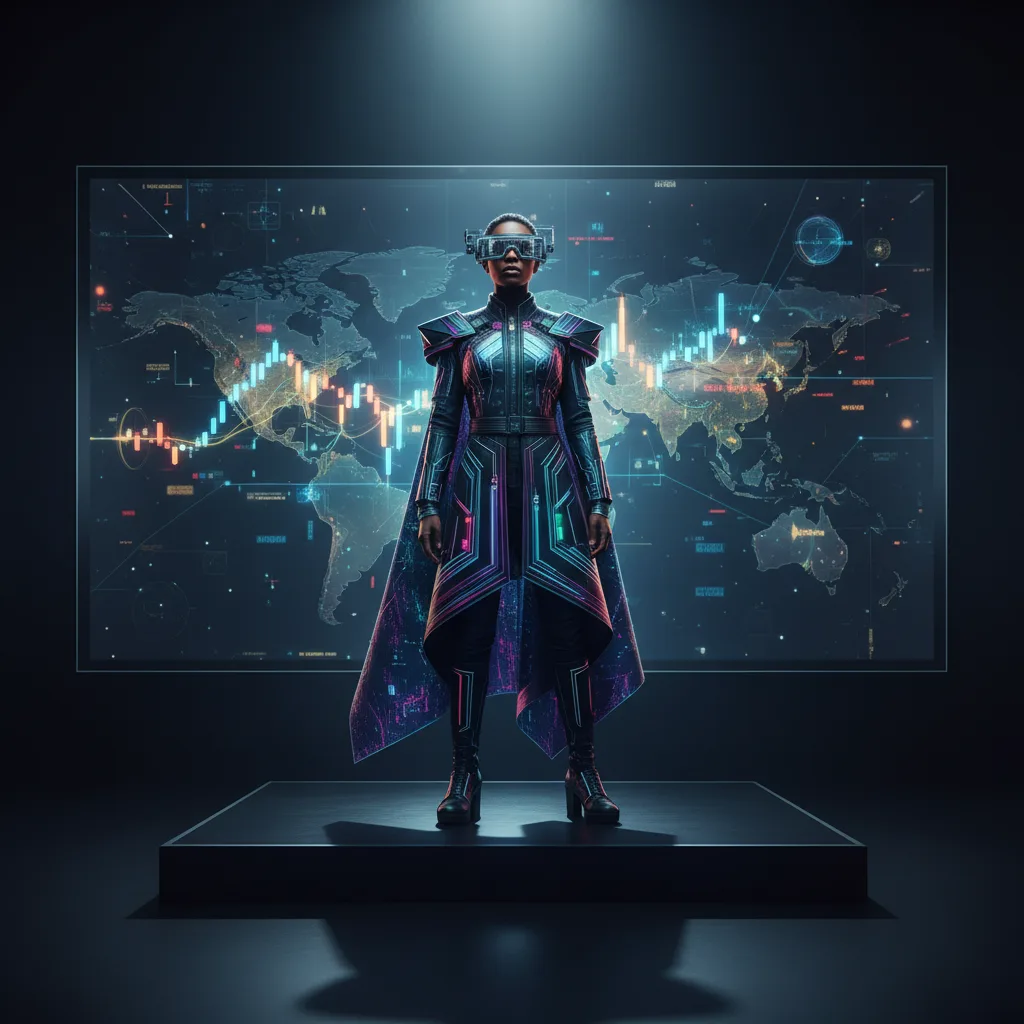
Investing in AI Fashion Trends 2026: Geopolitical Strategy Guide
Explore strategies for investing in AI-driven fashion trends by 2026. Understand how AI is transforming design, manufacturing, and retail amidst global geopolitical shifts.
The Best Strategy: A Guide to Investing in AI-Driven Fashion Trends 2026 Amidst Geopolitical Shifts
The world of fashion, traditionally driven by human creativity and intuition, is undergoing a profound transformation. Artificial intelligence (AI) is no longer a futuristic concept but a present-day catalyst, redefining everything from design and manufacturing to supply chain and retail. As we look towards 2026, this AI revolution is set to mature, offering unprecedented investment opportunities. However, these prospects are not without complexity, as they unfold against a backdrop of increasing geopolitical shifts—trade tensions, regional conflicts, and evolving regulatory landscapes. This comprehensive guide, “The Best Strategy: A Guide to Investing in AI-Driven Fashion Trends 2026 Amidst Geopolitical Shifts,” is designed to equip investors with the insights and actionable strategies needed to navigate this dynamic intersection and capitalize on the future of fashion.
The AI Revolution in Fashion: A 2026 Lens
By 2026, AI’s integration into the fashion industry will be pervasive, moving beyond experimental phases to become fundamental operational pillars. Its impact spans the entire value chain:
- Trend Forecasting and Design: AI algorithms, leveraging vast datasets from social media, runway shows, sales figures, and even satellite imagery, can predict emerging trends with remarkable accuracy. Generative AI tools are empowering designers to create novel patterns, silhouettes, and even entire collections, significantly accelerating the design cycle. Companies like Heuritech already provide AI-driven trend insights, helping brands like Louis Vuitton and Adidas stay ahead.
- Supply Chain Optimization: AI-powered platforms are revolutionizing supply chain efficiency. They enable predictive demand sensing, minimizing overproduction and waste, and optimizing logistics for faster, more sustainable delivery. This is crucial for brands like Zara (Inditex), which uses AI to analyze customer data and quickly adapt production, reducing lead times from months to weeks.
- Personalization and Retail Experience: AI is at the forefront of hyper-personalization. From virtual try-on experiences that reduce returns (e.g., Amazon’s StyleSnap or Wanna Kicks app) to AI-powered chatbots offering tailored styling advice, the customer journey is becoming increasingly bespoke. This enhances engagement and conversion rates.
- Sustainable and Circular Fashion: AI plays a pivotal role in identifying sustainable materials, optimizing recycling processes, and tracking product lifecycles, moving the industry towards a more circular economy. Startups are emerging that use AI to sort textile waste or design garments for longevity.

The global AI in fashion market is projected to grow significantly, with estimates often placing it at a multi-billion dollar valuation by the mid-2020s, underscoring the immense potential for innovation and financial return.
Navigating the Geopolitical Maze: Risks and Opportunities
Investing in AI-driven fashion by 2026 requires a keen awareness of the geopolitical landscape. Global trade dynamics, regulatory shifts, and regional instabilities can profoundly impact supply chains, market access, and consumer sentiment.
- Supply Chain Resilience: The pandemic exposed vulnerabilities in globalized supply chains. Geopolitical tensions, such as those between the US and China, further drive the need for diversification. Investors should favor companies employing AI to build resilient supply chains through strategies like near-shoring, friend-shoring, or developing localized manufacturing hubs. For example, brands investing in AI-driven micro-factories in target markets can mitigate risks associated with distant production.
- Trade Policies and Tariffs: Shifting trade agreements and the imposition of tariffs can significantly impact the cost of raw materials, manufacturing, and distribution. Companies with diversified sourcing strategies, enabled by AI for real-time risk assessment, will be better positioned to adapt. Investors should scrutinize a company’s exposure to volatile trade routes or politically sensitive regions.
- Regulatory Landscapes and Data Governance: As AI becomes more sophisticated, so do concerns around data privacy and ethical AI use. Different regions have varying regulations, such as Europe’s GDPR or emerging AI ethics guidelines. Investing in companies that prioritize transparent AI, data security, and ethical algorithm development will be crucial, as these practices reduce legal and reputational risks.
- Consumer Sentiment and Nationalism: Geopolitical events can influence consumer preferences, sometimes leading to a preference for local brands or products sourced from specific regions. AI can help brands understand and adapt to these subtle shifts in consumer sentiment, allowing for hyper-localized marketing and product offerings. Brands seen as ethically sourced or aligned with national values may gain an edge.

Understanding these multifaceted geopolitical influences is not just about mitigating risk; it’s about identifying opportunities for companies that can leverage AI to adapt, innovate, and thrive in an increasingly complex global environment.
Identifying Investment Opportunities in AI-Driven Fashion for 2026
To pinpoint the most promising ventures, investors must look across the entire fashion ecosystem, evaluating companies based on their AI integration and geopolitical resilience. Here’s how to identify key opportunities as part of The Best Strategy: A Guide to Investing in AI-Driven Fashion Trends 2026 Amidst Geopolitical Shifts:
- Pure-Play AI Fashion Tech Startups: These companies are solely focused on developing and deploying AI solutions for specific fashion challenges.
- Examples: Startups specializing in generative AI for textile design, AI-powered virtual fitting room technologies, or platforms optimizing sustainable material sourcing through machine learning. Look for strong intellectual property, demonstrable market adoption, and a clear path to scalability.
- Case Study: Stitch Fix, while not a startup, pioneered AI for personalized styling and inventory management, demonstrating the power of data-driven fashion curation. Newer startups are applying similar principles to even more niche areas.
- Established Fashion Brands and Retailers with Robust AI Integration: Investing in heritage brands or large retailers that are aggressively adopting and integrating AI into their core operations.
- Examples: Luxury conglomerates like LVMH investing heavily in AI for demand forecasting, customer experience, and supply chain optimization across their portfolio of brands. Fast fashion giants like H&M or Zara continuously refine their AI-driven agile supply chains.
- Focus: Look for public companies that explicitly detail their AI investment, R&D spend, and the measurable impact of AI on their bottom line or sustainability goals.
- Enabling Technology Providers: Companies that provide the foundational AI tools, platforms, and data infrastructure upon which the fashion industry builds its AI solutions.
- Examples: Cloud computing providers offering specialized AI/ML services (e.g., Google Cloud’s Fashion-AI solutions, AWS AI services), data analytics firms specializing in fashion insights, or companies developing ethical AI frameworks.
- Why Invest: These companies often have diversified client bases and are less exposed to the specific whims of fashion trends, benefiting from the broader AI adoption wave.
- Sustainable and Circular Fashion AI Innovators: With increasing consumer and regulatory pressure for sustainability, companies using AI to drive eco-friendly practices are poised for significant growth.
- Examples: AI platforms that optimize material usage to reduce waste, companies using AI for textile recycling and upcycling, or those leveraging AI to track the lifecycle of garments for circularity.
- Case Study: Startups like Resortecs are using AI to develop dissolvable stitching for easier garment recycling, a niche but impactful application.

When evaluating these opportunities, consider the company’s ability to adapt to geopolitical shifts. Does their AI solution offer flexibility in sourcing? Can it help identify alternative markets quickly? Is their data infrastructure resilient to regional data sovereignty laws?
Crafting Your Investment Strategy in AI-Driven Fashion Amidst Geopolitical Volatility
Developing an effective investment strategy in this evolving landscape requires a blend of technological foresight, market acumen, and geopolitical awareness. Here’s The Best Strategy: A Guide to Investing in AI-Driven Fashion Trends 2026 Amidst Geopolitical Shifts for success:
-
Thorough Due Diligence Beyond Financials:
- AI Prowess: Evaluate the sophistication of a company’s AI models, the quality and volume of their data, and the expertise of their AI talent. Is their AI proprietary and defensible?
- Market Fit and Scalability: Does the AI solution address a real pain point in the fashion industry? Can it scale globally, or is it niche?
- Geopolitical Exposure Audit: Understand where a company sources its materials, where it manufactures, and where its primary markets are. Assess its vulnerability to trade disputes, sanctions, or regional instability. Look for proactive strategies to mitigate these risks, such as diversified manufacturing footprints or near-shoring initiatives.
- Ethical AI and Data Governance: Prioritize companies with strong ethical AI frameworks and robust data privacy practices. This mitigates future regulatory risks and builds consumer trust.
-
Diversification Across the AI Fashion Value Chain:
- Don’t put all your capital into one segment (e.g., just generative design). Diversify across different applications of AI:
- Forecasting & Design: High-growth potential, but can be competitive.
- Supply Chain & Manufacturing: Essential for efficiency, often more stable returns.
- Retail & Customer Experience: Direct impact on sales and brand loyalty.
- Sustainability & Circularity: Long-term growth driven by regulatory and consumer demand.
- Consider a mix of pure-play tech companies and established brands adopting AI to balance risk and reward.
- Don’t put all your capital into one segment (e.g., just generative design). Diversify across different applications of AI:
-
Long-Term Vision and Adaptability:
- AI in fashion is a long-term transformative trend. Short-term market fluctuations or geopolitical headwinds should not deter a well-researched, long-term investment.
- Invest in companies that demonstrate agility and adaptability in their business models and technology stacks, capable of pivoting in response to rapid technological advancements or sudden geopolitical shifts.
-
Consider ESG (Environmental, Social, Governance) Factors:
- Geopolitical shifts often amplify the importance of ESG. Companies with strong ESG credentials, particularly in sustainable AI and ethical sourcing, are likely to attract more investment and consumer loyalty.
- AI that helps reduce fashion’s environmental footprint (e.g., waste reduction, energy efficiency in production) presents a compelling investment case.
-
Strategic Partnerships and Ecosystem Plays:
- Look for companies that are forming strategic alliances with tech giants, academic institutions, or other fashion innovators. These partnerships can provide access to new technologies, markets, and expertise, enhancing resilience.
By meticulously applying these strategic considerations, investors can construct a robust portfolio designed to capitalize on the immense potential of AI in fashion, even as the global political landscape continues to evolve.
Challenges, Risks, and Ethical Considerations
While the opportunities are vast, investors must also be aware of the inherent challenges and risks:
- Technological Obsolescence: The AI landscape evolves rapidly. What is cutting-edge today might be obsolete tomorrow.
- Data Privacy and Algorithmic Bias: Mismanagement of data or biased algorithms can lead to significant reputational and legal damage.
- Market Saturation and Overvaluation: The hype around AI can lead to inflated valuations for startups, requiring careful scrutiny.
- Geopolitical Instability: Rapidly changing trade relations, cybersecurity threats, or outright conflicts can severely disrupt even the most resilient businesses.
- Integration Complexity: Implementing AI effectively within traditional fashion companies can be challenging, often facing resistance or requiring significant cultural shifts.
Conclusion: Charting a Course for Future Returns
The convergence of AI and fashion presents one of the most exciting investment frontiers for 2026. However, success hinges not just on identifying technological prowess but also on a nuanced understanding of the complex geopolitical shifts shaping global markets. The Best Strategy: A Guide to Investing in AI-Driven Fashion Trends 2026 Amidst Geopolitical Shifts involves meticulous due diligence, strategic diversification across the AI fashion value chain, a steadfast long-term vision, and a commitment to ethical and sustainable practices. By embracing these principles, investors can navigate the challenges and unlock significant returns in the AI-powered fashion revolution.