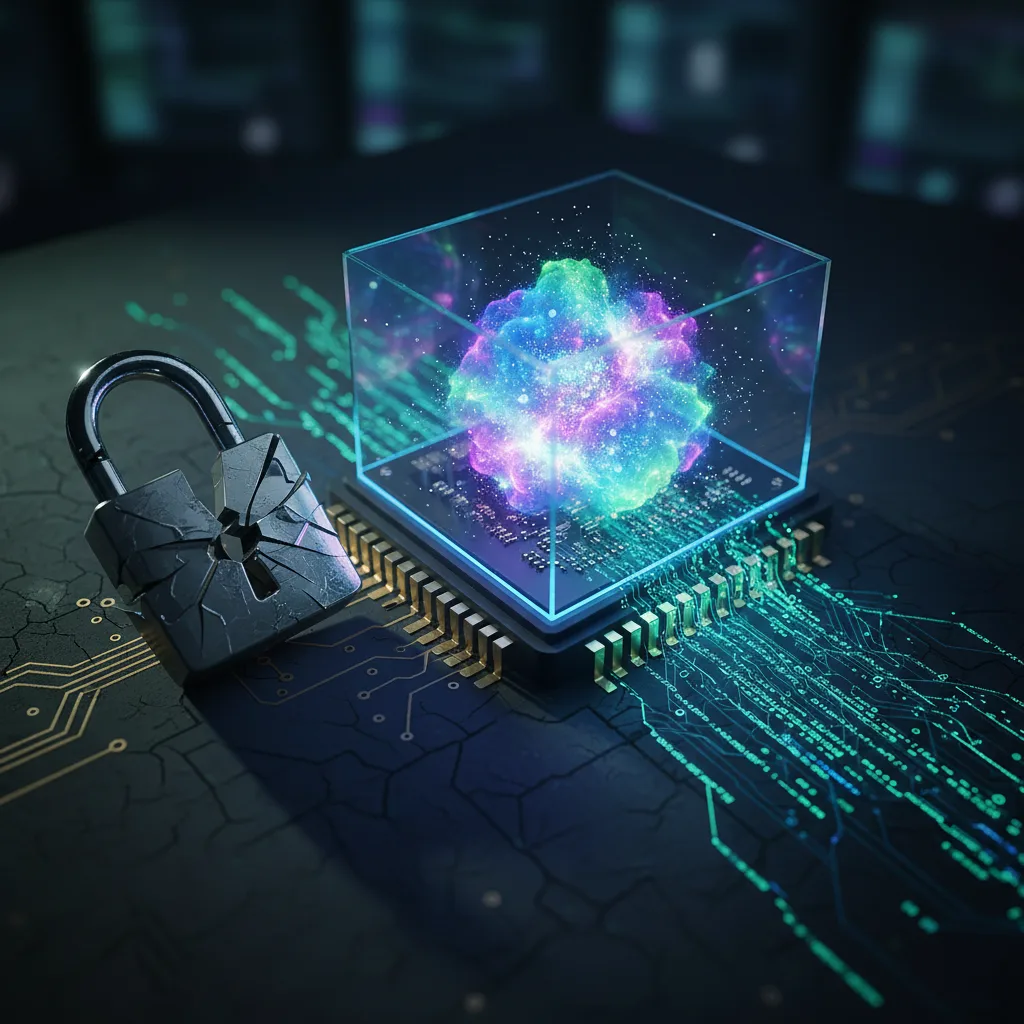
The Quantum Leap: Unpacking Quantum Computing's Impact on Cybersecurity
Explore how quantum computing is poised to revolutionize cybersecurity, challenging current encryption methods and impacting global communication, commerce, and national security.
The Quantum Leap: Unpacking Quantum Computing’s Impact on Cybersecurity
In an increasingly digitized world, the bedrock of our global communication, commerce, and national security relies heavily on robust cybersecurity. From protecting sensitive personal data to securing critical infrastructure, encryption is the silent guardian. Yet, a technological revolution is on the horizon, one with the potential to fundamentally reshape this landscape: quantum computing. This revolutionary paradigm promises to solve problems currently intractable for even the most powerful supercomputers, but its emergence casts both a long shadow and a beacon of hope over the realm of cybersecurity. Understanding the quantum computing impact on cybersecurity is no longer a futuristic exercise; it’s an urgent necessity for governments, businesses, and individuals alike.
Understanding the Quantum Computing Fundamentals
To grasp the profound implications of quantum computing, it’s essential to understand its core principles, which diverge significantly from classical computing. While classical computers store information as bits (either a 0 or a 1), quantum computers utilize qubits.
Qubits possess two extraordinary properties:
- Superposition: Unlike a classical bit that must be in one state (0 or 1), a qubit can exist in a superposition of both states simultaneously. Imagine a coin spinning in the air – it’s neither heads nor tails until it lands. This allows quantum computers to process vast amounts of information in parallel.
- Entanglement: Two or more qubits can become entangled, meaning their fates are intertwined, regardless of the distance separating them. Measuring the state of one entangled qubit instantaneously influences the state of the other, even if they are light-years apart. This interconnectedness allows for complex correlations and rapid calculations.
These properties enable quantum computers to perform certain computations exponentially faster than classical computers. While still in its nascent stages, with current quantum machines primarily experimental and prone to errors, the theoretical power is undeniable. Major players like IBM, Google, and governments worldwide are investing billions, pushing the boundaries of what’s possible, and bringing the “quantum era” steadily closer.
The Impending Quantum Computing Impact on Cybersecurity: Breaking Traditional Encryption
The most immediate and concerning quantum computing impact on cybersecurity stems from its ability to dismantle the cryptographic algorithms that secure most of our digital world. This threat is primarily driven by two groundbreaking quantum algorithms:
-
Shor’s Algorithm: Developed by Peter Shor in 1994, this algorithm can efficiently factor large numbers into their prime factors. This is a catastrophic blow to asymmetric cryptography, specifically the widely used RSA (Rivest–Shamir–Adleman) and ECC (Elliptic Curve Cryptography) algorithms. These algorithms rely on the mathematical difficulty of factoring large numbers or solving elliptic curve discrete logarithm problems for their security.
- Real-world impact: RSA and ECC are the backbone of secure communication. They protect:
- TLS/SSL connections: Securing your web browsing (HTTPS), online banking, and e-commerce.
- VPNs: Ensuring private and secure network access.
- Digital signatures: Verifying software authenticity, legal documents, and email integrity.
- Cryptocurrencies: Securing transactions and wallet ownership.
- A sufficiently powerful quantum computer running Shor’s algorithm could decrypt virtually all currently encrypted internet traffic, compromise digital identities, and undermine trust in digital transactions.
- Real-world impact: RSA and ECC are the backbone of secure communication. They protect:
-
Grover’s Algorithm: Developed by Lov Grover in 1996, this algorithm can search an unstructured database quadratically faster than classical algorithms. While not a direct “break,” it significantly weakens symmetric encryption (like AES - Advanced Encryption Standard) and hash functions.
- Real-world impact: Grover’s algorithm could reduce the effective key length of symmetric ciphers. For instance, a 128-bit AES key might offer only 64 bits of security against a quantum attack, making brute-force attacks feasible. This would necessitate a doubling of key lengths (e.g., from AES-128 to AES-256) to maintain current security levels, adding computational overhead.
The “harvest now, decrypt later” scenario is a particularly chilling aspect of this threat. Adversaries could be collecting vast amounts of encrypted data today, storing it with the intention of decrypting it once quantum computers become powerful enough. This poses a significant risk to long-term data confidentiality, potentially exposing state secrets, intellectual property, and personal information years down the line.
The Dawn of Post-Quantum Cryptography (PQC)
Recognizing the existential threat quantum computing poses, the cybersecurity community is not idly waiting. The development of Post-Quantum Cryptography (PQC), also known as quantum-resistant cryptography, is a global race to design new cryptographic algorithms that are secure against attacks by both classical and quantum computers, yet can still run on conventional classical hardware.
The most prominent initiative in this field is the National Institute of Standards and Technology (NIST) PQC standardization process. Launched in 2016, this multi-round competition has evaluated dozens of candidate algorithms from around the world. In July 2022, NIST announced its first set of standardized PQC algorithms, including:
- CRYSTALS-Kyber: For key encapsulation mechanisms (KEMs), used for establishing shared secrets.
- CRYSTALS-Dilithium: For digital signatures.
- SPHINCS+: Another digital signature scheme, offering a different security profile.
- SLH-DSA (formerly known as SPHINCS+): A stateless hash-based signature scheme.
These algorithms are based on different mathematical problems that are believed to be hard for both classical and quantum computers, such as lattice problems, code-based problems, and hash-based problems.
However, the migration to PQC is a monumental undertaking fraught with challenges:
- Complexity and Performance: PQC algorithms often have larger key sizes, larger signature sizes, and can be computationally more intensive than their classical counterparts, potentially impacting network bandwidth and processing power.
- Cryptographic Agility: Organizations need to design systems that can easily swap out cryptographic algorithms, rather than having them hard-coded, to facilitate a smooth transition and adapt to future algorithm updates.
- Long Transition Period: The global cryptographic infrastructure is vast and deeply embedded. Migrating every system, device, and application will take years, if not decades.
- Standardization and Interoperability: Ensuring that diverse systems can communicate securely using new PQC standards requires careful coordination and widespread adoption.
Leveraging Quantum Computing for Enhanced Cybersecurity Defenses
While the defensive challenges are clear, the quantum computing impact on cybersecurity isn’t solely negative. Quantum technologies also hold immense promise for enhancing our defensive capabilities and opening new avenues for security.
- Quantum Key Distribution (QKD): This technology leverages the principles of quantum mechanics (specifically, the no-cloning theorem and the uncertainty principle) to establish a shared cryptographic key between two parties with absolute theoretical security. Any attempt by an eavesdropper to intercept the key would inevitably disturb the quantum state, alerting the legitimate parties to the intrusion. QKD systems are already being deployed in experimental networks, offering “unbreakable” key exchange over optical fiber.
- Quantum Random Number Generators (QRNGs): Random numbers are crucial for generating strong cryptographic keys and ensuring the unpredictability of security protocols. Classical random number generators often rely on pseudo-randomness, which can theoretically be predicted. QRNGs, however, harness the inherent randomness of quantum phenomena, providing truly unpredictable and robust random numbers, significantly bolstering cryptographic strength.
- Quantum Machine Learning for Threat Detection: Quantum computers could dramatically accelerate machine learning algorithms. This has profound implications for cybersecurity analytics, enabling:
- Faster anomaly detection: Identifying unusual network traffic patterns or user behavior indicative of an attack in real-time.
- Enhanced malware analysis: Rapidly classifying and understanding new strains of malware.
- Improved intrusion detection systems: Processing vast datasets of security logs to pinpoint sophisticated, stealthy threats that evade classical systems.
- Quantum-Resistant Blockchain and Distributed Ledger Technologies: The security of existing blockchain implementations, including cryptocurrencies, relies heavily on ECC. PQC can be integrated into future blockchain designs to create quantum-resistant distributed ledgers, ensuring the integrity and immutability of these systems in the quantum era.
Preparing for the Quantum Era: Actionable Steps
The transition to quantum-safe cybersecurity will be one of the most significant technological shifts in recent memory. Proactive preparation is paramount. Here are actionable steps organizations can take:
- Inventory Cryptographic Assets: Conduct a thorough audit of all systems, applications, and data that rely on cryptography. Identify which algorithms (RSA, ECC, AES) are in use, where they are deployed, and what data they protect. This “crypto-inventory” is the foundation for any migration strategy.
- Develop Cryptographic Agility: Design new systems and update existing ones to be “crypto-agile.” This means making cryptographic modules easily replaceable, allowing for seamless upgrades to PQC algorithms without requiring a complete system overhaul.
- Monitor PQC Developments and Standards: Stay abreast of the latest advancements in PQC research and NIST’s standardization process. As new algorithms are finalized, begin to experiment with them in non-production environments.
- Prioritize “Long-Lived” Data: Identify data that needs to remain confidential for decades (e.g., medical records, government secrets, intellectual property). This data is most vulnerable to the “harvest now, decrypt later” threat and should be prioritized for early migration to PQC.
- Budget and Plan for Migration: Allocate resources – both financial and human – for the inevitable transition. This includes research, development, testing, and deployment of new cryptographic solutions. Develop a phased migration roadmap.
- Educate Stakeholders: Raise awareness within your organization, from leadership to technical teams, about the quantum threat and the importance of PQC. Foster a culture of cryptographic awareness.
- Consider Hybrid Solutions: A gradual transition might involve “hybrid cryptography,” where both classical and quantum-safe algorithms are used in parallel. This provides a fallback in case PQC algorithms are later found to have vulnerabilities, while also offering early quantum protection.
- Engage with Vendors: Ask your technology vendors about their quantum-readiness plans and timelines for PQC integration into their products and services.
Conclusion
The quantum computing impact on cybersecurity presents a profound paradox: a technological marvel capable of both dismantling our current digital defenses and fortifying them in unprecedented ways. The impending threat to classical cryptography, driven by algorithms like Shor’s, demands urgent attention and a proactive shift towards Post-Quantum Cryptography. Organizations must begin the arduous journey of inventorying their cryptographic landscape, developing crypto-agility, and planning for a multi-year migration.
Simultaneously, we must embrace the defensive capabilities that quantum technologies offer, from the theoretically unbreakable security of Quantum Key Distribution to the enhanced threat detection potential of Quantum Machine Learning. The quantum era is not a distant fantasy; it is rapidly approaching, and our ability to navigate this transition will define the security and integrity of the digital future. By understanding the challenges and opportunities, and by taking deliberate, strategic steps today, we can ensure that the quantum leap propels us forward into a more secure tomorrow.