
The Black Stone of Mecca: History, Legends & Spiritual Significance
Explore the profound history and captivating legends surrounding the Black Stone of Mecca, a sacred relic within the Kaaba and a focal point for the Hajj pilgrimage.
Unveiling the Mysteries: A Comprehensive Guide to La Pietra Nera della Mecca, Storia e Leggende
Deep within the heart of Islam’s holiest sanctuary, the Kaaba in Mecca, lies a relic of profound spiritual significance and enigmatic origins: La Pietra Nera della Mecca, or the Black Stone of Mecca. For centuries, this revered object has captivated the hearts and minds of billions, serving as a focal point for the annual Hajj pilgrimage and a symbol steeped in a rich tapestry of history, myth, and devotion. From its celestial legends to its tumultuous journey through human history, the Black Stone embodies a unique intersection of faith, tradition, and enduring mystery. This guide from TrendSeek will delve into the multifaceted story of this extraordinary artifact, exploring its historical accounts, the captivating legends that surround it, and its enduring role in Islamic worship.
The Kaaba’s Sacred Heart: Placement and Physical Description
To understand the Black Stone, one must first appreciate its dwelling: the Kaaba. This cube-shaped building, located in the center of the Grand Mosque (Al-Masjid al-Haram) in Mecca, Saudi Arabia, is the most sacred site in Islam. It serves as the qibla, the direction Muslims face during their daily prayers worldwide. Embedded in the Kaaba’s southeastern corner, approximately 1.1 meters (3.6 feet) above the ground, is the Black Stone.
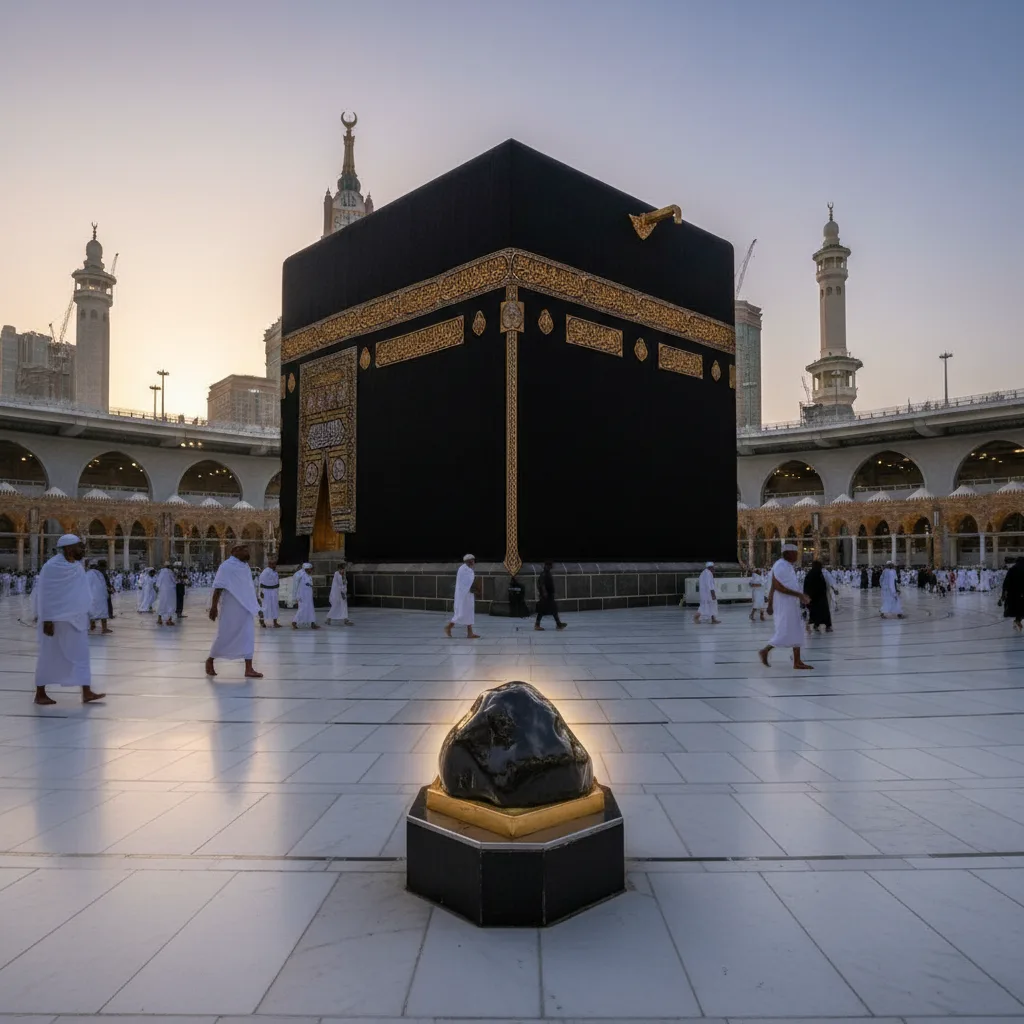
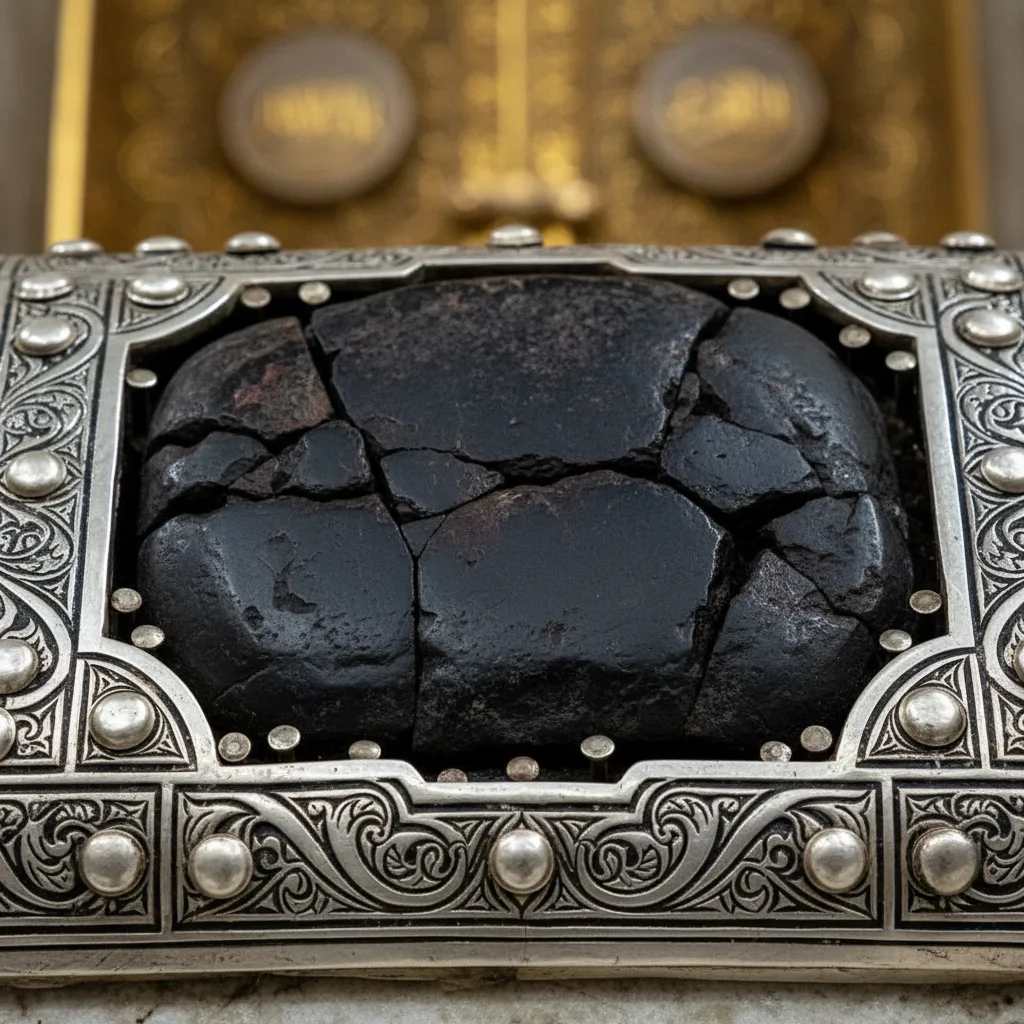
Physically, the Black Stone is not a single, perfectly smooth stone. Over centuries, due to various incidents and attempts at theft, it has been fractured into several pieces. These fragments are now encased in a large silver frame, held together by silver nails. The visible part of the stone is roughly oval-shaped, measuring about 7 inches (18 cm) by 6 inches (15 cm). Its color, as its name suggests, is predominantly black, though historical accounts suggest it was once much lighter, perhaps even white or translucent, before turning dark due to human sins or exposure to the elements. The stone itself is a type of rock, though its exact geological classification remains a subject of debate, with theories ranging from basaltic rock to an agate, or even a meteorite. Its unique appearance and the silver casing make it instantly recognizable to pilgrims performing the ritual circumambulation (tawaf) around the Kaaba.
Tracing the Celestial Roots: The Ancient History of La Pietra Nera della Mecca
The origins of the Black Stone are shrouded in antiquity, deeply intertwined with both pre-Islamic Arabian traditions and foundational Islamic narratives. Before the advent of Islam, the Kaaba was a sanctuary for various pagan idols, yet the Black Stone was already held in high esteem. It was believed to possess sacred powers, and its reverence predates the Prophet Muhammad.
Islamic tradition, however, provides a more specific and profound narrative for La Pietra Nera della Mecca. It is widely believed to be a heavenly stone, fallen from Paradise. According to Hadith (sayings and traditions of the Prophet Muhammad), the stone was originally pure white, even brighter than milk. It is said that the angel Gabriel brought it to Prophet Abraham (Ibrahim) and his son Ishmael (Isma’il) when they were constructing the Kaaba. The stone was placed in its current position to mark the starting point for the tawaf, the ritual circumambulation.
The legend further states that the stone turned black over time due to absorbing the sins of humanity. This transformation from pristine white to dark black serves as a powerful metaphor for human fallibility and the stone’s enduring witness to countless acts of repentance and prayer. This divine origin story elevates the Black Stone beyond a mere earthly artifact, imbuing it with unparalleled spiritual significance as a tangible link to the divine and a silent observer of humanity’s spiritual journey.
Legends and Miracles Associated with the Black Stone
Beyond its origin story, numerous legends and miraculous tales have accumulated around the Black Stone, further solidifying its mystical aura and spiritual importance within Islam. These stories, passed down through generations, speak to its profound impact on the collective consciousness of Muslims.
One of the most widely known legends asserts that the Black Stone will bear witness on the Day of Judgment. It is believed that the stone will have eyes and a tongue to testify for those who touched or kissed it with sincerity and devotion during their pilgrimage. This belief instills a deep sense of personal connection and accountability among pilgrims, making the act of istilam (touching or kissing the stone) a moment of profound spiritual reflection and hope for divine mercy.
Another legend speaks to its supposed ability to float on water, a miraculous property often attributed to objects of celestial origin. While not scientifically verifiable, such tales reinforce the stone’s extraordinary nature and its distinction from ordinary earthly matter. There are also accounts, though less widely circulated, of the stone radiating light or warmth at certain times, further contributing to its mystique.
These legends, whether literal truths or symbolic narratives, serve to deepen the spiritual reverence for the Black Stone. They transform it from a mere physical object into a living symbol of faith, a silent witness to history, and a future advocate for the devout, reinforcing its status as a cornerstone of Islamic pilgrimage and devotion.
Historical Incidents and Challenges Facing the Black Stone
The long history of La Pietra Nera della Mecca has not been without its share of tumultuous events. Far from being an untouched relic, the Black Stone has faced various threats, from natural disasters to deliberate acts of sacrilege, demonstrating its resilience and the unwavering determination of Muslims to protect it.
The most infamous incident occurred in 930 CE when the Qarmatians, an Ismaili Shia sect, attacked Mecca during the Hajj. They massacred thousands of pilgrims, looted the Kaaba, and, most audaciously, stole the Black Stone. For 22 years, the stone was held captive in their stronghold in Hajar (modern-day Bahrain). During this period, the Kaaba remained without its most sacred component, causing immense grief and distress throughout the Muslim world. The Qarmatians reportedly demanded a huge ransom for its return and even attempted to redirect the Hajj to their own city.
The stone was eventually returned in 952 CE, under mysterious circumstances, with some accounts suggesting it was thrown into the Grand Mosque and found by pilgrims. However, it was not returned unscathed. During its capture, the stone was reportedly damaged and broken into several pieces. It was meticulously repaired, with the fragments carefully reassembled and set into the silver casing that is visible today. This event highlights the profound importance of the Black Stone to the Muslim community, demonstrating the lengths to which people would go to possess or retrieve it.
Other incidents include damage from various sieges and natural events over the centuries. In 1674, a person attempted to break off a piece of the stone, causing further damage. Each time, meticulous restoration efforts have been undertaken by skilled artisans and scholars, ensuring the preservation of this invaluable relic. These historical challenges underscore not only the stone’s vulnerability but also the enduring commitment of the Muslim world to its safeguarding and its central role in their faith.
The Pilgrim’s Embrace: Rituals and Significance of La Pietra Nera della Mecca
For pilgrims embarking on the Hajj or Umrah, interacting with La Pietra Nera della Mecca is one of the most poignant and spiritually charged moments of their journey. The stone marks the starting point for the tawaf, the ritual circumambulation of the Kaaba, performed seven times in a counter-clockwise direction.
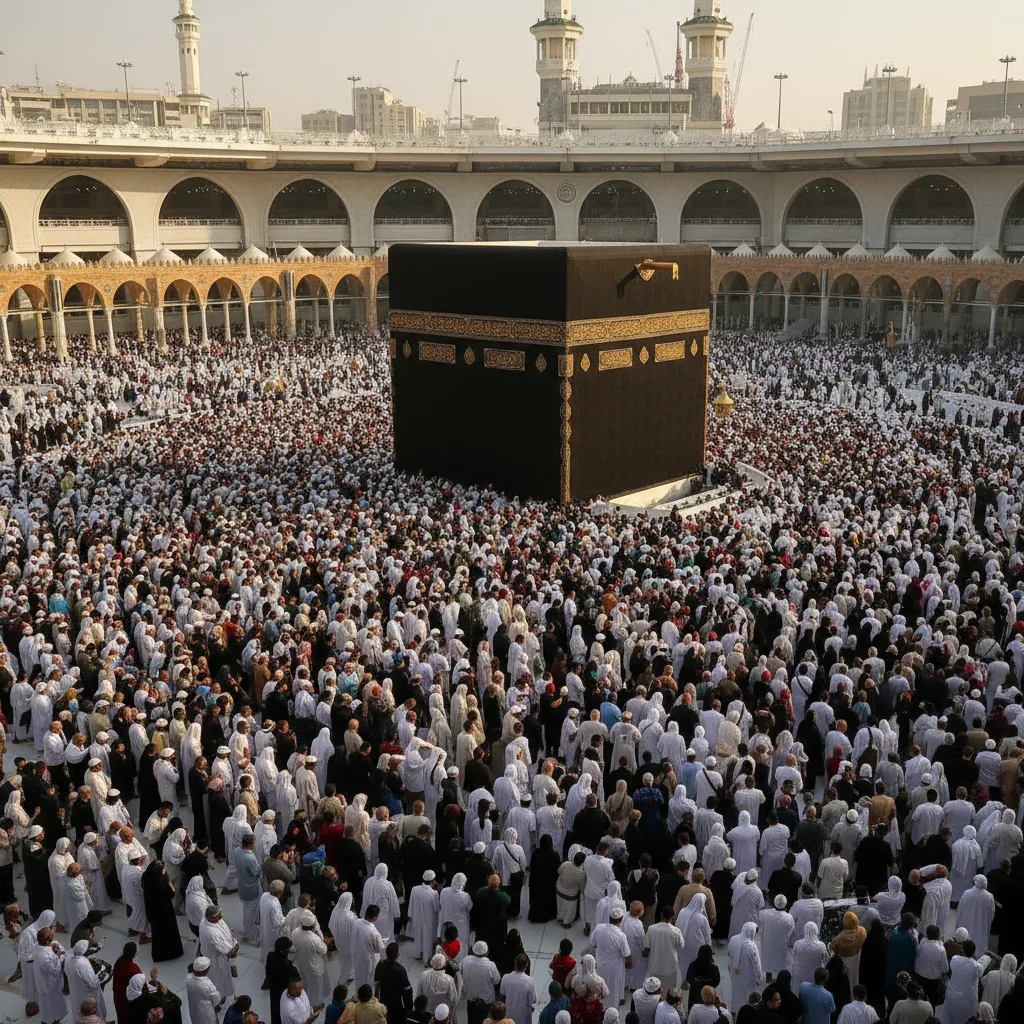
As pilgrims begin each circuit, they are encouraged to perform istilam, which involves kissing the Black Stone if possible. If the crowds are too dense, as is often the case given the millions of pilgrims, they may touch it with their hand and then kiss their hand, or simply point towards it from a distance while reciting a prayer. This act is not one of worship of the stone itself, but rather an act of reverence and emulation of the Prophet Muhammad, who performed the istilam. It symbolizes renewing one’s covenant with God and acknowledging the stone’s unique status as a sign from Paradise.
The significance of the istilam goes beyond mere ritual. For many, it represents a direct, physical connection to the sacred history of Islam, a moment of profound personal devotion, and a tangible link to the countless prophets and believers who have performed the same act throughout history. It is a moment of intense spiritual emotion, often bringing pilgrims to tears as they feel the weight of centuries of faith converging in that single touch or gesture. The Black Stone, therefore, is not just a relic; it is an active participant in the spiritual journey of every pilgrim, a witness to their devotion, and a beacon guiding them in their quest for closeness to the Divine.
Conclusion
La Pietra Nera della Mecca stands as one of the most revered and enigmatic objects in human history. From its celestial origins, believed to have fallen from Paradise and gifted to Abraham, to its role as a silent witness to the sins and devotions of humanity, its story is rich with history, legend, and profound spiritual meaning. We’ve explored its physical placement within the sacred Kaaba, delved into the captivating narratives of its divine beginnings and its transformation from white to black, and recounted the miraculous tales that have deepened its mystique.
Moreover, the Black Stone’s journey has been marked by significant historical challenges, most notably the Qarmatian theft, which tested the resolve of the Muslim world but ultimately led to its triumphant return and careful preservation. For millions of pilgrims each year, the act of istilam during the Hajj or Umrah transcends a mere ritual; it is a deeply personal and spiritually charged encounter, a tangible connection to their faith’s ancient roots and a renewal of their covenant with God.
Ultimately, the Black Stone is far more than just a piece of rock. It is a powerful symbol of unity, continuity, and divine presence, weaving together the threads of history, legend, and unwavering faith into the very fabric of Islamic identity. Its enduring presence in the heart of Mecca continues to inspire awe, devotion, and a timeless connection to the sacred.