
100 Most Influential People: Shapers of Human History & Future
Explore the 100 most influential people who shaped human history, from ancient civilizations to modern AI. Discover their profound impact on economy, science, geopolitics, and culture.
The Unseen Hand: Unraveling the 100 Most Influential People in Human History
Every moment of our lives, from the language we speak to the laws we obey, the technologies we use, and the beliefs we hold, is shaped by a long chain of events set in motion by individuals of extraordinary vision, intellect, and will. Compiling a definitive list of the 100 most influential people in human history is a monumental task, fraught with challenges of perspective, cultural bias, and the sheer scale of human achievement. Yet, exploring this question offers a profound journey into the very fabric of civilization, revealing the titans who sculpted our world.
This guide from TrendSeek doesn’t aim to present the definitive list of 100 names – such a list would require volumes – but rather to explore the categories, criteria, and profound impact of those individuals whose contributions reverberate across millennia, shaping societies, sparking revolutions, and redefining the human experience. We’ll delve into the diverse ways influence manifests, from spiritual awakenings to scientific breakthroughs, artistic masterpieces, and political upheavals, offering a framework for understanding why certain figures stand head and shoulders above the rest.
Defining Influence: What Makes a Historical Giant?
Before we can even begin to ponder who belongs on a list of the 100 most influential people in human history, we must grapple with the definition of influence itself. It’s more than just fame or power; true influence is about lasting impact that transcends their lifetime and original context.
Consider these dimensions:
- Breadth of Impact: How many people did they affect? Was it a nation, a continent, or humanity as a whole?
- Depth of Impact: How profoundly did they change people’s lives, thoughts, or societal structures? Did they merely tweak existing systems, or did they fundamentally alter paradigms?
- Duration of Impact: Does their legacy persist for decades, centuries, or millennia? Do their ideas continue to shape contemporary thought and practice?
- Transformative Power: Did they initiate a new era, a new way of thinking, a new technology, or a new social order that redirected the course of human events?
Influence can be positive, leading to enlightenment, peace, and progress, or it can be negative, resulting in conflict, oppression, and destruction. Both types of impact, however, are undeniable forces in shaping history. A figure like Adolf Hitler, despite his horrific legacy, undeniably influenced the 20th century in a profound and destructive way. Conversely, someone like Mahatma Gandhi inspired non-violent resistance that liberated nations and continues to resonate globally. The measure is impact, not necessarily morality.
Architects of Thought and Faith: Shaping Civilizations
Perhaps no category of individuals has had a more pervasive and long-lasting influence than those who shaped humanity’s spiritual and philosophical landscapes. Their ideas have formed the bedrock of civilizations, guiding moral codes, social structures, and individual beliefs for billions.
Figures like Siddhartha Gautama (the Buddha), Confucius, Jesus Christ, and Muhammad stand as monumental pillars. Their teachings, often recorded and interpreted by generations of followers, have inspired religions with hundreds of millions, even billions, of adherents, dictating everything from daily rituals to legal systems and artistic expressions. The Bible, the Quran, and the Analects of Confucius are not merely books; they are blueprints for entire ways of life, shaping cultures across continents and centuries.

Beyond religious leaders, philosophers have provided the intellectual frameworks through which we understand the world. Plato and Aristotle laid much of the groundwork for Western philosophy, science, and political thought, influencing thinkers from the Enlightenment to modern academia. Karl Marx, though controversial, reshaped political and economic discourse, inspiring revolutions and ideological movements that defined the 20th century. These thinkers didn’t just offer ideas; they provided lenses through which humanity could perceive reality, justice, and the purpose of existence.
The Engines of Progress: Science, Innovation, and Exploration
The relentless human drive to understand the universe and improve our condition has been spearheaded by brilliant scientists, ingenious inventors, and daring explorers. Their discoveries and creations have fundamentally altered our relationship with the natural world and each other.
Consider Isaac Newton, whose laws of motion and universal gravitation provided a mechanistic understanding of the cosmos that dominated scientific thought for centuries and enabled the Industrial Revolution. Or Albert Einstein, whose theories of relativity revolutionized physics, unlocking the secrets of the atom and paving the way for technologies ranging from nuclear power to GPS. These individuals didn’t just add to existing knowledge; they paradigm-shifted our understanding of reality.
In the realm of invention, Johannes Gutenberg’s movable type printing press (c. 1440) democratized knowledge, fueling the Renaissance, the Reformation, and the Scientific Revolution. It transformed literacy and communication, arguably having a greater long-term impact than any single battle or political treaty. More recently, figures like Thomas Edison (electricity, phonograph, motion pictures) and Marie Curie (radioactivity, first woman to win a Nobel Prize) exemplify the relentless pursuit of innovation that has reshaped daily life. Explorers like Christopher Columbus, despite his controversial legacy, undeniably initiated a profound global exchange of goods, ideas, and populations, irrevocably altering world geography and geopolitics.
 📷 Caelb375 (CC BY 4.0)

Masters of Culture and Communication: Art, Literature, and Media
Culture is the soul of a civilization, and certain individuals have etched their indelible marks on humanity’s collective consciousness through art, literature, and innovative forms of communication. They speak to our emotions, challenge our perceptions, and preserve our stories.
William Shakespeare, with his timeless plays and sonnets, not only enriched the English language but also explored the depths of the human condition with unparalleled insight. His works continue to be performed, studied, and adapted globally, demonstrating an enduring power to resonate across centuries and cultures. In art, Leonardo da Vinci personifies the Renaissance ideal, a polymath whose masterpieces like the Mona Lisa and The Last Supper remain iconic, while his scientific sketches foreshadowed future inventions. Michelangelo’s David and the Sistine Chapel ceiling likewise define an era of artistic brilliance.
Music, too, boasts its giants. Ludwig van Beethoven’s symphonies and sonatas transcended his deafness to create works of profound emotional power that continue to move audiences worldwide. More recently, the advent of mass media has created new avenues for influence. Figures who shaped global communication, from the early pioneers of film and radio to modern tech innovators like Steve Jobs (whose vision for personal computing and design profoundly altered how we interact with technology and information), have fundamentally changed how we connect, learn, and entertain ourselves.
Leaders and Revolutionaries: Forging New Paths
Throughout history, individuals with exceptional leadership, strategic acumen, and unwavering resolve have risen to power, leading nations, inspiring movements, and reshaping political landscapes. Their decisions have often had immediate and far-reaching consequences.
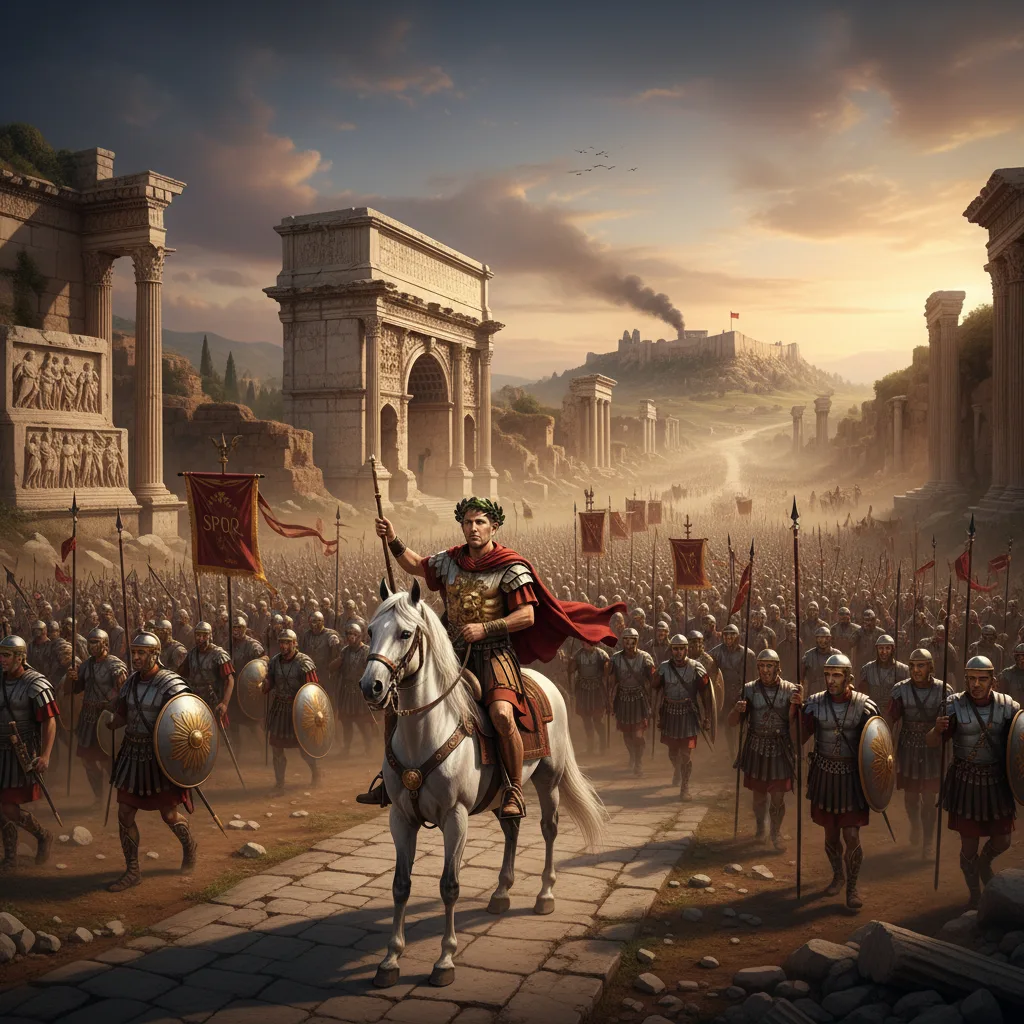
Alexander the Great forged one of the largest empires of the ancient world, spreading Hellenistic culture across three continents. Julius Caesar’s military genius and political ambition transformed the Roman Republic into an empire, setting the stage for centuries of imperial rule. These figures didn’t just lead armies; they were nation-builders, administrators, and cultural diffusers whose actions left lasting geopolitical imprints.
 📷 John Farey (Public domain)
In more modern times, George Washington led the American Revolution, establishing a new nation founded on republican ideals that inspired democratic movements worldwide. Napoleon Bonaparte, though a controversial figure, codified French law (the Napoleonic Code) that influenced legal systems across Europe and beyond, while his military campaigns redrew the map of the continent.
Beyond military and political leaders, social revolutionaries have fought for fundamental human rights and freedoms. Nelson Mandela’s struggle against apartheid in South Africa became a global symbol of resistance to oppression, demonstrating the power of perseverance and reconciliation. Figures like Martin Luther King Jr., through non-violent activism, spearheaded civil rights movements that challenged entrenched injustices and reshaped societies. These leaders often faced immense personal risk, yet their conviction and courage irrevocably altered the course of human dignity and equality.
Compiling “The 100 Most Influential People in Human History”: A Methodological Challenge
The very idea of definitively listing the 100 most influential people in human history is a fascinating intellectual exercise, but one that highlights the subjective nature of historical judgment. No single list can ever be universally accepted, and methodologies vary wildly.
Historians, sociologists, and data scientists have attempted such rankings using different criteria:
- Historical Consensus: Which figures consistently appear in history textbooks across different cultures?
- Cultural Impact: Whose works or ideas are still widely consumed, debated, or foundational to modern thought?
- Quantitative Metrics: Some attempts have used metrics like the number of books written about a person, references in academic papers, or even Wikipedia page views as proxies for influence.
- Geographic and Temporal Diversity: A truly comprehensive list would strive to avoid an overrepresentation of Western male figures, acknowledging the profound contributions from Asia, Africa, the Middle East, and female trailblazers throughout history.
Bias is inherent. Many historical accounts were written by the victors, by men, or by specific cultural groups, often overlooking or downplaying the contributions of others. The influence of figures like Wangari Maathai (environmentalism), Harriet Tubman (abolitionism), or Hypatia (ancient philosophy and mathematics) may not have been as widely recognized in their time, but their legacies have grown in significance as historical perspectives broaden. Furthermore, the “influence” of collective movements or anonymous innovators (like the inventors of the wheel or agriculture) can sometimes overshadow individual contributions, yet these too are crucial to human progress. This ongoing re-evaluation ensures that our understanding of influence remains dynamic and inclusive.
The Enduring Echo: Why Their Influence Still Matters
The study of influential figures is not merely an academic exercise; it offers profound insights into the human condition, the drivers of change, and the potential for both greatness and destruction. The echoes of these individuals resonate in our daily lives, often in ways we don’t consciously recognize.
- The legal system you abide by likely has roots in Roman law or Enlightenment philosophy.
- The scientific principles explaining the world around you were often painstakingly discovered by figures centuries ago.
- The stories, art, and music that move you are part of a cultural tapestry woven by countless creative minds.
- The very concept of human rights, equality, or democracy was championed and fought for by brave leaders and thinkers.
By understanding the lives and impacts of these giants, we gain a deeper appreciation for the complex forces that have shaped our world. We learn about the power of ideas, the courage required to challenge the status quo, and the delicate balance between individual agency and historical context. Their stories inspire us, warn us, and provide a rich tapestry of human endeavor that continues to unfold.
Conclusion
The quest to identify the 100 most influential people in human history is a journey through the annals of human ingenuity, spirituality, conflict, and creativity. While no single list can capture the full spectrum of human impact, the exploration itself reveals the incredible diversity of ways individuals can profoundly alter the course of civilization. From the founders of great religions to the architects of scientific revolutions, the framers of laws, and the creators of enduring art, these figures stand as testaments to the extraordinary potential within humanity.
Their legacies remind us that individuals, through sheer force of will, intellect, and vision, can ignite movements, shift paradigms, and leave an indelible mark on generations yet unborn. Understanding their influence is not just about looking back; it’s about recognizing the continuous thread of human endeavor that connects us to the past and empowers us to shape the future. The conversation about who belongs on such a list will forever evolve, but the profound impact of these historical giants will never diminish.