
Navigating AI's Future in Global Trade Law & Dispute Resolution
Explore how AI is transforming the global economy, reshaping international trade law and dispute settlement. Understand the new complexities and efficiencies for cross-border commerce.
Artificial Intelligence: Navigating the Future of International Trade Law and Dispute Settlement
The global economy is undergoing a profound transformation, driven by the relentless advance of artificial intelligence (AI). From optimizing supply chains to automating complex transactions, AI is reshaping how goods, services, and capital flow across borders. This technological revolution, while promising unprecedented efficiency and growth, also introduces novel complexities and questions for the foundational pillars of international commerce: its laws and mechanisms for resolving disputes. Understanding Artificial intelligence and the future of international trade law and dispute settlement is no longer a niche concern but a critical imperative for businesses, policymakers, and legal professionals alike. This comprehensive guide from TrendSeek explores the seismic shifts AI is bringing to this crucial domain, highlighting both the opportunities and the formidable challenges ahead.
The AI Revolution in Global Trade: A New Era of Connectivity and Complexity
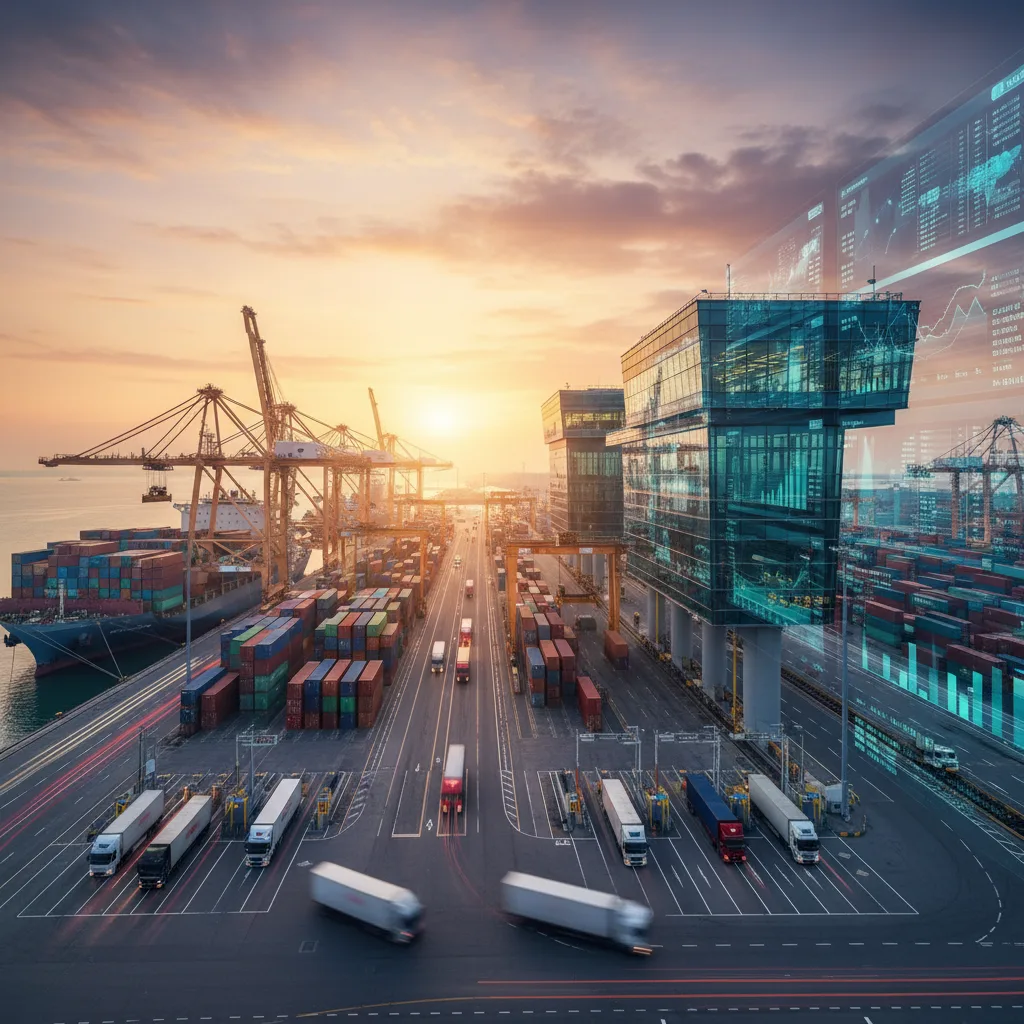
AI’s influence on international trade is already palpable. Algorithms power predictive analytics for demand forecasting, optimize shipping routes, and manage inventory across continents. Machine learning enhances customs processing by identifying anomalies and potential illicit trade, while natural language processing (NLP) assists in translating and analyzing vast quantities of trade documentation. The rise of autonomous agents and smart contracts promises to automate entire transaction lifecycles, from negotiation to payment and delivery, with minimal human intervention.
This surge in AI-driven trade generates an unprecedented volume of data, creating new economic value but also raising critical questions about ownership, privacy, and sovereignty. Digital trade, increasingly facilitated and enhanced by AI, blurs geographical boundaries, making traditional notions of jurisdiction and physical presence less relevant. As AI systems become more sophisticated, they are not just tools but active participants in the global marketplace, necessitating a fundamental re-evaluation of the legal frameworks designed for a pre-AI world.
AI’s Impact on International Trade Law: New Challenges and Opportunities
The advent of AI introduces a dual-edged sword to the realm of international trade law. It presents unparalleled opportunities for efficiency and innovation, yet simultaneously throws up complex legal dilemmas that existing frameworks are ill-equipped to handle. The future of international trade law, therefore, hinges on our ability to adapt and innovate in response to AI.
Navigating New Legal Frontiers
One of the most pressing challenges is jurisdiction. When an AI system, operating across multiple servers and national borders, causes harm or breaches a contract, which country’s laws apply? Is it where the AI was developed, where it is hosted, where the impact occurred, or where the user is located? The nebulous nature of AI operations defies traditional territorial principles.
Liability is another critical concern. In a scenario where an autonomous AI agent makes a trading decision that results in significant financial loss or a violation of trade sanctions, who is accountable? Is it the developer of the AI, the owner, the operator, or the data provider? Current legal doctrines struggle to attribute responsibility to non-human entities, demanding new approaches to corporate and product liability.
Data governance becomes exponentially more complex with AI. Cross-border data flows, essential for AI training and operation, clash with national data sovereignty laws, privacy regulations like GDPR, and varying intellectual property protections for AI-generated content. Ensuring secure, ethical, and legally compliant data sharing across jurisdictions is paramount.
Furthermore, algorithmic bias can inadvertently lead to discrimination in trade, affecting market access or competitive conditions. If an AI system, trained on biased data, favors certain suppliers or markets, it could violate non-discrimination principles enshrined in international trade agreements. The potential for regulatory arbitrage, where countries compete to offer the most AI-friendly (and potentially least regulated) environments, also poses a risk to global legal coherence.
Seizing the Opportunities
Despite these challenges, AI offers immense opportunities to enhance international trade law. Automated compliance systems can leverage AI to screen transactions against complex trade regulations, sanctions lists, and customs tariffs in real-time, drastically reducing human error and processing times. This proactive approach can help businesses avoid costly penalties and facilitate smoother trade flows.
AI can also revolutionize predictive policy analysis. By simulating the economic and legal impacts of proposed trade agreements or regulatory changes, AI can provide policymakers with invaluable insights, leading to more informed and effective decision-making.
The rise of smart contracts, powered by blockchain and AI, promises to automate the execution and enforcement of trade agreements. These self-executing contracts, where terms are directly written into code, can reduce disputes by ensuring transparent, immutable, and automated compliance with agreed-upon conditions, from payment upon delivery to quality verification.
Finally, AI can facilitate the development and implementation of new digital trade agreements that specifically address AI-related issues, such as cross-border data flows, AI ethics, and interoperability standards, thereby creating a more robust and future-proof global trade framework.

Reshaping Dispute Settlement with AI: Efficiency, Access, and Ethical Considerations
The mechanisms for resolving disputes in international trade are notoriously slow, costly, and complex. Artificial intelligence and the future of international trade law and dispute settlement are inextricably linked, with AI poised to profoundly transform how trade disputes are managed and resolved.
Enhancing Efficiency and Accessibility
AI-powered tools are already making inroads into legal processes. AI-powered legal research platforms can analyze vast databases of treaties, case law, and legal scholarship in minutes, identifying relevant precedents and arguments with unparalleled speed and accuracy. This significantly reduces the time and cost associated with preparing for arbitration or litigation.
Predictive analytics for outcomes can help parties assess the likelihood of success in a dispute, guiding their negotiation strategies and settlement decisions. By analyzing historical data on similar cases, AI can offer data-driven insights into potential rulings, encouraging early, amicable resolutions.
Automated document review dramatically streamlines the discovery phase in complex trade disputes. AI can quickly sift through millions of documents, identifying relevant evidence, redacting sensitive information, and highlighting key clauses, saving countless hours of human labor.
Perhaps one of the most transformative applications is in Online Dispute Resolution (ODR). AI-powered ODR platforms can facilitate mediation and arbitration for smaller, high-volume trade disputes, offering accessible, cost-effective solutions to businesses worldwide. These platforms can guide parties through negotiation, suggest settlement options, and even, in some cases, provide automated decisions for low-value claims, greatly expanding access to justice.
Furthermore, the integration of smart contracts directly into trade agreements can fundamentally alter dispute settlement. By automating the fulfillment of contractual terms, many potential disputes can be avoided entirely. When disputes do arise, the immutable record provided by blockchain can offer clear evidence, simplifying the fact-finding process for arbitrators.

Addressing New Challenges in Dispute Settlement
While AI offers significant advantages, its integration into dispute settlement also raises critical concerns. Ensuring due process and fairness is paramount. If AI algorithms are used to suggest or even make decisions, transparency about their operation, the data they are trained on, and the potential for bias becomes crucial. Parties must have confidence that the AI is impartial and its reasoning is comprehensible.
The necessity for human oversight remains undeniable, especially in complex, high-stakes international trade disputes involving nuanced legal interpretations or sensitive geopolitical considerations. AI should augment, not entirely replace, human judgment, ensuring that ethical considerations, contextual factors, and unforeseen circumstances are adequately addressed.
Data security and confidentiality are also major concerns. International trade disputes often involve highly sensitive commercial information. The use of AI tools requires robust cybersecurity measures to protect this data from breaches or misuse. Finally, gaining acceptance by parties for AI-driven outcomes will require building trust through transparent processes, rigorous testing, and clear accountability mechanisms.
Global Governance and the Path Forward
The fragmented nature of international law means that a coordinated global response is essential to harness AI’s potential while mitigating its risks in trade. International organizations like the World Trade Organization (WTO), the United Nations Commission on International Trade Law (UNCITRAL), and the World Intellectual Property Organization (WIPO) have crucial roles to play in developing common standards, guidelines, and model laws.
The future demands a shift towards technology-neutral and adaptable legal frameworks that can accommodate rapid technological advancements without requiring constant legislative overhauls. This includes discussions on principles for cross-border data flow, ethical AI development, and harmonized approaches to AI liability. Regional initiatives, such as the European Union’s AI Act, represent initial steps towards comprehensive AI regulation, but international interoperability will be key.
The concept of regulatory sandboxes can allow for controlled experimentation with AI technologies in trade, providing valuable insights for future policy development. Fostering international dialogue and collaboration among governments, industry, academia, and civil society will be vital to build consensus on best practices and to prevent a patchwork of conflicting national regulations that could stifle innovation and trade.
Practical Steps for Businesses and Policymakers
To navigate this evolving landscape, proactive engagement is crucial for all stakeholders.
For Businesses:
- Invest in AI Literacy: Equip legal, compliance, and trade teams with a fundamental understanding of AI technologies and their legal implications.
- Adopt AI-Powered Tools: Explore and integrate AI solutions for compliance screening, contract analysis, and legal research to enhance efficiency and reduce risk.
- Review Contracts: Update international trade contracts to include specific clauses addressing AI-related issues such as data ownership, liability for autonomous agents, and dispute resolution mechanisms for AI-generated disputes.
- Engage Legal Counsel: Work with legal experts specializing in AI law and international trade to ensure compliance and strategic positioning.
- Participate in Industry Standards: Contribute to and adopt industry best practices for ethical AI deployment and data governance in trade.
For Policymakers:
- Foster International Dialogue: Actively participate in multilateral forums to develop harmonized international standards and principles for AI in trade.
- Develop Flexible Regulations: Create technology-neutral legal frameworks that can adapt to rapid AI advancements, focusing on outcomes rather than specific technologies.
- Invest in Digital Infrastructure and Skills: Support the development of robust digital infrastructure and a skilled workforce capable of operating and regulating AI in trade.
- Promote Ethical AI: Advocate for and implement policies that embed ethical considerations, transparency, and accountability into the development and deployment of AI systems used in international trade.
- Consider Regulatory Sandboxes: Establish controlled environments for testing new AI technologies in trade to gather data and inform future regulatory approaches.
Conclusion
The intersection of artificial intelligence and the future of international trade law and dispute settlement represents one of the most significant legal and economic frontiers of our time. AI promises to unlock unprecedented efficiencies, foster new forms of commerce, and streamline dispute resolution processes. However, it simultaneously presents profound challenges related to jurisdiction, liability, data governance, and ethical considerations.
Successfully navigating this transformation requires a proactive, collaborative, and adaptable approach from all stakeholders. By fostering international cooperation, developing flexible legal frameworks, embracing ethical AI principles, and investing in human and technological capabilities, we can harness the immense potential of AI to build a more efficient, equitable, and resilient global trading system. The future of international trade will undoubtedly be shaped by AI, and our collective ability to thoughtfully govern this powerful technology will determine whether it leads to greater prosperity and cooperation, or to increased complexity and contention.