
Ancient Rome: Rise, Fall, & Legacy of a Great Empire
Explore the epic saga of ancient Rome, from its humble origins to its vast empire. Uncover the ambition, innovation, and eventual decline that shaped one of history's greatest civilizations.
The Colossal Saga: Understanding Ancient Rome’s Rise and Fall of an Empire
Few civilizations have captured the human imagination quite like ancient Rome. Its story is an epic narrative of ambition, innovation, conquest, and eventual decline – a compelling testament to the cyclical nature of power and the enduring impact of human endeavor. From its humble beginnings as a small settlement on the Tiber River to the sprawling empire that dominated the known world, the ancient Rome rise and fall of an empire offers invaluable lessons on governance, military strategy, culture, and societal resilience. This comprehensive guide delves into the pivotal moments, key figures, and complex factors that shaped one of history’s most influential civilizations.
From Village to Republic: The Genesis of Roman Power
The story of Rome begins, according to legend, in 753 BCE with the twin brothers Romulus and Remus. While mythological, this founding narrative underscores Rome’s self-perception as a city destined for greatness. Initially a monarchy ruled by seven kings, Rome transitioned to a Republic in 509 BCE, an pivotal shift that laid the groundwork for its future expansion.
The Roman Republic was a sophisticated system of governance, characterized by its emphasis on civic duty, rule of law, and a balance of power. Key institutions included:
- The Senate: An advisory body composed of elder statesmen, holding immense influence.
- Consuls: Two annually elected chief magistrates who commanded the army and presided over the Senate.
- Popular Assemblies: Bodies where citizens could vote on laws and elect officials, though often dominated by the patrician (aristocratic) class.
This republican structure, combined with a highly adaptable and disciplined military, enabled Rome to gradually assert its dominance over the Italian peninsula. By the 3rd century BCE, Rome was no longer merely a city-state but a regional power. This ascendancy brought it into direct conflict with Carthage, a formidable maritime power in North Africa. The Punic Wars (264-146 BCE) were a series of brutal and protracted conflicts that tested Rome’s resilience to its limits. Despite facing brilliant Carthaginian generals like Hannibal, Rome ultimately triumphed, securing its control over the Mediterranean and emerging as the undisputed superpower of the ancient world. This period forged the Roman character – resilient, practical, and relentlessly ambitious.
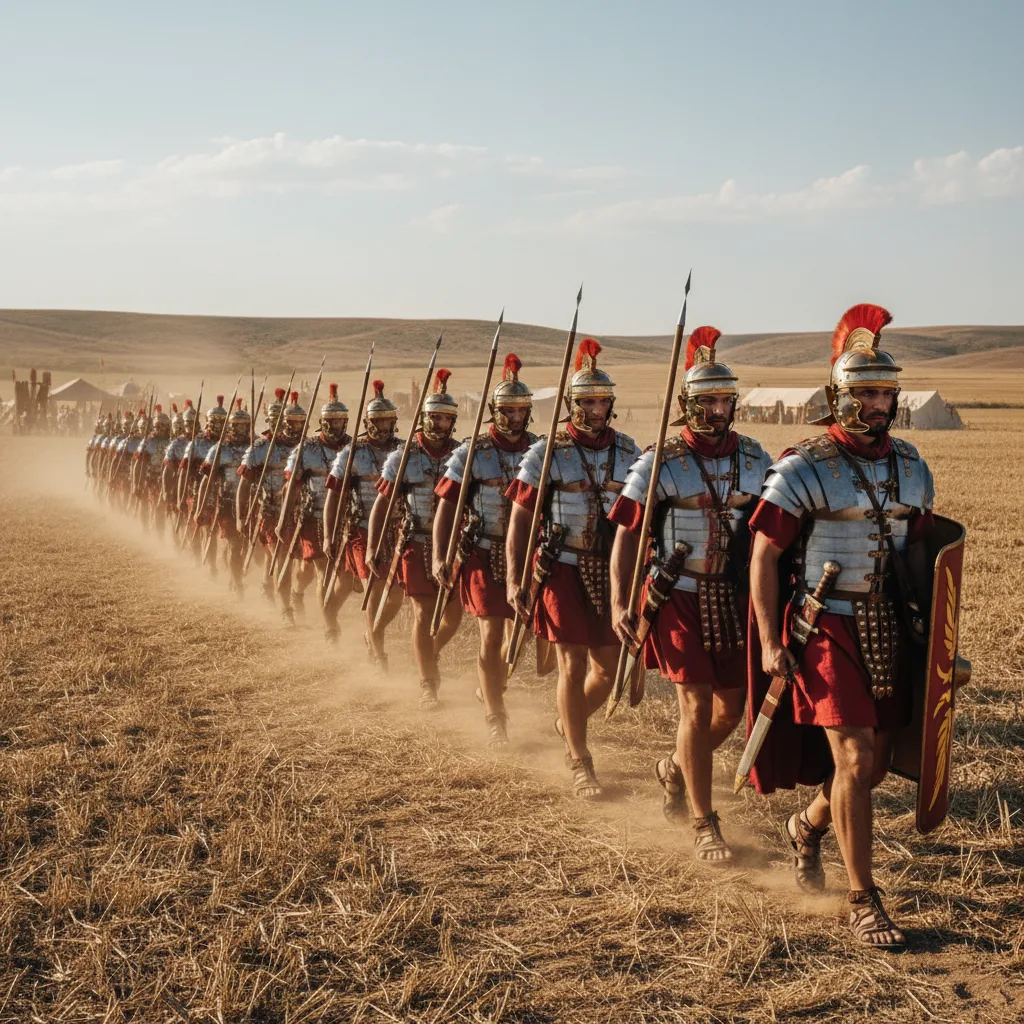
Forging an Empire: Conquest, Consolidation, and the Pax Romana
The vast wealth and territories acquired during the Republican era, while bringing unprecedented power, also sowed seeds of internal strife. The late Republic was marked by intense political rivalries, social inequalities, and civil wars, as ambitious generals like Marius, Sulla, Pompey, and Crassus vied for power. The most famous of these was Julius Caesar, whose military genius and populist appeal threatened the very foundations of the Republic. His assassination in 44 BCE plunged Rome into further chaos, setting the stage for the rise of his adopted heir, Octavian.
Octavian, through cunning political maneuvering and military victories, consolidated his power, eventually adopting the title of Augustus in 27 BCE. This marked the official transition from Republic to Empire, and the beginning of the Principate. Augustus skillfully maintained the illusion of republican institutions while centralizing power, ushering in an era known as the Pax Romana (Roman Peace). Lasting for over two centuries (27 BCE - 180 CE), this period was the zenith of Roman power and prosperity.
Under the Pax Romana, the Roman Empire reached its greatest territorial extent, stretching from Britain to Mesopotamia, and from North Africa to the Rhine and Danube rivers. This vast domain was unified by:
- An unparalleled network of Roman roads, facilitating trade, communication, and military movement.
- Advanced aqueducts and urban planning, bringing clean water and sanitation to burgeoning cities.
- A sophisticated legal system that influenced subsequent European law.
- A common culture, language (Latin), and currency that fostered economic integration.
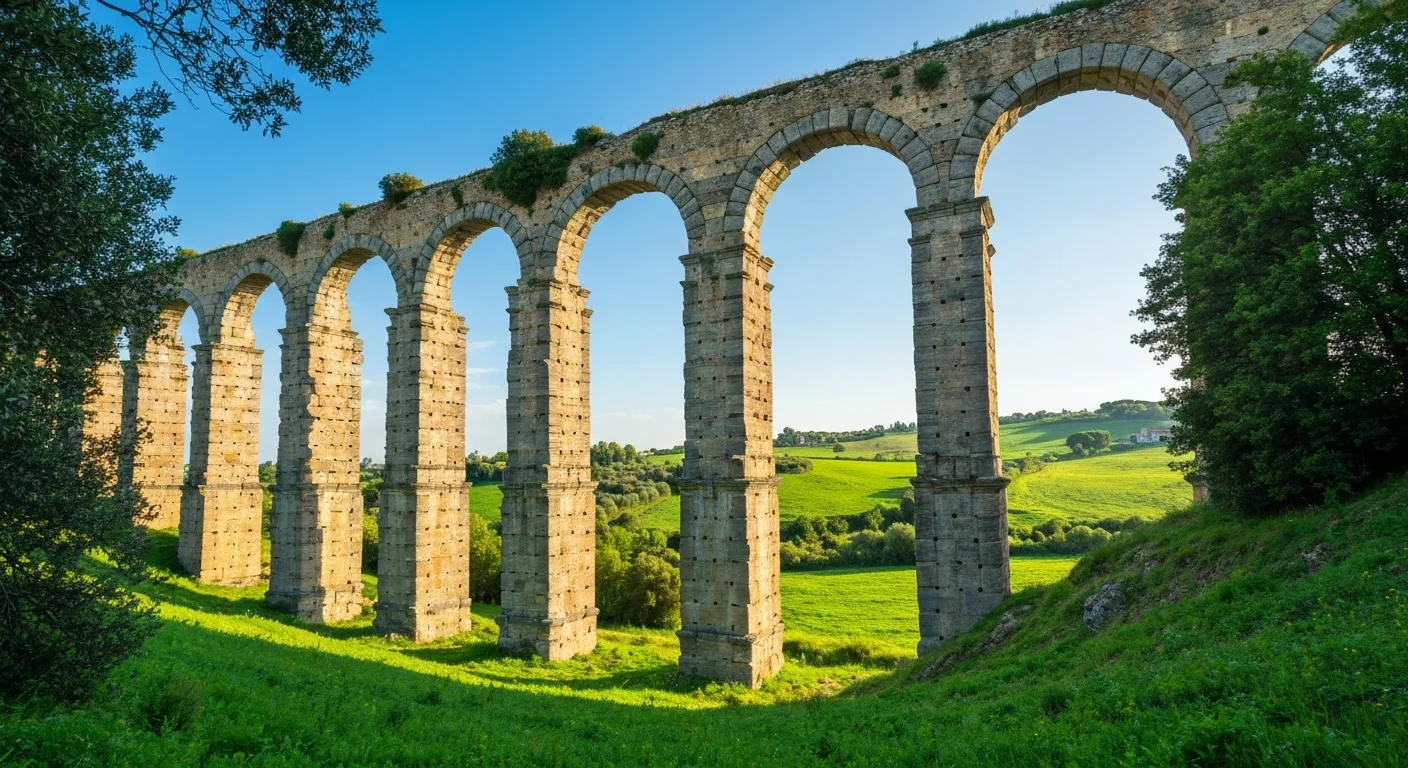
Emperors like Trajan, Hadrian, and Marcus Aurelius presided over a period of remarkable stability, cultural flourishing, and monumental construction. The Colosseum, the Pantheon, and countless temples and forums stand as enduring testaments to this golden age, symbolizing the might and ingenuity of the Roman Empire.
Cracks in the Foundation: Internal Strife and the Seeds of Decline
Even at its peak, the Roman Empire harbored vulnerabilities that would eventually contribute to its long, slow decline. The end of the Pax Romana with the death of Marcus Aurelius in 180 CE signaled the beginning of a more tumultuous era. The third century CE, in particular, was a period of profound crisis.
Known as the Crisis of the Third Century, this period (235-284 CE) saw an astonishing succession of over 20 legitimate emperors in just 49 years, most of whom met violent ends. This rampant political instability was fueled by:
- Military interference: Armies frequently proclaimed their own generals as emperors, leading to constant civil wars.
- Economic woes: The constant warfare, coupled with a lack of new conquests to provide wealth and slaves, led to severe inflation. Emperors debased the coinage (reducing its silver content) to pay soldiers, further eroding public trust and economic stability. Trade routes became less secure, and local economies struggled under heavy taxation.
- Disease and depopulation: Plagues, such as the Antonine Plague, decimated the population, leading to labor shortages and a weakened tax base.
- Military overstretch: The Empire’s vast borders, known as the limes, were increasingly difficult and expensive to defend against growing pressures from various Germanic tribes (Goths, Alamanni, Franks) and the Sasanian Persian Empire in the East.
While the Empire managed to survive this crisis, it emerged fundamentally altered, with its central authority weakened and its resources strained. The seeds of its eventual fall had been sown.
The Empire Divided: Barbarian Invasions and the Western Collapse
The late 3rd and 4th centuries saw attempts at reform and stabilization, notably under Emperor Diocletian (284-305 CE). Recognizing the immense size and administrative challenges of the Empire, Diocletian implemented the Tetrarchy, dividing the Empire into four administrative zones, each with its own emperor (two Augusti and two Caesars). While this initially brought stability, it also formalized a division that would eventually become permanent.
Another pivotal figure was Constantine the Great (306-337 CE). He reunified the Empire, legalized Christianity with the Edict of Milan (313 CE), and most significantly, established a new capital city in the East: Constantinople (modern-day Istanbul) in 330 CE. This move further shifted the Empire’s center of gravity eastward, away from the traditional heartland of Rome.

Despite these reforms, the pressures on the Western Roman Empire intensified. The late 4th and 5th centuries witnessed a series of massive barbarian migrations. Driven by the expansion of the Huns from Central Asia, various Germanic tribes sought refuge or new lands within Roman territory. These included:
- The Visigoths, who, after being mistreated by Roman officials, revolted and famously sacked the city of Rome itself in 410 CE. This event sent shockwaves throughout the Roman world, shattering the illusion of the Eternal City’s invincibility.
- The Vandals, who established a kingdom in North Africa and launched their own devastating sack of Rome in 455 CE.
- The Franks, Burgundians, and Angles/Saxons, who established kingdoms in Gaul and Britain, gradually eroding Roman control.
The Western Roman Empire became increasingly fragmented, with provinces falling under the control of various barbarian warlords. Roman emperors in the West became mere figureheads, often controlled by powerful barbarian generals.
Echoes of Eternity: Rome’s Enduring Legacy Beyond the Fall
The traditional date for the fall of the Western Roman Empire is 476 CE, when the Germanic chieftain Odoacer deposed the last Western Roman Emperor, Romulus Augustulus, and sent the imperial regalia to Constantinople. However, this was not a sudden, cataclysmic event, but rather the culmination of centuries of decline, a complex interplay of multiple factors:
- Economic collapse: Hyperinflation, declining trade, a shrinking tax base, and the loss of productive provinces starved the Western Empire of resources.
- Military weakness: Over-reliance on barbarian mercenaries, declining discipline, and an inability to recruit sufficient Roman citizens left the Empire vulnerable.
- Political instability and corruption: Weak emperors, constant usurpations, and a bloated bureaucracy hampered effective governance.
- Social and demographic changes: Depopulation due to plagues and warfare, growing inequality, and a loss of civic participation contributed to societal decay.
- Barbarian invasions: While not the sole cause, the relentless pressure from migrating tribes ultimately delivered the final blows.
Crucially, only the Western Roman Empire fell. The Eastern Roman Empire, centered in Constantinople, continued to thrive for another thousand years, evolving into what historians call the Byzantine Empire. It preserved Roman law, culture, and administrative traditions, serving as a bulwark against invasions and a bridge between the ancient and medieval worlds.
Despite the collapse of its western half, the legacy of Rome is indelible and continues to shape the modern world:
- Roman Law: Principles of justice, property, and civil rights, codified in works like the Justinian Code, form the bedrock of legal systems across Europe and beyond.
- Language: Latin, the language of Rome, evolved into the Romance languages (Italian, French, Spanish, Portuguese, Romanian) and heavily influenced English vocabulary.
- Architecture and Engineering: Roman innovations in concrete, arches, domes, and urban planning are still evident in structures worldwide.
- Governance and Administration: Concepts of republicanism, citizenship, and centralized administration owe much to Roman precedents.
- Christianity: Rome’s adoption of Christianity transformed it from a persecuted sect into a global religion, with the Roman Catholic Church inheriting much of the Empire’s administrative structure.
Conclusion
The ancient Rome rise and fall of an empire is a saga of unparalleled ambition and profound consequence. From its republican virtues and military might to its imperial grandeur and eventual fragmentation, Rome’s journey offers a mirror to humanity’s greatest achievements and most tragic failings. Its story reminds us that even the most powerful civilizations are subject to the forces of change, internal dissent, and external pressures. Yet, the enduring legacy of Rome – in our laws, languages, architecture, and political thought – ensures that this colossal empire, though fallen, remains eternally present, continuing to inspire, educate, and captivate us centuries later.