
Cultural Differences: Asia vs Europe in Economy, AI & Geopolitics
Explore the vast cultural differences between Asia and Europe, impacting economy, finance, science, AI, fashion, geopolitics, and history in our globalized world.
Bridging Continents: Understanding Cultural Differences Between Asia and Europe
The world is a tapestry woven from diverse cultures, each thread adding unique patterns and hues. When we talk about cultural differences between Asia and Europe, we’re exploring two vast continents, each home to myriad nations, languages, and traditions. Understanding these distinctions is not just an academic exercise; it’s a crucial skill in our increasingly globalized world, impacting everything from international business and diplomacy to travel and personal relationships. This comprehensive guide from TrendSeek aims to illuminate the fascinating contrasts and subtle nuances that define the cultural landscapes of Asia and Europe, offering insights to navigate them with greater awareness and respect.
Core Values and Worldviews: Shaping the Cultural Differences Between Asia and Europe
At the heart of any culture lie its fundamental values and how its people perceive the world. This is perhaps where the most significant cultural differences between Asia and Europe emerge.
-
Individualism vs. Collectivism:
- Europe (generally individualistic): Many European societies, particularly in the West, prioritize the individual. Emphasis is placed on personal achievement, self-reliance, and individual rights. Decisions are often made based on personal preferences and goals, and privacy is highly valued. For example, in countries like Germany or Sweden, personal space is respected, and expressing one’s own opinion is encouraged.
- Asia (generally collectivistic): Most Asian cultures, from China to Japan to India, lean heavily towards collectivism. The group (family, community, company) takes precedence over the individual. Harmony, interdependence, and loyalty to the group are paramount. Decisions are often made with the collective good in mind, and “saving face” – maintaining one’s own or another’s dignity – is a critical social consideration. For instance, in many Asian workplaces, team consensus is more valued than individual brilliance.
-
Hierarchy and Authority (Power Distance):
- Europe (varied, often lower power distance): While there are hierarchical structures, many European countries (especially Nordic nations) tend to have lower power distance, meaning there’s a greater expectation of equality and less deference to authority. Employees might openly question managers, and leaders are often seen as facilitators rather than absolute rulers.
- Asia (generally higher power distance): A strong respect for hierarchy and authority is a hallmark of many Asian cultures. Age, position, and experience command deep deference. This is evident in communication styles, decision-making processes, and social interactions, where junior members might not challenge seniors, and elders are highly revered. Think of the intricate honorifics used in Japanese or Korean to address superiors.

- Time Perception:
- Europe (monochronic): Many European cultures, particularly those influenced by German efficiency, operate on a monochronic view of time. Time is seen as linear, segmented, and a valuable commodity. Punctuality is crucial, schedules are strictly adhered to, and people prefer to do one thing at a time.
- Asia (often polychronic): While some Asian cultures (e.g., Japan) are highly punctual, many others operate on a more polychronic view. Time is seen as more fluid and flexible. Relationships and current interactions often take precedence over strict schedules. Meetings might overlap, and deadlines can be seen as targets rather than rigid commitments.
Communication Styles and Social Etiquette Across Continents
How people interact and convey messages forms another significant layer of cultural differences between Asia and Europe. Misunderstandings often stem from contrasting communication norms.
-
Direct vs. Indirect Communication:
- Europe (often direct): Many European cultures, particularly Germanic and Nordic ones, favor direct communication. Messages are explicit, clear, and to the point. People are expected to say what they mean, and ambiguity can be frustrating.
- Asia (often indirect/high-context): Most Asian cultures are high-context, meaning much of the communication is conveyed through non-verbal cues, shared understanding, and implied meanings rather than explicit words. Direct “no” can be considered rude; therefore, people might use phrases like “I’ll think about it” or “it might be difficult” to convey refusal. Understanding the context, relationship, and body language is paramount.
-
Non-Verbal Communication:
- Eye Contact: In much of Europe, direct eye contact signifies honesty and engagement. In many Asian cultures, prolonged direct eye contact, especially with a superior or elder, can be seen as disrespectful or challenging.
- Gestures: A gesture that is benign in Europe might be offensive in Asia, and vice-versa. For example, pointing with an index finger is common in Europe but can be considered impolite in some Asian countries where a whole hand or chin gesture is preferred.
- Personal Space: Europeans generally maintain a moderate personal space. In some Asian cities, particularly crowded ones, the concept of personal space in public might be smaller, while in private interactions, distance can signify respect.
-
Social Rituals and Etiquette:
- Greetings: Handshakes are common in Europe, often firm and direct. In Asia, greetings vary widely from bows (Japan, Korea) to a slight nod, a “wai” (Thailand), or a namaste (India), often accompanied by less physical contact.
- Gift-Giving: In Asia, gift-giving is often an elaborate ritual, with specific protocols regarding presentation, wrapping, and when to open the gift (often not in front of the giver). In Europe, while appreciated, it’s generally less ritualistic.
- Dining Etiquette: Table manners differ significantly. Using chopsticks in many parts of Asia, specific rules about sharing food, slurping noodles (can be a sign of enjoyment in some Asian cultures but rude in Europe), and toasting rituals are all distinct.
Navigating Cultural Differences Between Asia and Europe in Business
For businesses operating internationally, understanding cultural nuances is not merely polite; it’s essential for success. The business landscape reflects many of the aforementioned cultural differences between Asia and Europe.
-
Relationship Building vs. Task Orientation:
- Europe (often task-oriented): Many European business cultures prioritize efficiency, contracts, and getting straight to the point. While relationships are valued, they often develop after a professional rapport is established.
- Asia (relationship-oriented): In many Asian countries, building strong personal relationships (“Guanxi” in China, “Wa” in Japan) is a prerequisite for successful business. Trust is built over time through social interactions, dinners, and personal gestures before significant business deals are discussed.
-
Negotiation Styles:
- Europe: Negotiations tend to be more direct, focusing on logical arguments, facts, and figures. The final contract is often seen as the definitive agreement.
- Asia: Negotiations can be longer and more nuanced. Saving face, maintaining harmony, and understanding implied meanings are crucial. A signed contract might be seen as a starting point for an ongoing relationship that allows for future adjustments.
-
Decision-Making:
- Europe (varied, often individual or small group): Decisions might be made by an individual leader or a small executive team, often after consulting with relevant stakeholders.
- Asia (often consensus-driven): Many Asian companies employ a consensus-based decision-making process (e.g., “Ringi-sho” in Japan), where proposals are circulated and approved by various levels before a final decision is made. This ensures buy-in but can be time-consuming for Westerners.
-
Work-Life Balance:
- Europe: Many European countries, particularly in Scandinavia and Western Europe, champion a strong work-life balance, with defined working hours, generous vacation policies, and an emphasis on personal time.
- Asia: Work cultures in many Asian countries (e.g., Japan, South Korea, China) often involve longer working hours, strong dedication to the company, and a blurring of lines between personal and professional life, especially for career advancement. Overtime is common, and social events with colleagues are often mandatory.
Family, Community, and Lifestyle: A Glimpse into Daily Life

The fabric of daily life, from family structures to public behavior, showcases further cultural differences between Asia and Europe.
-
Family Importance:
- Europe (nuclear family): The nuclear family (parents and children) is typically the primary unit. While extended family ties exist, independence and leaving the parental home at a young age are common.
- Asia (extended family & filial piety): Extended families are often deeply integrated, with multiple generations living together or in close proximity. Filial piety – deep respect and care for elders – is a cornerstone of many Asian societies, influencing housing, financial decisions, and caregiving.
-
Community and Public Behavior:
- Europe: While community spirit exists, individual rights and privacy are paramount. Public spaces generally emphasize order, queuing, and moderate noise levels.
- Asia: Community cohesion and collective responsibility are often highly valued. Public behavior might vary, with bustling markets and louder conversations being common in some areas, while others emphasize quiet contemplation (e.g., temples). The concept of collective responsibility often means that individuals are expected to contribute to the well-being of the broader community.
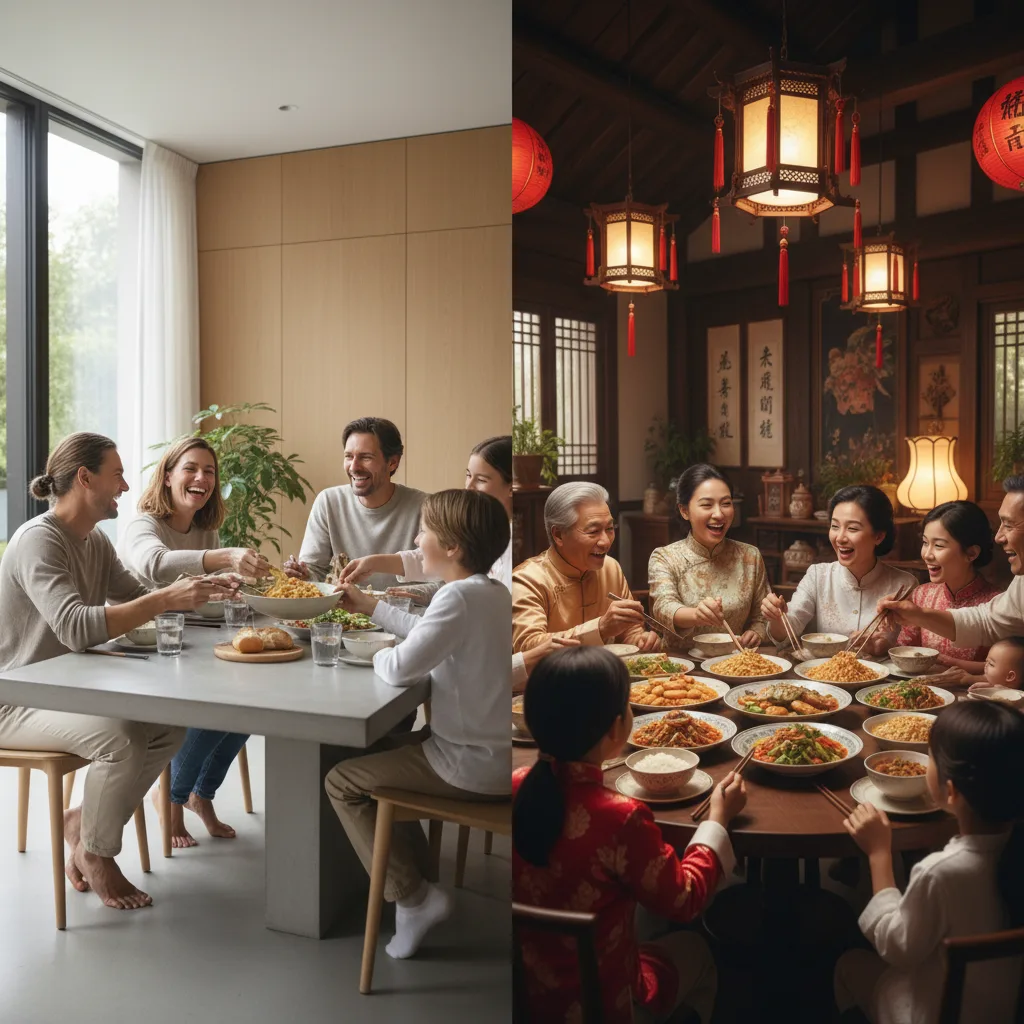
- Food Culture:
- Europe: Dining often involves individual plates, cutlery, and a focus on distinct courses. Wine culture is prevalent in many regions.
- Asia: Sharing dishes is common, especially in Chinese, Korean, and Indian cuisine. Chopsticks are widely used. Food is often a central element of social gatherings and celebrations, with specific rituals and superstitions surrounding meal times.
Education and Innovation: Shaping Future Generations
The approaches to learning and fostering creativity also highlight distinct cultural differences between Asia and Europe.
-
Educational Systems:
- Europe: Many European systems emphasize critical thinking, creativity, and independent learning from a young age. While academic rigor is present, there’s often a focus on holistic development and less emphasis on rote memorization.
- Asia: Many Asian education systems are known for their intensity, high academic pressure, and emphasis on rote learning, memorization, and standardized testing. Success in exams is often seen as the primary pathway to social mobility and career success.
-
Innovation and Risk-Taking:
- Europe: Innovation is often driven by individual ingenuity, research and development, and a tolerance for failure as a learning opportunity. Entrepreneurship is encouraged, and startups are a significant part of many economies.
- Asia: While innovation is booming in Asia, the approach can differ. In some contexts, innovation might be more incremental, building upon existing technologies, or driven by large corporate entities. The fear of failure, due to its impact on family and “face,” can sometimes make individual risk-taking less common, though this is rapidly changing.
Conclusion
The cultural differences between Asia and Europe are profound and multifaceted, reflecting centuries of distinct historical, philosophical, and social development. From the individualistic ethos of many European nations to the collectivistic heart of Asian societies, from direct communication styles to nuanced indirect expressions, these contrasts shape every aspect of life. Understanding these distinctions is not about labeling one culture as “better” or “worse” but about appreciating the richness of human diversity. For anyone engaging with these vibrant continents – whether for business, travel, or personal enrichment – cultivating an open mind, practicing active listening, and showing genuine respect for local customs are the keys to bridging divides and fostering meaningful connections. The journey of cultural understanding is an ongoing one, promising endless discovery and deeper appreciation for our global community.