
Surprising Cultural Differences Around the World: A Global Guide
Explore surprising cultural differences worldwide, from subtle customs to deeply ingrained behaviors. Understand global traditions, beliefs, and actions to navigate diverse societies better.
Navigating the Unexpected: Cultural Differences Around the World That Will Surprise You
The world is a magnificent tapestry woven with countless cultures, each thread representing unique traditions, beliefs, and behaviors. While travel broadens the mind, and global connectivity brings us closer, it’s often the subtle, unspoken cultural differences around the world that will surprise you the most. These aren’t just quaint customs; they are deeply ingrained patterns of thought and action that shape how people interact, communicate, and perceive reality. Understanding these nuances is not just a polite gesture; it’s essential for effective communication, successful business, and enriching personal experiences in our increasingly interconnected world.
This comprehensive guide from TrendSeek will delve into some of the most fascinating and often surprising cultural distinctions, offering insights to help you navigate diverse global landscapes with greater awareness and respect. Prepare to challenge your assumptions and discover a world far richer and more complex than you might imagine.
The Nuances of Non-Verbal Communication: Cultural Differences Around the World That Will Surprise You
Communication is far more than just spoken words. Our bodies, our gestures, and even our silence speak volumes, often conveying messages that contradict or amplify our verbal expressions. These non-verbal cultural differences around the world that will surprise you can lead to significant misunderstandings if not recognized.
- Eye Contact: In many Western cultures, direct eye contact signifies honesty, confidence, and engagement. However, in some Asian, Middle Eastern, and Latin American cultures, prolonged direct eye contact can be seen as aggressive, disrespectful, or challenging, particularly when interacting with elders or superiors. For example, in Japan, indirect eye contact is often preferred as a sign of respect.
- Gestures: A simple hand gesture can mean drastically different things across borders.
- The “OK” sign (thumb and forefinger forming a circle) is positive in the US, but it can be an insult in Brazil, Germany, and Russia (meaning “zero” or “worthless”). In some Middle Eastern countries, it’s considered highly offensive.
- The “thumbs-up” gesture, universally understood as approval in many Western nations, is considered vulgar in parts of the Middle East, West Africa, and South America.
- Pointing with an index finger, common in the West, is considered rude in many Asian and African cultures, where people might use their entire hand or chin to indicate direction.
- Personal Space (Proxemics): The invisible bubble of personal space varies dramatically. In countries like Japan, China, and Nordic nations, people generally maintain a larger personal distance. Conversely, in many Latin American, Middle Eastern, and Southern European cultures, standing closer during conversation is normal and expected, with a greater tolerance for physical touch. What feels like an invasion of space to one person might feel like aloofness to another.
- Silence: While silence can be awkward in many Western conversations, it’s highly valued in some cultures. In Finland, for instance, silence is a comfortable and meaningful part of communication, allowing for reflection and thoughtful responses. In contrast, in many Mediterranean cultures, a vibrant, continuous flow of conversation is the norm, and silence might indicate discomfort or disagreement.

Unwritten Rules: Social Etiquette and Cultural Differences Around the World That Will Surprise You
Beyond communication, the daily rituals of social interaction are rife with unwritten rules and cultural differences around the world that will surprise you. These govern everything from how we greet each other to how we share a meal.
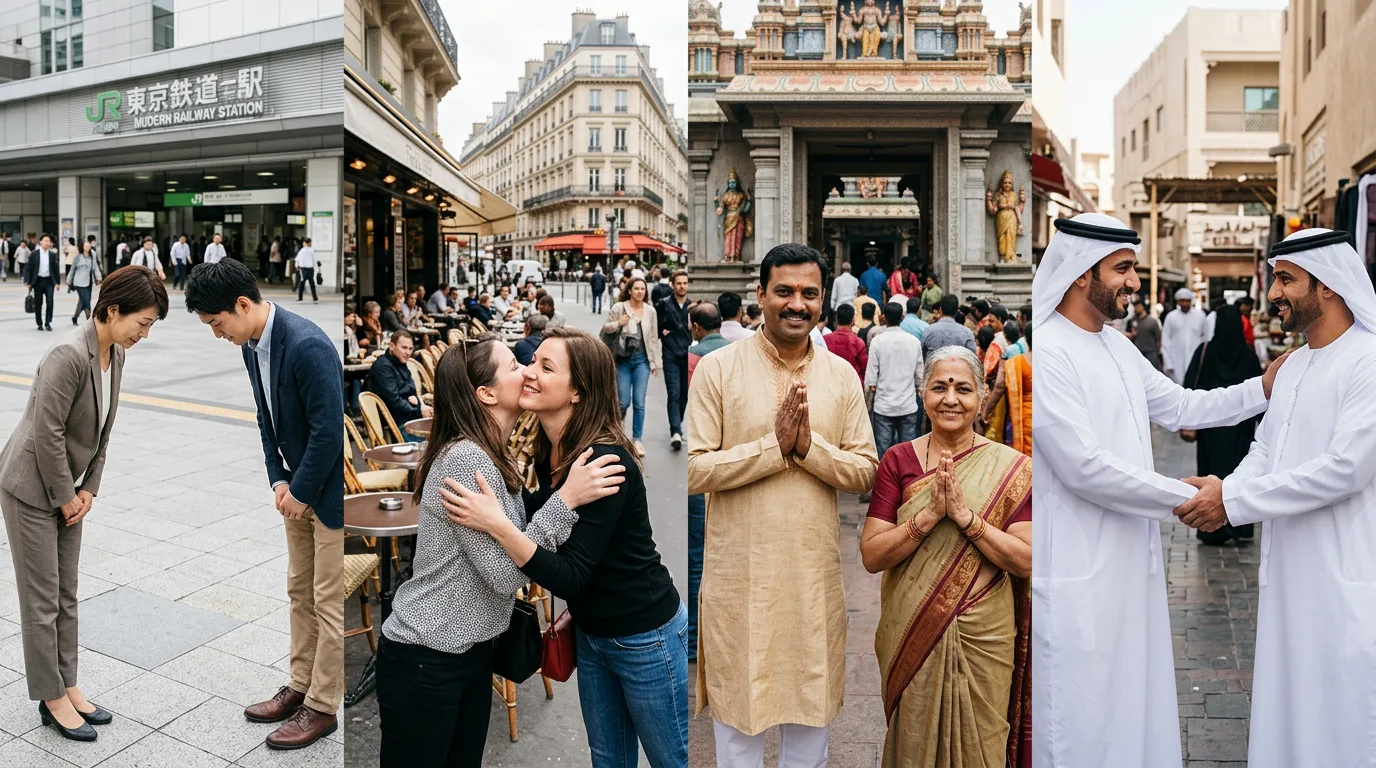
- Greetings: A simple handshake is far from universal.
- In France, a light double-cheek kiss (or bise) is common among friends and even new acquaintances, but the number of kisses varies by region.
- In Japan, a bow is the traditional greeting, with the depth and duration of the bow indicating respect. A business card exchange is also a formal ritual, where the card is presented and received with both hands, read carefully, and never immediately put away.
- In India, the Namaste (palms pressed together, fingers pointing upwards, thumbs close to the chest, with a slight bow) is a respectful greeting.
- In the Middle East, a gentle handshake is common, often accompanied by a hand placed over the heart as a sign of sincerity.
- Dining Etiquette: Mealtime is a minefield of potential faux pas.
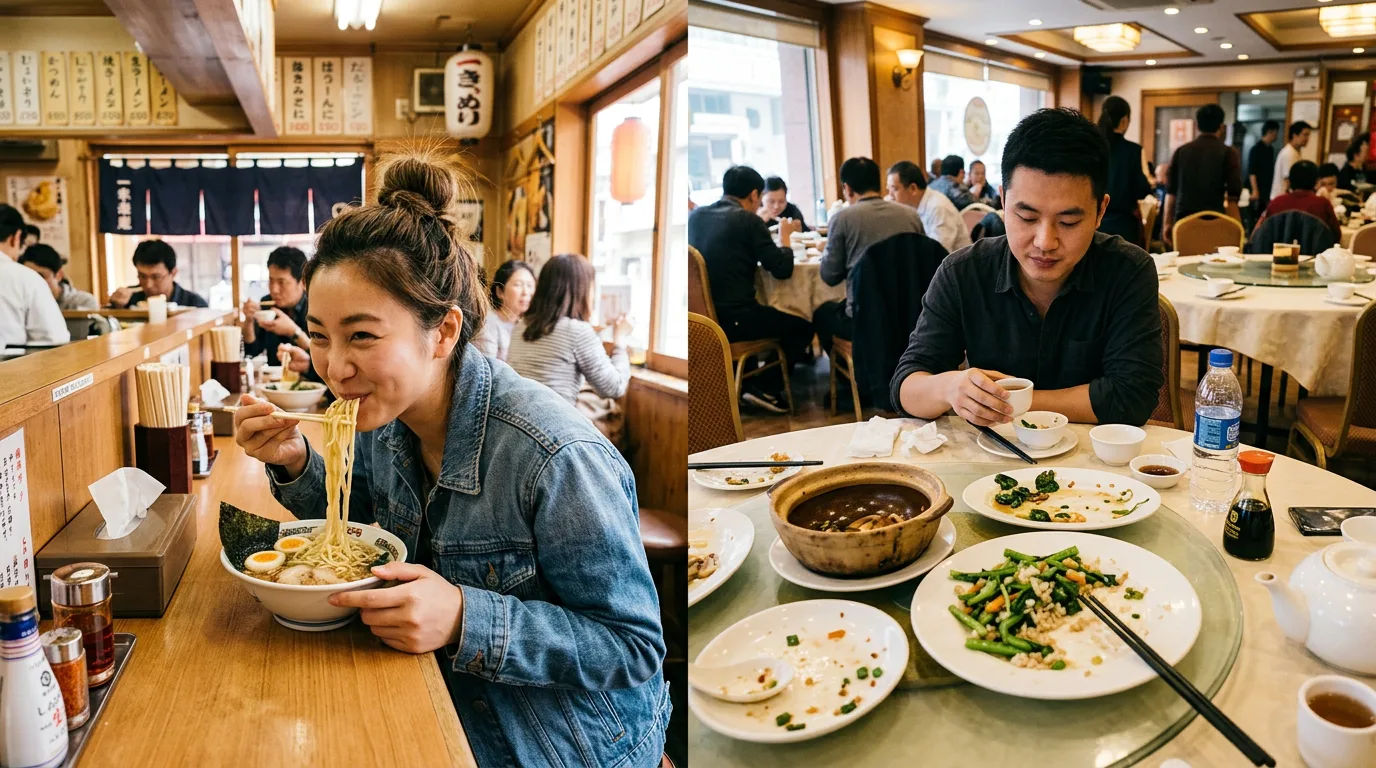
- Slurping: In Japan, slurping noodles is not only acceptable but often encouraged as a sign of enjoyment and appreciation for the chef. In most Western cultures, it’s considered rude.
- Finishing Food: In China, leaving a small amount of food on your plate indicates that your host has provided generously. Finishing everything might imply you weren’t given enough. Conversely, in India and Japan, finishing your plate is a sign of respect and appreciation.
- Tipping: Tipping customs vary wildly. In the US, a 15-20% tip is standard in restaurants. In Japan, tipping can be considered rude or confusing, as good service is expected as part of the job. In some European countries, a service charge is included, or a small tip for exceptional service is sufficient.
- Gifting: The act of giving and receiving gifts carries specific protocols. In China, gifts are often initially refused several times as a gesture of humility before being accepted. In many cultures, gifts are not opened in front of the giver to avoid potential embarrassment if the gift is not to their liking. In some cultures, certain items (like knives or clocks) are considered bad luck as gifts.
Time is Relative: How Cultures Perceive Punctuality
One of the most profound and often frustrating cultural differences around the world that will surprise you relates to the perception and handling of time. Anthropologist Edward T. Hall coined the terms monochronic (M-time) and polychronic (P-time) to describe these divergent approaches.
- Monochronic Cultures: Predominant in countries like Germany, Switzerland, the United States, and Nordic nations, M-time cultures view time as a linear, finite resource. Schedules, deadlines, and punctuality are highly valued. “Time is money,” and being late is often seen as disrespectful, inefficient, or even rude. Meetings typically start and end on time, and agendas are followed strictly. People prefer to do one thing at a time.
- Polychronic Cultures: Common in Latin America, the Middle East, and parts of Africa and Southern Europe, P-time cultures have a more fluid and flexible approach to time. Relationships and ongoing interactions often take precedence over strict schedules. Being late might be acceptable, especially if a more important social interaction or family matter arises. Meetings might start late, involve several conversations happening simultaneously, and run indefinitely. Building relationships and trust is often more important than adhering to a rigid timetable.
- Example: In Germany, a meeting scheduled for 9:00 AM means 9:00 AM sharp, and arriving even five minutes late can be seen as highly unprofessional. In contrast, in many parts of Spain or Mexico, a 9:00 AM meeting might realistically begin closer to 9:15 or 9:30, as it’s understood that personal interactions might delay arrival.
Understanding this difference is crucial for international business and travel. What might be perceived as disorganization in an M-time culture is simply a different organizational logic in a P-time culture, where flexibility and human connection are prioritized.
Navigating Global Workplaces: Understanding Professional Cultural Differences
The professional world, perhaps more than any other, highlights significant cultural differences around the world that will surprise you. How organizations are structured, decisions are made, and feedback is given varies immensely.
- Hierarchy and Power Distance: Geert Hofstede’s cultural dimensions framework identifies power distance as the extent to which less powerful members of organizations accept and expect that power is distributed unequally.
- High Power Distance Cultures (e.g., Japan, Mexico, India): Authority is respected, hierarchy is clear, and decisions are typically made at the top. Subordinates might not challenge superiors openly.
- Low Power Distance Cultures (e.g., Denmark, Sweden, Israel, Austria): Organizations tend to be flatter, and employees are encouraged to participate in decision-making and express opinions, even to superiors.
- Decision-Making:
- In individualistic, low-context cultures (like the U.S.), decisions are often made by individuals or small groups, with a quick turnaround.
- In collectivistic, high-context cultures (like Japan), decision-making is often a slow, consensus-driven process known as nemawashi, where all stakeholders are consulted beforehand to ensure buy-in, leading to faster implementation once a decision is finally made.
- Feedback Styles:
- Direct Feedback: Common in low-context cultures (e.g., Germany, Netherlands, Russia), where feedback is explicit, clear, and often critical.
- Indirect Feedback: Prevalent in high-context cultures (e.g., Japan, Thailand, Saudi Arabia), where feedback is subtle, implied, and delivered in a way that preserves harmony and avoids direct confrontation or loss of face.
- Work-Life Balance: The emphasis on work versus personal life varies. In some cultures (e.g., the U.S.), long hours are often seen as a sign of dedication. In others (e.g., France, Sweden), there’s a strong emphasis on maintaining a healthy work-life balance, with protected vacation time and limits on working hours.
Core Values: Underlying Cultural Differences That Will Surprise You
At the deepest level, cultural differences around the world that will surprise you stem from differing core values and worldviews. These foundational beliefs influence everything else.
- Individualism vs. Collectivism:
- Individualistic Cultures (e.g., USA, UK, Australia): Emphasize personal achievement, self-reliance, and individual rights. Identity is defined by personal attributes.
- Collectivistic Cultures (e.g., China, Japan, many Latin American and African nations): Prioritize group harmony, loyalty, and interdependence. Identity is often defined by one’s affiliation with a group (family, company, community).
- High-Context vs. Low-Context Communication:
- High-Context Cultures (e.g., Japan, China, Middle East): Communication relies heavily on implicit cues, shared understanding, non-verbal signals, and the context of the situation. What is not said can be as important as what is said.
- Low-Context Cultures (e.g., Germany, Switzerland, USA): Communication is explicit, direct, and unambiguous. Messages are conveyed primarily through words, and there’s less reliance on shared background knowledge.
- Uncertainty Avoidance: This dimension measures how a society deals with the fact that the future can never be known.
- High Uncertainty Avoidance Cultures (e.g., Japan, Greece, Portugal): Prefer clear rules, structured situations, and resist change. There’s a strong need for predictability.
- Low Uncertainty Avoidance Cultures (e.g., Singapore, Sweden, UK): Are more comfortable with ambiguity, take more risks, and are more open to change and innovation.
- Attitudes Towards Age and Gender: In many traditional cultures, age confers wisdom and authority, and gender roles can be more rigidly defined. In more egalitarian societies, age and gender may play less of a role in determining social status or professional opportunities. For instance, the deference shown to elders in many Asian or African cultures is a profound difference from the more casual interactions with older individuals common in some Western societies.
Conclusion
The journey through the diverse landscape of global cultures reveals a fascinating array of cultural differences around the world that will surprise you. From the unspoken language of gestures and the invisible boundaries of personal space to the profound variations in how we perceive time, conduct business, and define our very selves, the world is a testament to human ingenuity and adaptation.
Embracing these differences is more than just good manners; it’s a vital skill for anyone navigating our interconnected world. Cultivating cultural intelligence – the ability to understand and adapt to different cultural contexts – allows us to build stronger relationships, avoid misunderstandings, and foster an environment of mutual respect. So, the next time you encounter a custom that seems peculiar or a communication style that challenges your norms, remember that it’s an invitation to learn, grow, and appreciate the incredible richness that cultural diversity brings to the human experience.