Deep Sea Mysteries: Unsolved Enigmas of the Ocean Depths
Uncover the profound mysteries hidden within the ocean's largely unexplored depths. Despite advanced technology, many deep-sea enigmas persist, making it Earth's most alien frontier.
Diving Deep: Exploring the Deep Sea Mysteries That Remain Unsolved
The ocean. It covers over 70% of our planet, yet its depths remain largely unknown, a frontier more alien and unexplored than the surface of Mars. For centuries, humanity has gazed upon its vast expanse with a mix of wonder and trepidation, crafting myths and legends to fill the gaps in our understanding. Today, with advanced technology, we’ve begun to peel back some layers of this aquatic veil, but for every question answered, a dozen new ones emerge. At TrendSeek, we’re fascinated by the edges of human knowledge, and few realms present as many tantalizing deep sea mysteries that remain unsolved as the abyssal plains and hadal trenches. Join us as we plunge into the frigid, crushing darkness to explore the most profound secrets the deep ocean still holds.
The Uncharted Frontier: Why the Deep Sea is So Mysterious
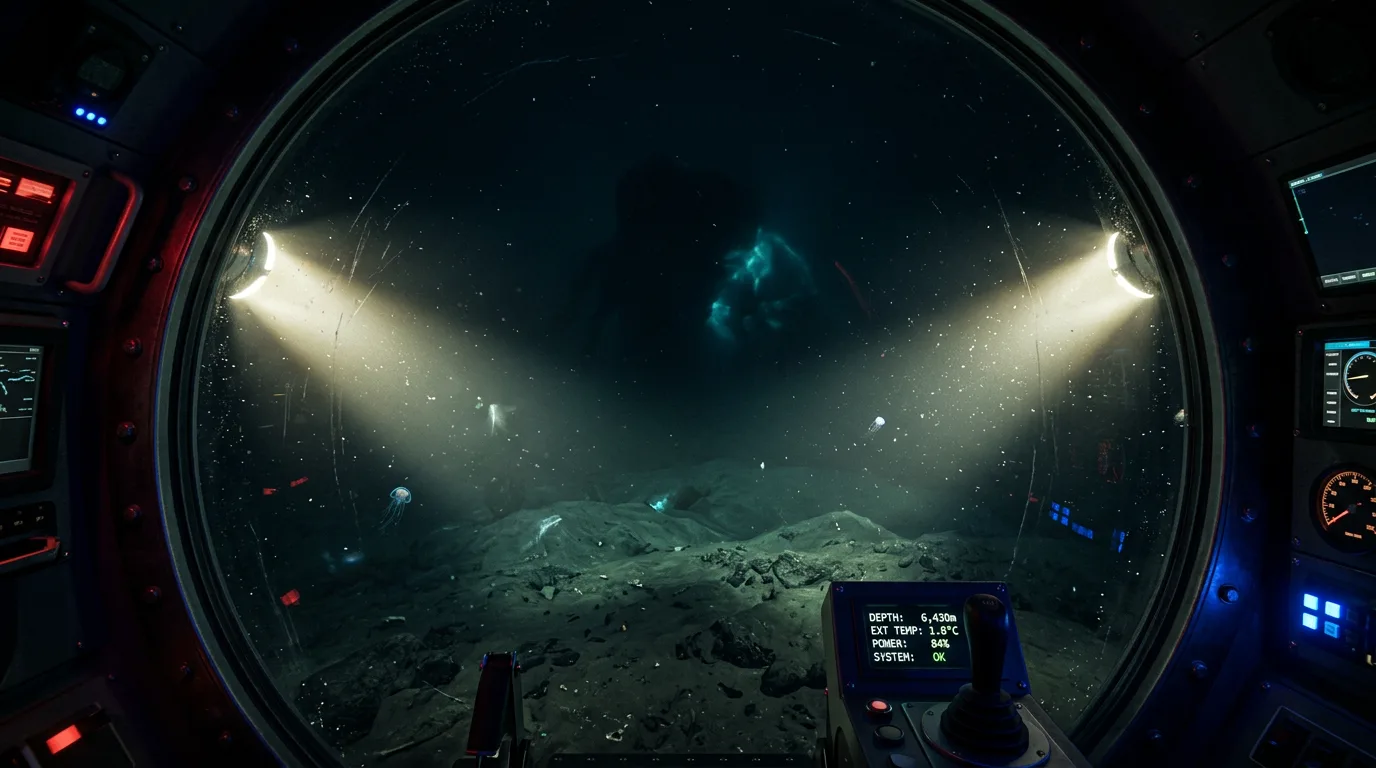
Imagine a world without sunlight, under pressures that could crush a submarine, and where temperatures hover just above freezing. This is the reality of the deep sea, an environment so extreme it presents immense challenges to exploration. More than 80% of our oceans are still unmapped and unexplored, with the vast majority of deep-sea habitats remaining utterly unseen by human eyes. This lack of access is the fundamental reason why so many deep sea mysteries persist.
The deeper one goes, the more intense the conditions become:
- Crushing Pressure: For every 10 meters of depth, pressure increases by one atmosphere. At the bottom of the Mariana Trench, the deepest point on Earth (nearly 11,000 meters), the pressure is over 1,000 times that at sea level – equivalent to having 50 jumbo jets stacked on your head.
- Absolute Darkness: Sunlight penetrates only a few hundred meters. Below that, the ocean is a realm of perpetual night, illuminated only by the occasional flash of bioluminescence.
- Extreme Cold: Apart from geothermal vents, deep-sea temperatures typically range from 0-4°C (32-39°F).
- Vastness: The sheer volume of the deep ocean is staggering, making it like searching for a needle in a colossal, dark haystack.
These factors necessitate highly specialized, incredibly robust, and often prohibitively expensive equipment like ROVs (Remotely Operated Vehicles) and AUVs (Autonomous Underwater Vehicles), limiting the scope and frequency of deep-sea expeditions.
Enigmatic Life Forms: Deep Sea Mysteries That Remain Unsolved in Biology
The deep sea is home to an astonishing array of life, much of which defies conventional biological understanding. From creatures that thrive without sunlight to those that grow to colossal sizes, the ocean’s darkest reaches harbor countless biological puzzles.
One of the most iconic examples is the Colossal Squid (Mesonychoteuthis hamiltoni). While its cousin, the Giant Squid, has been filmed in its natural habitat, the Colossal Squid – believed to be even larger and heavier, with unique swiveling hooks on its tentacles – has only ever been observed alive a handful of times and its full life cycle, hunting behaviors, and true maximum size remain largely unknown. Most of what we know comes from specimens caught by accident or found in the stomachs of sperm whales.
Then there’s the Giant Oarfish (Regalecus glesne), the longest bony fish in the world, capable of reaching lengths of up to 17 meters (56 feet). Usually found in the mesopelagic and bathypelagic zones, these serpentine giants are rarely seen alive. Their occasional appearance at the surface, often after storms or when ill, has likely fueled ancient sea serpent myths. Scientists are still piecing together their diet, reproductive habits, and how they navigate their deep-water world.
Perhaps the most intriguing biological mystery is the sheer volume of undiscovered species. Scientists estimate that millions of species in the deep sea have yet to be identified. Every deep-sea expedition uncovers new forms of life, from bizarre fish with transparent heads to unique microbial communities thriving around hydrothermal vents. The potential for discovering creatures that challenge our understanding of evolution and adaptation is immense. Could there be megafauna, even larger than the Colossal Squid, lurking in the deepest trenches, completely unknown to science? The possibility remains tantalizing.
Geological Puzzles: Unraveling Earth’s Deep Sea Mysteries
Beneath the waves, the Earth’s crust is a dynamic canvas of volcanic activity, seismic shifts, and unique geological formations, many of which are still poorly understood.
Hydrothermal vents, for instance, are cracks in the seafloor where superheated, mineral-rich water erupts. Discovered only in 1977, these “black smokers” and “white smokers” host incredibly diverse ecosystems that thrive through chemosynthesis rather than photosynthesis, completely independent of the sun. While we’ve found many vent fields, countless others are undoubtedly scattered across the ocean floor, each potentially harboring unique species and providing clues about the origins of life on Earth. The precise mechanisms of their formation, their lifespan, and their full impact on ocean chemistry and global climate are still subjects of intense research.
Deep-sea trenches, like the Mariana Trench, represent the deepest scars on our planet, formed where tectonic plates collide and one slides beneath another. While we’ve sent submersibles to their bottoms, the complex geology and biology of these extreme environments are far from fully mapped or understood. What forces drive the deepest subduction? What unique minerals or geological processes occur under such immense pressure?
Even the very composition and history of the ocean floor hold secrets. Scientists are still piecing together the ancient movements of continents, the history of sea level changes, and the impact of past mega-tsunamis and underwater landslides. The discovery of Zealandia, a largely submerged continent, in 2017, highlights how much of Earth’s fundamental geography still lies hidden beneath the waves. Are there other “lost continents” or significant landmasses waiting to be discovered and mapped in the abyssal depths?
The Vanished and the Vexing: Deep Sea Mysteries and Historical Enigmas
The vast, unforgiving nature of the deep sea makes it a formidable graveyard for human endeavors, swallowing ships, planes, and perhaps even traces of ancient civilizations. These losses often lead to enduring deep sea mysteries.
One of the most compelling modern enigmas is the disappearance of Malaysia Airlines Flight MH370 in 2014. Despite extensive and technologically advanced search efforts covering tens of thousands of square kilometers of the southern Indian Ocean, the main wreckage of the Boeing 777 has never been found. While debris has washed ashore, the bulk of the aircraft and its flight recorders remain hidden, leaving crucial questions about its final moments unanswered. The sheer scale and depth of the search area underscore the challenges of finding even large objects in the deep ocean.
Older maritime disappearances also continue to baffle. The USS Cyclops, a massive collier that vanished in the Bermuda Triangle in 1918 with 306 crew and passengers, remains one of the largest non-combat losses in U.S. Navy history. Despite extensive searches, no wreckage or trace of the ship was ever found, leading to over a century of speculation.
Beyond modern craft, the deep sea might hold clues to forgotten human history. While the mythical city of Atlantis remains firmly in the realm of legend, archaeological discoveries like the Yonaguni Monument off the coast of Japan — a massive underwater rock formation with strikingly precise angles and terraces — spark debate. Is it a natural geological phenomenon, or the remnants of an ancient, submerged civilization? The lack of definitive answers makes it a fascinating, if controversial, deep-sea mystery.
Adding to the intrigue are reports of USOs (Unidentified Submerged Objects) – phenomena described by naval personnel and others, often involving objects moving at incredible speeds or performing impossible maneuvers underwater, only to vanish into the depths. While often lacking concrete evidence, these accounts fuel speculation about advanced, unknown technologies or even non-human intelligence operating beneath the waves.
Unexplained Phenomena: Deep Sea Mysteries That Defy Easy Explanation
Beyond specific creatures or lost objects, the deep sea periodically presents us with phenomena that defy easy explanation, challenging our understanding of physics, biology, and the very nature of our planet.
One famous example is the “Bloop” sound. In 1997, NOAA’s hydrophones, designed to detect underwater seismic activity and marine mammal sounds, picked up an ultra-low-frequency, high-amplitude sound that was louder than any known animal. It was detected across a range of over 5,000 kilometers in the Pacific Ocean. While subsequent analysis suggested it might have been the sound of a large icequake (an ice sheet cracking and breaking), the initial mystery and its immense power led many to speculate about an unknown, giant deep-sea creature. The definitive source, however, remains debated by some.
Another enduring mystery, albeit one often debunked by science, is the legend of the Bermuda Triangle. While there’s no evidence of supernatural forces, the area is known for its treacherous weather, strong currents, and deep abyssal plains. The high incidence of disappearances, whether due to natural phenomena like rogue waves, methane hydrates erupting from the seafloor, or simple human error, continues to fascinate and generates countless theories about what truly happens to vessels and aircraft that vanish there. The deep, inaccessible nature of the region means that many of these disappearances become permanent deep sea mysteries.
Furthermore, scientists occasionally detect inexplicable energy signatures, unusual magnetic anomalies, or strange light patterns emanating from the deep. These fleeting observations, often made by sensitive instruments rather than human eyes, hint at unknown processes or life forms operating in the profound darkness, just beyond our current grasp of detection and comprehension.
The Future of Exploration: Solving Deep Sea Mysteries
Despite the challenges, humanity’s quest to understand the deep ocean is accelerating. Technological advancements are opening new windows into this hidden world.
- Advanced Submersibles and Robotics: Next-generation ROVs and AUVs are capable of diving deeper, staying submerged longer, and operating with greater autonomy. They are equipped with high-definition cameras, sophisticated sonar, and sampling tools, allowing for unprecedented data collection.
- Deep-Sea Mapping: Multibeam sonar technology is progressively mapping the ocean floor in increasing detail, revealing underwater mountain ranges, canyons, and potential areas of interest for biological or geological study.
- Genomic Sequencing: Analyzing environmental DNA (eDNA) from water samples allows scientists to detect the presence of species without ever seeing them, potentially revealing unknown biodiversity in vast, unexplored areas.
- International Collaboration: Global initiatives are pooling resources and expertise to undertake ambitious deep-sea expeditions, recognizing that the scale of the ocean requires a collaborative approach.
These efforts are not just about satisfying curiosity; they are crucial for understanding Earth’s climate, discovering new resources, and protecting fragile ecosystems. Every new discovery has the potential to rewrite our textbooks and redefine our place in the natural world.
Conclusion
The deep sea is not merely a vast body of water; it is a dynamic, living world teeming with secrets. From the baffling biology of unseen creatures to the geological forces shaping our planet, and from the poignant remains of lost vessels to the truly inexplicable phenomena, the deep sea mysteries that remain unsolved are a testament to the ocean’s enduring power and our own limited understanding.
As we continue to push the boundaries of technology and human ingenuity, we inch closer to unraveling these profound enigmas. Yet, the ocean’s sheer immensity and its hostile conditions ensure that it will likely forever hold some of its most extraordinary secrets close. The allure of the unknown, however, only fuels our desire to explore, to learn, and to appreciate the magnificent, mysterious depths that lie beneath the waves. The journey of discovery into the deep sea is far from over, and the greatest revelations may still be waiting in the darkest, most pressure-filled corners of our planet.