Funny Wedding Traditions: Hilarious Customs from Around the World
Discover the most hilarious and unique wedding traditions from around the globe! Explore quirky customs and diverse approaches to matrimony that showcase humanity's rich cultural tapestry.
Beyond the Vows: Exploring Hilarious and Funny Wedding Traditions Around the World
Weddings are a universal celebration of love, commitment, and new beginnings. While many cultures share common threads – vows, rings, and joyous feasts – it’s the unique, often quirky, and sometimes downright hilarious customs that truly showcase humanity’s diverse approaches to matrimony. At TrendSeek, we delve into the fascinating tapestry of global knowledge, and today, we’re taking a lighthearted journey to explore some of the most funny wedding traditions around the world that add a memorable, laughter-filled twist to the big day.
From playful pranks designed to test a couple’s bond to ancient rituals that defy modern logic, these traditions remind us that while love is serious, celebrating it doesn’t always have to be. So, prepare to be amused as we uncover the delightful oddities that make weddings truly unforgettable across continents.
The Art of the Kidnap & Ransom: Playful Abductions in Global Nuptials
Imagine your wedding day, only for your beloved to suddenly vanish! Don’t panic; it’s likely just a playful tradition. The “kidnapping” of the bride or groom is a surprisingly common and incredibly funny wedding tradition around the world, often involving intricate plots and a “ransom” for their return.
In Germany, one of the most popular and amusing customs is the Brautentführung, or bride kidnapping. After the ceremony, a group of the groom’s friends “abduct” the bride and take her to several pubs, where they enjoy drinks. The groom must then track them down, often following a trail of clues or paying for the drinks consumed. The twist? He pays with his wallet, but also with his wit, performing tasks or telling jokes to “win” his bride back. It’s a test of his dedication, his sense of humor, and his ability to hold his liquor!
Similarly, in parts of India, particularly in Punjabi weddings, a tradition called Joota Chupai (shoe hiding) sees the bride’s sisters or female relatives steal the groom’s shoes when he takes them off to sit at the altar. They then demand a “ransom” – usually money or gifts – for their return. The groom must negotiate or try to retrieve them, leading to a lively, good-natured standoff that often results in much laughter and playful bargaining between the two families. This tradition not only adds humor but also strengthens the bond between the new in-laws.
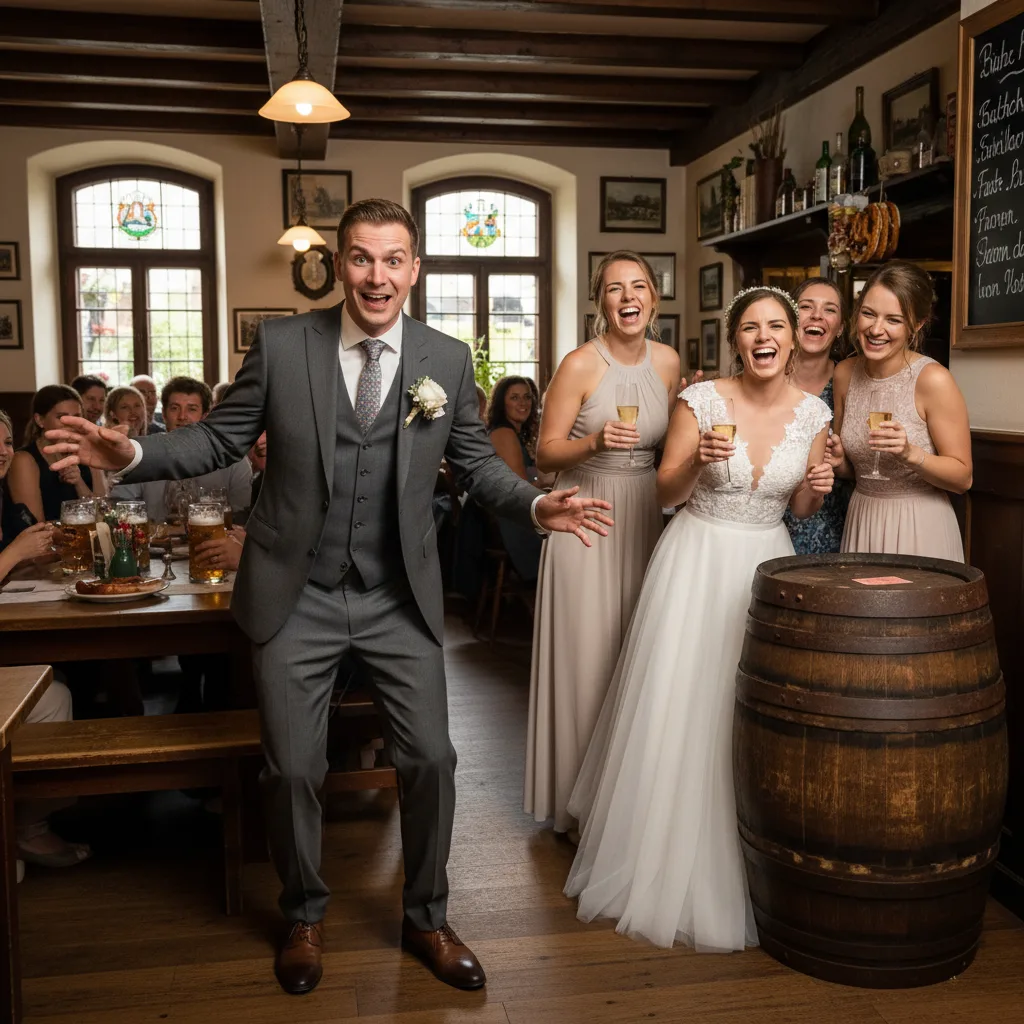
These “kidnappings” are far from sinister; they are cherished moments of light-hearted mischief, creating memorable stories and showing the couple’s willingness to overcome obstacles – even if those obstacles involve a pub crawl or a shoe heist.
Pre-Wedding Pranks & Obstacles: Testing the Couple’s Mettle
Before the “I do’s,” some cultures believe a couple’s love should be tested, often through a series of humorous challenges or pranks. These aren’t meant to be cruel, but rather to ensure the couple is truly ready for married life and can face adversity with a smile. These funny wedding traditions around the world serve as a unique rite of passage.
In China, particularly during traditional weddings, the groom and his groomsmen must face a series of “door games” orchestrated by the bride’s bridesmaids and female relatives. These games are designed to test the groom’s love, patience, and determination. Challenges can range from answering difficult questions about the bride, performing silly dances, eating bizarre food combinations (like wasabi bread), or even finding hidden items. The groom must “bribe” the bridesmaids with red envelopes (containing money) to pass each test and finally gain access to his bride. It’s a hilarious spectacle, often filmed and shared, that showcases the groom’s unwavering commitment and good humor.
Across the globe in South Korea, the Falaka or foot-beating tradition is a boisterous and memorable ritual for the groom. After the wedding ceremony, the groom’s friends or family members remove his shoes and socks, tie his feet together, and then playfully beat the soles of his feet with a stick or dried fish. While it sounds harsh, it’s done in good spirits, accompanied by much laughter and cheering. The intention is to test the groom’s strength and character, ensuring he’s ready for married life. They might also ask him questions about the bride, adding to the entertainment. It’s a bonding experience for the men and a source of great amusement for all present.
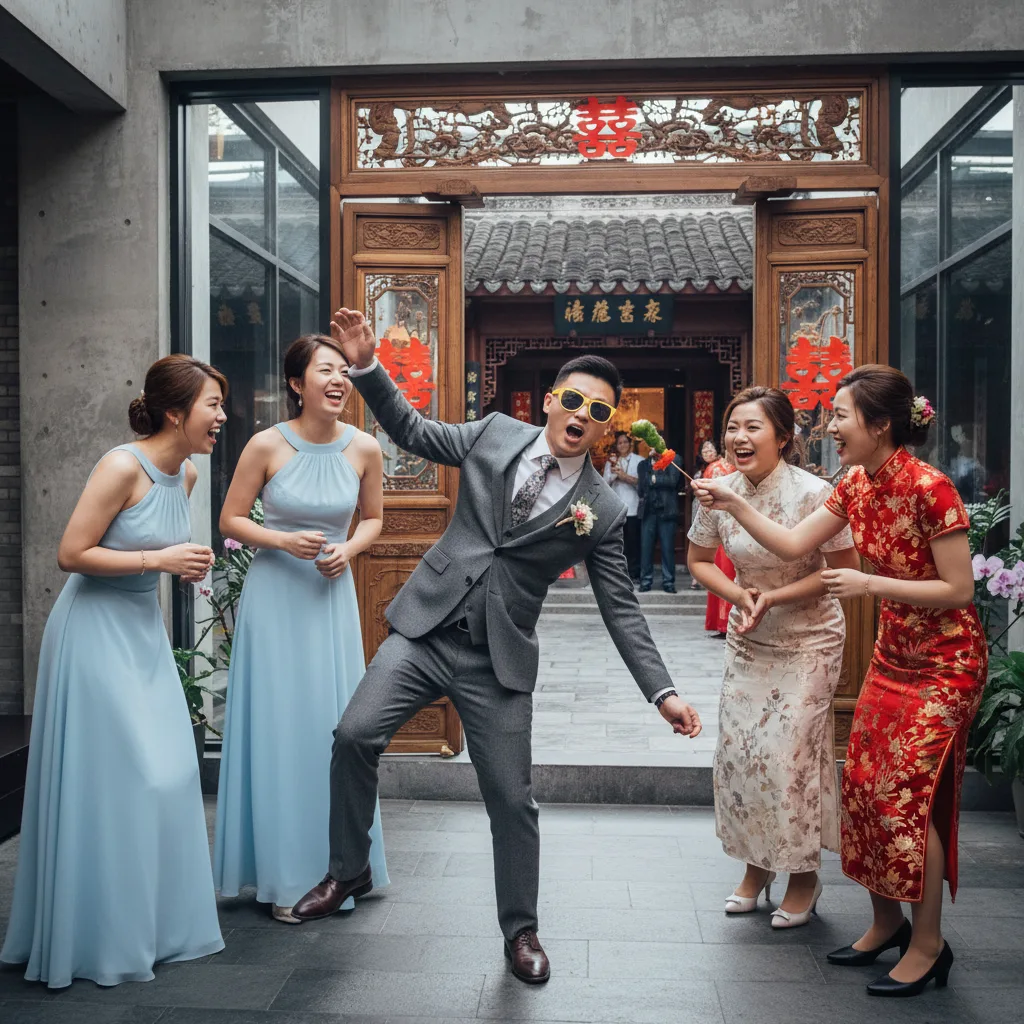
These pre-wedding antics are more than just pranks; they are communal rites that bring families and friends closer, fostering a sense of shared joy and a hearty start to the marriage.
Unconventional Attire & Appearance: Embracing the Messy Side of Love
While many brides dream of pristine white gowns and grooms of sharp suits, some cultures embrace a far messier, and undeniably funnier, approach to wedding day attire and appearance. These traditions challenge conventional beauty standards, often with the goal of warding off evil spirits or bringing good luck.
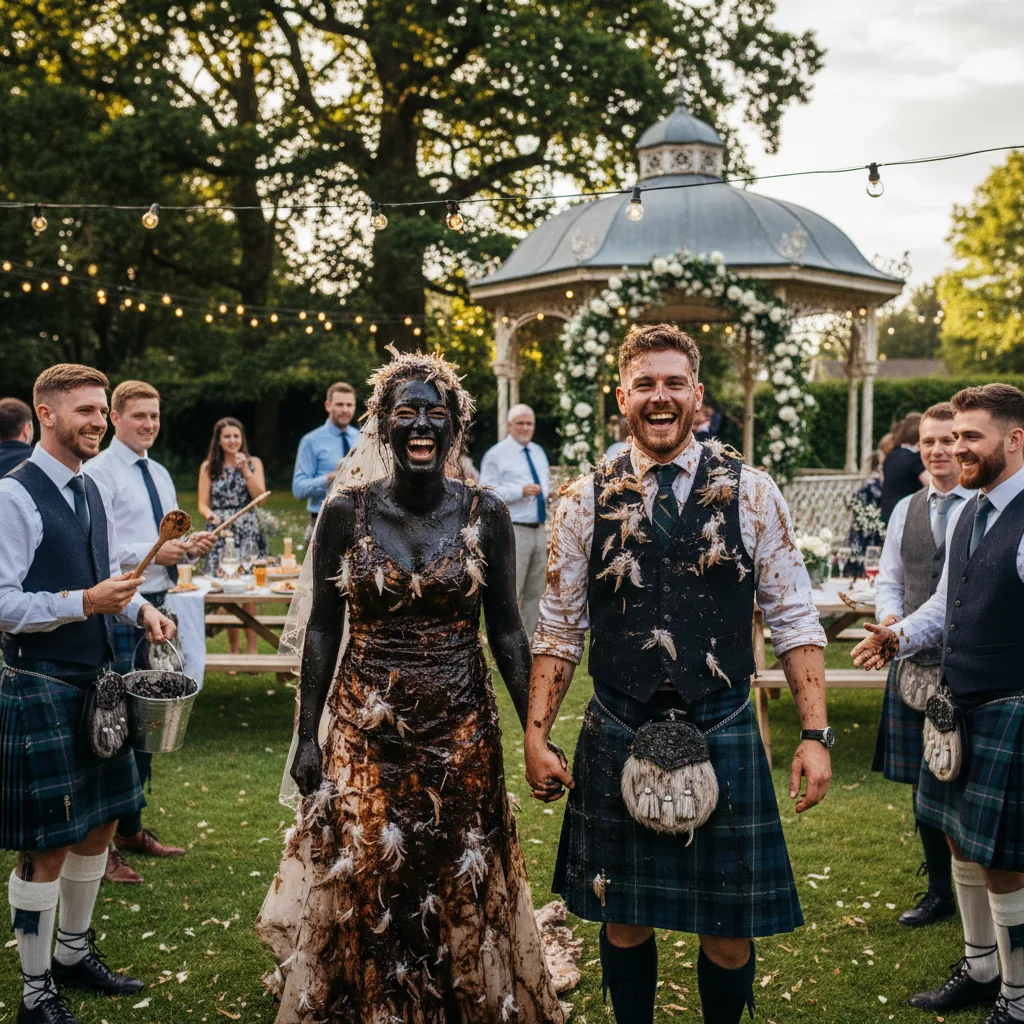
Perhaps one of the most famously grotesque, yet utterly hilarious, traditions hails from Scotland: the “Blackening of the Bride and Groom.” Days or weeks before the wedding, the couple is ambushed by friends and family, covered from head to toe in a concoction of soot, treacle, feathers, flour, and anything else sticky and smelly imaginable. They are then paraded through the streets in the back of an open truck or cart, making as much noise as possible. This tradition is believed to ward off evil spirits and prepare the couple for the challenges of married life by showing them they can face anything together, no matter how messy or embarrassing. It’s a riotous, unforgettable experience that leaves both the couple and onlookers in stitches.
Another striking example comes from the Maasai people of Kenya and Tanzania. While not “messy” in the Scottish sense, the father of the bride spits on his daughter’s head and breasts as a blessing before she leaves with her husband. This might seem shocking to outsiders, but for the Maasai, spitting is a symbol of good fortune and respect, not disgust. It’s a deeply meaningful, albeit visually unusual, gesture that highlights the cultural relativity of what is considered “funny” or “appropriate” in wedding rituals. It’s a powerful reminder that humor often stems from surprise and cultural difference.
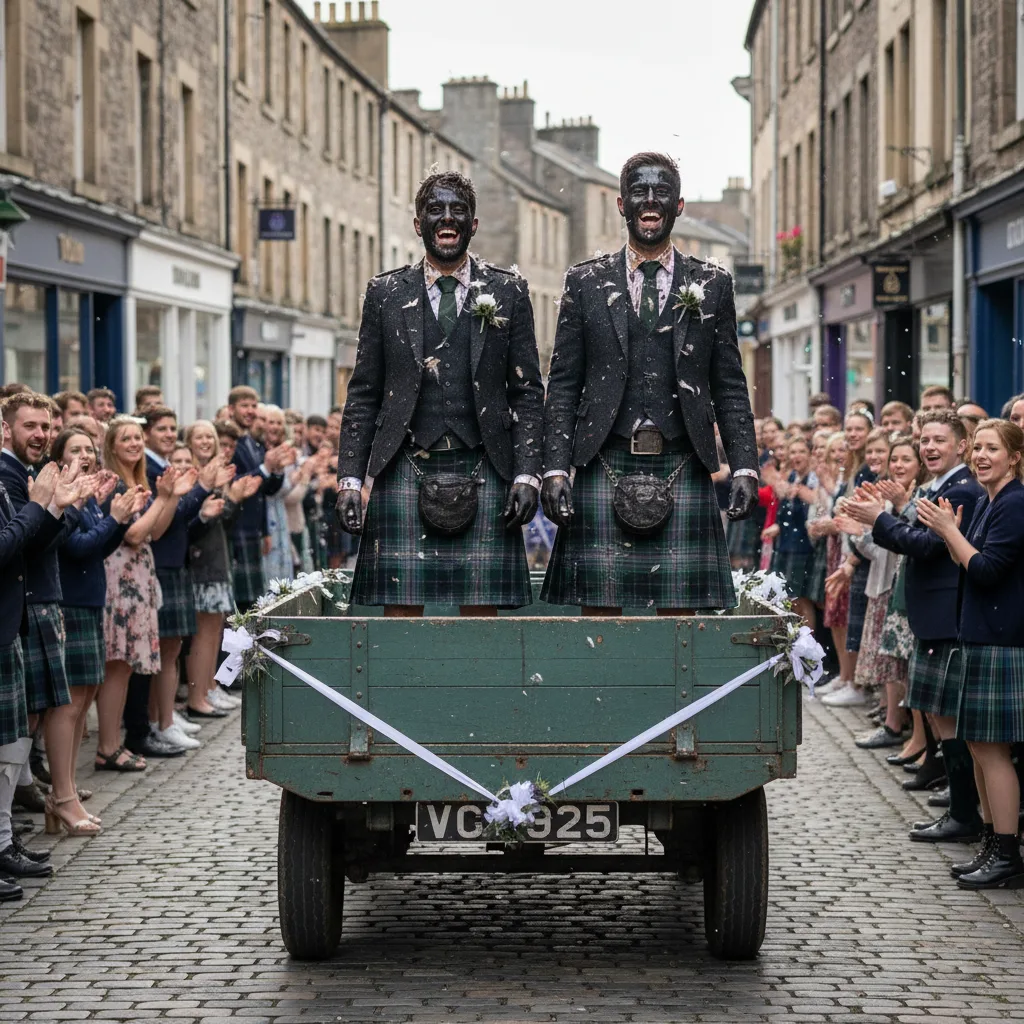
These traditions, while visually jarring or surprising, are steeped in cultural significance and provide a memorable, often uproarious, start to the marital journey, proving that true love can conquer even the stickiest of situations.
Feasting Fun & Food Fights: Culinary Capers at the Reception
Food is central to celebrations, but in some weddings, it becomes the centerpiece for playful chaos or symbolic acts of unity. These funny wedding traditions around the world demonstrate how even the most basic elements of a reception can be transformed into sources of amusement.
In France, an old, infamous tradition known as La Soupe (The Soup) or La Potée (The Pot) involved the friends of the newlyweds collecting all the leftover food and drink from the reception, putting it into a chamber pot, and then forcing the couple to drink it. The original intent was to give the couple energy for their wedding night. Thankfully, modern interpretations are far less stomach-churning. Today, the “soup” is usually a concoction of chocolate, champagne, or other palatable ingredients, still served in a chamber pot, but consumed with much more laughter and less gagging. It’s a nod to a raucous past, transformed into a charmingly gross tradition that still elicits plenty of giggles.
Another German tradition that combines food and physical challenge is the log-cutting ceremony (Baumstamm sägen). Immediately after the wedding ceremony, the couple is presented with a large log and a two-person saw. They must work together to saw through the log, symbolizing their ability to overcome obstacles as a team. While not a “food fight” per se, it often takes place before the main feast, involving physical exertion and coordination that can lead to clumsy, funny moments. It’s a popular photo opportunity and a tangible demonstration of their teamwork, often accompanied by cheers and playful advice from guests.
These food-related traditions, whether involving bizarre drinks or shared physical tasks, highlight the communal spirit of weddings and the joy of shared experiences, no matter how peculiar.
Noisy Nuptials & Public Protests: Making a Racket for Love
Some cultures believe that the louder the celebration, the better the luck for the newlyweds. These traditions involve making a significant amount of noise or even staging mock protests, adding a boisterous and undeniably funny element to the wedding festivities.
Consider the old tradition from France (and some other European countries) of “charivari”. After the wedding, friends and family would gather outside the couple’s home and make a tremendous racket with pots, pans, horns, and anything else they could get their hands on. Historically, this was sometimes done to express disapproval of an unequal match (e.g., an older person marrying a younger one), but over time, it evolved into a good-natured, noisy serenade meant to wish the couple good luck and ward off evil spirits. Today, a modern form of charivari might involve guests clanking glasses to make the couple kiss, but the spirit of playful noise remains.
In Russia, a common and very funny tradition during the wedding reception involves guests shouting “Gor’ko!” which means “Bitter!” This chant implies that the food or drink (specifically vodka) is bitter and needs to be sweetened. The only way to sweeten it, according to tradition, is for the bride and groom to share a long, passionate kiss. The longer the kiss, the “sweeter” the drinks become, and the more pleased the guests are. This can lead to extended kissing sessions, often timed and cheered on by the crowd, creating a truly lively and amusing atmosphere. It’s a playful way to encourage public displays of affection and ensure the couple is well and truly “in love.”
These noisy traditions are a testament to the idea that love should be celebrated loudly and proudly, with plenty of laughter and good cheer to accompany the happy couple into their new life.
The Enduring Appeal of Funny Wedding Traditions Around the World
The sheer variety of funny wedding traditions around the world is a testament to human creativity, cultural diversity, and our universal desire to celebrate love in memorable ways. From the elaborate pranks in China to the messy “blackening” in Scotland, each tradition, no matter how strange it may seem to an outsider, carries deep cultural significance. They are often rooted in ancient beliefs about warding off evil, ensuring fertility, testing commitment, or simply fostering community spirit and shared joy.
These traditions serve multiple purposes: they break the ice between new families, provide comic relief during what can be an intense day, and create unforgettable stories that couples will recount for years to come. They remind us that marriage, while a serious commitment, is also an occasion for immense joy and lighthearted fun. They highlight the resilience of cultural practices, adapting over time but retaining their core spirit of celebration.
Conclusion
As we’ve journeyed through the delightful and often bizarre world of funny wedding traditions around the world, it’s clear that love truly knows no bounds – and neither does the human imagination when it comes to celebrating it. From playful kidnappings and physical challenges to messy rituals and boisterous chants, these customs add character, humor, and a unique cultural stamp to the sacred union of marriage.
These traditions are more than just oddities; they are vibrant expressions of community, tests of love, and powerful symbols of good fortune. They remind us that while the core promise of marriage remains universal, the ways we choose to honor it are as diverse and wonderful as humanity itself. So, the next time you attend a wedding, keep an eye out for the unexpected – you might just witness a hilarious tradition that makes the celebration truly unforgettable.