
Geopolitical Events: Impact on Stock Market & Investments
Uncover how geopolitical events, including conflicts and trade wars, profoundly impact global financial markets. Understand their influence on investment landscapes and investor sentiment.
Navigating the Tides: Understanding Geopolitical Events and Stock Market Reaction
The global economy is an intricate web, constantly influenced by a myriad of factors. Among the most potent and unpredictable are geopolitical events. From armed conflicts and trade wars to political upheavals and international sanctions, these developments can send seismic waves across financial markets, dramatically altering investment landscapes and investor sentiment. For anyone looking to understand the forces shaping their portfolio, grasping the complex interplay between a geopolitical event and stock market reaction is not just beneficial—it’s essential.
This comprehensive guide from TrendSeek will delve into the mechanisms through which global political shifts translate into market movements, explore historical case studies, and provide actionable insights for navigating these turbulent times.
The Unpredictable Nature of Geopolitical Risk and Market Sensitivity
Geopolitical risk refers to the potential for political instability, conflict, or other international developments to disrupt the global economy and financial markets. Unlike economic data or corporate earnings, which often follow predictable cycles or can be modeled, geopolitical events are inherently unpredictable, making them particularly challenging for investors to anticipate and price in.
Markets are highly sensitive to uncertainty. When a geopolitical event emerges, it introduces a significant degree of unknowns:
- Future Policy: Will governments impose new tariffs, sanctions, or regulations?
- Supply Chains: Will critical resources be disrupted, or trade routes blocked?
- Corporate Earnings: How will international tensions affect the profitability of multinational corporations?
- Consumer Confidence: Will fear or uncertainty lead to reduced spending?
- Investor Sentiment: Will panic selling or a flight to safety dominate market behavior?
The sensitivity of financial markets stems from their forward-looking nature. Investors constantly try to discount future cash flows and assess risks. Geopolitical events fundamentally alter these assumptions, leading to rapid re-evaluations of asset prices. While some events might have a localized impact, many, given the interconnectedness of today’s global economy, can trigger widespread volatility across multiple asset classes and regions.
How Geopolitical Events Drive Stock Market Reaction
The immediate and long-term stock market reaction to geopolitical developments can vary widely, but several common patterns emerge:
Immediate Volatility and Flight to Safety
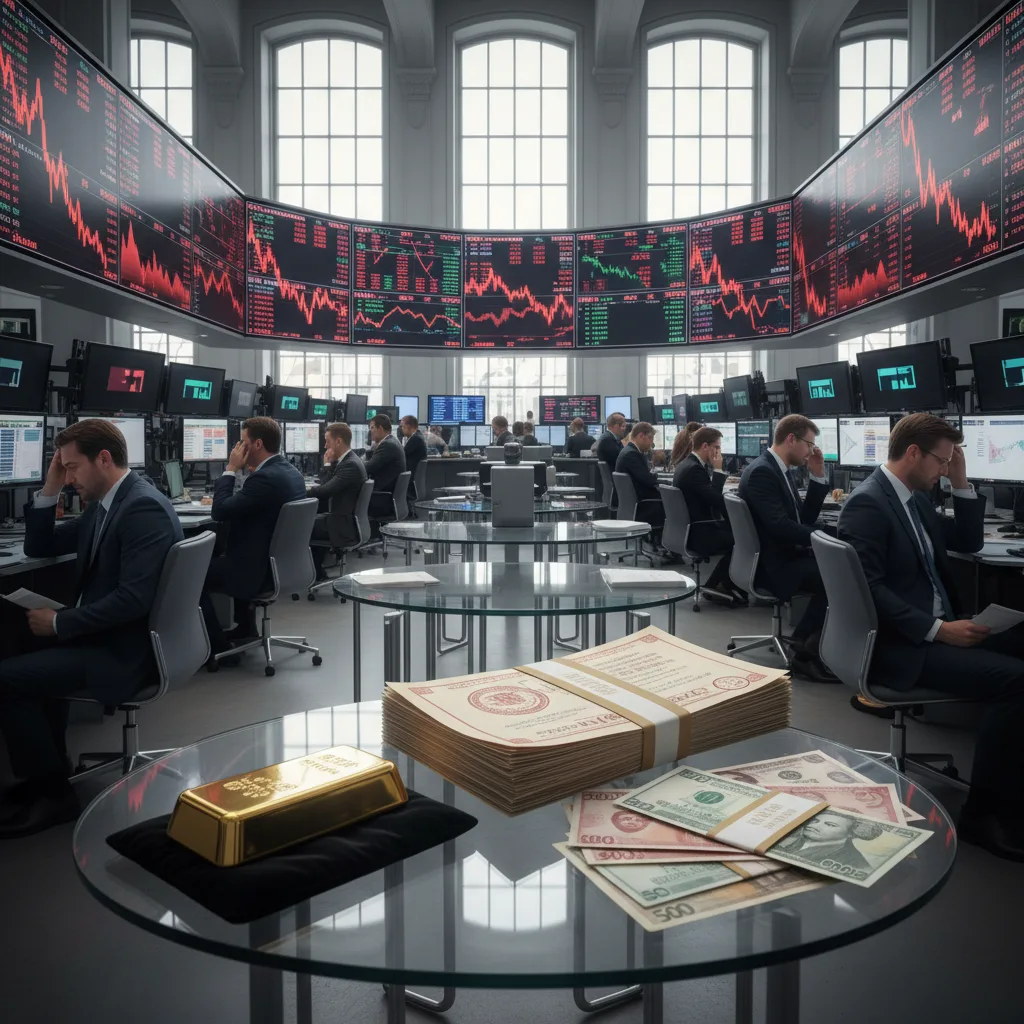
Typically, the initial response to a significant geopolitical shock is a surge in market volatility. Stock indices often experience sharp declines as investors rush to sell risky assets. This capital then frequently flows into traditional “safe havens” such as:
- Gold: A timeless store of value, often seen as a hedge against inflation and instability.
- Government Bonds (e.g., U.S. Treasuries): Perceived as low-risk due to the backing of stable governments.
- Strong Currencies: Currencies like the U.S. Dollar, Swiss Franc, and Japanese Yen often strengthen during global crises.
This “flight to safety” can be swift and dramatic, leading to a temporary decoupling of market performance from underlying economic fundamentals.
Sectoral Impacts and Divergent Performance
Not all sectors react equally to geopolitical events. Some may suffer, while others might even benefit:
- Energy Sector: Conflicts in oil-producing regions or disruptions to supply lines can cause oil and gas prices to spike, boosting energy company stocks. Conversely, a resolution might see prices fall.
- Defense and Aerospace: Increased geopolitical tensions often lead to higher defense spending, benefiting companies in this sector.
- Technology and Manufacturing: Sectors heavily reliant on global supply chains (e.g., semiconductors, automotive) can be severely impacted by trade disputes, sanctions, or disruptions to production hubs.
- Consumer Discretionary: During times of heightened uncertainty, consumer confidence often wanes, leading to reduced spending on non-essential goods and services, hurting retailers and leisure companies.
- Consumer Staples and Utilities: These sectors are generally considered more defensive, as demand for their products and services remains relatively stable regardless of economic or geopolitical headwinds.
Currency Fluctuations and Trade Implications
Geopolitical events can significantly influence exchange rates. A country embroiled in conflict or facing severe sanctions might see its currency weaken dramatically dueimpacting import/export costs and the profitability of multinational corporations. Trade disputes, such as the U.S.-China trade war, can lead to tariffs that alter the competitive landscape for industries, forcing companies to re-evaluate supply chains and pricing strategies.

Long-Term Strategic Shifts
Beyond immediate reactions, geopolitical events can trigger longer-term strategic shifts. These might include:
- Reshoring/Friend-shoring: Companies relocating production closer to home or to politically aligned nations to reduce supply chain vulnerabilities.
- New Alliances: Formation of new economic or political blocs, influencing trade agreements and investment flows.
- Technological Decoupling: Efforts by nations to develop independent technological capabilities, particularly in critical sectors like semiconductors or AI, reducing reliance on potential adversaries.
These shifts can create new investment opportunities in certain regions or industries while posing challenges to others.
Historical Case Studies: Geopolitical Events and Stock Market Reaction
Examining past events offers invaluable insights into how markets absorb and respond to geopolitical shocks.
The Gulf War (1990-1991)
When Iraq invaded Kuwait in August 1990, oil prices surged, and global stock markets, including the S&P 500, experienced a sharp decline due to fears of a wider conflict and economic recession. However, once the U.S.-led coalition launched Operation Desert Storm and achieved a swift victory, uncertainty dissipated rapidly. Markets recovered quickly, demonstrating that while the initial shock was significant, the relatively quick and decisive resolution led to a rebound as investors priced in a return to stability.
The 9/11 Terrorist Attacks (2001)
The coordinated terrorist attacks on September 11, 2001, were an unprecedented shock. U.S. stock markets were closed for four days, the longest closure since 1933. Upon reopening, the Dow Jones Industrial Average fell 684 points, or 7.1%, its largest one-day point drop at the time. The S&P 500 lost 11.6% in the first week. Sectors like airlines, travel, and insurance were hit particularly hard. Yet, within a few months, markets had largely recovered, showcasing the resilience of the U.S. economy and the market’s ability to absorb even profound shocks, especially when met with strong governmental and monetary policy responses.
The Brexit Referendum (2016)
In June 2016, the UK’s vote to leave the European Union sent shockwaves across global markets. The British pound plummeted against major currencies, losing over 10% against the dollar in a single day. European stock markets fell sharply. However, the UK’s FTSE 100, which is heavily weighted towards multinational companies earning revenue in foreign currencies, surprisingly climbed in the months following the vote. This demonstrated a nuanced reaction: while the domestic economy and sterling suffered, export-oriented companies benefited from a weaker pound making their goods cheaper abroad. This case highlights that a geopolitical event’s impact can be complex and lead to divergent outcomes even within a single market.
Russia-Ukraine War (2022 onwards)
The full-scale invasion of Ukraine by Russia in February 2022 triggered an immediate and widespread geopolitical shock. Energy prices, particularly natural gas and crude oil, surged as sanctions targeted Russia, a major global energy producer. Agricultural commodities like wheat also saw significant price increases. Defense stocks rallied, while companies with significant exposure to Russia faced write-downs and divestments. The war exacerbated global inflation, prompted central banks to accelerate interest rate hikes, and led to a broader re-evaluation of energy security and supply chain resilience worldwide. This ongoing event illustrates a prolonged and systemic impact, shaping global economic policy and investment themes for years to come.
Navigating Geopolitical Uncertainty: Strategies for Investors
While predicting geopolitical events is impossible, investors can adopt strategies to mitigate risks and position their portfolios more resiliently.
- Diversification is Key: Spread investments across different asset classes (stocks, bonds, real estate, commodities), geographies, and industries. A well-diversified portfolio is less vulnerable to a single event impacting one region or sector.
- Focus on Quality and Resilience: During uncertain times, companies with strong balance sheets, robust cash flows, and sustainable competitive advantages tend to weather storms better. Look for businesses that can adapt to changing supply chains or regulatory environments.
- Consider Defensive Sectors: Include a portion of your portfolio in sectors traditionally considered defensive, such as utilities, consumer staples, and healthcare. These tend to be less cyclical and provide stable returns during downturns.
- Strategic Allocation to “Safe Havens”: While not suitable for every investor, a small allocation to assets like gold or short-term U.S. Treasuries can act as a hedge during periods of extreme volatility. However, remember that even safe havens can experience price fluctuations.
- Maintain a Long-Term Perspective: History shows that markets tend to recover from geopolitical shocks over time. Panic selling during downturns often locks in losses and prevents participation in subsequent recoveries. A long-term investment horizon allows you to ride out short-term volatility.
- Dollar-Cost Averaging: Investing a fixed amount regularly, regardless of market fluctuations, can help smooth out your average purchase price and reduce the risk of investing a lump sum right before a market downturn triggered by an unforeseen event.
- Stay Informed, But Avoid Overreacting: Keep abreast of global developments, but resist the urge to make drastic portfolio changes based on every news headline. Distinguish between temporary noise and fundamental shifts.
The Role of Investor Psychology and Media Amplification
Beyond economic fundamentals, investor psychology plays a crucial role in shaping the stock market reaction to geopolitical events. Emotions like fear and greed can drive irrational behavior, leading to market overreactions.
- Fear: During crises, fear can trigger widespread panic selling, even for fundamentally sound assets, as investors prioritize capital preservation over potential returns. This can lead to market bottoms that have little to do with underlying economic health.
- Herd Mentality: Investors often follow the crowd, exacerbating market movements. If everyone is selling, the urge to sell becomes stronger, even if it contradicts one’s own analysis.
- Media Amplification: The 24/7 news cycle and social media can amplify the perceived severity of geopolitical events. Constant updates, speculation, and sensationalized reporting can heighten anxiety and contribute to market volatility, often pushing narratives that aren’t fully supported by data.

Understanding these psychological biases is crucial. Recognizing when markets are reacting emotionally rather than rationally can help investors avoid costly mistakes and even identify opportunities when assets are oversold.
Conclusion
The relationship between a geopolitical event and stock market reaction is undeniably complex and often unpredictable. While immediate market movements can be sharp and unsettling, historical analysis reveals a consistent pattern of resilience and recovery over the long term. Geopolitical events introduce uncertainty, disrupt supply chains, influence policy, and shift investor sentiment, leading to immediate volatility and, at times, profound long-term realignments in global markets.
For investors, the key lies not in attempting to predict the next global flashpoint, but in building a robust, diversified portfolio that can withstand various shocks. By understanding the mechanisms of market reaction, learning from history, adopting prudent investment strategies, and maintaining a disciplined, long-term perspective, investors can better navigate the often-turbulent waters of geopolitical uncertainty and position themselves for sustained success. The world will always present new challenges, but an informed and resilient approach remains the most powerful tool in an investor’s arsenal.