
History of Secret Societies: Unveiling Their Hidden Influence
Explore the captivating history of secret societies. Uncover their ancient origins, hidden rituals, and the profound influence these enigmatic groups have had on human history.
Unveiling the Shadows: A Comprehensive History of Secret Societies
From hushed whispers in ancient temples to coded messages in clandestine lodges, secret societies have woven a captivating and often terrifying thread through the tapestry of human history. These enigmatic organizations, bound by exclusive membership, hidden rituals, and shared, often clandestine goals, have long fueled both fascination and fear. They promise enlightenment, power, or radical change to their initiates, while simultaneously evoking suspicion and conspiracy theories from the outside world. This guide delves into a history of secret societies, exploring their origins, evolution, and enduring impact across millennia, separating historical fact from persistent myth.
Ancient Roots and Esoteric Wisdom: The Earliest Secret Societies
The impulse towards secrecy, shared knowledge, and exclusive belonging is as old as civilization itself. The earliest forms of secret societies often emerged from religious or philosophical movements, seeking to preserve esoteric wisdom or attain spiritual enlightenment beyond the grasp of the common populace.
- Egyptian Mystery Schools: While not “secret societies” in the modern sense, the priesthoods of ancient Egypt operated with extreme exclusivity. Access to sacred texts, rituals, and knowledge regarding the afterlife (such as the intricate processes of mummification and the journey through Duat) was restricted to a select few. Temples were not public spaces in the way we understand them; their inner sanctums held profound secrets guarded by initiates, suggesting a proto-secret society structure dedicated to mystical knowledge.
- The Pythagorean Brotherhood (6th Century BCE): Founded by the philosopher Pythagoras in Croton, Magna Graecia, this was arguably one of the earliest true secret societies. Its members, known as Pythagoreans, adhered to a strict code of conduct, communal living, and intellectual pursuit. They believed in the transmigration of souls and the mystical properties of numbers and geometry. Initiates underwent rigorous tests and swore oaths of secrecy, with knowledge shared incrementally. Their influence extended beyond mathematics to philosophy, astronomy, and even political thought, making them a powerful, albeit veiled, force in their time.
- Eleusinian Mysteries (Ancient Greece): These were annual initiation rites held in honor of Demeter and Persephone at Eleusis. While not a permanent society, the mysteries involved secret rituals, dramatic performances, and sacred objects that were never to be revealed to the uninitiated. Participants swore an oath of secrecy, believing that participation brought them a happier afterlife. Their profound spiritual impact on thousands of Greeks for nearly two millennia underscores the power of shared, hidden experience.
These ancient groups laid the groundwork for future secret societies, establishing precedents for initiation rites, hierarchical structures, and the potent allure of forbidden knowledge.
Medieval Mysticism and Templar Knights: Secrecy in the Middle Ages
The Middle Ages, with its fervent religious beliefs and political upheaval, provided fertile ground for new forms of secret societies. These often blended spiritual devotion with practical objectives, sometimes with devastating consequences.
- The Knights Templar (1119-1312): Officially the Poor Fellow-Soldiers of Christ and of the Temple of Solomon, this military order was founded to protect pilgrims in the Holy Land. They quickly grew into one of the wealthiest and most powerful organizations of their time, operating vast financial networks across Europe. Their military prowess, combined with their secretive initiation rites and perceived autonomy from traditional authorities, bred suspicion. Accusations of heresy, idolatry, and bizarre rituals (like spitting on the cross or worshipping a mysterious idol called Baphomet) led to their dramatic downfall. King Philip IV of France, heavily indebted to the Templars, orchestrated their arrest and torture in 1307, resulting in their suppression by Pope Clement V. Their sudden demise and the mystery surrounding their alleged hidden treasures and knowledge cemented their place in the lore of secret societies.
- The Hashashin (Assassins) (11th-13th Centuries): This Nizari Ismaili sect, led by Hassan-i Sabbah from his fortress of Alamut in Persia, operated with extreme secrecy and strategic precision. Their objective was to defend and expand their interpretation of Islam through political assassinations of key enemies. The term “assassin” itself derives from their name, often linked to legends of drug use (hashish) to induce visions of paradise among their operatives. Their hierarchical structure, absolute loyalty, and readiness for self-sacrifice made them a feared and legendary force, demonstrating how secrecy could be weaponized for political ends.
- The Rosicrucians (Early 17th Century): Emerging in Germany, the Rosicrucians were not a single, unified organization but a mystical and philosophical movement proclaimed through a series of anonymous manifestos (e.g., Fama Fraternitatis, Confessio Fraternitatis). These manifestos spoke of a secret brotherhood founded by Christian Rosenkreuz, dedicated to universal reform of humanity through science, religion, and art. While the historical existence of such a brotherhood is debated, the Rosicrucian ideals profoundly influenced later esoteric societies and the nascent scientific revolution, highlighting the power of ideas, even those shrouded in mystery, to spark intellectual and spiritual awakening.
The Age of Enlightenment and Revolutionary Ideals: A History of Secret Societies
The 18th century, a period of profound intellectual and political ferment, witnessed the rise of some of the most famous and controversial secret societies, deeply intertwined with the radical ideas of the Enlightenment.
- Freemasonry: Evolving from medieval stonemasons’ guilds into a speculative fraternal order, Freemasonry became a global phenomenon. Its members, known as Freemasons, were bound by oaths, secret handshakes, and allegorical rituals centered on moral and philosophical lessons, often using the tools of masonry as metaphors. Emphasizing brotherhood, charity, and the pursuit of knowledge, Freemasonry attracted figures like George Washington, Benjamin Franklin, and Voltaire. Its embrace of reason, religious tolerance (within its lodges), and universal brotherhood resonated with Enlightenment ideals. However, its secrecy also made it a target of suspicion, particularly from the Catholic Church and absolute monarchies, who feared its potential for political subversion. Conspiracy theories linking Freemasonry to revolutionary movements, particularly the French Revolution, became widespread and persist to this day.
- The Illuminati (1776-1785): Founded by Bavarian professor Adam Weishaupt on May 1, 1776, the Bavarian Illuminati was a short-lived but immensely influential secret society. Its stated goals were to oppose superstition, prejudice, religious influence over public life, and the abuse of state power. They sought to perfect human nature through reason and education, ultimately aiming for a society without monarchy or state control, governed by enlightened individuals. Members infiltrated existing Masonic lodges and attracted prominent intellectuals. However, their radical anti-clerical and anti-monarchical views, combined with their extreme secrecy and hierarchical structure, led to their suppression by the Bavarian Elector Karl Theodor in 1785. Despite its brief existence, the Illuminati’s name became synonymous with global conspiracy theories, often conflated with Freemasonry, and believed by some to still operate in the shadows, orchestrating world events.
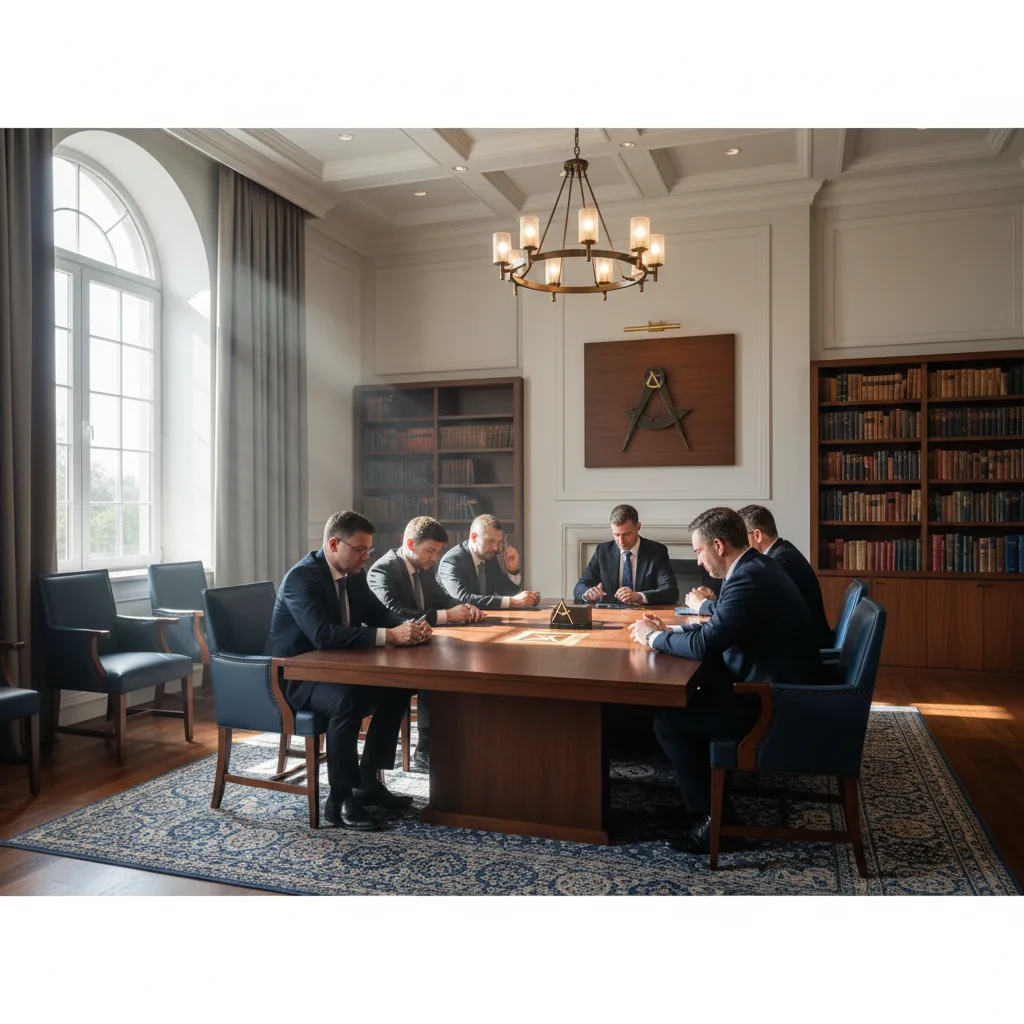
These societies profoundly influenced the political and social landscape of their time, acting as incubators for revolutionary thought and challenging established hierarchies.
19th and 20th Century Expansion: From Fraternal Orders to Covert Operations
The 19th and 20th centuries saw a diversification of secret societies, ranging from widespread benevolent fraternal orders to more overtly political and sometimes violent groups, as well as the emergence of truly covert state operations.
- Fraternal Orders: In the 19th century, particularly in the United States, fraternal orders like the Odd Fellows, Knights of Pythias, and Improved Order of Red Men flourished. These organizations offered social networking, mutual aid (insurance, care for widows and orphans), and a sense of community to their members, often through elaborate rituals and hierarchical structures borrowed from Freemasonry. While not “secret” in the conspiratorial sense, their private meetings and exclusive membership fostered close bonds and provided essential social services before the advent of the modern welfare state.
- Political Secret Societies: In Europe, groups like the Carbonari in Italy played a significant role in the push for Italian unification (the Risorgimento), using secret meetings and coded language to organize revolutionary activities against foreign rule. The Fenian Brotherhood (Irish Republican Brotherhood) similarly operated in secret to achieve Irish independence from British rule. These groups often resorted to clandestine operations and, at times, violence, highlighting the darker side of secret organizing when political stakes were high.
- The Golden Dawn (1888-early 20th Century): This Hermetic Order, founded in London, was a prominent magical order that influenced much of the Western esoteric tradition. It taught ceremonial magic, alchemy, astrology, and tarot through a graded system of initiations. While not seeking political power, its complex rituals and the pursuit of occult knowledge were highly secretive, attracting figures like W.B. Yeats and Aleister Crowley.
- Modern Elite Groups and Conspiracy Theories: In the 20th century, the concept of a “secret society” began to blur with that of exclusive, powerful organizations. University secret societies like Skull and Bones at Yale, and elite gathering like the Bilderberg Group (an annual private conference of influential figures), while not possessing the arcane rituals of older groups, are often perceived as modern secret societies. They fuel contemporary conspiracy theories about global elites making decisions behind closed doors, demonstrating the enduring human tendency to attribute major events to the hidden machinations of powerful, secretive groups.
The Enduring Allure and Modern Manifestations of Secret Societies
Why do secret societies continue to captivate the human imagination? The reasons are as complex and varied as the societies themselves.

- The Human Need for Belonging: At their core, many secret societies fulfill a fundamental human need for community, shared purpose, and exclusive belonging. Being part of an “inner circle” can offer a sense of identity, status, and mutual support that is distinct from mainstream society.
- The Power of Secrecy and Mystery: What is hidden often seems more valuable, more potent. Secrecy creates an aura of mystery, promising access to forbidden knowledge, ancient wisdom, or untold power. This allure is a powerful motivator for both joining and speculating about such groups.
- Conspiracy and Control: For those outside, secret societies often become convenient scapegoats for societal ills or unexplained events. From the Illuminati allegedly orchestrating revolutions to modern groups supposedly controlling global finance, the idea that a powerful, unseen hand is at work provides a coherent (if unproven) narrative for a complex world.
- Modern “Secret” Groups: While truly clandestine, ritualistic groups are less common today, their spirit lives on in various forms:
- University Societies: Groups like Skull and Bones persist, offering networking and prestige to their members.
- Exclusive Clubs and Think Tanks: Organizations like the Bohemian Grove or various high-level policy groups operate with a degree of privacy, fostering connections among influential individuals, which can easily be interpreted as conspiratorial by outsiders.
- Online Communities: The internet has paradoxically both demystified and amplified the idea of secret societies. While information is more accessible, it also allows for the rapid spread of new conspiracy theories and the formation of insular, often anonymous online groups with shared (sometimes extreme) beliefs.
The line between a private club, an exclusive network, and a genuinely dangerous secret society remains fluid, reflecting society’s ongoing fascination with what lies beyond the veil of public knowledge.

Conclusion
The history of secret societies is a rich and intricate narrative, marked by a fascinating interplay of human ambition, spiritual yearning, political maneuvering, and the enduring power of mystery. From the esoteric wisdom of ancient Egyptian priests and Pythagorean philosophers to the military might of the Knights Templar and the revolutionary ideals of the Freemasons and Illuminati, these groups have consistently shaped, or been perceived to shape, the course of history.
They served as incubators for radical thought, preservers of ancient knowledge, engines of social change, and sometimes, instruments of oppression or violent revolution. Their motivations were diverse: spiritual enlightenment, mutual aid, political reform, or simply the desire for exclusive belonging and shared purpose. While the overt power of traditionally conceived secret societies may have waned in an increasingly transparent world, their legacy persists in our cultural narratives, our anxieties about hidden power, and our unending fascination with what lies just beyond our sight. The allure of the secret, it seems, is a fundamental and enduring aspect of the human condition.