
History of World-Changing Inventions: Human Ingenuity & Impact
Explore the fascinating history of inventions, from the wheel to AI, that have profoundly reshaped societies, cultures, and the trajectory of human civilization through ingenuity and problem-solving.
The History of Inventions That Changed the World: A TrendSeek Guide
From the humble wheel to the intricate algorithms of artificial intelligence, the history of inventions that changed the world is a testament to human ingenuity, perseverance, and an unyielding drive to solve problems and improve conditions. Every epoch has witnessed groundbreaking innovations that have not merely altered technologies but profoundly reshaped societies, cultures, and the very trajectory of human civilization. This comprehensive guide from TrendSeek will embark on a fascinating journey through time, exploring the pivotal inventions that have propelled humanity forward, transforming how we live, work, communicate, and understand our universe.
Ancient Ingenuity: The Dawn of Civilization-Shaping Inventions
Long before the advent of modern science, ancient civilizations laid the foundational stones of human progress with surprisingly sophisticated inventions. These early innovations, often born out of necessity, were nothing short of revolutionary, enabling settled communities, organized societies, and the very concept of civilization.
Perhaps no invention symbolizes this era more than the Wheel. Appearing around 3500 BCE in Mesopotamia, its initial use was for pottery, but its application soon expanded to transportation, leading to chariots, carts, and eventually complex machinery. The wheel dramatically reduced the effort required for transport, facilitated trade, and enabled the movement of heavy goods, effectively shrinking the world and fostering interconnectivity.
Equally transformative was the development of Writing. Evolving independently in several cultures, including Sumer (cuneiform, 3200 BCE) and Egypt (hieroglyphs, 3200 BCE), writing allowed for the permanent recording of information, laws, stories, and knowledge. This invention was crucial for administration, the codification of laws (like Hammurabi’s Code), and the transmission of accumulated wisdom across generations, giving rise to complex bureaucracies and the very concept of history itself.
Agriculture itself, while a discovery rather than a single invention, led to a cascade of related innovations like the Plow (invented independently in Mesopotamia and China around 6000 BCE). The plow revolutionized farming, allowing for more efficient cultivation of land, leading to surplus food production. This surplus supported larger populations, enabled specialization of labor, and underpinned the formation of permanent settlements and cities. Other crucial ancient inventions include sophisticated Irrigation Systems, Paper (China, 105 CE), and early forms of Metallurgy, each contributing to humanity’s ability to control its environment and build increasingly complex societies.
Exploring the History of Inventions That Changed the World Through the Ages: From Ancient Wonders to Modern Marvels
As civilizations matured, so did the complexity and impact of their inventions. The medieval period, often mislabeled as the “Dark Ages,” was a fertile ground for innovations that would set the stage for the Renaissance and beyond.
One of the most impactful inventions of this era was Gunpowder. Discovered in China in the 9th century, initially for medicinal purposes and fireworks, its military application revolutionized warfare. By the 13th century, gunpowder had spread to Europe, leading to cannons and firearms, forever changing military strategy and the balance of power. The destructive potential of gunpowder spurred innovation in metallurgy and defense, but also played a role in the rise of centralized states capable of funding such technologies.
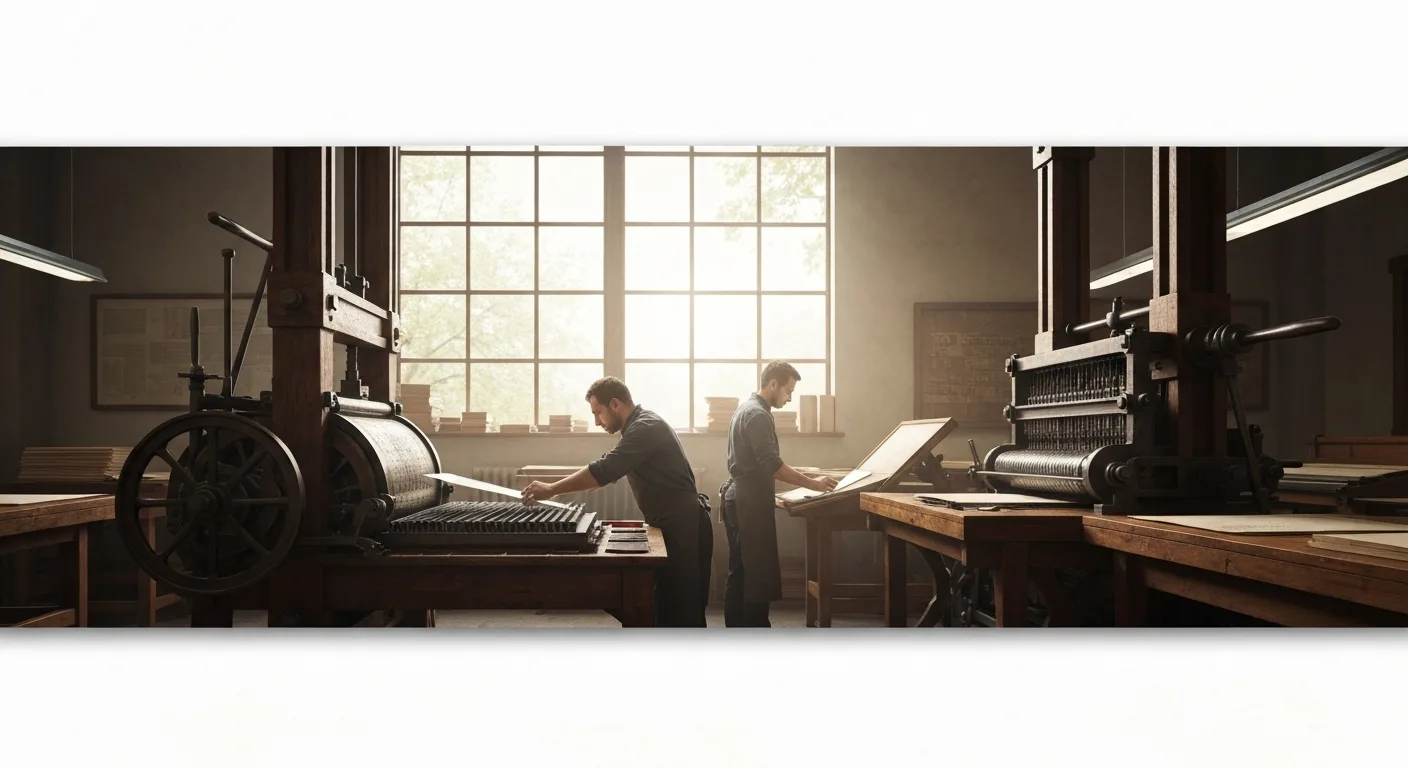
However, it was the Printing Press with movable type, perfected by Johannes Gutenberg around 1440, that truly ushered in a new era. Before Gutenberg, books were laboriously copied by hand, making them rare and expensive. The printing press democratized knowledge by making books widely available and affordable. This invention fueled the Renaissance, facilitated the Protestant Reformation, spread scientific ideas, and significantly increased literacy rates across Europe. It laid the groundwork for mass communication and the rapid dissemination of information, an impact that continues to resonate in our digital age.
Other significant inventions from this period include the Magnetic Compass (China, 11th century), which revolutionized navigation and enabled the Age of Exploration; Eyeglasses (Italy, late 13th century), which extended the productive lives of scholars and artisans; and the Mechanical Clock (Europe, 13th century), which brought a new level of precision to timekeeping, profoundly altering daily routines and the organization of labor. These inventions, collectively, demonstrate a growing sophistication in human thought and engineering, moving beyond basic needs to enhance human capability and understanding.
The Industrial Revolutions: Powering Progress and Redefining Society
The 18th and 19th centuries witnessed a series of profound transformations collectively known as the Industrial Revolutions. These periods were characterized by a shift from agrarian, handcraft economies to industrial, machine-manufacturing economies, driven by an explosion of mechanical and scientific inventions.
At the heart of the First Industrial Revolution was the Steam Engine. While earlier versions existed, James Watt’s improvements in the late 18th century made it a powerful, efficient, and versatile prime mover. The steam engine powered factories, locomotives, and steamships, revolutionizing manufacturing, transportation, and mining. It enabled the construction of larger factories away from water sources, spurred urbanization, and dramatically increased the speed and capacity of goods and people movement, fostering global trade and connectivity.

The Second Industrial Revolution, beginning in the late 19th century, was defined by Electricity. Pioneers like Thomas Edison (incandescent light bulb, power generation systems) and Nikola Tesla (alternating current system) harnessed this invisible force to light cities, power homes and factories, and drive new industries. Electricity fundamentally changed daily life, extending working hours, improving safety, and enabling a vast array of new appliances and technologies. Its impact on urban development, industrial efficiency, and public life is immeasurable.
Contemporaneous with electricity was the development of the Internal Combustion Engine and the Automobile. Karl Benz and Gottlieb Daimler’s work in the 1880s led to the first successful automobiles. Henry Ford’s assembly line production made cars affordable for the masses in the early 20th century. The automobile transformed transportation, facilitating personal mobility, suburbanization, and the growth of the oil industry, forever altering urban landscapes and individual freedom. Other key inventions included the Telegraph and Telephone, which revolutionized long-distance communication, shrinking the world further and enabling instant information exchange.
The Information Age: A Pivotal Chapter in the History of Inventions That Changed the World
The mid-20th century marked the dawn of the Information Age, characterized by the rapid development of digital technology and its pervasive influence on every aspect of life. This era has given us some of the most complex and interconnected inventions in human history of inventions that changed the world.
The invention of the Transistor in 1947 at Bell Labs by John Bardeen, Walter Brattain, and William Shockley was a pivotal moment. This tiny semiconductor device could amplify and switch electronic signals and electrical power. Its small size, low power consumption, and reliability made it the fundamental building block for all modern electronics, paving the way for microchips and the miniaturization of computers.
From the transistor emerged the Computer. Early computers like ENIAC (1946) were massive machines, but the invention of the integrated circuit (Jack Kilby, Robert Noyce, 1958) and the microprocessor (Intel 4004, 1971) led to personal computers becoming accessible to the public. The computer revolutionized data processing, automation, and design, empowering individuals and businesses with unprecedented computational power.
However, it was the Internet and the World Wide Web that truly defined the Information Age. Originating from ARPANET in the late 1960s, the internet evolved into a global network of interconnected computer networks. Tim Berners-Lee’s invention of the World Wide Web in 1989, a system of interlinked hypertext documents accessible via the internet, made information universally available. The internet and WWW transformed communication, commerce, education, and entertainment, creating a global village and fundamentally altering how humans interact and access knowledge.

Accompanying these, the Mobile Phone, particularly the smartphone (Apple iPhone, 2007), integrated computing, communication, and connectivity into a single, portable device. Smartphones have become ubiquitous, reshaping social interactions, driving new industries, and providing instant access to information and services globally. Other crucial inventions include GPS (Global Positioning System), which revolutionized navigation and location-based services, and Digital Photography, which changed how we capture and share memories.
Beyond the Digital: Future Innovations and Continuing the Legacy of World-Changing Inventions
Innovation is not a relic of the past; it is an ongoing, accelerating process. The 21st century continues to witness breakthroughs that promise to redefine our future, building on the vast history of inventions that changed the world.
Artificial Intelligence (AI) stands as one of the most transformative fields of our time. From machine learning algorithms that power personalized recommendations to sophisticated neural networks enabling self-driving cars and medical diagnostics, AI is poised to revolutionize industries, enhance human capabilities, and solve complex global challenges. While still in its early stages, AI’s potential impact on work, ethics, and society is immense, driving discussions about the future of human-machine interaction.
Biotechnology has also seen monumental leaps. Techniques like CRISPR-Cas9 gene editing (Jennifer Doudna, Emmanuelle Charpentier, 2012) offer unprecedented precision in altering DNA. This invention holds the promise of curing genetic diseases, developing new crops, and even understanding the fundamental processes of life. Similarly, advancements in personalized medicine and vaccine development (exemplified by mRNA vaccines during the COVID-19 pandemic) are rapidly changing healthcare.
The urgent need for sustainable solutions has propelled innovations in Renewable Energy. Solar panels, wind turbines, and advanced battery storage technologies are becoming increasingly efficient and affordable, driving the transition away from fossil fuels. These inventions are critical in combating climate change and ensuring a sustainable future for humanity.
Finally, renewed interest and advancements in Space Exploration (e.g., reusable rockets, private spaceflight, Mars missions) are pushing the boundaries of human presence beyond Earth. These endeavors not only expand our scientific understanding of the cosmos but also drive innovation in materials science, propulsion, and robotics, promising future benefits for life on Earth. From quantum computing to advanced robotics and sustainable materials, the spirit of invention continues to thrive, promising a future shaped by human ingenuity and the relentless pursuit of progress.
Conclusion
The history of inventions that changed the world is a powerful narrative of human evolution, marked by bursts of creativity, scientific discovery, and engineering prowess. From the foundational tools of ancient civilizations to the complex digital ecosystems of today, each invention has built upon its predecessors, creating a continuous chain of progress. The wheel enabled trade, writing preserved knowledge, the printing press disseminated it, the steam engine powered industry, and the internet connected the globe.
These innovations have not merely provided convenience; they have fundamentally reshaped economies, fostered new social structures, redefined warfare, expanded human lifespan, and broadened our understanding of the universe. As we look to the future, the pace of innovation shows no signs of slowing. Emerging fields like AI, biotechnology, and sustainable energy promise to continue this legacy, addressing new challenges and opening up unimaginable possibilities. The human spirit of invention remains our most potent force for change, a constant reminder of our capacity to dream, design, and build a better world.