
Mind-Blowing Historical Facts You Won't Believe Are Real
Dive into history's most astonishing corners with TrendSeek. Uncover bizarre, improbable, and mind-blowing historical facts that defy belief and will challenge your perception of the past.
Unearthing the Past: 10+ Historical Facts You Won’t Believe Are Real
Welcome to TrendSeek, where we dive deep into the most fascinating corners of human knowledge. Today, we’re embarking on a journey through time to uncover some truly astonishing historical facts you won’t believe are real. History, often perceived as a dry chronicle of dates and names, is in reality a vibrant tapestry woven with tales so bizarre, so improbable, that they often defy belief. From ancient civilizations with surprisingly modern amenities to bizarre wars and eccentric societal norms, the past is replete with stories that challenge our understanding of reality. Prepare to have your perceptions of history shattered as we explore the unbelievable truths lurking just beneath the surface of textbooks.
Ancient Oddities & Unlikely Inventions
The further back we go, the more alien the world seems, yet ancient societies often harbored innovations and practices that feel shockingly contemporary or utterly fantastical.
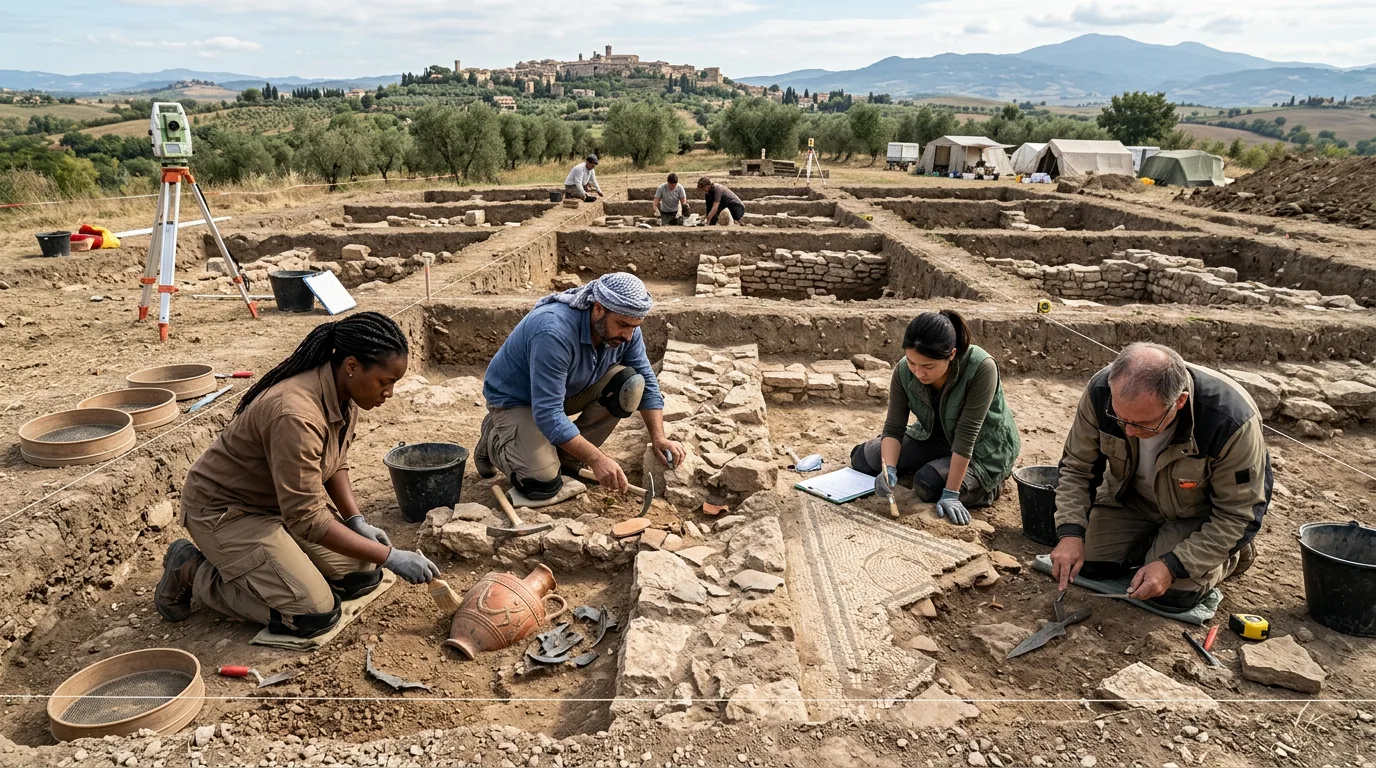
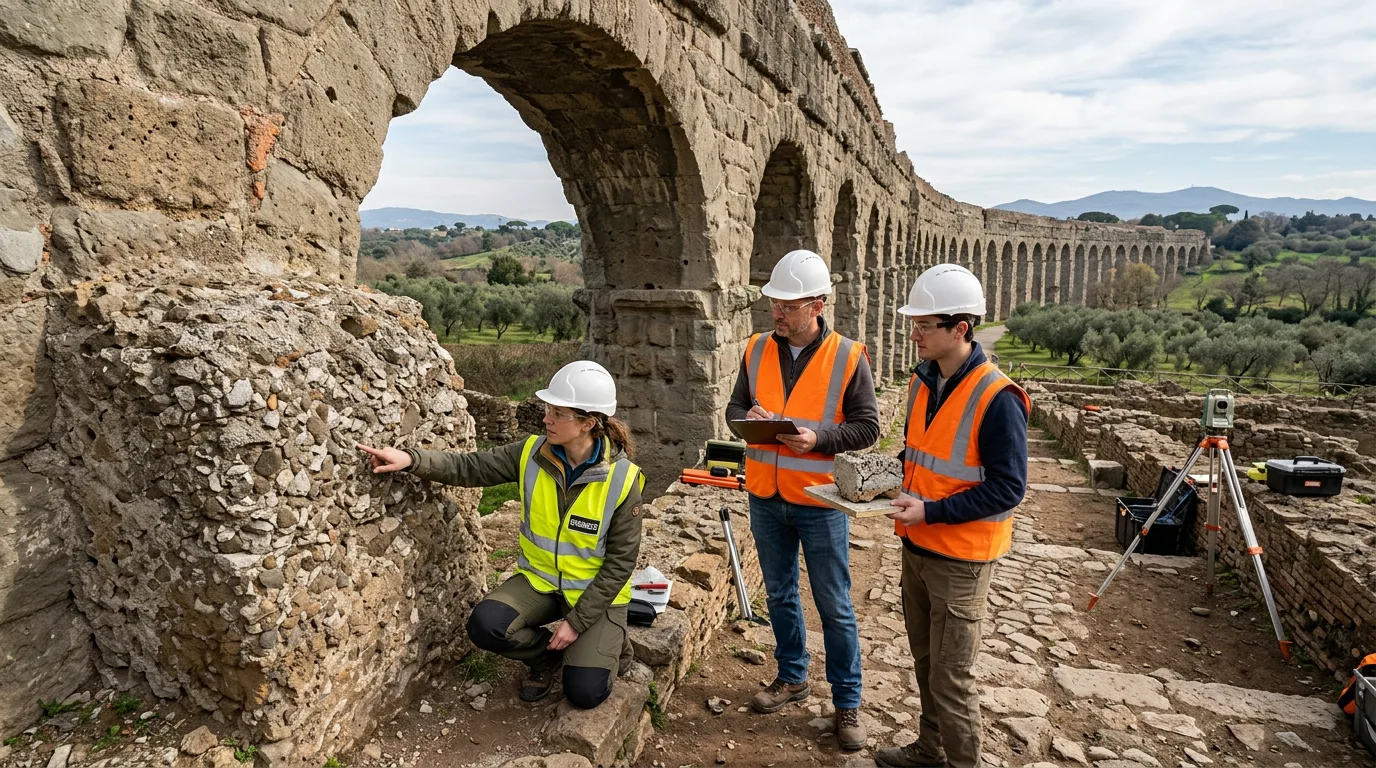
1. Roman Concrete Was Superior to Modern Concrete: Forget everything you thought you knew about ancient technology. The Romans mastered concrete construction to an extent that modern engineers are still trying to replicate. Their secret? A unique volcanic ash mix, combined with lime and seawater, which allowed the concrete to heal itself over time and resist erosion. Structures like the Pantheon and numerous aqueducts have stood for two millennia, often outlasting modern concrete that degrades within decades. This incredible durability is a testament to an ancient engineering marvel that we’re only now beginning to fully understand and appreciate, proving that sometimes, older truly is better.
2. Ancient Greek Alarm Clocks Existed: Long before smartphones and digital alarms, the Greeks had their own ingenious methods for waking up on time. Ctesibius, a Hellenistic engineer and inventor from Alexandria (c. 285–222 BC), is credited with inventing a complex water clock (clepsydra) that could sound an alarm. These devices used a system of dripping water to measure time, and some models were designed to drop pebbles onto a gong or even trigger mechanical figures to blow a trumpet at a preset hour. Imagine the surprise of hearing a mechanical trumpet blare to signal the start of your day in ancient Greece!
3. Emperor Caligula Appointed His Horse as a Consul: Roman Emperor Caligula (reigned 37-41 AD) was notorious for his eccentric and tyrannical behavior, but few stories are as infamous as his alleged plan to appoint his favorite horse, Incitatus, as a Roman Consul. While historical accounts vary on whether he actually carried through with the appointment or merely threatened to, the story itself highlights the emperor’s contempt for the Roman Senate and his grasp on absolute power. Incitatus reportedly lived in a marble stall, ate from an ivory manger, and even had servants and a house of his own. This bizarre tale underscores the unimaginable excesses and whims of absolute rulers in antiquity.
Bizarre Battles & Unconventional Warfare
History is riddled with conflicts, but some stand out not for their strategic brilliance or tragic scale, but for their sheer absurdity. These historical facts you won’t believe are real redefine our understanding of conflict.
1. The Emu War of Australia (1932): Australia, a land of unique wildlife, once found itself embroiled in a bizarre conflict against its feathered inhabitants. In 1932, a large population of emus (estimated at 20,000) began migrating through farming regions in Western Australia, destroying crops. In response, the Australian military was deployed, equipped with machine guns, to combat the avian invaders. The “war” lasted several weeks, with the highly agile emus proving surprisingly difficult targets. Despite their firepower, the soldiers struggled against the birds’ guerrilla tactics, eventually withdrawing with a largely inconclusive result. The emus, it seems, won the war, making this a truly unbelievable chapter in military history.
2. The War of the Bucket (1325): This conflict between the rival Italian city-states of Bologna and Modena is often cited as one of the most trivial causes for war in history. The story goes that a group of Modenese soldiers stole a wooden bucket from a well in Bologna, sparking outrage and demands for its return. When Bologna refused, a full-scale war erupted, involving thousands of soldiers and resulting in significant casualties. Modena ultimately won the battle and kept the bucket, which remains in Modena’s city hall to this day. While underlying political tensions certainly fueled the conflict, the legend of a war fought over a single wooden bucket is an enduring testament to human folly.
3. The Great Molasses Flood of Boston (1919): Not a war in the traditional sense, but an utterly bizarre and devastating event. On January 15, 1919, a massive storage tank containing over 2.3 million gallons of molasses burst in the North End of Boston. A 15-foot-high wave of molasses, traveling at an estimated 35 miles per hour, swept through the streets, demolishing buildings, derailing a train, and killing 21 people while injuring 150 more. The sticky wave was so powerful it ripped houses from their foundations. The cleanup effort lasted weeks, and the sweet scent of molasses reportedly lingered in the area for decades. It’s an unbelievable example of how an industrial accident can turn into an unprecedented urban disaster.
Strange Societies & Peculiar Practices – More Historical Facts You Won’t Believe Are Real
Human societies throughout history have developed customs and beliefs that can seem utterly alien to modern sensibilities. These unbelievable historical facts reveal the incredible diversity of human experience.

1. Victorian Post-Mortem Photography: In the 19th century, particularly during the Victorian era, death was a much more visible and integrated part of life. With high mortality rates and the advent of photography, a peculiar practice emerged: post-mortem photography. Families would commission photographs of deceased loved ones, often arranged to look as if they were merely sleeping, sometimes even propped up with open eyes. These photographs served as cherished mementos, often the only photographic record a family had of the deceased, especially for children who died young. While unsettling to modern eyes, it was a deeply personal and culturally accepted way to cope with grief and preserve memories.
2. Dwarf Tossing as a Popular Pub Sport: Believe it or not, in some parts of the world, particularly in Australia, the UK, and the US in the 1980s, dwarf tossing was a controversial yet popular pub sport. Participants would compete to throw a person with dwarfism (who wore protective padding) the furthest onto a mattress or similar soft landing. While it gained a cult following in certain circles, it also faced widespread condemnation from disability rights groups, leading to its eventual ban in many jurisdictions. This disturbing historical “sport” highlights the darker side of entertainment and societal attitudes towards disability in recent memory.
3. The Dancing Plague of 1518: Imagine a town gripped by an uncontrollable urge to dance, without rest, for days on end, until exhaustion or even death. This is precisely what happened in Strasbourg (then part of the Holy Roman Empire) in July 1518. A woman named Frau Troffea began to dance uncontrollably in the street, and within a month, hundreds of people joined her, seemingly against their will. Many danced until they collapsed from exhaustion, heart attacks, or strokes. While modern theories range from mass psychogenic illness to ergot poisoning, the exact cause remains debated. This bizarre episode is one of history’s most perplexing and tragic examples of collective hysteria.
Unsung Heroes & Unlikely Events
History is also a treasure trove of unexpected acts of heroism and fortunate coincidences that shaped the world in profound ways.
1. The “Great Stink” of London and Its Revolutionary Solution (1858): In the summer of 1858, the River Thames, which served as London’s main sewer, reached an unprecedented level of putrefaction. The smell was so overpowering that it disrupted Parliament and led to fears of disease outbreaks (cholera was rampant). This crisis, known as the Great Stink, forced authorities to act. Joseph Bazalgette, a civil engineer, spearheaded the construction of a vast underground sewer system, a monumental feat of Victorian engineering that diverted waste away from the river. This ambitious project, completed in just a few years, dramatically improved public health and transformed London, demonstrating how an overwhelming environmental crisis can spur groundbreaking infrastructure.
2. Tsutomu Yamaguchi, The Man Who Survived Two Atomic Bombs: The story of Tsutomu Yamaguchi is nothing short of miraculous. He was in Hiroshima on a business trip on August 6, 1945, when the first atomic bomb was dropped. Despite being less than two miles from ground zero, he survived, albeit with severe burns. He then traveled back to his hometown of Nagasaki. On August 9, 1945, while recounting his harrowing experience to his supervisor, the second atomic bomb struck Nagasaki. Yamaguchi survived again, relatively unscathed from the second blast, making him the only person officially recognized by the Japanese government as having survived both atomic bombings. His incredible resilience is a testament to the human will to survive against impossible odds.
3. The Accidental Discovery of Penicillin by Alexander Fleming (1928): Many of history’s greatest breakthroughs have come not from meticulous planning, but from serendipitous accidents. One such event was the discovery of penicillin by Scottish bacteriologist Alexander Fleming. In 1928, Fleming went on vacation, leaving a petri dish of staphylococcus bacteria cultures on his lab bench. Upon his return, he noticed that a mold (Penicillium notatum) had contaminated one of his cultures, and, more importantly, the bacteria around the mold colony had been destroyed. He realized he had stumbled upon a powerful antibacterial agent. This accidental observation revolutionized medicine, ushering in the age of antibiotics and saving countless lives, an undeniable historical fact you won’t believe is real until you learn the details.
Conclusion
As we’ve journeyed through these incredible tales, it becomes abundantly clear that history is far stranger and more fascinating than most textbooks let on. From ancient Roman engineering feats that defy modern understanding to bizarre wars fought over buckets and plagues of uncontrollable dancing, the past is a rich tapestry of the unexpected. These historical facts you won’t believe are real serve as a powerful reminder that human ingenuity, folly, resilience, and sheer absurdity have always been constants. They challenge our assumptions, spark our curiosity, and encourage us to look beyond the familiar narratives, proving that the truth is often stranger, and more compelling, than fiction. So next time you think you know history, remember that there’s always an unbelievable truth waiting to be discovered.