
Quantum Brain: Does Human Consciousness Operate at a Quantum Level?
Explore the profound question: Does the human brain operate on a quantum level? Delve into the scientific inquiry challenging classical neuroscience models and unraveling the mysteries of consciousness and thought.
Unraveling the Quantum Mind: Does the Human Brain Work on a Quantum Level?
For centuries, humanity has grappled with the profound mysteries of consciousness, thought, and the very essence of what makes us ‘us.’ While classical neuroscience offers increasingly sophisticated models of brain function, a radical and intriguing question continues to emerge from the fringes of scientific inquiry: does the human brain work on a quantum level? This isn’t just a philosophical musing; it’s a scientific challenge that probes the very boundaries between biology, physics, and the nature of reality itself. TrendSeek delves into this captivating debate, exploring the theories, the evidence, and the immense challenges involved in understanding the brain as potentially more than just a classical computer.
The Classical Brain: A Symphony of Neurons and Synapses
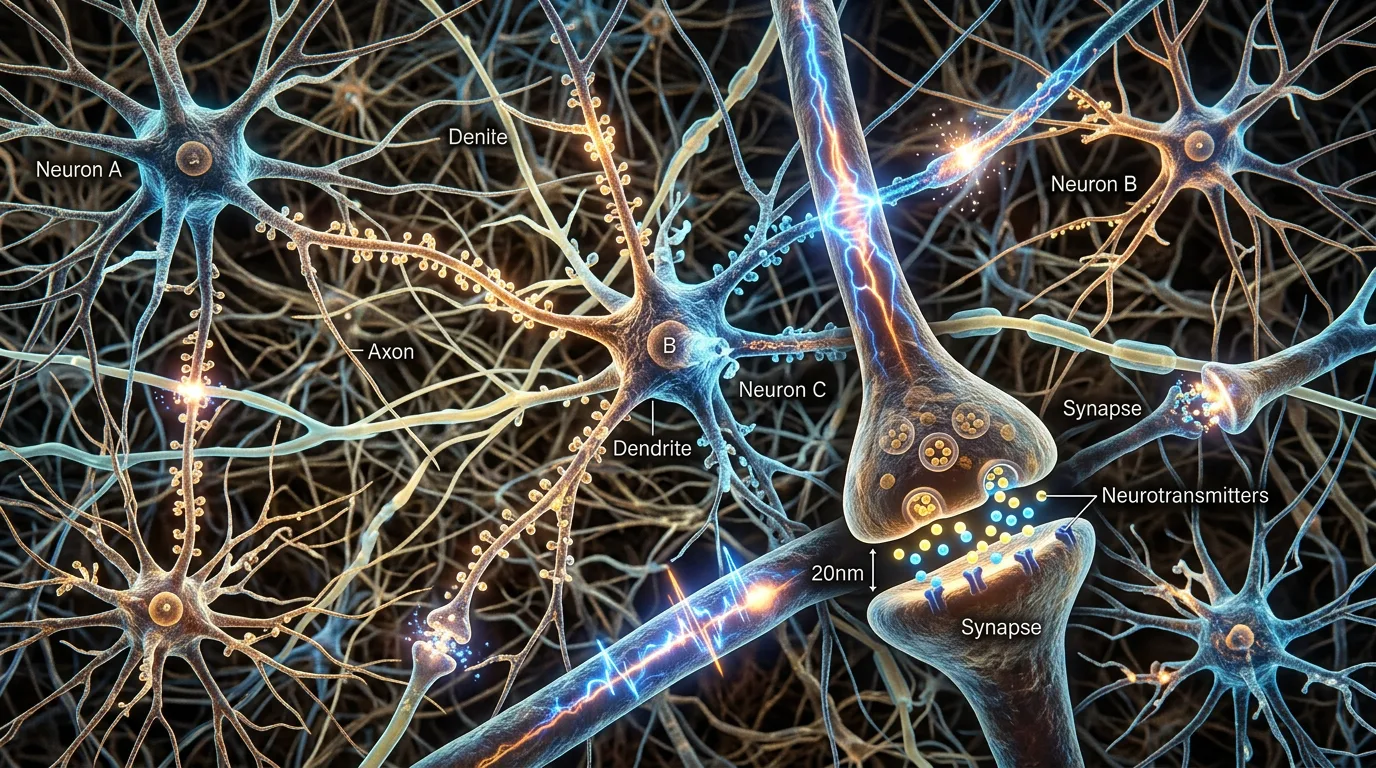
Before we venture into the quantum realm, it’s crucial to understand the prevailing classical model of brain function. Our current understanding paints the brain as an incredibly complex, electrochemical machine. At its core are billions of neurons, specialized cells that communicate through electrical impulses and chemical signals.
When a neuron “fires,” it generates an electrical signal that travels down its axon. At the end of the axon, it releases neurotransmitters into the synaptic cleft – a tiny gap between neurons. These neurotransmitters bind to receptors on the neighboring neuron, either exciting or inhibiting it, thereby influencing whether that neuron will fire. This intricate dance of electrical pulses and chemical exchanges forms vast networks responsible for everything from basic reflexes to complex thoughts, emotions, and memories.
This classical view has been incredibly successful. We’ve mapped neural pathways, identified areas associated with specific functions, and developed treatments for neurological disorders based on this understanding. The brain, in this model, operates much like an advanced, parallel-processing computer, with information encoded in the firing patterns and connectivity strengths of its neural circuits. While incredibly powerful, some argue that this classical framework might not fully account for the subjective experience of consciousness, free will, or the speed and efficiency of certain cognitive processes.
Quantum Mechanics Unveiled: A Primer on the Bizarre
To truly appreciate the “quantum brain” hypothesis, we need a basic grasp of quantum mechanics, the branch of physics that describes the behavior of matter and energy at the atomic and subatomic levels. It’s a world that defies our everyday intuition, characterized by phenomena that seem utterly bizarre:
- Superposition: Unlike classical objects that have a definite state (e.g., a coin is either heads or tails), a quantum particle can exist in multiple states simultaneously until it is observed or measured. Imagine a quantum coin that is both heads AND tails at the same time until you look at it.
- Entanglement: Two or more quantum particles can become linked in such a way that they share the same fate, no matter how far apart they are. Measuring the state of one instantly influences the state of the other, as if they are communicating faster than light. Einstein famously called this “spooky action at a distance.”
- Quantum Tunneling: Particles can sometimes pass through energy barriers that they classically shouldn’t have enough energy to overcome. It’s like a ball rolling up a hill and appearing on the other side without having enough momentum to get over the top.
- Wave-Particle Duality: Quantum entities can exhibit properties of both particles (discrete units) and waves (spread-out disturbances) depending on how they are observed.
These principles underpin the very fabric of reality at its smallest scales, governing everything from how atoms bond to how stars burn. The question then becomes: could these fundamental, non-classical phenomena play a role in the most complex structure known – the human brain?

The Quantum Brain Hypothesis: Does the Human Brain Work on a Quantum Level?
The idea that the brain might exploit quantum mechanics isn’t new, but it gained significant traction with the Orchestrated Objective Reduction (Orch-OR) theory proposed by physicist Roger Penrose and anesthesiologist Stuart Hameroff. Their hypothesis suggests that consciousness arises from quantum processes occurring within the brain’s microtubules.
Microtubules are protein polymers that form part of the cell’s cytoskeleton, providing structural support and transport pathways. Hameroff, a medical doctor, observed their intricate lattice-like structure within neurons and proposed that they could act as a suitable environment for quantum coherence.
Here’s a simplified breakdown of Orch-OR:
- Quantum Coherence in Microtubules: Penrose and Hameroff suggest that the protein subunits (tubulins) within microtubules can exist in a superposition of multiple conformational states. These superpositions could remain coherent (linked in a quantum state) for long enough to influence brain function.
- Orchestrated Objective Reduction: Penrose further proposed a mechanism called “Objective Reduction” where quantum superpositions collapse not randomly, but due to an inherent property of spacetime geometry at a fundamental level. Hameroff added the “Orchestrated” part, suggesting that synaptic inputs and neural activity “orchestrate” these quantum collapses, linking them to specific conscious events.
- Consciousness as Quantum Collapse: In this model, moments of conscious experience are not merely the result of classical neuronal firing but are discrete events corresponding to these orchestrated quantum collapses within microtubules.

While Orch-OR is the most prominent, other theories suggest quantum effects might play a role in various brain processes:
- Ion Channels: Some researchers propose that quantum tunneling could be involved in the rapid and precise movement of ions across neuronal membranes, influencing electrical signaling.
- Neurotransmitter Release: The binding of neurotransmitters might involve quantum effects, altering their interaction with receptors.
- Enzyme Function: Quantum tunneling is already known to play a role in certain enzymatic reactions throughout the body, raising the possibility of similar mechanisms in brain enzymes.
These theories offer intriguing possibilities, suggesting that the brain might leverage the unique properties of quantum mechanics to achieve capabilities that classical models struggle to explain, such as the unity of consciousness, the speed of thought, or even aspects of free will.
The Decoupling Challenge: Why Proving a Quantum Brain is Hard
Despite the allure of quantum consciousness, the hypothesis faces enormous scientific skepticism and significant challenges, primarily centered around a phenomenon called decoherence.
- Decoherence: Quantum states are incredibly fragile. They exist in superposition or entanglement only when isolated from their environment. Any interaction with the “outside world” (heat, vibration, stray particles) causes the quantum state to “decohere,” forcing it to collapse into a classical, definite state.
- The Warm, Wet Brain: The human brain is a notoriously hot, wet, and noisy environment. It operates at body temperature (around 37°C or 98.6°F) and is constantly bombarded by biochemical interactions. This environment is considered highly unsuitable for maintaining delicate quantum coherence for any significant period, let alone the milliseconds or seconds required for cognitive processes. Most quantum phenomena studied in labs require extreme cold and vacuum conditions.
- Scale Mismatch: Quantum effects are typically observed at atomic or subatomic scales. While microtubules are tiny, the brain itself is a macroscopic organ. Bridging this vast difference in scale, from quantum events in individual proteins to large-scale conscious experience, is a monumental conceptual hurdle.
- Lack of Empirical Evidence: The most significant challenge is the absence of direct, verifiable experimental evidence. While the theories are conceptually elegant, no experiment has definitively demonstrated quantum coherence or entanglement playing a functional role in brain activity or consciousness. Researchers have struggled to design experiments that could detect such subtle quantum effects amidst the overwhelming classical noise of the brain.
- The “Hard Problem” of Consciousness: Even if quantum effects were found in the brain, it doesn’t automatically solve the “hard problem” of consciousness – how physical processes give rise to subjective experience. Quantum mechanics might provide a mechanism, but the explanatory gap remains.
Therefore, while the question, “does the human brain work on a quantum level?” remains open, the scientific consensus leans heavily towards the classical model due to the overwhelming evidence for decoherence and the lack of direct quantum observations within living brain tissue.
Beyond the Brain: Quantum Biology and Emerging Evidence
While direct evidence for quantum consciousness in the brain remains elusive, the broader field of quantum biology is rapidly gaining traction. This discipline investigates the role of quantum mechanics in biological processes throughout nature, offering tantalizing hints that life itself might harness quantum phenomena.
Here are some established or strongly suspected examples:
- Photosynthesis: Plants convert sunlight into energy with remarkable efficiency. Research suggests that quantum coherence helps funnel light energy directly to reaction centers with minimal loss, effectively “sampling” multiple pathways simultaneously to find the most efficient one.
- Bird Navigation: European robins and other migratory birds can sense Earth’s magnetic field to navigate. One leading theory suggests this involves quantum entanglement of electron spins in light-sensitive proteins in their eyes, allowing them to “see” magnetic field lines.
- Enzyme Catalysis: As mentioned, quantum tunneling is known to speed up certain enzymatic reactions in biological systems, allowing particles to bypass energy barriers.
- Smell: Some theories propose that our sense of smell might involve quantum vibrational modes of molecules interacting with receptors, rather than just their shape.
These examples demonstrate that biological systems, even at physiological temperatures, can protect and utilize quantum effects. This provides a glimmer of hope for quantum brain theories, suggesting that nature might have evolved mechanisms to mitigate decoherence in specific biological contexts. However, the complexity of a quantum effect in a single protein versus a system responsible for consciousness is vastly different.
The Verdict So Far: Does the Human Brain Work on a Quantum Level?
The question does the human brain work on a quantum level continues to be one of science’s most intriguing and challenging frontiers. On one hand, the classical neuroscience model has provided immense insights into brain function, explaining much of what we observe. On the other, the profound mysteries of consciousness, subjective experience, and the brain’s unique capabilities continue to inspire scientists to look beyond classical physics.
Currently, there is no definitive, widely accepted scientific proof that the human brain operates on a quantum level in a way that directly explains consciousness or complex cognitive functions. The Orch-OR theory, while elegant and thought-provoking, remains a hypothesis. The overwhelming hurdle of decoherence in the warm, wet brain environment poses a significant challenge to all quantum brain theories.
However, the burgeoning field of quantum biology demonstrates that life can harness quantum phenomena for specific biological advantages. This keeps the door open for future discoveries, suggesting that perhaps localized, fleeting quantum effects could play a role in specific neural processes, even if not directly explaining the entirety of consciousness.
Conclusion
The journey to understand the human brain is far from over. While classical neuroscience provides a robust framework, the possibility that quantum mechanics plays a fundamental role in our most complex organ remains a captivating prospect. The “quantum brain” hypothesis, particularly the Orch-OR theory, offers a compelling alternative paradigm for consciousness, even if it faces substantial scientific obstacles.
As technology advances and our understanding of both neuroscience and quantum mechanics deepens, new experiments may one day shed light on this profound question. For now, the debate continues, reminding us that the universe, and indeed our own minds, may be far stranger and more wonderful than we currently imagine. The quest to determine whether the human brain works on a quantum level is a testament to humanity’s insatiable curiosity about itself and the very nature of reality.