
Sputnik 1 (1957): The Launch That Filled Orbit With Junk
Sputnik 1's 1957 launch, circling Earth for 21 days, inadvertently started the growing problem of space debris from dead satellites.
On October 4, 1957, the Soviet Union launched Sputnik 1. That small, beeping sphere began humanity’s journey into space. It circled our planet for 21 days. This launch sparked a fierce space race. Nations rushed to put more objects into orbit. Each success, however, left a trail: spent rocket stages and dead satellites. We started filling the space around our planet with junk.
Our growing orbital mess
Space debris now rings our planet. It is made of dead satellites, spent rocket parts, and collision fragments. These objects fly around Earth at incredible speeds.
Most debris circles Low Earth Orbit (LEO), 160 to 2,000 kilometers above us. Geosynchronous Orbit (GEO) sits much higher, around 36,000 kilometers. Both orbits are vital for our technology.
Objects in LEO scream around at 27,000 kilometers per hour. A paint fleck at that speed can shred a spacecraft. Even tiny fragments become dangerous. They carry enormous kinetic energy.
Scientists initially focused on new missions. Orbital clutter was not a priority. Rules for disposing of spent hardware were few. Every mission just added to the mess.
By the 1970s, some experts worried. NASA astrophysicist Dr. Donald J. Kessler spoke up. He warned about the growing threat. His predictions soon became a serious problem.
Kessler’s prophecy: The first crashes
In 1978, Dr. Kessler published a paper outlining the Kessler Syndrome. He theorized a single collision could trigger a cascade of further impacts. Each impact would create more debris. This chain reaction could make certain orbits unusable. It would create a dense, uncontrollable cloud of shrapnel. His warning was theoretical then. Space still seemed vast and empty.
The first confirmed collision happened in July 1996. A fragment from a ten-year-old Ariane 4 rocket hit Cerise, a French military satellite. The collision tore off part of Cerise’s gravity-gradient boom.
This proved Kessler’s theory was not just speculation. Even small, untracked objects posed a real threat. The event made space agencies notice. It showed the risk of uncontrolled orbital environments. Despite new discussions about solutions, the problem kept growing. More satellites launched, and more rocket bodies stayed in orbit.
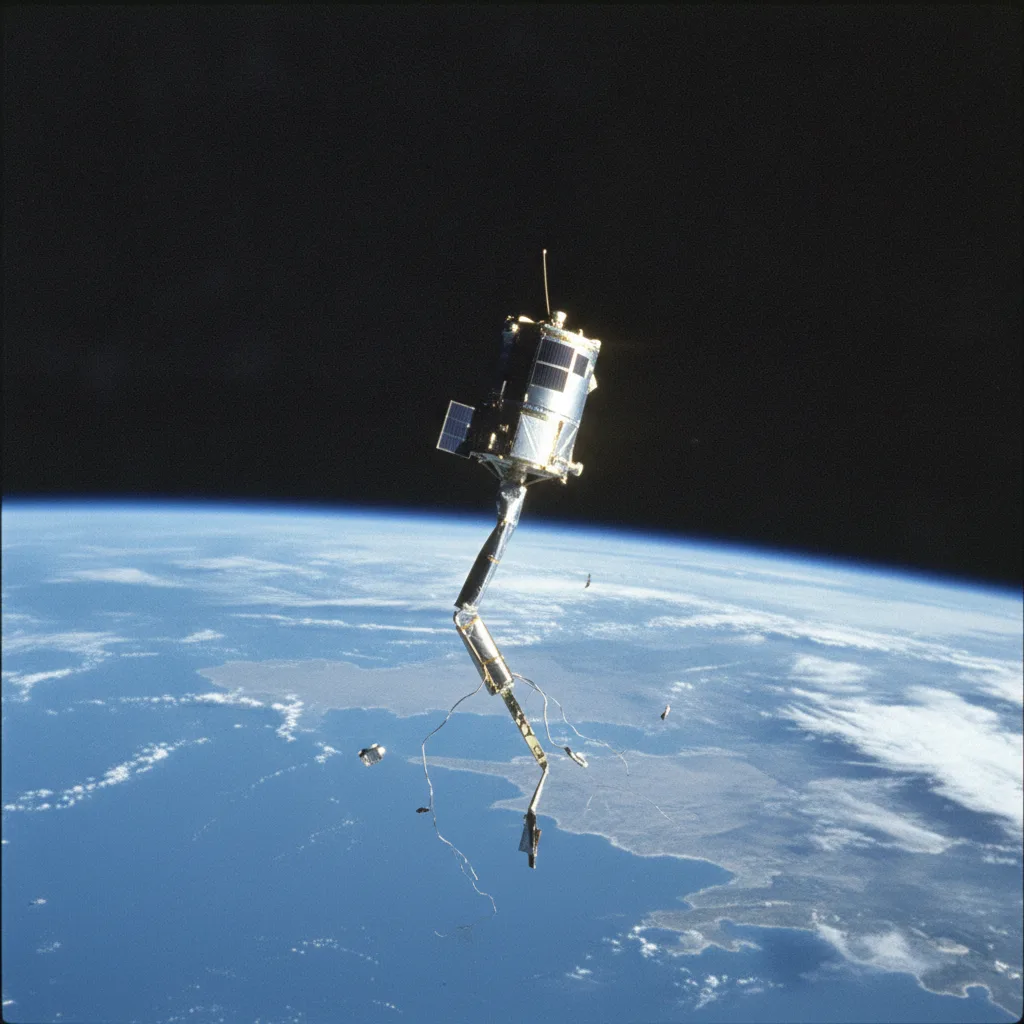
In July 1996, the French military satellite Cerise became the first confirmed spacecraft to be damaged by space debris when it collided with a fragment from an Ariane 4 rocket, tearing off part of its gravity-gradient boom and validating Dr. Kessler's warnings. (AI-generated illustration)
The big crash: Iridium and Cosmos
On February 10, 2009, two large satellites collided 789 kilometers above Siberia. An active U.S. satellite, Iridium 33, hit Cosmos 2251, a dead Russian military satellite.
They slammed into each other at 11.7 kilometers per second. The impact was very destructive. Both spacecraft exploded into thousands of pieces. They created a massive new debris field.
Nicholas Johnson, then NASA’s chief scientist for orbital debris, confirmed the severity. He said, “The collision significantly increased the population of trackable debris in Low Earth Orbit.” The event added over 2,000 trackable debris pieces. Many more untrackable fragments also formed.
This collision was unheard of. It was the first time two intact satellites accidentally destroyed each other. It proved Kessler’s warnings were right. The incident showed the orbital environment was getting dangerously crowded. This forced satellite operators to improve collision avoidance. It also showed the urgent need for international debris cleanup. The orbital environment had changed greatly.
Deliberate destruction: ASAT tests
On January 11, 2007, China tested an anti-satellite (ASAT) missile. They intentionally destroyed their Fengyun-1C weather satellite, orbiting at 865 kilometers. This created a huge amount of debris.
The test produced over 3,000 trackable debris pieces. Many fragments remain in orbit today. They threaten active satellites and human spaceflight. NASA reported this test created more long-lived debris than any other event.
Fourteen years later, on November 15, 2021, Russia destroyed its dead Cosmos 1408 satellite. This happened at 480 kilometers altitude. The explosion created at least 1,500 new trackable debris pieces.
NASA Administrator Bill Nelson criticized the test. He called it “reckless and irresponsible.” The debris forced the International Space Station (ISS) crew to shelter in their capsules. It threatened the lives of astronauts and cosmonauts. These ASAT tests show a concerning trend. Nations can deliberately worsen the debris problem. Such actions threaten global space systems and increase the risk of future collisions.
Our daily lives and future space travel are at risk
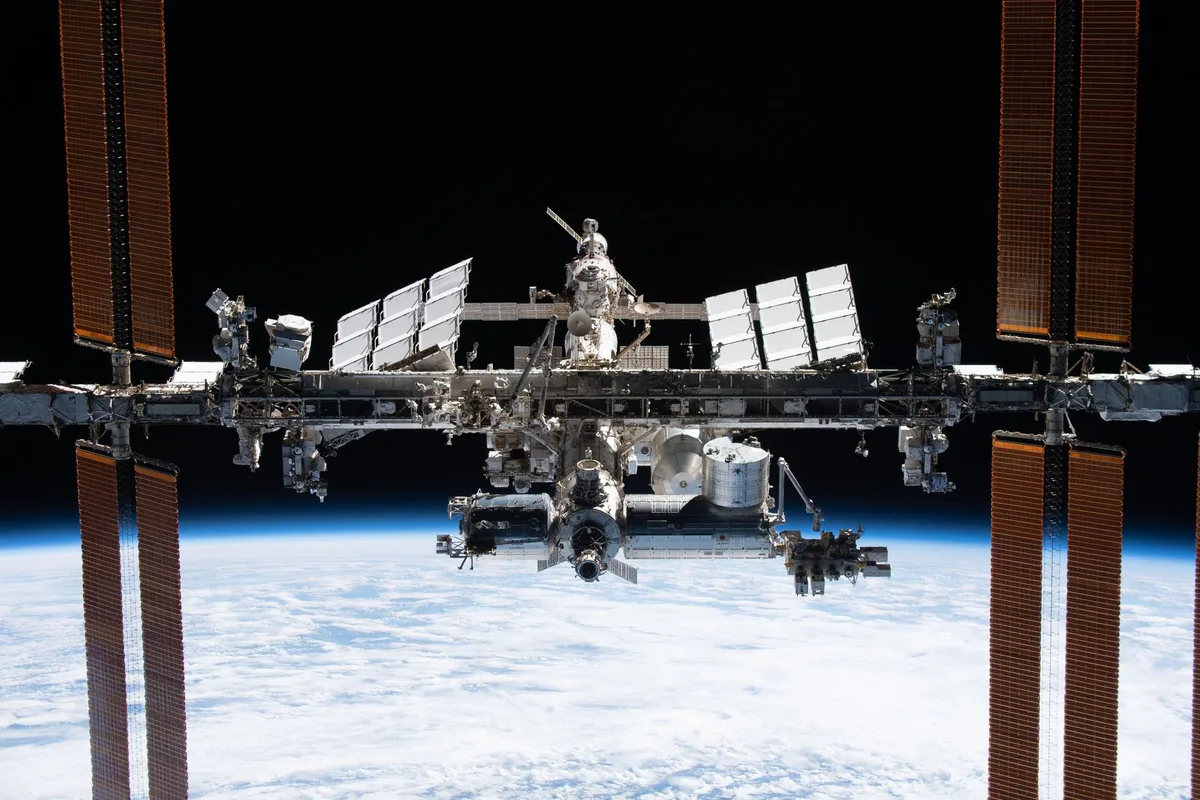
The International Space Station (ISS) and its crew were directly threatened by debris from Russia's 2021 ASAT test, forcing astronauts and cosmonauts to shelter in their capsules. This incident vividly demonstrated the immediate danger space debris poses to human life in orbit. (Source: isslivenow.com)
Today, U.S. Space Command tracks over 27,000 pieces of space debris. These are objects larger than 10 centimeters. Millions more smaller, untrackable pieces exist. Each one is a potential bullet.
This debris threatens vital services on Earth. Communications satellites, GPS, and weather forecasting all rely on clean orbits. A single impact could disrupt these systems globally. The economic cost would be very high.
Human spaceflight faces direct danger. The International Space Station performs hundreds of evasive maneuvers yearly. Josef Aschbacher, ESA Director General, pointed this out. He said, “The growth of space debris is making operations in orbit more complex and costly.” Future missions to the Moon and Mars must also deal with this risk.
Active debris removal technologies are now in development. Companies like ClearSpace and Astroscale lead these efforts. ClearSpace-1, an ESA mission scheduled for 2025, aims to capture a Vespa adapter. This is a large piece of debris from a 2013 Vega rocket launch. While these missions are important first steps, they only address a tiny fraction of the problem. Preventing future debris is just as important. This requires international cooperation and following reduction guidelines.
Cleaning up space: What we’re doing and what’s next
To manage space debris, the UN Committee on the Peaceful Uses of Outer Space (UN COPUOS) developed Space Debris Mitigation Guidelines. These guidelines recommend de-orbiting satellites within 25 years. They also suggest avoiding intentional breakups.
New satellites use “design for demise” principles. This means spacecraft burn up safely upon re-entry. This reduces new debris. Companies also explore on-orbit servicing to extend satellite lifespans.
International partnerships are forming. The EU’s Space Surveillance and Tracking (SST) program monitors debris. It provides collision warnings to satellite operators. This helps protect important systems. Yet, following these guidelines is voluntary. Some nations and private entities do not follow them strictly. More satellite constellations, like Starlink, add to the difficulty. Each one adds thousands of new objects.
The challenge is huge. Protecting our orbital paths for future generations requires new technology, agreements between countries, and a common effort. Our ability to explore and use space is at risk.
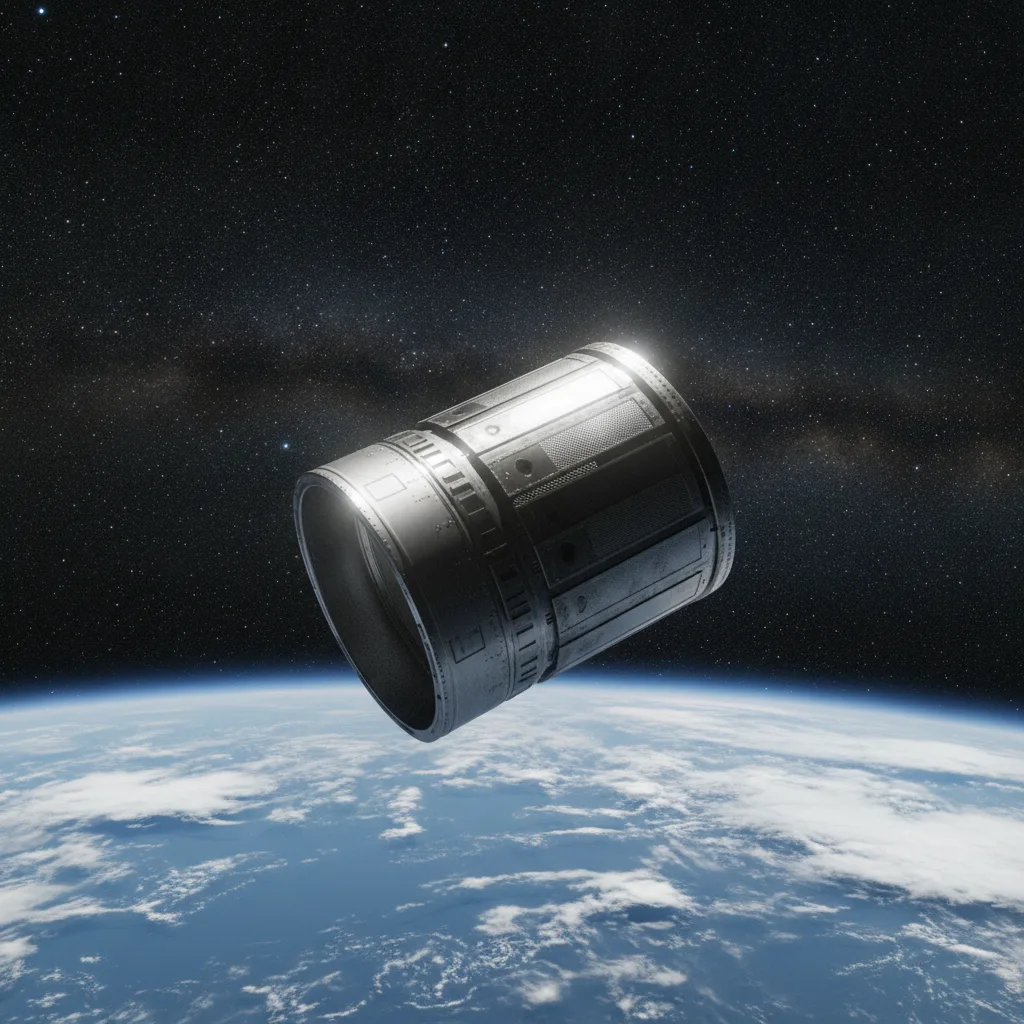
The Vespa adapter is a specific piece of rocket hardware from a 2013 Vega launch, now orbiting Earth as space debris. This large, untrackable object is the primary target for ESA's ClearSpace-1 mission, scheduled for 2025, which aims to demonstrate active debris removal technology. (AI-generated illustration)
FAQ
What is the kessler syndrome? The Kessler Syndrome is a theoretical scenario. It describes a chain reaction of collisions in Low Earth Orbit. Each collision creates more debris, leading to further impacts. This could make certain orbital altitudes unusable for generations.
How fast does space debris travel? Space debris in Low Earth Orbit travels at speeds up to 27,000 kilometers per hour. This speed means even tiny fragments can cause severe damage. Impacts can be catastrophic for active satellites and spacecraft.
What are asat tests? ASAT tests involve intentionally destroying a satellite with a missile. These tests create thousands of new debris pieces. They threaten all other objects in orbit.
What are some solutions to the space debris problem? Solutions include active debris removal missions, like ESA’s ClearSpace-1. New satellites are also designed for safe de-orbiting. International guidelines promote responsible space operations.
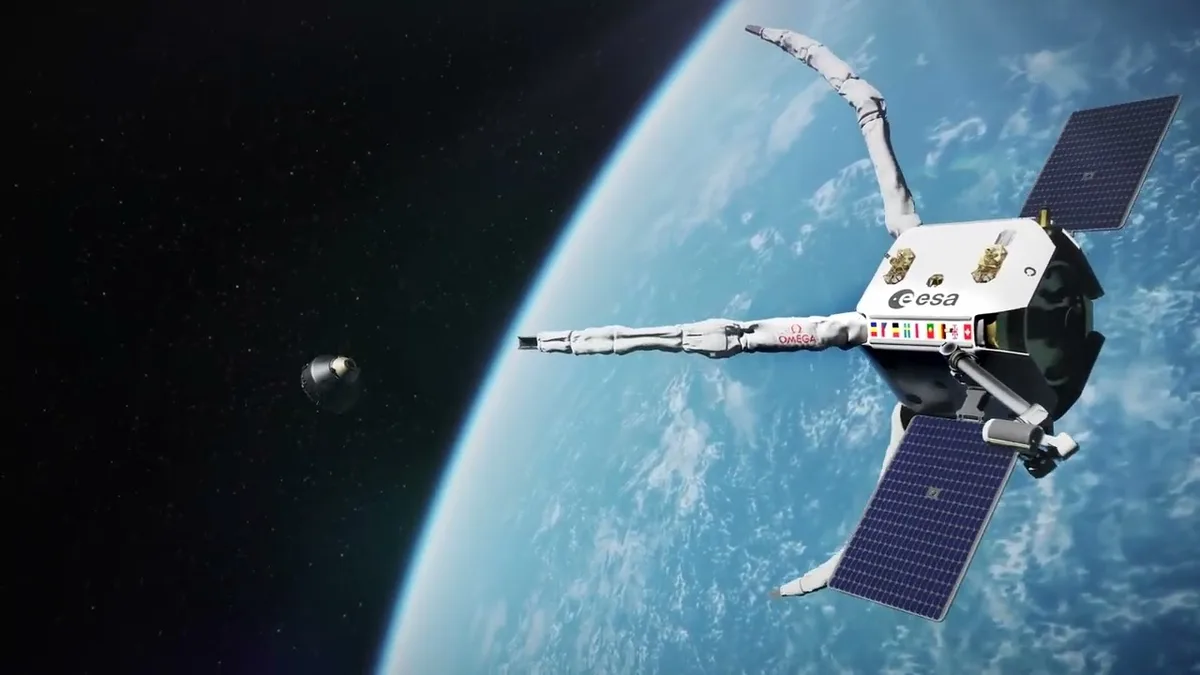
ESA's ClearSpace-1 is a pioneering mission designed to perform the first-ever active removal of space debris. It aims to capture and de-orbit a specific piece of space junk, the Vespa adapter, by 2026. (Source: space.com)
You might also like:
👉 1960’s TIROS-1: The Satellite That Showed Earth’s Climate