
Medieval Empires: Power, Culture, and Lasting Global Impact
Explore the vibrant Middle Ages, a complex era of profound transformations. Uncover the rise and fall of formidable medieval empires that shaped continents and fostered cultural exchange.
The Grand Tapestry of Power: Unveiling the Empires of the Middle Ages
The period often referred to as the Middle Ages, stretching roughly from the 5th to the 15th century CE, was far from a “dark age.” Instead, it was a vibrant, complex era marked by profound transformations, cultural dynamism, and the rise and fall of formidable empires of the Middle Ages. These colossal political entities shaped continents, fostered unprecedented cultural exchange, and laid the groundwork for modern nations. From the sprawling successor states of Rome to the innovative caliphates and the mighty khanates of the East, understanding these empires offers a crucial lens into the forces that forged our world. This guide delves into the characteristics, triumphs, and enduring legacies of these extraordinary powers.
Defining the Medieval Empire: Characteristics and Challenges
What exactly constituted an empire during the Middle Ages? Unlike the centralized, bureaucratic Roman Empire that preceded it, many medieval empires grappled with unique challenges. They were often characterized by:
- Vast Territorial Control: Extending dominion over diverse peoples and geographies, often through military conquest.
- Centralized (or Aspiringly Centralized) Authority: A single ruler or dynasty at the apex, though their actual power often varied greatly depending on the region and the loyalty of local lords.
- Cultural and Religious Hegemony: Many empires leveraged a dominant religion or culture to unify disparate populations, such as Christianity in Byzantium or Islam in the Caliphates.
- Economic Networks: Control over trade routes, resources, and often sophisticated tax systems to sustain their power and infrastructure.
- Military Prowess: A strong, organized military was essential for expansion, defense, and maintaining internal order.
However, medieval empires also faced persistent challenges: difficulties in communication and transport over vast distances, the constant threat of internal revolts or external invasions, and the struggle to integrate diverse ethnic and linguistic groups. Despite these hurdles, many managed to maintain stability and project influence for centuries, leaving indelible marks on history.
The Enduring Legacy: The Byzantine Empire Among Empires of the Middle Ages
Emerging from the eastern half of the Roman Empire, the Byzantine Empire stands as one of the most remarkable and longest-lasting empires of the Middle Ages. For over a thousand years, from its foundation in 330 CE (as Constantinople) until its fall in 1453, it served as a bulwark against invasions from the East and a beacon of classical learning and Christian culture.
Its capital, Constantinople, was a marvel of urban planning and architecture, boasting structures like the magnificent Hagia Sophia. The Byzantines preserved and transmitted much of ancient Greek and Roman knowledge to the medieval West and the Islamic world, influencing everything from philosophy to art and law. Emperor Justinian I (reigned 527–565 CE) epitomized Byzantine ambition, overseeing a golden age of territorial expansion, legal reform (the Corpus Juris Civilis or “Justinian Code”), and architectural innovation. His campaigns temporarily reclaimed significant portions of the old Western Roman Empire, including parts of Italy and North Africa.
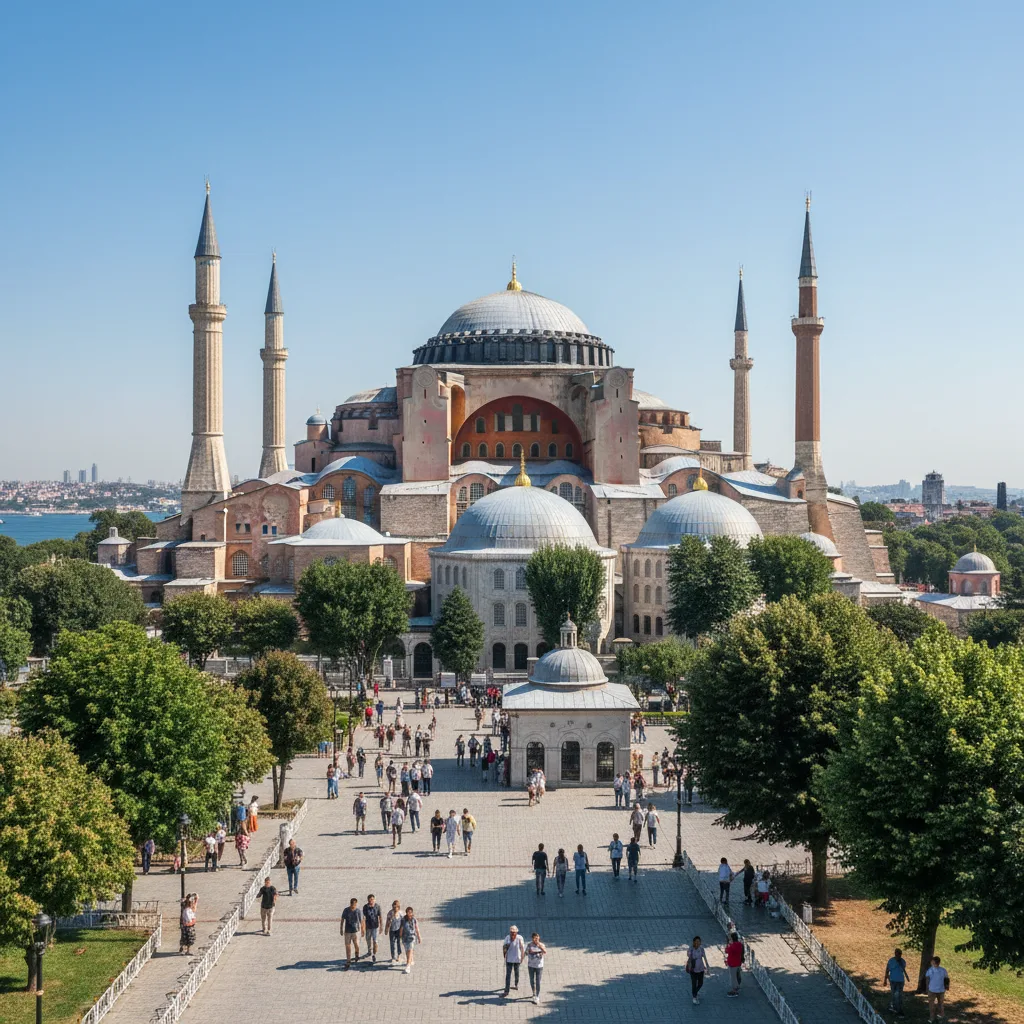
The empire’s strategic location at the crossroads of Europe and Asia made it a pivotal hub for trade, accumulating immense wealth. Its sophisticated bureaucracy, advanced military (including the devastating “Greek Fire”), and deeply ingrained Orthodox Christian identity gave it remarkable resilience. Though it faced numerous crises, including the devastating impact of the Fourth Crusade in 1204, the Byzantine Empire’s cultural and political influence radiated across Eastern Europe, shaping the development of nations like Russia, Serbia, and Bulgaria.
From Desert to Dominion: The Islamic Caliphates as Empires of the Middle Ages
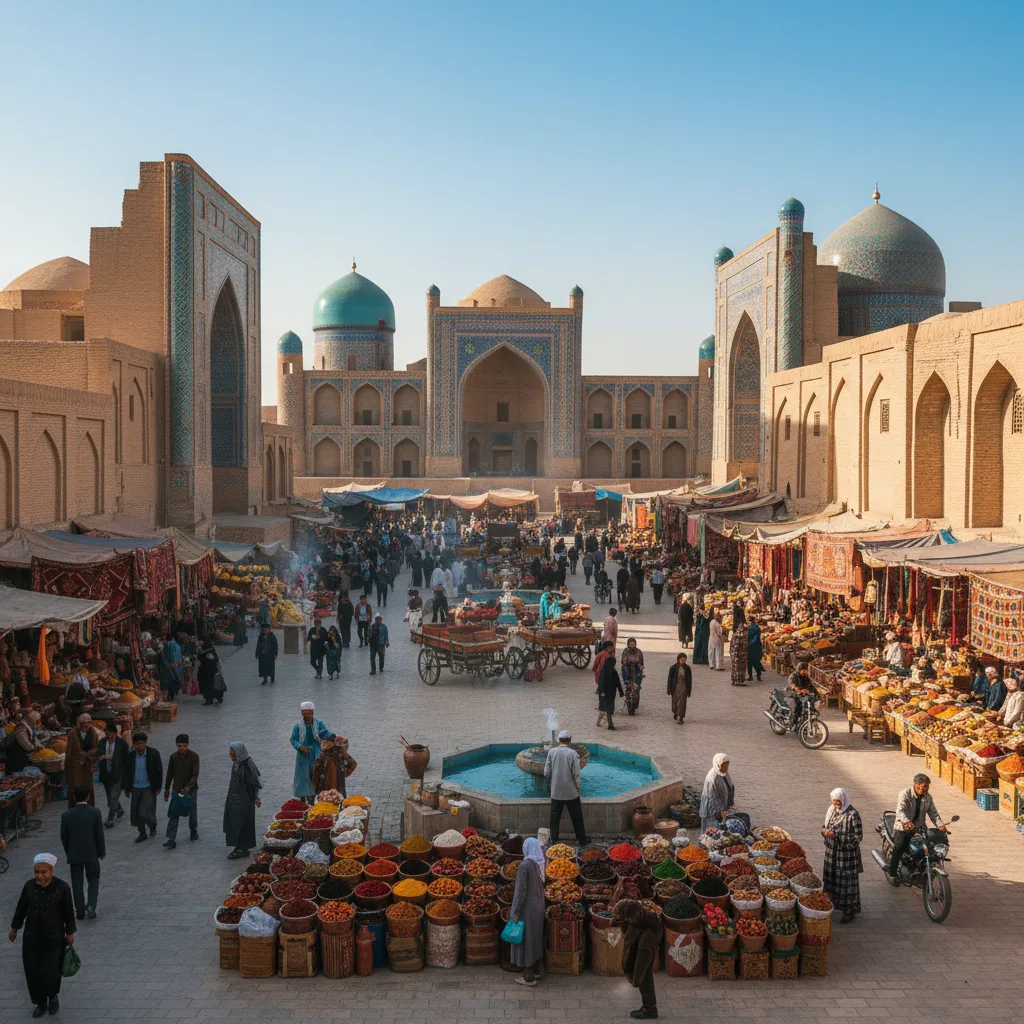
Within a century of the Prophet Muhammad’s death in 632 CE, the Islamic Caliphates had exploded out of the Arabian Peninsula to become one of the largest and most influential empires of the Middle Ages. This rapid expansion established a vast realm stretching from Spain and North Africa across the Middle East to Central Asia and parts of India.
The early Rashidun Caliphate (632-661 CE) saw the initial conquests, followed by the Umayyad Caliphate (661-750 CE), which solidified administrative structures and moved the capital to Damascus. The subsequent Abbasid Caliphate (750-1258 CE), with its capital in Baghdad, ushered in the “Golden Age of Islam.” During this period, Islamic civilization became a global center for learning, science, and innovation. Scholars in institutions like the House of Wisdom translated, preserved, and built upon ancient Greek, Roman, Persian, and Indian texts.
Key contributions from the Islamic empires included:
- Mathematics: The development of algebra (from al-jabr), Arabic numerals, and the concept of zero.
- Medicine: Advanced hospitals, surgical techniques, and encyclopedic medical texts like Ibn Sina’s The Canon of Medicine.
- Astronomy: Sophisticated observatories and instruments, leading to accurate star charts and calendars.
- Philosophy and Literature: Preserving classical thought and producing groundbreaking works of poetry, history, and philosophy.
The caliphates fostered a vibrant intellectual and economic network, facilitating trade along the Silk Road and across the Indian Ocean. While the Abbasid Caliphate eventually fragmented into various independent Islamic states, the cultural, religious, and linguistic unity it had forged continued to bind the Islamic world, leaving an enduring legacy that profoundly shaped global civilization.
The Holy Roman Empire: A European Powerhouse
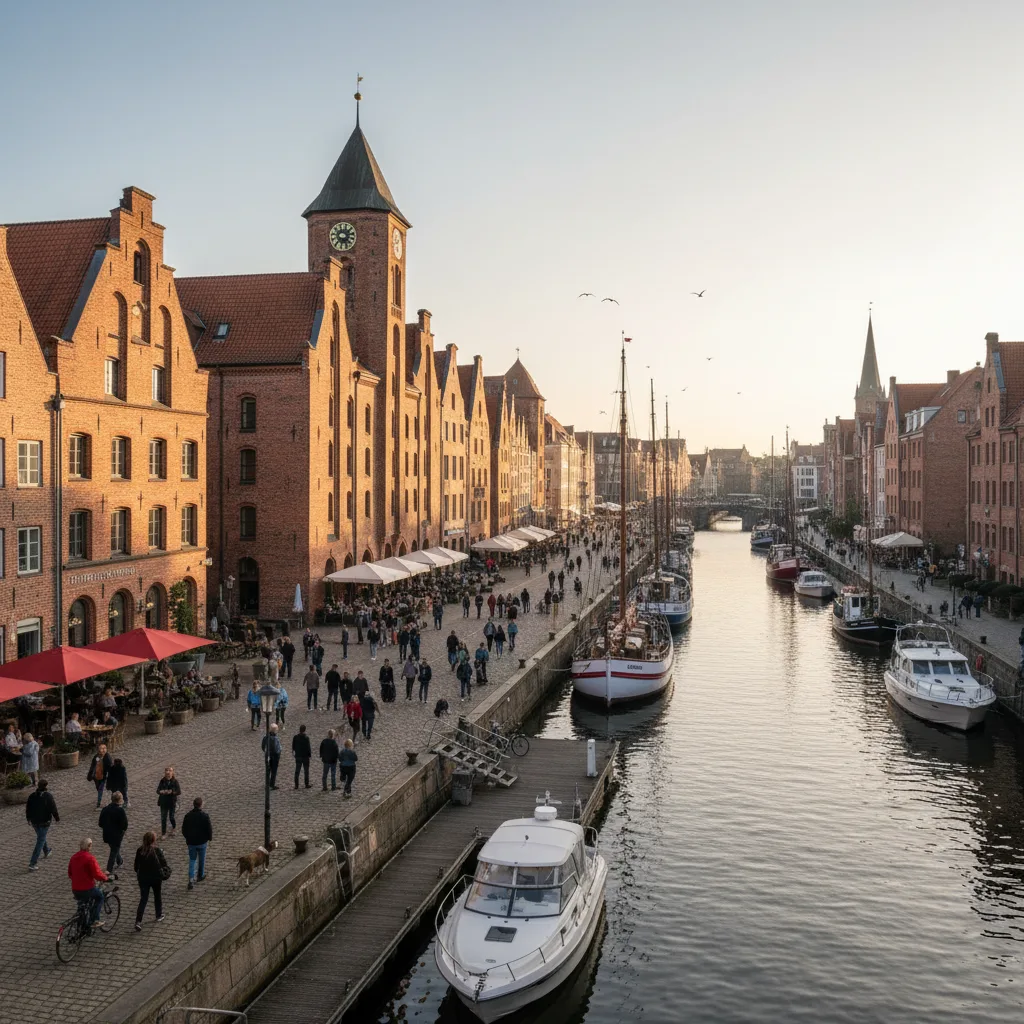
In Western Europe, after the collapse of the Western Roman Empire, the idea of a universal Christian empire persisted. This ideal found its most enduring manifestation in the Holy Roman Empire, a complex political entity that dominated Central Europe for over a millennium, from its traditional founding in 800 CE with the coronation of Charlemagne as Emperor, until its dissolution in 1806.
Though Charlemagne’s vast Carolingian Empire was short-lived, the imperial title was revived in 962 CE with the coronation of Otto I, marking the true beginning of the Holy Roman Empire. Unlike a centralized modern state, the Holy Roman Empire was a decentralized collection of hundreds of smaller entities: kingdoms, duchies, principalities, bishoprics, and free cities, all theoretically owing allegiance to the Emperor.
Its influence was profound:
- Cultural Crossroads: It served as a melting pot for German, Italian, and Slavic cultures.
- Political Development: It fostered the development of parliamentary bodies (like the Imperial Diet) and legal traditions that influenced modern European governance.
- Religious Significance: The Emperor was seen as the temporal protector of the Church, leading to centuries of complex and often contentious relationships with the Papacy, notably the Investiture Controversy of the 11th and 12th centuries.
- Economic Power: Cities within the empire, particularly those of the Hanseatic League, became major centers of trade and commerce.
Despite its internal struggles and the constant tension between imperial authority and the autonomy of its constituent states, the Holy Roman Empire provided a framework for political order and cultural identity in a fragmented Europe. It was a testament to the enduring appeal of imperial ideals, even in an era of nascent nation-states.
Beyond Europe: Mighty Empires of the Middle Ages in Asia and Africa
While Europe saw the rise of Byzantium and the Holy Roman Empire, other parts of the world were home to equally, if not more, powerful and sophisticated empires of the Middle Ages. These empires often surpassed their European counterparts in terms of population, wealth, and technological advancement.
The Mongol Empire (13th-14th Centuries)
Perhaps the most astonishing of all medieval empires was the Mongol Empire. Under the leadership of Genghis Khan and his successors, it exploded across Eurasia in the 13th century, creating the largest contiguous land empire in history. At its peak, it stretched from Eastern Europe to the Pacific Ocean, encompassing vast swathes of China, Russia, Persia, and Central Asia.
Key aspects of the Mongol Empire:
- Military Innovation: Superior cavalry tactics, discipline, and siege warfare.
- Pax Mongolica: Despite its brutal conquests, the empire fostered a period of unprecedented peace and stability across Eurasia, facilitating trade and cultural exchange along the Silk Road.
- Cultural Diffusion: It connected East and West, leading to the transfer of technologies (like gunpowder and printing) and ideas.
- Administrative Adaptability: While initially destructive, the Mongols often adopted existing administrative structures in conquered lands, allowing for long-term governance.
The Song Dynasty (960-1279 CE)
In China, the Song Dynasty represented a period of immense economic prosperity, technological innovation, and cultural flourishing. Although not an empire of conquest in the same vein as the Mongols, its vast and well-governed territory, sophisticated bureaucracy, and immense population made it a global superpower.
Achievements of the Song Dynasty:
- Technological Marvels: Invention of gunpowder, the compass, movable type printing, and advanced shipbuilding.
- Economic Revolution: Massive agricultural productivity, urbanization, and a sophisticated market economy using paper money.
- Art and Philosophy: A golden age for landscape painting, ceramics, and Neo-Confucianism.
- Bureaucratic Excellence: A highly centralized state governed by a meritocratic civil service examination system.
The Mali Empire (13th-17th Centuries)
In West Africa, the Mali Empire rose to prominence, controlling vast gold and salt trade routes. Founded by Sundiata Keita, it reached its zenith under Mansa Musa (reigned 1312–1337), who famously undertook a pilgrimage to Mecca with a caravan so laden with gold that he impacted the economies of the regions he passed through.
The Mali Empire was:
- Wealthy: Built upon control of trans-Saharan trade routes.
- Culturally Rich: Timbuktu became a renowned center of Islamic scholarship, boasting libraries and universities.
- Powerful: A well-organized military and administrative system allowed it to maintain control over a vast territory.
These empires demonstrate the diverse forms of power and influence that characterized the medieval world beyond the familiar narratives of Europe.
The Rise and Fall: Common Threads Among Medieval Empires
The history of empires of the Middle Ages is a cyclical narrative of expansion, consolidation, and eventual decline. While each empire faced unique circumstances, several common threads contributed to their rise and fall:
Factors for Rise and Stability:
- Strong Leadership: Charismatic and effective rulers like Justinian, Genghis Khan, or Mansa Musa were crucial for initial expansion and consolidation.
- Military Innovation: Superior tactics, weaponry, or organization often gave an advantage over neighbors.
- Economic Prosperity: Control over vital trade routes, valuable resources, or agricultural surplus provided the wealth necessary to maintain armies and administrations.
- Cultural/Religious Unity: A shared identity, often fostered by a dominant religion, could bind disparate populations together.
- Effective Administration: Developing sophisticated bureaucracies, legal codes, and tax systems to manage vast territories.
Factors for Decline and Collapse:
- Internal Strife: Dynastic disputes, civil wars, and rebellions from local lords or conquered peoples frequently weakened empires from within.
- External Pressures: Constant invasions from neighboring powers, nomadic groups (like the Huns or Mongols themselves), or rival empires could exhaust resources and manpower.
- Economic Decline: Disruption of trade routes, environmental changes, or over-taxation could lead to economic instability.
- Over-extension: As empires grew too large, the challenges of communication, control, and defense often became insurmountable.
- Succession Issues: The lack of clear rules for imperial succession often led to periods of instability and fragmentation.
- Plagues and Famine: Natural disasters, like the Black Death, could devastate populations and economies, severely weakening state capacity.
The fall of Constantinople in 1453, the fragmentation of the Abbasid Caliphate, and the eventual breakup of the Mongol Empire into smaller khanates all illustrate these complex dynamics.
Conclusion
The empires of the Middle Ages were monumental forces that sculpted the geopolitical, cultural, and intellectual landscape of their time. From the enduring legacy of Byzantium, preserving classical knowledge and Christian faith, to the vast scientific and cultural achievements of the Islamic Caliphates, the complex political tapestry of the Holy Roman Empire, and the unparalleled scale of the Mongol conquests and the sophistication of the Song Dynasty, these entities demonstrate a period of incredible innovation, expansion, and cultural exchange. They remind us that the medieval world was a dynamic arena where power was constantly contested, cultures intertwined, and the foundations of future civilizations were profoundly laid. Understanding these great powers is not just a journey into the past, but an essential step in comprehending the diverse origins of our modern globalized world.