
Economic Sanctions: Why They Often Fail to Achieve Goals
Explore why economic sanctions, a key diplomatic tool, frequently fall short of their objectives. This guide analyzes their impact on global markets, finance, and policy change.
Why Economic Sanctions Don’t Work: A TrendSeek Guide to Their Ineffectiveness
For decades, economic sanctions have been a cornerstone of international diplomacy, wielded by powerful nations as a non-military tool to influence the behavior of other states. The premise is simple: restrict a target country’s access to global markets, finance, and resources, and the resulting economic pain will compel its leaders to change their policies, whether on human rights, nuclear proliferation, or regional aggression. Yet, despite their widespread application, a growing body of evidence and historical experience suggests that economic sanctions don’t work with the consistency or effectiveness that their proponents often claim. This comprehensive guide from TrendSeek delves into the complexities of economic sanctions, exploring their theoretical underpinnings, their frequent failures, and the often-devastating unintended consequences that make them a blunt and often counterproductive instrument of foreign policy.
Understanding the Theory: Why Economic Sanctions Are Imposed
At their core, economic sanctions are designed to be a coercive measure, a middle ground between diplomatic rhetoric and military intervention. They manifest in various forms: trade embargoes preventing the exchange of goods and services, asset freezes targeting the financial holdings of individuals or entities, travel bans, and financial restrictions that cut off access to international banking systems. The goals are typically ambitious:
- Coercion: To force a change in a target country’s policies or behavior.
- Deterrence: To prevent future undesirable actions by signaling consequences.
- Punishment: To impose costs on a state for past transgressions.
- Disruption: To cripple a regime’s ability to fund illicit activities, such as terrorism or weapons programs.
- Signaling: To demonstrate international disapproval and rally support for a specific norm or policy.
The theory posits that by creating sufficient economic hardship, the ruling elite or even the general populace will pressure the government to comply with international demands. This pressure is expected to be economically painful but politically effective, leading to a desired policy shift without the human cost of armed conflict. However, the reality on the ground frequently diverges sharply from this optimistic theoretical framework.
The Fundamental Flaws: Why Economic Sanctions Don’t Work Reliably
The principal reason economic sanctions don’t work as intended lies in a confluence of factors that undermine their coercive power and often produce perverse outcomes.
Firstly, resilience and adaptation by sanctioned regimes are pervasive. Governments facing sanctions rarely capitulate immediately. Instead, they often develop sophisticated strategies to circumvent restrictions, establishing black markets, finding new trade partners (often those less aligned with the sanctioning powers), or boosting domestic production to replace imports. This adaptability allows them to weather the storm, sometimes for decades, without altering their core policies. For instance, countries like Cuba and North Korea have endured decades of severe sanctions, yet their regimes have remained firmly in power, demonstrating remarkable capacity for self-sufficiency and alternative sourcing.

Secondly, the humanitarian cost of broad economic sanctions is immense and often misdirected. While sanctions are theoretically aimed at the ruling elite, their primary victims are almost invariably ordinary citizens. Restrictions on imports of essential goods, medicine, and food can trigger humanitarian crises, leading to widespread suffering, malnutrition, and disease. This suffering rarely translates into public pressure on authoritarian regimes, which often control information and suppress dissent. Instead, it can foster deep resentment towards the sanctioning nations, paradoxically strengthening the targeted regime’s narrative of external aggression and unifying the population against a common “enemy.”
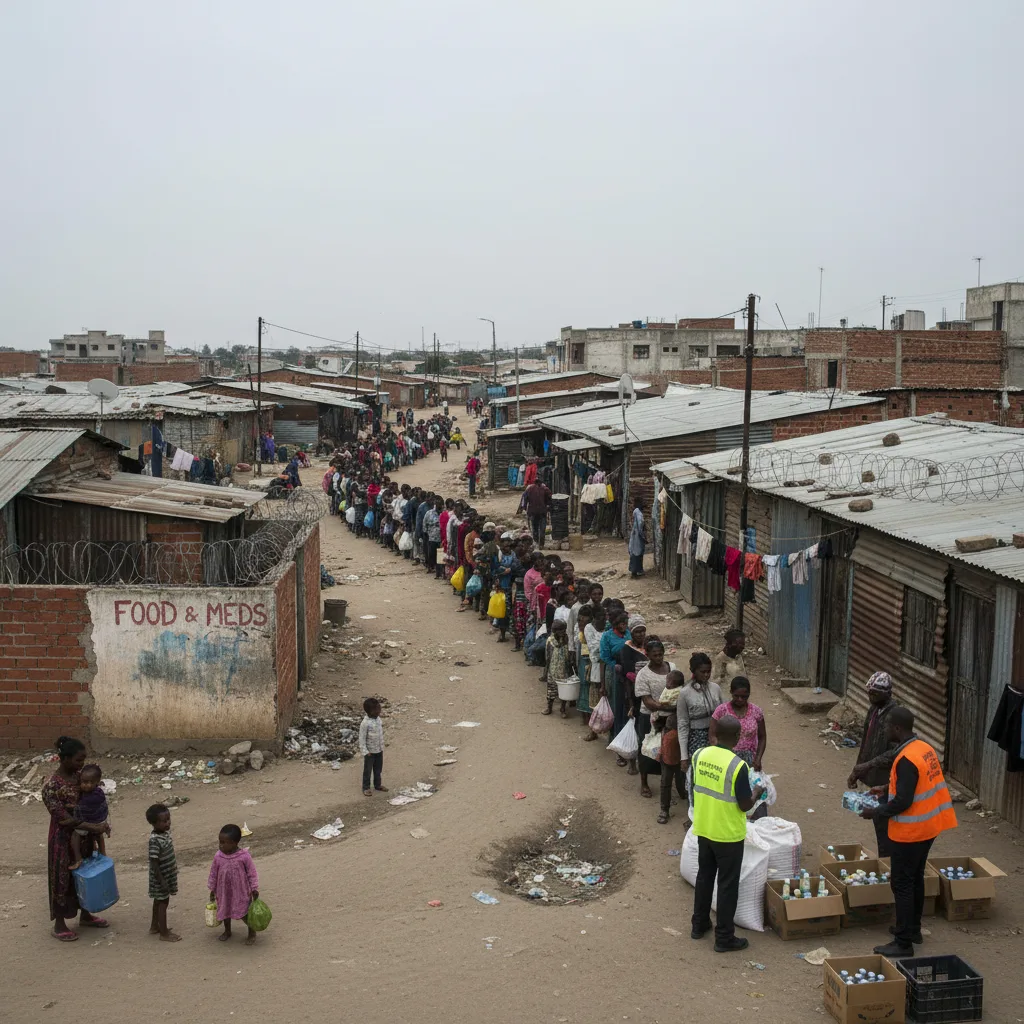
Thirdly, sanctions frequently trigger a “rally ‘round the flag” effect. Rather than weakening the targeted government, external pressure can consolidate its power. Leaders can exploit sanctions to portray themselves as defenders of national sovereignty against foreign interference, garnering domestic support and suppressing internal opposition under the guise of national unity. This phenomenon has been observed in various contexts, where sanctions, instead of fracturing the regime, inadvertently provide it with a powerful propaganda tool.

Finally, the lack of universal enforcement and compliance significantly dilutes the impact of sanctions. Unless sanctions are multilateral and strictly enforced by a broad coalition of nations, targeted countries can simply shift their trade and financial activities to non-participating states. This “leakage” undermines the economic pressure, allowing regimes to maintain crucial revenue streams and access to necessary resources. Achieving genuine multilateral consensus and sustained enforcement is notoriously difficult in a fragmented global political landscape.
Case Studies in Ineffectiveness: When Economic Sanctions Don’t Work
History is replete with examples illustrating the limitations and failures of economic sanctions.
-
Cuba: The United States imposed a comprehensive trade embargo on Cuba in the early 1960s, a policy that has largely remained in place for over six decades. Despite the immense economic pressure, the Castro regime, and subsequently its successors, maintained power and continued its socialist policies. While the sanctions undoubtedly contributed to Cuba’s economic struggles, they utterly failed to achieve their primary goal of regime change or significant political liberalization. Instead, they became a symbol of Cuban resilience against American imperialism.
-
North Korea: Since the 1990s, North Korea has been subjected to some of the most stringent and comprehensive international sanctions ever imposed, largely due to its nuclear weapons and ballistic missile programs. These sanctions have targeted its exports, imports, financial system, and even individual officials. Yet, North Korea has not only continued but accelerated its weapons development, conducting numerous nuclear tests and missile launches. While the sanctions have undoubtedly hampered its economy and contributed to the hardship of its population, they have demonstrably failed to halt its strategic programs or destabilize the regime.
-
Iran: Iran has faced a complex web of international sanctions for decades, primarily related to its nuclear program, human rights record, and support for regional proxies. While sanctions, particularly those imposed by the UN and the US, did put significant pressure on the Iranian economy and played a role in bringing Iran to the negotiating table for the Joint Comprehensive Plan of Action (JCPOA), they did not fundamentally alter the nature of the regime or its broader regional ambitions. Following the US withdrawal from the JCPOA and the reimposition of “maximum pressure” sanctions, Iran’s economy suffered, but its nuclear program has advanced, and its regional influence remains strong.
-
Venezuela: Sanctions imposed by the US and other countries against Venezuela, aimed at pressuring the Maduro government, have severely exacerbated the country’s economic crisis and humanitarian catastrophe. While the sanctions have deepened the suffering of the Venezuelan people, they have not led to the collapse of the Maduro regime or a democratic transition. Instead, the regime has consolidated power, relying on illicit trade, military support, and a shrinking but loyal base.
These examples underscore a consistent pattern: while sanctions can inflict economic damage, they rarely achieve their desired political outcomes, especially when targeting determined authoritarian regimes.
The High Cost: How Economic Sanctions Can Backfire
Beyond their ineffectiveness, economic sanctions often carry significant unintended consequences that can be detrimental to international stability and human well-being.
One of the most tragic outcomes is the exacerbation of humanitarian crises. When entire economies are targeted, the most vulnerable populations suffer disproportionately. Restrictions on essential goods like food, medicine, and medical equipment can lead to widespread shortages, disease, and increased mortality rates, particularly among children and the elderly. This moral dilemma raises serious ethical questions about the costs borne by innocent civilians in the name of geopolitical leverage.
Furthermore, sanctions can inadvertently empower authoritarian regimes. By creating scarcity, sanctions give sanctioned governments greater control over the distribution of limited resources. This control can be used to reward loyalists and punish dissenters, strengthening the regime’s grip on power rather than weakening it. They can also push sanctioned states into the arms of other geopolitical rivals, fostering new alliances that complicate international relations and undermine the sanctioning powers’ long-term strategic goals.
Sanctions also tend to fuel black markets and illicit trade. As legitimate avenues for commerce are closed, illegal networks emerge to fill the void, often involving criminal organizations or state-sponsored smuggling. This not only undermines the sanctions regime but also entrenhes corruption and instability within the targeted country and potentially beyond its borders.
Finally, sanctions can damage the imposing nation’s economy and diplomatic standing. Retaliation from sanctioned countries, loss of trade opportunities, and the need for complex enforcement mechanisms can incur significant economic costs. Moreover, the perception of sanctions as an unfair or heavy-handed tool can erode the moral authority and diplomatic influence of the imposing nation on the global stage.
Nuance and Rare Exceptions: When Sanctions Show Glimmers of Effect
While the evidence overwhelmingly suggests that economic sanctions don’t work as a panacea for complex geopolitical problems, it is important to acknowledge that they are not always entirely without effect. Their limited successes tend to occur under very specific conditions:
- Highly Targeted Sanctions: “Smart sanctions” that focus on specific individuals, entities, or sectors (e.g., asset freezes against corrupt officials, bans on luxury goods for the elite, or restrictions on specific technologies used for repression) are often more effective. They aim to minimize humanitarian impact while maximizing pressure on decision-makers.
- Multilateral Consensus and Strict Enforcement: When sanctions are truly global, with broad international buy-in and rigorous enforcement by all major economic powers, their impact is significantly amplified. This prevents circumvention and isolates the target more effectively.
- Clear, Achievable Goals and Exit Strategies: Sanctions are more likely to succeed when they have very specific, measurable objectives (e.g., releasing a political prisoner, allowing humanitarian access) rather than broad goals like “regime change.” A clear pathway for lifting sanctions upon compliance also provides an incentive for the target state.
- Combined with Other Diplomatic Tools: Sanctions are rarely effective in isolation. They tend to yield better results when integrated into a broader diplomatic strategy that includes negotiation, mediation, incentives, and the potential use of other forms of leverage. They can serve as a bargaining chip rather than an end in themselves.
Even in these rare instances, “success” is often incremental and partial, highlighting that sanctions are a tool of limited utility, best used sparingly and strategically, rather than as a default response to international disagreements.
Beyond Sanctions: More Effective Tools for Geopolitical Influence
Given the documented ineffectiveness and high costs, it is imperative for the international community to explore and prioritize alternative, more nuanced, and potentially more effective tools for geopolitical influence.
- Intensive Diplomacy and Negotiation: Sustained, high-level diplomatic engagement, including back-channel communications and multi-party negotiations, remains the most potent tool for resolving disputes and influencing behavior. This involves understanding the interests of all parties and seeking mutually beneficial solutions.
- Targeted Financial Intelligence and Law Enforcement: Instead of broad economic restrictions, focusing on combating money laundering, illicit financial flows, and asset recovery can directly target the financial networks of corrupt regimes and criminal enterprises without harming the general population.
- Support for Civil Society and Democratic Movements: Empowering local civil society organizations, independent media, and human rights advocates within repressive states can foster internal pressure for change in a more organic and sustainable way.
- Strategic Aid and Development: Carefully designed aid programs that promote economic development, education, and healthcare can address root causes of instability and build goodwill, fostering long-term cooperation and positive influence.
- Public Diplomacy and Information Campaigns: Countering misinformation and communicating shared values can influence public opinion both within sanctioned countries and globally, building support for democratic norms and human rights.
- Technological Engagement and Digital Diplomacy: Leveraging technology for communication, education, and fostering connections can circumvent state control and empower citizens.
These approaches, while requiring patience and long-term commitment, offer a more ethical and potentially more impactful path to achieving international policy goals than the often-blunt instrument of economic sanctions.
Conclusion
The persistent reliance on economic sanctions as a primary tool of foreign policy, despite overwhelming evidence that economic sanctions don’t work effectively, represents a significant challenge in international relations. While conceptually appealing as a non-military means of coercion, their practical application has repeatedly demonstrated their limitations. From the resilience of targeted regimes and the tragic humanitarian costs to the “rally ‘round the flag” effect and the fostering of illicit markets, the unintended consequences often outweigh any perceived benefits.
History teaches us that sanctions rarely achieve their ambitious goals of regime change or fundamental policy shifts, particularly against determined authoritarian governments. Instead, they often inflict widespread suffering on innocent populations, strengthen the grip of the very leaders they aim to undermine, and complicate the landscape of international diplomacy. For a future of more stable, just, and effective international relations, it is crucial for policymakers to acknowledge the deep flaws in this approach and prioritize a multi-faceted toolkit of diplomacy, targeted financial measures, strategic engagement, and support for civil society. Only then can we move beyond the illusion of control offered by sanctions and embrace more nuanced and ultimately more successful strategies for influencing global behavior.