Unveiling the World's Most Baffling Natural Phenomena
Discover the planet's most extraordinary and baffling natural phenomena. Explore wonders that challenge physics and ignite profound wonder, from dancing lights to moving rocks.
Unveiling the World’s Most Baffling: Strange Natural Phenomena Across the World
Our planet is a canvas of breathtaking beauty, a vibrant tapestry woven with the predictable rhythms of seasons and tides. Yet, beneath this familiar surface lies a realm of the truly extraordinary – a collection of strange natural phenomena across the world that defy easy explanation, challenge our understanding of physics, and ignite a sense of profound wonder. From dancing lights in the sky to rocks that move on their own, these occurrences remind us that Earth is a living, breathing entity, capable of conjuring spectacles far stranger and more magnificent than any fiction.
At TrendSeek, we delve into the depths of knowledge to bring you insights into the most captivating aspects of our world. Join us on an epic journey as we explore some of the most bewildering and beautiful natural wonders, peeling back the layers of mystery that shroud these geological, atmospheric, and biological marvels. Prepare to have your perceptions of reality stretched as we uncover the science, the folklore, and the sheer awe inspired by these unique events.
Celestial Wonders and Atmospheric Anomalies: Exploring Strange Natural Phenomena Across the World’s Skies
The sky above us, often taken for granted, is a stage for some of Earth’s most dramatic and mysterious acts. Beyond the familiar spectacle of rainbows and sunsets, a host of strange natural phenomena across the world play out, leaving observers spellbound.
-
Sprites, Jets, and Elves: Far above thunderclouds, in the mesosphere and ionosphere, lies a secret world of atmospheric electricity. Red sprites are massive, fleeting flashes of red light, often resembling jellyfish or carrots, that occur directly above active thunderstorms. They are triggered by powerful positive lightning strikes below. Even more elusive are blue jets, cone-shaped bursts of blue light shooting upwards from the top of cumulonimbus clouds, and elves, rapidly expanding rings of faint, red light in the ionosphere. These “transient luminous events” (TLEs) were largely dismissed as folklore by pilots until sophisticated camera technology confirmed their existence in the late 20th century. Their precise formation mechanisms are still an active area of research, but they are believed to be related to the electrical imbalances created by intense thunderstorms.
-
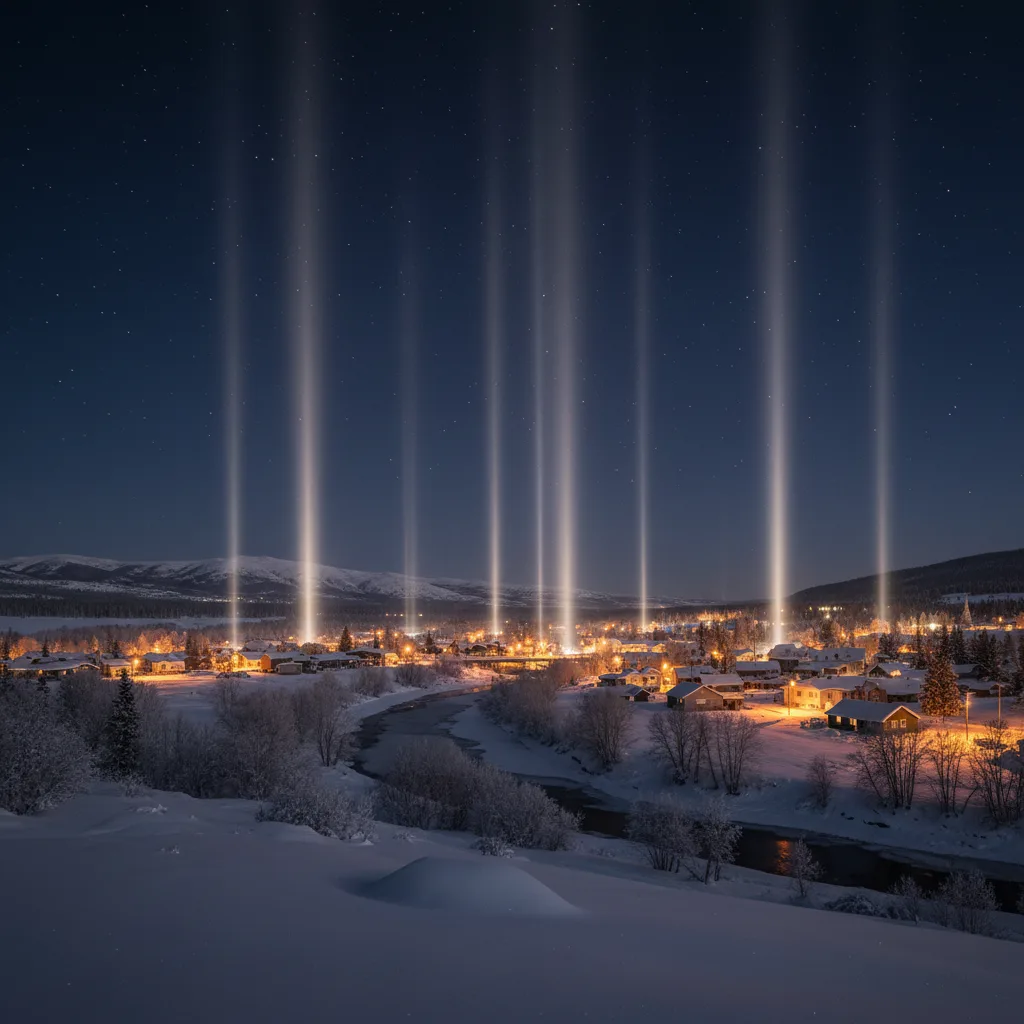
Light Pillars: Imagine vertical beams of light stretching towards the heavens, seemingly emanating from the ground or hovering in the sky. This ethereal display, known as light pillars, is a captivating optical phenomenon. It occurs when light from a strong source (like streetlights, car headlights, or even the sun or moon) reflects off millions of tiny ice crystals suspended in the atmosphere. For the pillars to form, these plate-like ice crystals must be oriented horizontally as they fall through calm air, acting like miniature mirrors. They are most commonly observed in extremely cold regions, such as the Arctic, Canada, or northern Scandinavia, creating an otherworldly glow that can make a town look like a futuristic cityscape.
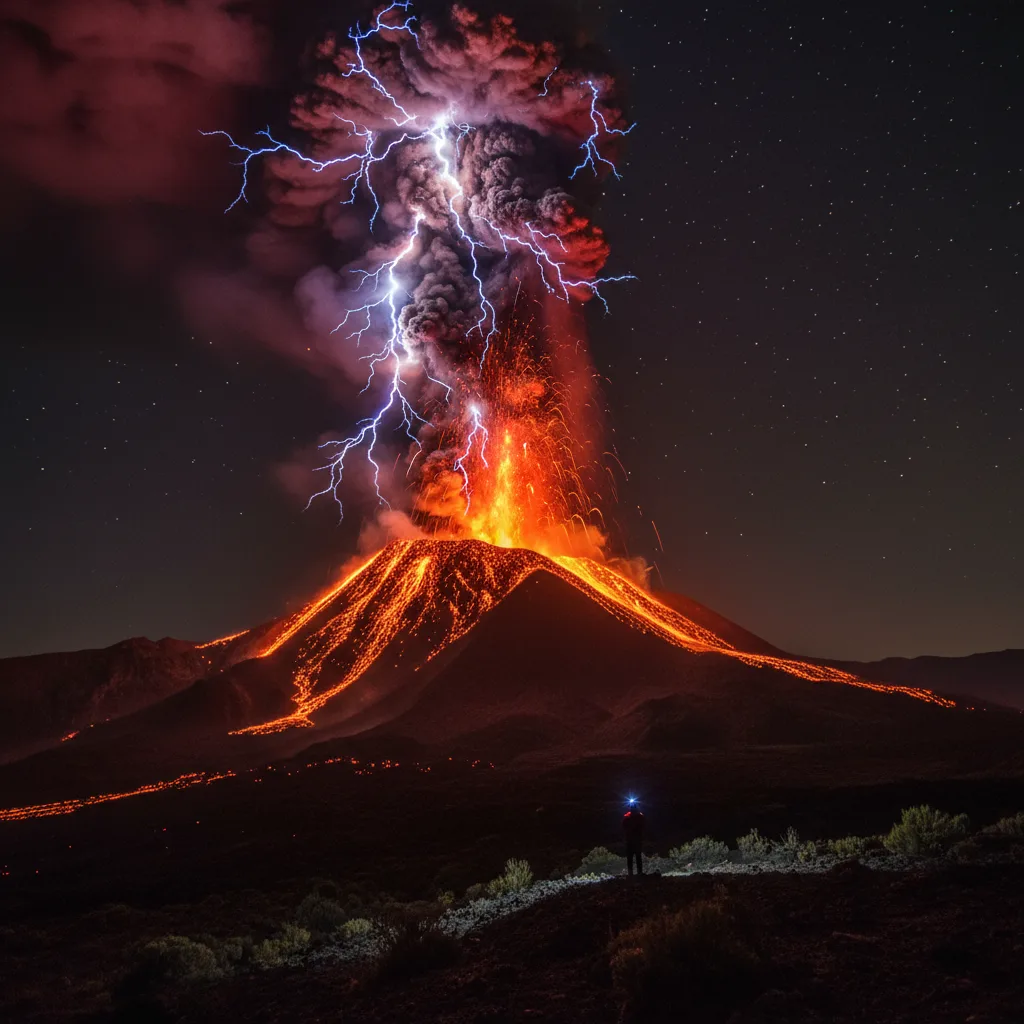
- Volcanic Lightning (Dirty Thunderstorms): While lightning is a common atmospheric phenomenon, its occurrence during a volcanic eruption is truly a spectacle of raw power. Volcanic lightning, also known as a “dirty thunderstorm,” is generated within the ash plume of an erupting volcano. Unlike regular lightning, which forms from ice crystal collisions in storm clouds, volcanic lightning is thought to arise from the friction and collisions of ash, rock fragments, and gas within the turbulent volcanic plume. The sheer force of the eruption creates massive static charges, leading to spectacular electrical discharges that crackle through the dark, billowing ash clouds. Iconic examples include eruptions from Sakurajima Volcano in Japan and Eyjafjallajökull in Iceland, where photographers have captured stunning images of lightning bolts tearing through the ash-laden sky.
Earth’s Enigmas: Unearthing Strange Natural Phenomena on Land
Our planet’s solid ground, seemingly stable and predictable, harbors secrets that challenge geological norms. From rocks that wander to circles of barren earth, these land-based strange natural phenomena across the world captivate scientists and adventurers alike.
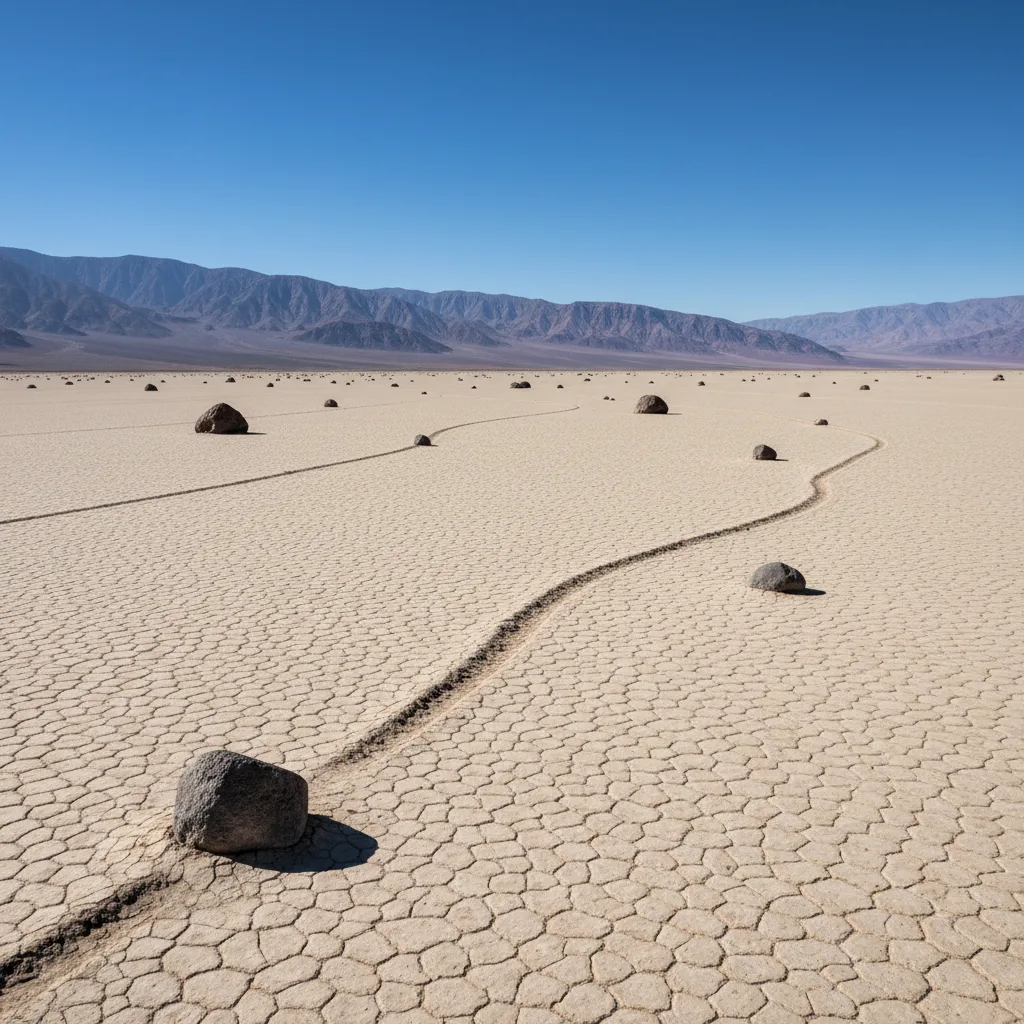
- The Sailing Stones of Racetrack Playa: In the remote and desolate Death Valley National Park, California, lies a dry lakebed known as Racetrack Playa. Here, large rocks, some weighing hundreds of pounds, appear to move across the flat, cracked surface, leaving long, distinct trails in their wake. For decades, the mechanism behind these “sailing stones” was a profound mystery, fueling speculation ranging from alien intervention to magnetic fields. The puzzle was finally solved in 2014 by a team of scientists who deployed GPS-enabled rocks and time-lapse cameras. They discovered that a rare combination of events is required: the playa must fill with water, freeze into thin sheets of ice overnight, and then be broken up by gentle winds, which push the ice sheets (and the embedded rocks) across the muddy surface as the ice melts. The trails are formed by the rocks dragging through the soft mud. This specific confluence of conditions makes the phenomenon incredibly rare and difficult to observe.
-
Fairy Circles of Namibia: Stretching across the grasslands of Namibia and parts of Australia, vast expanses of land are dotted with millions of perfectly circular patches where nothing grows, surrounded by rings of taller grasses. These enigmatic fairy circles range from 2 to 15 meters in diameter and have baffled scientists for generations. Two primary theories dominate the scientific discussion. One suggests that the circles are the result of termite activity, with sand termites consuming vegetation within the circles and creating underground tunnels that allow water to collect, supporting the surrounding grass. The other theory proposes self-organizing vegetation patterns, where plants compete for scarce water resources in arid environments, creating these regular, hexagonal patterns of bare earth to optimize water distribution. While both theories have supporting evidence, the true, complete explanation may involve a complex interplay of both biological and ecological factors.
-
The Moeraki Boulders of New Zealand: Along the coastline of Koekohe Beach in Otago, New Zealand, lie hundreds of unusually large, spherical boulders scattered across the sand. These Moeraki Boulders range from half a meter to over three meters in diameter, with some weighing several tons. Their perfectly rounded, almost alien appearance has made them a popular tourist attraction and a subject of scientific curiosity. Geologically, these are concretions, formed over millions of years through the gradual cementation of sedimentary particles around a central nucleus (like a fossil or shell) on the ancient seafloor. The calcium carbonate crystals slowly accumulated, growing outwards in a spherical shape, much like a pearl forming around a grain of sand. Subsequent erosion of the surrounding mudstone has exposed these magnificent geological marbles.
Deep Dives into Aquatic Oddities: Strange Natural Phenomena Beneath the Waves and on the Surface
The vastness of Earth’s oceans and freshwater bodies conceals an array of mesmerizing and often perplexing phenomena. The aquatic realm presents some of the most beautiful and sometimes eerie strange natural phenomena across the world.
-
The Underwater Waterfall of Mauritius: Off the coast of Mauritius, a stunning visual illusion creates the impression of a massive underwater waterfall plunging into the abyss. This captivating sight is not an actual waterfall but a trick of perspective, made visible from aerial views. The illusion is created by the unique ocean floor topography of the region. The island sits on a continental shelf, which suddenly drops off into a deep oceanic trench. The movement of sand and silt across this shelf, combined with the varying depths and colors of the water, creates the dramatic visual effect of water cascading downwards. It’s a powerful reminder of how geology and light can conspire to create truly breathtaking natural art.
-
Brinicles (Fingers of Death): In the frigid waters beneath the Arctic and Antarctic sea ice, a chilling phenomenon known as a brinicle occurs. Often dubbed the “finger of death,” a brinicle is an underwater icicle that forms when extremely cold, dense, and saline brine (water expelled from newly forming sea ice) sinks downwards. As this super-chilled brine descends, it freezes the less saline seawater it encounters, creating a hollow, downward-growing tube of ice. If this icy finger reaches the seabed, it can spread outwards, freezing any marine life, such as starfish and sea urchins, that come into contact with it. First observed and filmed in 2011, brinicles are a spectacular example of how extreme cold can reshape the underwater environment.
-
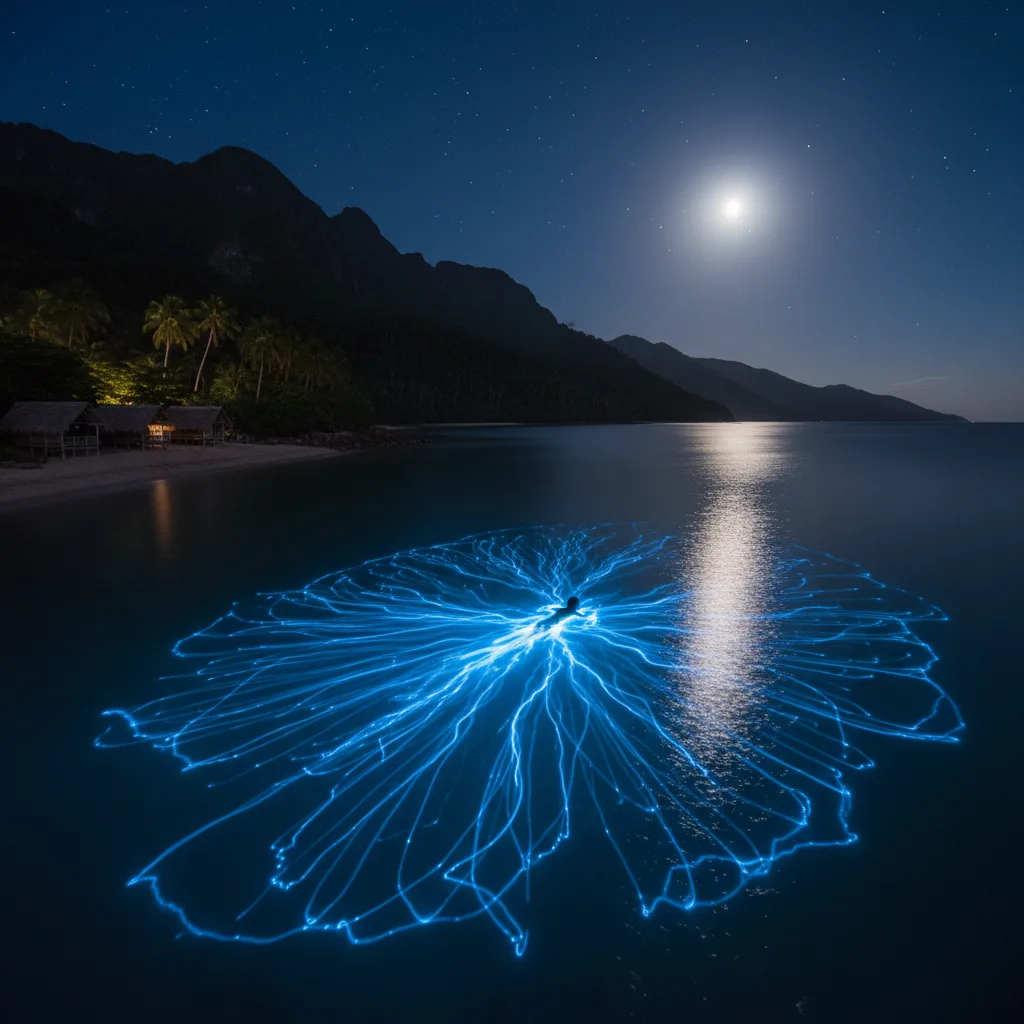
Bioluminescent Bays and Beaches: Imagine swimming in water that glows with every movement, or walking along a beach where your footprints ignite a shimmering blue light. This magical phenomenon is bioluminescence, the production of light by living organisms. In certain parts of the world, particularly in calm, nutrient-rich bays like Puerto Rico’s Mosquito Bay or Luminous Lagoon in Jamaica, the water teems with microscopic organisms called dinoflagellates. When disturbed by movement – a boat, a swimming fish, or a person – these tiny organisms emit a brief flash of blue-green light, creating a dazzling display. On land, bioluminescent fungi can cause wood to glow, creating “foxfire,” and certain insects like fireflies are well-known for their light production.
Life’s Little Mysteries and Optical Delusions: Strange Natural Phenomena Across the World’s Biological and Perceptual Landscapes
Beyond the grand scale of geology and atmosphere, life itself and the way we perceive it can produce some truly baffling natural events. These strange natural phenomena across the world range from the utterly bizarre to the visually deceptive.
-
Animal Rain: Perhaps one of the most unsettling and inexplicable phenomena is animal rain, where fish, frogs, birds, or other small creatures fall from the sky. While rare, documented cases have occurred throughout history, from Yoro, Honduras, which reportedly experiences “fish rain” annually, to a 2007 incident in Juncos, Puerto Rico, where hundreds of tiny frogs rained down. The most widely accepted scientific explanation involves waterspouts or tornadoes forming over bodies of water. These powerful rotating columns of air can lift small aquatic animals into the atmosphere, carrying them for miles before depositing them back on land when the storm loses energy. While this explains how they get there, the sheer oddity of seeing animals fall from the sky remains deeply strange.
-
Ball Lightning: For centuries, sailors, pilots, and ordinary people have reported seeing mysterious, glowing spheres of light, typically the size of a grapefruit to a basketball, during thunderstorms. These ball lightning phenomena can last for several seconds, float through the air, sometimes pass through windows, and occasionally explode with a bang. Despite numerous eyewitness accounts, scientific consensus on ball lightning’s precise nature and formation mechanism remains elusive. Theories range from superheated plasma spheres to exotic chemical reactions, or even a form of microwave radiation trapped in a bubble of air. In 2012, Chinese scientists captured the first-ever spectrographic data of ball lightning during a thunderstorm, offering a glimpse into its elemental composition, but much about this elusive phenomenon is still a mystery.
-
Fata Morgana: A Fata Morgana is a complex form of superior mirage that is seen in a narrow band just above the horizon. Unlike a typical mirage, which makes distant objects appear closer or inverted, a Fata Morgana can distort objects so dramatically that they appear to be entirely different, often stretched, stacked, or even floating in the air. This optical illusion occurs when light rays bend through layers of air of different temperatures, creating a thermal inversion where cold, dense air lies beneath warmer air. This acts like a refracting lens, causing light from distant objects (like ships, islands, or coastlines) to be stretched and distorted vertically. It’s often observed in polar regions or over large bodies of water, giving rise to legends of phantom islands or castles in the sky.
The Science Behind the Spectacle: Understanding Strange Natural Phenomena
While many of these strange natural phenomena across the world initially appear inexplicable, a deeper dive into science often reveals the intricate workings of our planet. From the fundamental laws of physics to complex ecological interactions, the explanations behind these wonders are as fascinating as the phenomena themselves. Scientists use a combination of fieldwork, remote sensing, laboratory experiments, and advanced modeling to unravel these mysteries. The continuous pursuit of knowledge not only helps us understand the “how” but also reinforces the incredible diversity and dynamic nature of Earth’s systems. Even with explanations, the sheer scale, rarity, and visual impact of these events never fail to inspire awe and remind us of the vastness of what we still have to learn.
Conclusion
From the ethereal glow of light pillars to the enigmatic trails of sailing stones, and the chilling beauty of brinicles, our planet is an unparalleled showman, constantly surprising us with its boundless creativity. The strange natural phenomena across the world are not just curiosities; they are profound reminders of Earth’s dynamic processes, the delicate balance of its ecosystems, and the relentless power of nature. They challenge our assumptions, push the boundaries of scientific understanding, and, perhaps most importantly, ignite an insatiable curiosity within us.
As we continue to explore, observe, and document these incredible occurrences, we gain a deeper appreciation for the planet we call home. Each phenomenon, whether fully explained or still shrouded in mystery, serves as an invitation to look closer, question more, and remain forever humbled by the extraordinary wonders that unfold around us every single day. The world is a stranger, more magical place than we often realize, and its most bizarre spectacles are truly its greatest treasures.