
AI's Atom-by-Atom Leap: Designing Materials from Scratch
Discover how AI is fundamentally altering materials science, moving beyond traditional experiments to design new materials atom by atom.
AI builds materials from scratch, atom by atom
Materials science is changing. Most people think it means scientists in lab coats, endlessly mixing chemicals and hoping for a new battery or stronger metal. While that work is part of the field, a major change is underway. This change is not just about speeding up traditional experiments. It’s about fundamentally altering how we discover and design materials.
You might think artificial intelligence simply makes existing research faster. That’s a common misconception. AI isn’t just a faster blender in the materials kitchen. It’s becoming the head chef. It designs entirely new recipes and even invents new ingredients we never considered before. This change means we can now predict material properties before synthesizing them. This saves great time and resources.
Material discovery’s big challenge
Material science has always faced a big challenge: the vastness of “materials space.” There are infinite combinations of elements, structures, and processing methods possible. Each combination creates a unique material with specific properties. For example, a single change in temperature or pressure during synthesis can alter a metal’s strength. It can also change a polymer’s flexibility.
Traditional discovery involves slow, costly experimentation. Researchers might spend years synthesizing and testing thousands of variations of a compound. Even with advanced simulations, predicting how atoms interact to form macroscopic properties is incredibly complex. Dr. Kristin Persson leads research at Lawrence Berkeley National Laboratory. She directs the Materials Project. Persson notes this “Edisonian approach” is simply not practical for modern demands. Her team’s work creates open-access material databases. These are needed for AI training.
The goal is to find materials with specific functions. We need lighter alloys for aircraft, more efficient catalysts for chemical reactions, and safer batteries for electric vehicles. This process often feels like searching for a needle in a haystack, but the haystack is infinitely large. This fundamental difficulty has limited human progress in many areas for centuries.
AI: more than just a speed boost

The Materials Project, directed by Dr. Kristin Persson at Lawrence Berkeley National Laboratory, is a pioneering open-access database that provides crucial computational data on material properties, serving as a vital training ground for AI models in the discovery of novel materials. (AI-generated illustration)
Artificial intelligence is changing this slow, intuitive process. It moves beyond merely speeding up existing lab work. AI analyzes huge datasets of known materials. It learns the relationships between their atomic structure and observed properties. Think of it like a detective identifying patterns across thousands of crime scenes.
In 2018, Google DeepMind showed an AI model called AlphaFold that accurately predicted protein structures. This project wasn’t directly materials science. But it showed AI’s power to understand complex atomic arrangements. This principle applies directly: AI can learn the “rules” of material formation and behavior. It then uses these rules to predict new, undiscovered materials.
This isn’t just about crunching numbers faster. It’s about generating entirely new hypotheses. AI algorithms can propose new chemical compositions or crystal structures that no human scientist might have conceived. This makes AI a significant development in the field. It’s not just improving; it’s inventing.
AI designs materials, atom by atom
AI models are becoming advanced material designers. They use techniques like machine learning and neural networks to understand the fundamental physics and chemistry of materials. One powerful approach involves generative models. These models don’t just classify existing data; they create new data points.
Imagine you want a new material for a high-temperature superconductor. You feed an AI model all known data on superconductors, including their atomic arrangements and properties. The model learns the underlying principles that make a material superconductive. Then, it can generate thousands of theoretical new compounds, each with predicted properties.
Researchers at the University of Cambridge, for instance, have used machine learning to predict the properties of metal alloys. Their models can accurately forecast strength and ductility without any physical experiments. This predictive power allows scientists to explore millions of possibilities virtually before stepping into a lab. This saves great amounts of time and expensive resources.
Another method is active learning. This combines AI predictions with targeted experiments. The AI suggests the most promising candidate materials. Scientists then synthesize and test only these specific suggestions. The experiment results go back into the AI model. This refines its understanding and improves future predictions. This creates a powerful feedback loop, greatly speeding up discovery.
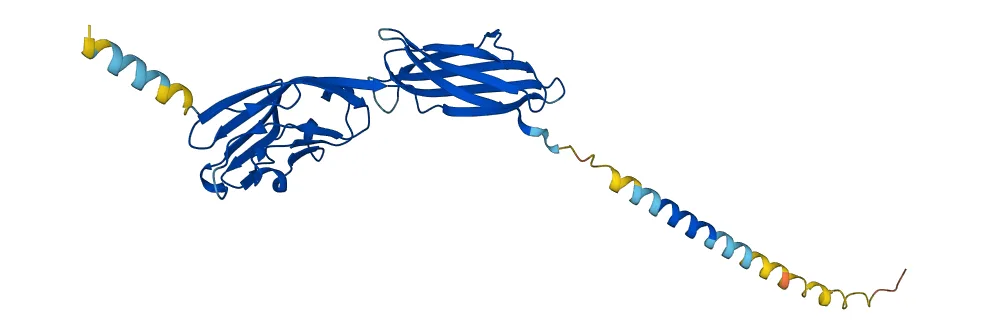
AlphaFold, an AI model developed by Google DeepMind, revolutionized biology by accurately predicting complex protein structures. This groundbreaking achievement demonstrated AI's profound capability to understand intricate atomic arrangements, inspiring its application in the design of new materials. (Source: info.hsls.pitt.edu)
Tomorrow’s lab: AI and robots at work
AI doesn’t just design on computers. It’s also transforming the physical laboratory itself. Autonomous laboratories, powered by AI, are appearing. These “self-driving labs” can conduct experiments and analyze results. They can even decide the next steps, all without human intervention.
In 2020, a University of Toronto team developed an AI-driven robotic system. It could synthesize and characterize new materials. This system performed thousands of experiments daily, far surpassing human capabilities. It found new catalysts for solar energy. That process would have taken years the old way.
IBM Research also has an AI-driven robot called “RoboRXN.” This system can execute complex chemical reactions based on molecular designs provided by AI. It automates the entire synthesis process, from weighing chemicals to purifying products. This means a chemist can design a molecule, and RoboRXN can attempt to create it.
These automated systems accelerate the validation of AI-predicted materials. They eliminate human error and tirelessly conduct repetitive tasks. This frees human researchers to focus on higher-level problem-solving and creative thinking. When AI design meets robotic experiments, it creates a powerful discovery engine.
Real impact: from batteries to buildings
AI’s practical uses in materials science are huge and growing fast. We already see its impact in key areas. Consider the demand for better batteries. Electric vehicles and renewable energy storage require lighter, safer, and more energy-dense batteries. AI helps find new electrode materials and electrolytes.
For example, researchers at MIT used machine learning to discover new solid-state battery materials in 2022. Their AI model analyzed millions of potential compounds. It identified several promising candidates for fast-ion conductors. These are key for next-gen batteries. This process took days, not years.
In aerospace, AI helps design lighter, stronger alloys for aircraft components. These materials improve fuel efficiency and safety. Companies like Boeing are investing in AI tools to improve material selection for new designs. This leads to reduced development cycles and lower manufacturing costs.
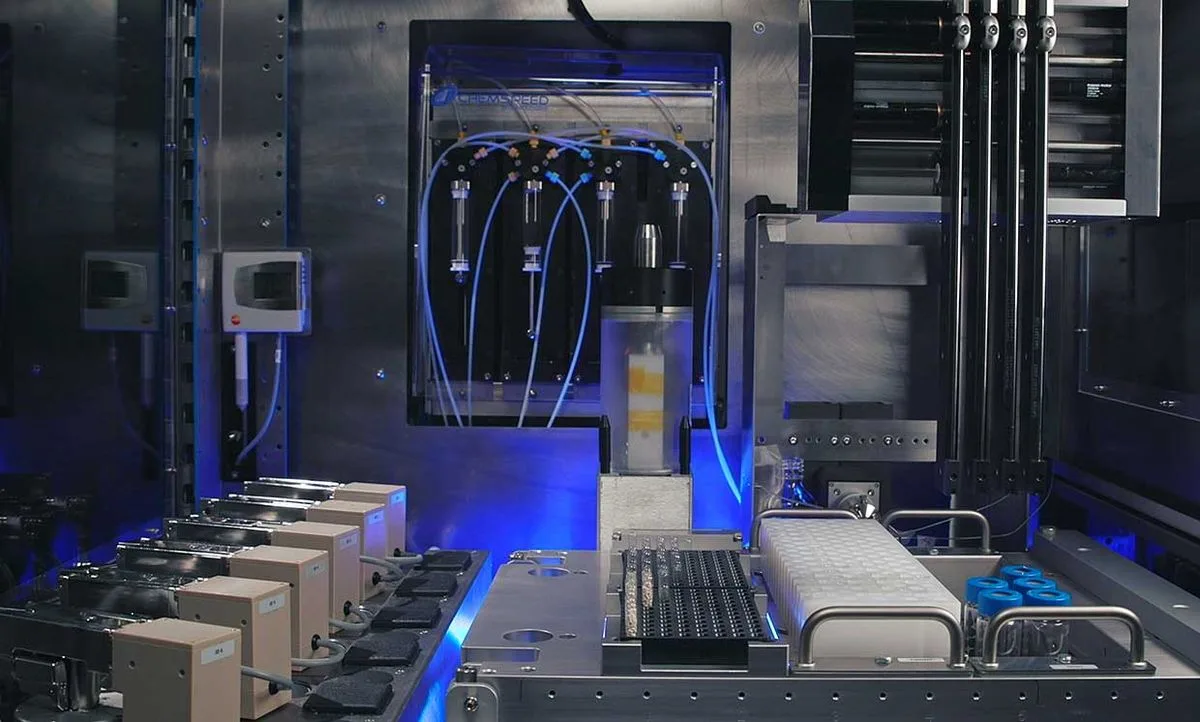
IBM Research's RoboRXN is an AI-driven robotic system designed to automate complex chemical reactions, from weighing chemicals to purifying products. This "self-driving lab" allows chemists to design molecules and have RoboRXN attempt to create them, accelerating material discovery. (Source: spectrum.ieee.org)
AI is also impacting sustainable materials. Researchers are using AI to discover biodegradable plastics or more efficient catalysts for carbon capture. This helps address urgent environmental challenges. The ability to rapidly screen and predict properties allows for faster development of eco-friendly alternatives.
The next chapter for smart materials
The journey of AI in materials science is just beginning. We’re moving towards a future where materials can be designed on demand, much like software is today. This means you specify what you want. Then AI generates the best atomic structure. This could lead to major advances in medicine, energy, and electronics.
One exciting direction is the development of self-healing materials. Imagine a concrete that repairs its own cracks or a polymer that mends itself after damage. AI can help identify the molecular mechanisms needed for such self-repair. It can then design materials that incorporate these features.
More high-quality materials data is becoming available. Paired with stronger AI algorithms, this will keep speeding up discovery. Collaboration between materials scientists, computer scientists, and engineers is key. We’re building a future where our tools are smart, intelligent designers. The next generation of materials will be born from this powerful partnership.
Frequently asked questions
Q1: What is the main benefit of using AI in materials science? A1: The main benefit is the ability to predict material properties and even design new materials computationally. This drastically reduces the need for slow, expensive, and often wasteful physical experiments.
Q2: Does AI replace human materials scientists? A2: No, AI helps human scientists. AI handles data analysis, prediction, and automation of repetitive tasks. This frees human researchers to focus on complex problem-solving, creative hypothesis generation, and experimental design.
Q3: What kind of data does AI use for materials discovery? A3: AI uses vast datasets from sources like scientific literature, experimental databases, and computational simulations. This includes information on atomic structures, chemical compositions, and observed physical or chemical properties of materials.
Q4: Can AI design a material that breaks the laws of physics? A4: No. AI models are trained on existing scientific data and principles. While they can propose new combinations, these proposals still follow basic physics and chemistry laws.

Self-healing materials, such as this polymer or concrete, are engineered to autonomously repair damage, extending their lifespan and reducing waste. AI is accelerating the discovery of molecular mechanisms that enable these materials to mend themselves after damage. (Source: delzottoproducts.com)
You might also like:
👉 UC Berkeley’s 2023 Metamaterial: Sound Vanishes