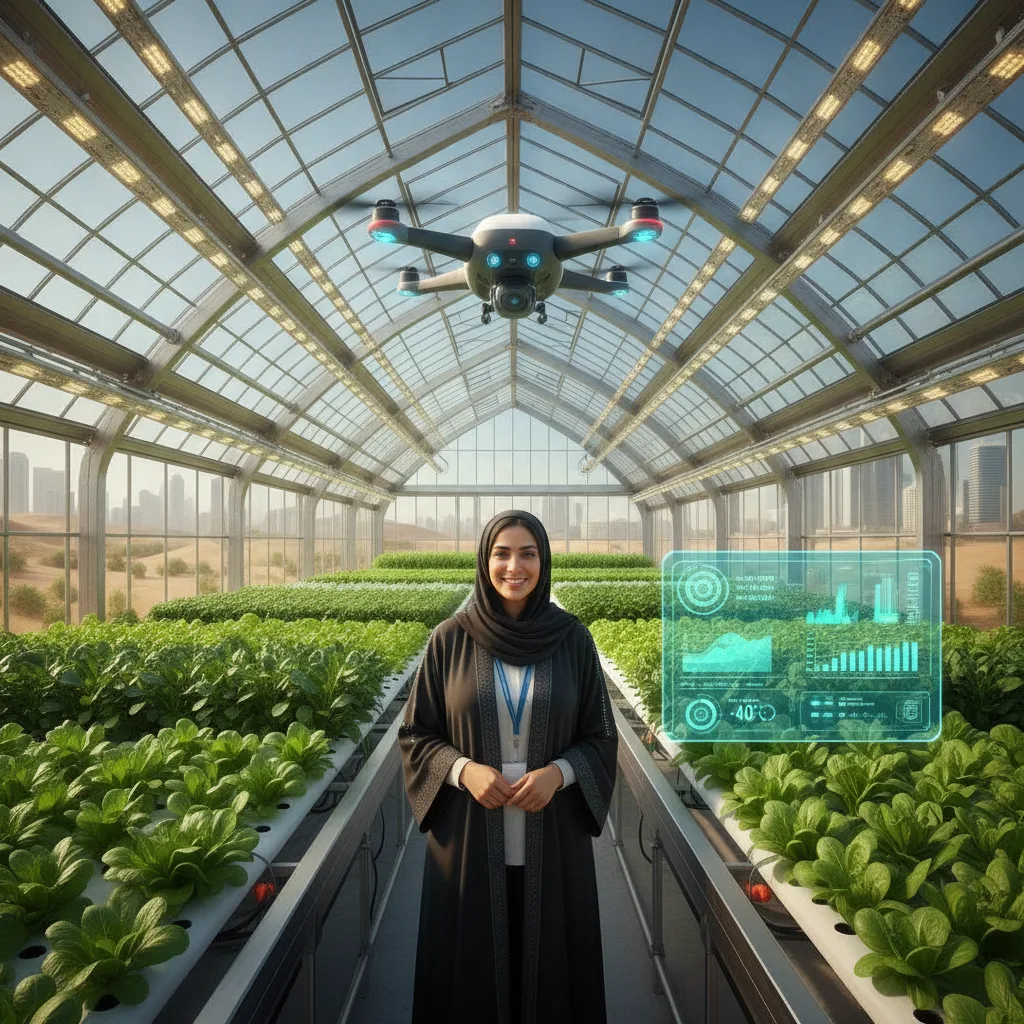
UAE's AI Gamble: Feeding a Nation with <1% Arable Land
The UAE, a nation with less than 1% arable land, is defying its arid climate by actively growing its own food using advanced AI.
The UAE is known for its skyscrapers, vast deserts, and oil wealth. Farming is not typically associated with the region. Many might assume the country imports all its food. However, the UAE is actively growing its own food. It uses advanced AI for this purpose. This is a bold move for a nation with less than 1% arable land and scarce freshwater.
The unlikely garden
The UAE sits in a highly arid part of the Arabian Peninsula. It is extremely hot, with little rain. This has historically made growing much food impossible.
For decades, the UAE relied heavily on other countries. The nation imports over 85% of its food, according to the UAE Food Security Office. This dependence makes the country vulnerable to global supply chain problems and price changes. Food security became a strategic need, not just an economic one.
In 2018, the UAE started its National Food Security Strategy 2051. This plan aims to give all residents enough safe, nutritious food. It also wants to make the UAE a world leader in food security solutions.
From scarcity to smart farms
Farming in a desert requires significant technology and investment. The UAE’s commitment to agricultural technology is remarkable.
In 2021, the UAE government invested AED 1.7 billion (USD 463 million) into agricultural technology startups and projects. This funding shows a serious, long-term commitment. It is a core investment, not a temporary plan. This money has rapidly grown high-tech farming.
AI is central to these farms. AI programs control climate precisely inside huge indoor facilities. Sensor networks, managed by AI, improve nutrient delivery in hydroponic and aeroponic systems. Robots even automate tasks like planting, monitoring, and harvesting.
Take Bustanica, which opened in Dubai in July 2022. This joint venture between Emirates Flight Catering and Crop One Holdings is the world’s largest vertical farm. It grows over 1,000 kilograms of leafy greens daily, right in the desert. Bustanica uses 95% less water than traditional field farming. That is a huge advantage for the UAE.
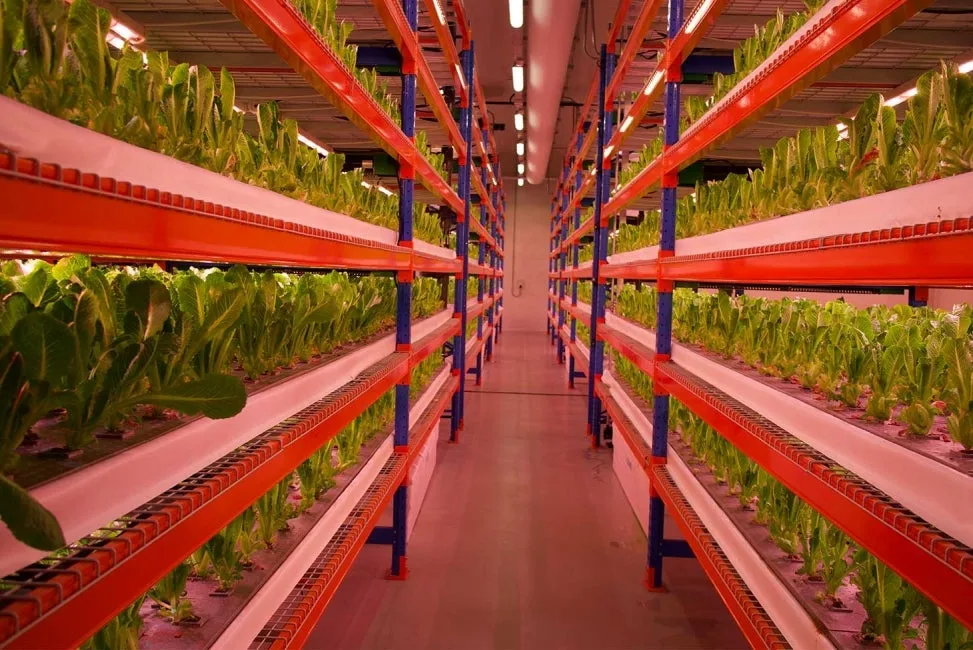
Bustanica, the world's largest vertical farm, opened in Dubai in July 2022 as a joint venture between Emirates Flight Catering and Crop One Holdings. This massive facility grows over 1,000 kilograms of leafy greens daily, utilizing advanced AI and 95% less water than traditional field farming. (Source: hdrinc.com)
Another key development is AeroFarms AgX, an advanced research facility. It launched in Abu Dhabi in February 2023. This facility focuses on research and development for controlled environment agriculture. Scientists here use AI to improve everything from light recipes to nutrient solutions. This speeds up plant growth. These are not just small tests; they are large, working food production sites.
Precision in the sand
AI helps farming overcome the UAE’s tough environment through extreme precision. Every drop of water, every ray of light, and every nutrient is managed exactly.
Water scarcity is the UAE’s biggest farming challenge. AI programs analyze real-time data from hundreds of sensors in the growing beds. They send water and dissolved nutrients directly to plant roots. This stops evaporation losses common in traditional irrigation.
The Ministry of Climate Change and Environment (MOCCAE) supports these climate-resilient farming methods. They show how AI-controlled drip irrigation and hydroponics cut water use by 80-90%. This directly addresses the nation’s reliance on desalination, which uses a lot of energy. It ensures precious freshwater is used as efficiently as possible.
AI also creates ideal climates. Indoor vertical farms use AI-controlled systems to manage the environment. These systems precisely set temperature, humidity, and CO2 levels. They even adjust light intensity and color, specific to each crop’s needs. This makes a perfect microclimate, totally separate from the scorching desert outside.
AI also excels at finding pests and diseases. Drones with AI cameras scan crops on their own. They spot early signs of stress, disease, or pests. This allows for targeted treatment. It greatly reduces the need for broad pesticides. Farmers treat only the affected spots, cutting down on chemicals and waste.
The human element and future harvests
This technology revolution brings significant changes for people and the economy. It impacts consumers and job markets.
Local shoppers already see the benefits. Supermarket shelves in Dubai and Abu Dhabi now carry locally grown leafy greens and herbs. These products often reach stores within hours of harvest. This freshness is better than imported produce, which travels thousands of kilometers. A 2023 report by the UAE Food Security Office confirmed a big rise in available local produce.
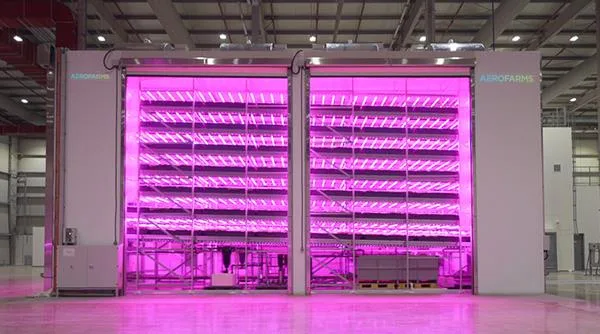
AeroFarms AgX, an advanced research facility launched in Abu Dhabi in February 2023, serves as a hub for developing AI-driven solutions to optimize plant growth and resource efficiency in controlled environment agriculture. (Source: globenewswire.com)
The growth of this high-tech farming creates new job opportunities. These are not traditional farm jobs. Demand exists for AI engineers, data scientists, robotics technicians, and agronomists. These specialists work in controlled environment agriculture. This shift diversifies jobs. It builds a knowledge-based economy, matching the UAE’s wider economic goals.
Still, challenges exist. The initial money needed for these advanced farms is large. This can stop smaller businesses. Energy use for indoor climate control is another concern. Many farms are looking into renewable energy, but ensuring sustainable power remains a focus. Growing staple crops like wheat or rice, which need huge spaces, is also a current research challenge.
A global blueprint for food security
The UAE is not just growing food in the desert. It is building a blueprint for sustainable agriculture in tough places worldwide. This has significant global effects.
The knowledge grown here is very valuable. Ministry of Economy officials plan to export this knowledge. They aim to share best practices in arid land farming and AI use. This makes the UAE a leader in farming solutions, not just a buyer.
Abu Dhabi’s AgTech Park shows this smart strategy in action. It aims to attract global agricultural technology companies and research groups. This initiative creates a network for new ideas. It encourages teamwork and speeds up new solutions. The goal is to build a place where advanced farming technologies are born and scaled.
The UAE’s journey proves what happens when smart strategy meets advanced technology. It shows food security is possible even in the harshest climates. Their work gives a strong model for other nations facing similar environmental or logistical problems. The desert, once a symbol of scarcity, is now a lab for future harvests.
Questions you might have
What is the main goal of AI in UAE farming? The main goal is to improve food security and rely less on imports. AI improves resource use, especially water. It allows for year-round local food production in the harsh desert climate.
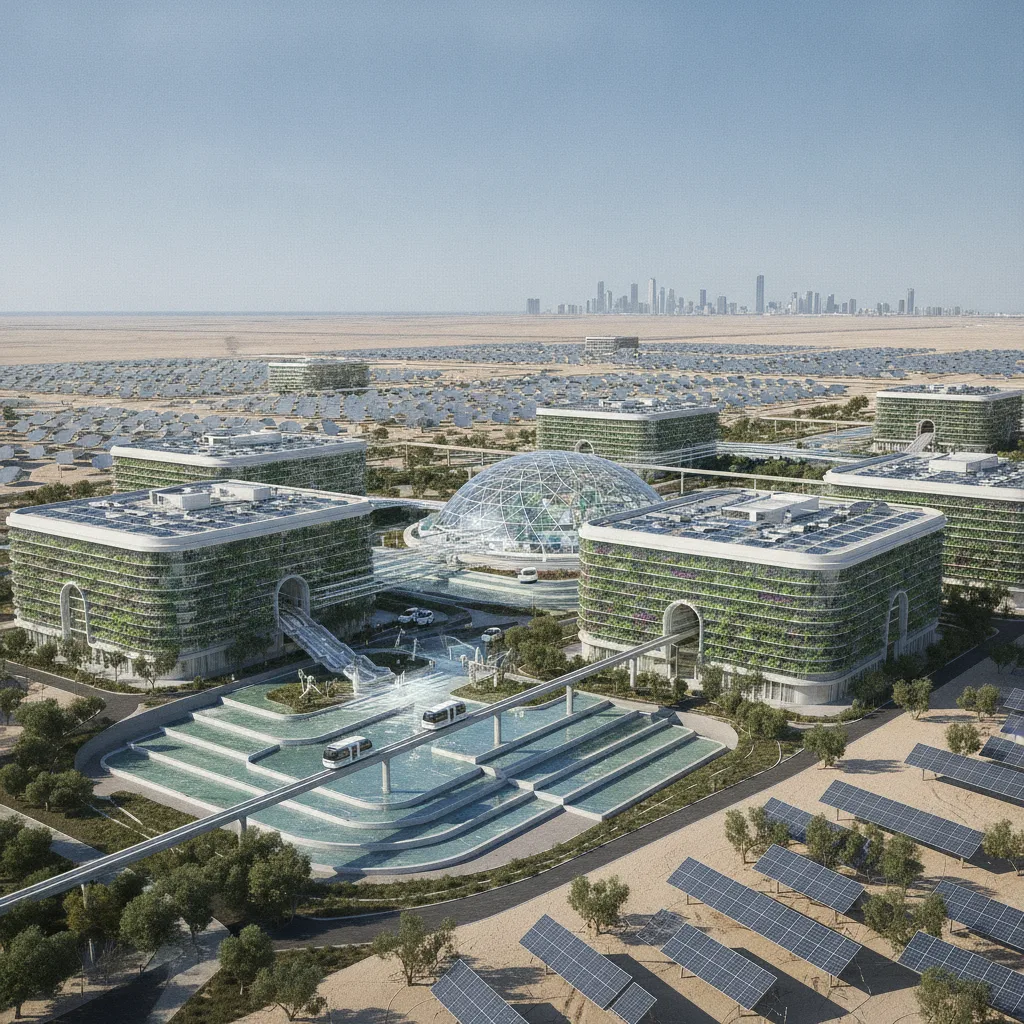
Abu Dhabi's AgTech Park is a strategic initiative designed to attract global agricultural technology companies and research groups, fostering a collaborative environment where advanced farming solutions are developed and scaled for arid regions worldwide. (AI-generated illustration)
What crops grow with AI in the UAE? They mostly grow high-value, fast-growing crops. These include leafy greens, herbs, and some fruits and vegetables. These work well in controlled indoor farms.
Is AI farming in the UAE worth it financially? Initial investments are high. However, long-term viability comes from lower import costs, better food security, and a growing knowledge industry. Government support and partnerships also help.
How does AI save water on UAE farms? AI systems closely watch plant needs. They deliver water and nutrients directly to roots. This cuts down on wasted water from evaporation and runoff. It leads to significant water savings compared to traditional farming.
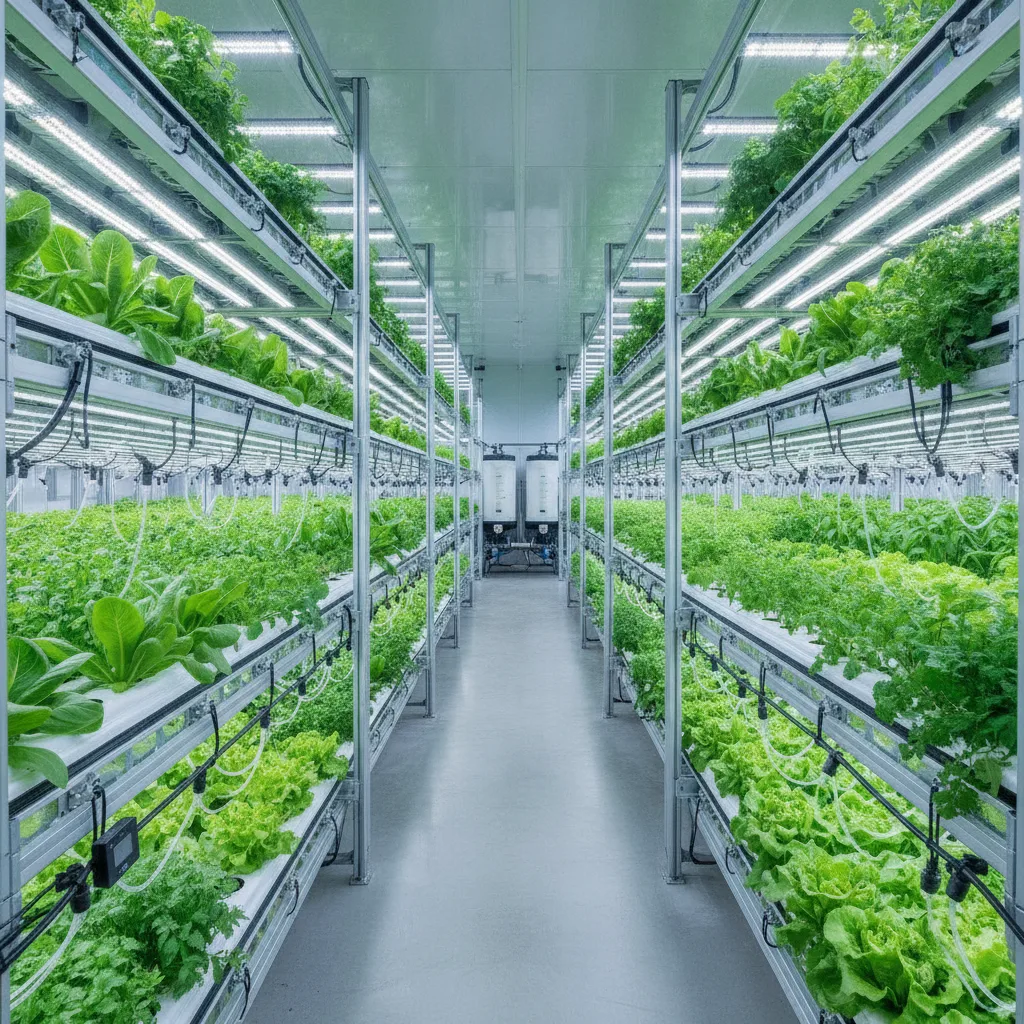
AI-driven precision irrigation systems are vital for water conservation in the UAE's advanced indoor farms. These technologies meticulously monitor plant needs, delivering water and nutrients directly to the roots and significantly reducing waste compared to traditional farming. (AI-generated illustration)
You might also like:
👉 UAE Drones: The 2022 Ban’s Hidden Truth Revealed
👉 Abu Dhabi Halts $23 Billion F-35 Deal for 50 Stealth Jets
👉 Why 1/3 of Food Waste Won’t Feed 735 Million Hungry People