
Alice J Walton School: Disrupting the Rural Healthcare Crisis
Discover how the Alice J Walton School of Medicine aims to revolutionize medical education and address the critical shortage of primary care physicians in rural America, impacting 46 million lives.
A staggering 80% of rural counties in the United States face a shortage of primary care physicians, a deficit that translates directly into compromised health outcomes for over 46 million Americans. This persistent national crisis underscores a critical need for innovative models in medical education and healthcare delivery. Against this backdrop, a new institution emerges not merely as another medical school, but as a meticulously planned, data-driven initiative designed to disrupt the status quo and address systemic healthcare challenges head-on: the alice j walton school of medicine. Situated in Bentonville, Arkansas, this institution represents a significant philanthropic investment and a strategic response to the complex interplay of physician maldistribution, health disparities, and the evolving demands of modern medicine.
The alice j walton school of medicine: An Unprecedented Financial Commitment to Healthcare Transformation
The foundation of any ambitious educational endeavor often lies in its financial bedrock, and the alice j walton school of medicine stands on an exceptionally robust one. With an initial $300 million endowment provided by its namesake, Alice L. Walton, this institution immediately distinguishes itself. To put this figure into perspective, the average endowment for a private medical school in the U.S. hovered around $100-$150 million in recent years, making Walton’s contribution one of the largest single philanthropic gifts ever made to establish a new medical school. This substantial capital infusion, announced in April 2023, is not simply a sum; it is a strategic enabler designed to foster innovation without the immediate pressures of traditional funding models.
This unprecedented financial commitment translates directly into tangible advantages. It permits the school to maintain a low student-to-faculty ratio, projected at 4:1 for core clinical faculty, significantly better than the national average of 7:1 reported by the AAMC for many established institutions. Such ratios are statistically correlated with improved student performance and greater individualized mentorship, crucial for developing competent physicians. Furthermore, a significant portion of the endowment is earmarked for student scholarships and financial aid, aiming to mitigate the crippling debt that often deters promising students from underserved backgrounds. The average medical student debt in the U.S. exceeds $200,000, a barrier the Walton School actively seeks to lower, ensuring that talent, not economic status, dictates access to medical education.
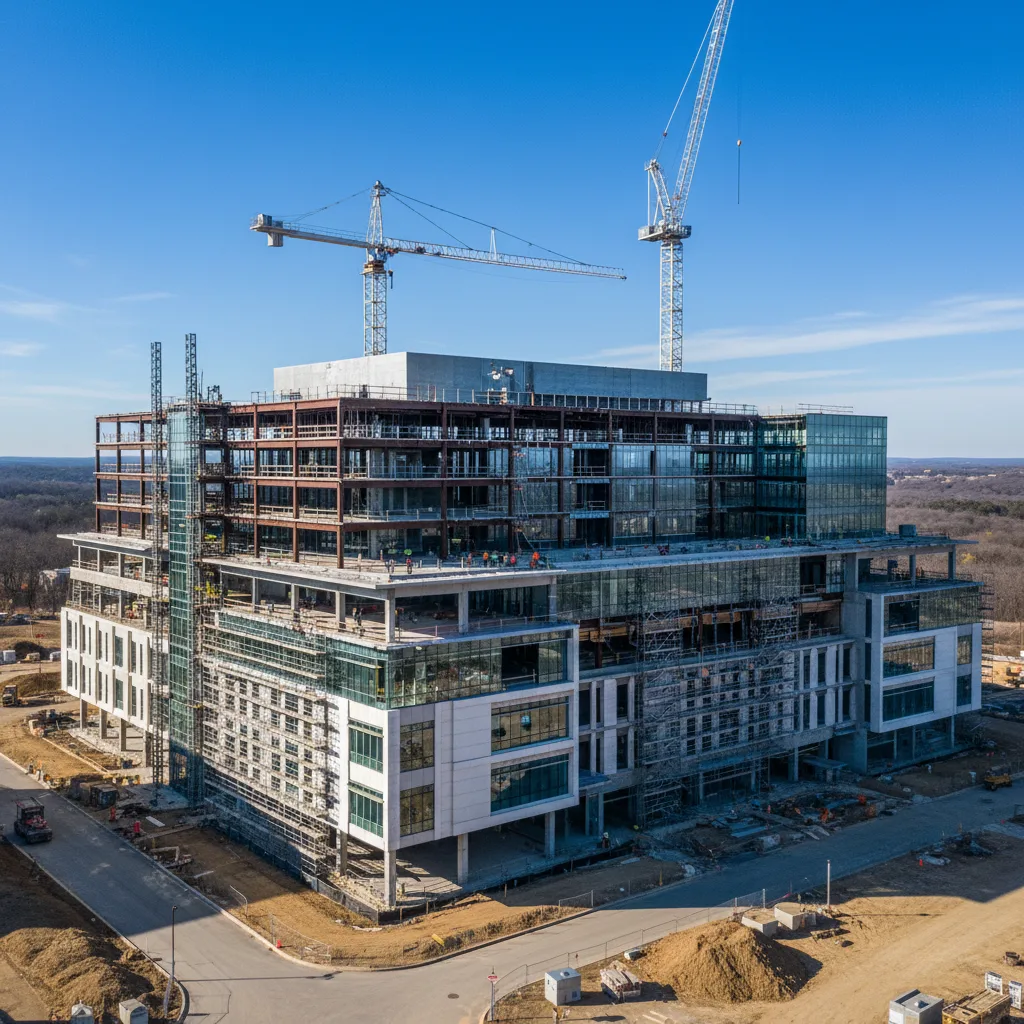
Beyond operational costs and student support, the endowment secures the development of state-of-the-art facilities and advanced technological infrastructure. The 154,000-square-foot facility, currently under construction with an expected completion in 2025, integrates cutting-edge simulation labs, anatomy suites utilizing virtual and augmented reality, and collaborative learning spaces. This investment ensures that graduates are not only clinically proficient but also adept at leveraging emerging technologies, preparing them for a healthcare landscape increasingly defined by digital innovation and data analytics.
Addressing Physician Shortages: A Targeted Strategy for Regional Impact
Arkansas consistently ranks among states with critical physician shortages, particularly in rural areas. Data from the Association of American Medical Colleges (AAMC) indicates that Arkansas maintains a physician-to-patient ratio of approximately 200 physicians per 100,000 residents, significantly below the national average of 250 per 100,000. This deficit is exacerbated in the state’s 75 counties, where access to specialized care, and even basic primary care, is often severely limited. The alice j walton school of medicine is explicitly designed to confront this imbalance, with a mission to train physicians who are not only skilled but also deeply committed to serving the region.
The school’s admissions strategy reflects this targeted approach, with a stated goal of matriculating 50% of its students from Arkansas, prioritizing those with ties to rural and underserved communities. This focus is grounded in robust empirical evidence: studies show that medical students who originate from rural areas are up to 3.5 times more likely to practice in rural settings after graduation compared to their urban counterparts. By cultivating a student body rooted in the communities it aims to serve, the school directly addresses the “brain drain” phenomenon where locally trained professionals often migrate to more populous, resource-rich areas. The inaugural class, slated for Fall 2025, will comprise 48 students, with plans to expand to 64 students per class by 2028, projecting an annual contribution of over 60 new physicians to the regional healthcare workforce once fully operational.
Furthermore, the curriculum is intentionally structured to expose students to the unique challenges and rewards of rural and community-based practice from their earliest stages of training. Through longitudinal integrated clerkships (LICs), students will spend extended periods in diverse clinical settings across Northwest Arkansas and beyond, including critical access hospitals and community health centers. This contrasts with traditional block rotations, where students cycle through specialties in brief intervals. LICs have demonstrated a higher likelihood of students choosing primary care specialties and practicing in underserved areas, with some studies indicating a 20-30% increase in primary care choices among LIC graduates compared to traditional curricula. This strategic alignment of admissions, curriculum, and clinical exposure positions the alice j walton school of medicine as a potent force in mitigating Arkansas’s physician shortage and improving health equity.

Innovative Curriculum Design: Beyond Traditional Medical Education
The traditional medical school curriculum, often characterized by didactic lectures and fragmented clinical rotations, is increasingly recognized as insufficient for preparing physicians for the complexities of 21st-century healthcare. The alice j walton school of medicine directly addresses this by adopting a radically innovative curriculum, prioritizing active learning, interprofessional collaboration, and early clinical integration. A striking 75% of learning will occur through active, case-based, and team-based methods, significantly surpassing the national average of approximately 30-40% for many established medical programs. This shift emphasizes critical thinking, problem-solving, and peer collaboration over passive information absorption.
The curriculum is structured around a three-phase model that integrates foundational sciences with clinical experience from day one. Phase 1, “Scientific Foundations,” uses an organ-system approach with extensive case studies and simulation. Phase 2, “Clinical Immersion,” features the aforementioned longitudinal integrated clerkships, ensuring sustained patient relationships and continuity of care. Phase 3, “Advanced Clinical Practice,” allows for individualized pathways and advanced electives, including research and global health opportunities. This continuous integration contrasts sharply with the “2+2 model” (two years preclinical, two years clinical) prevalent in many institutions, which often delays meaningful clinical exposure. Data suggests that early and sustained clinical exposure improves clinical reasoning skills and reduces the “culture shock” often experienced by students transitioning from classroom to clinic.
A core tenet of the curriculum is its emphasis on health equity, population health, and digital literacy. Students will engage with social determinants of health, learn to analyze population-level data, and become proficient in telemedicine and electronic health records. This holistic approach is crucial given that 80% of health outcomes are influenced by non-medical factors such as socioeconomic status, education, and environment. By embedding these competencies throughout the four-year program, the school aims to produce physicians who are not only scientifically adept but also socially conscious and technologically fluent, equipped to address the multifaceted challenges of patient care in diverse communities.
Health Equity and Community Engagement: Bridging Disparities in Arkansas
Health disparities in Arkansas are stark. For example, the state consistently ranks among the lowest nationally for key health indicators such as obesity rates, diabetes prevalence, and infant mortality, particularly within its minority and economically disadvantaged populations. The alice j walton school of medicine is not merely acknowledging these disparities; it is embedding a commitment to health equity directly into its institutional DNA, aiming to produce physicians who are culturally competent and deeply invested in community well-being. This is exemplified by its focus on matriculating students from underrepresented backgrounds and its robust community engagement initiatives.
As previously noted, the school’s goal of admitting 50% of its students from Arkansas, with a specific focus on those from rural and underrepresented minority (URiM) backgrounds, is a deliberate strategy to cultivate a diverse physician workforce. National data from the AAMC in 2022 showed that URiM students constituted only approximately 18% of matriculants across all U.S. medical schools. By significantly exceeding this proportion for its in-state cohort, the Walton School aims to foster a physician pipeline that better reflects the diverse demographics of the communities it serves. Research indicates that patients from racial and ethnic minority groups report higher satisfaction and better adherence to medical advice when treated by physicians who share their background or demonstrate strong cultural competency.
Beyond admissions, the school’s curriculum integrates robust community engagement through required service-learning projects and partnerships with local health organizations. Students will work alongside public health professionals, community leaders, and local clinics to address specific health needs, from developing preventative health programs to implementing health literacy initiatives. These experiences are designed not as extracurricular activities but as integral components of their medical training, ensuring that graduates possess a deep understanding of the social determinants of health and the practical skills required to advocate for and implement community-based health solutions. This hands-on approach aims to reduce the 15-year gap in life expectancy observed between the healthiest and least healthy counties in Arkansas, directly addressing systemic inequities through physician education and community action.
Technological Integration and Research: Pioneering Future Healthcare
The rapid evolution of medical technology and data science is reshaping healthcare delivery. The alice j walton school of medicine is designed to be at the forefront of this transformation, with a substantial investment in advanced technological infrastructure and a curriculum that emphasizes digital literacy and research acumen. An estimated $50 million has been allocated for cutting-edge research infrastructure and the integration of digital health platforms, positioning the school as a hub for medical innovation in the region. This investment will equip students and faculty with tools ranging from advanced imaging systems to artificial intelligence-driven diagnostic support.
 Students will receive extensive training in **telemedicine protocols, electronic health record (EHR) optimization, and data analytics**, skills that are increasingly indispensable for modern medical practice. For example, the COVID-19 pandemic saw an exponential rise in telemedicine utilization, with some specialties reporting over **50% of patient encounters shifting to virtual platforms**. The school's curriculum ensures graduates are not just familiar with these tools but proficient in leveraging them to improve patient access, efficiency, and outcomes. Furthermore, the school will house dedicated research laboratories focusing on areas critical to regional health, such as chronic disease management, rural health innovations, and health technology.
 The emphasis on research extends beyond faculty endeavors; students will be actively engaged in scholarly pursuits from their early years. A **required longitudinal research project** will guide students through the process of scientific inquiry, from hypothesis generation to data analysis and dissemination. This commitment to research is crucial for developing evidence-based practitioners and future innovators. By fostering a culture of inquiry and providing access to sophisticated tools like **genomic sequencing platforms and virtual reality surgical simulators**, the alice j walton school of medicine aims to produce physicians who are not only capable of delivering high-quality care today but also equipped to contribute to the medical breakthroughs of tomorrow, enhancing the overall research ecosystem of the state.
Economic Impact and Regional Development: A Catalyst for Growth
The establishment of a major institution like the alice j walton school of medicine extends its influence far beyond medical education and healthcare delivery, serving as a powerful economic engine for the region. Economic impact analyses of new medical schools consistently demonstrate significant benefits, and the Walton School is projected to contribute substantially to the economic vitality of Northwest Arkansas. Over its first five years of operation, the school is estimated to generate over 1,000 direct and indirect jobs, ranging from faculty and administrative staff to support services and construction workers. This employment surge will inject substantial new income into the local economy.
The school’s operational expenditures, including salaries, facility maintenance, and procurement of supplies, are projected to generate an economic output exceeding $150 million annually once fully established. This figure takes into account the multiplier effect, where each dollar spent by the institution or its employees circulates through the local economy multiple times. For example, faculty and staff relocating to Bentonville will purchase homes, frequent local businesses, and pay taxes, stimulating growth across various sectors. The presence of a new medical school also tends to attract other healthcare-related businesses and research ventures, creating a cluster effect that further amplifies economic development.
Beyond direct financial contributions, the alice j walton school of medicine enhances the “human capital” of the region. By attracting top-tier faculty, researchers, and bright students, it elevates the intellectual landscape and fosters an environment of innovation. The improved healthcare access and outcomes resulting from an increased physician workforce also contribute to a healthier, more productive population, which is a key factor in attracting new businesses and retaining existing ones. This holistic economic impact positions the school not just as an educational institution but as a cornerstone of long-term regional prosperity, demonstrating a profound return on the initial philanthropic investment.
FAQ
Q1: When will the alice j walton school of medicine officially open and welcome its first class? A1: The alice j walton school of medicine is anticipated to open its doors and welcome its inaugural class of 48 students in Fall 2025, with the main facility expected to be completed in 2025.
Q2: What makes the curriculum at the alice j walton school of medicine unique compared to traditional medical schools? A2: Its curriculum is highly innovative, emphasizing active, case-based learning for 75% of instruction, early and sustained clinical exposure through longitudinal integrated clerkships, and integrated training in health equity, population health, and digital literacy from day one. It moves beyond traditional didactic lectures to foster critical thinking and practical skills.
Q3: How specifically will the school address healthcare disparities and physician shortages in Arkansas? A3: The school aims to address these issues by prioritizing admissions for students from Arkansas, especially those from rural and underrepresented backgrounds, with a goal of 50% in-state matriculants. Its curriculum includes extensive community engagement and training in rural health, preparing graduates to serve in underserved areas where physician shortages are most acute.
Q4: Is the alice j walton school of medicine affiliated with an existing university system or is it an independent entity? A4: The alice j walton school of medicine is established as an independent, not-for-profit medical school. While it may collaborate with existing institutions for clinical training and research, it operates autonomously under its own governance structure.
Key Takeaways
The alice j walton school of medicine is poised to redefine medical education and healthcare delivery in Arkansas and beyond. Its $300 million endowment provides an unparalleled foundation for innovation. Strategically targeting Arkansas’s physician shortage, the school aims to contribute over 60 new physicians annually to the regional workforce, with a strong emphasis on rural and underserved communities. Its cutting-edge curriculum, marked by 75% active learning and early clinical integration, will produce physicians equipped for 21st-century challenges. Furthermore, a deep commitment to health equity, supported by diverse admissions and community engagement, seeks to bridge persistent disparities. Finally, substantial investment in digital health and research infrastructure positions the school as a catalyst for technological advancement and regional economic growth, projected to generate over 1,000 jobs and $150 million in annual economic output. This institution is not just filling a void; it is setting a new standard for impact-driven medical education.
You might also like:
👉 AI in Medicine: A Complete Guide to Healthcare Transformation
👉 AI & Education: Reshaping the Future of Teaching & Learning
👉 Future Bridge Education & Training LLC: Adaptive Learning for Tomorrow