Beyond 1957: Why Chemical Rockets Won't Reach Mars
Chemical rockets have taken us to space since Sputnik 1 in 1957, but deep-space travel to Mars demands far more than small upgrades.
Space Engines: The Hurdles We Don’t Talk About
We’ve always dreamed of space. Chemical rockets have taken us there since Sputnik 1 launched in 1957. They still lift our payloads and people into orbit. Many think small upgrades will get us to Mars and beyond. This idea misses huge physics and engineering problems. It ignores what deep-space travel really demands.
Our space travel today starts and ends with Earth. Rockets launch from places like Cape Canaveral, Florida, or Baikonur Cosmodrome, Kazakhstan. NASA, ESA, and companies like SpaceX want to cut launch costs and make things more reliable. Their main goal is to get spacecraft and astronauts safely into low-Earth orbit. Sometimes they send probes to the planets or reach lunar orbit.
This whole system depends on chemical rockets. These rockets burn propellants like liquid hydrogen and oxygen, shooting out hot gases for thrust. It’s powerful enough to beat Earth’s gravity. But it severely limits missions far from home.
Chemical rockets: A stubborn grip
SpaceX’s Falcon 9 alone launched 98 times in 2023. This shows how reliable and frequent chemical rockets have become. Many think these engines just need to get bigger or a bit more efficient. Then they’ll conquer the solar system. This idea ignores the “tyranny of the rocket equation.”
The rocket equation means you need more fuel just to carry the fuel. This makes long missions less efficient. Dr. Robert Zubrin, who founded the Mars Society, often talks about this problem. He notes the Apollo program’s Saturn V rocket used over 85% of its launch mass as propellant. Only a tiny part made it to lunar orbit. For Mars, this problem gets even worse. A bigger chemical rocket just needs a much bigger fuel tank.
This isn’t just about bigger tanks. It’s about basic physics. Chemical reactions release a fixed amount of energy per unit of propellant. This caps the maximum exhaust velocity. We call this key efficiency measure specific impulse (Isp). Even top chemical engines, like the Space Shuttle’s SSMEs, hit around 450 seconds Isp. That’s not enough for fast trips between planets.
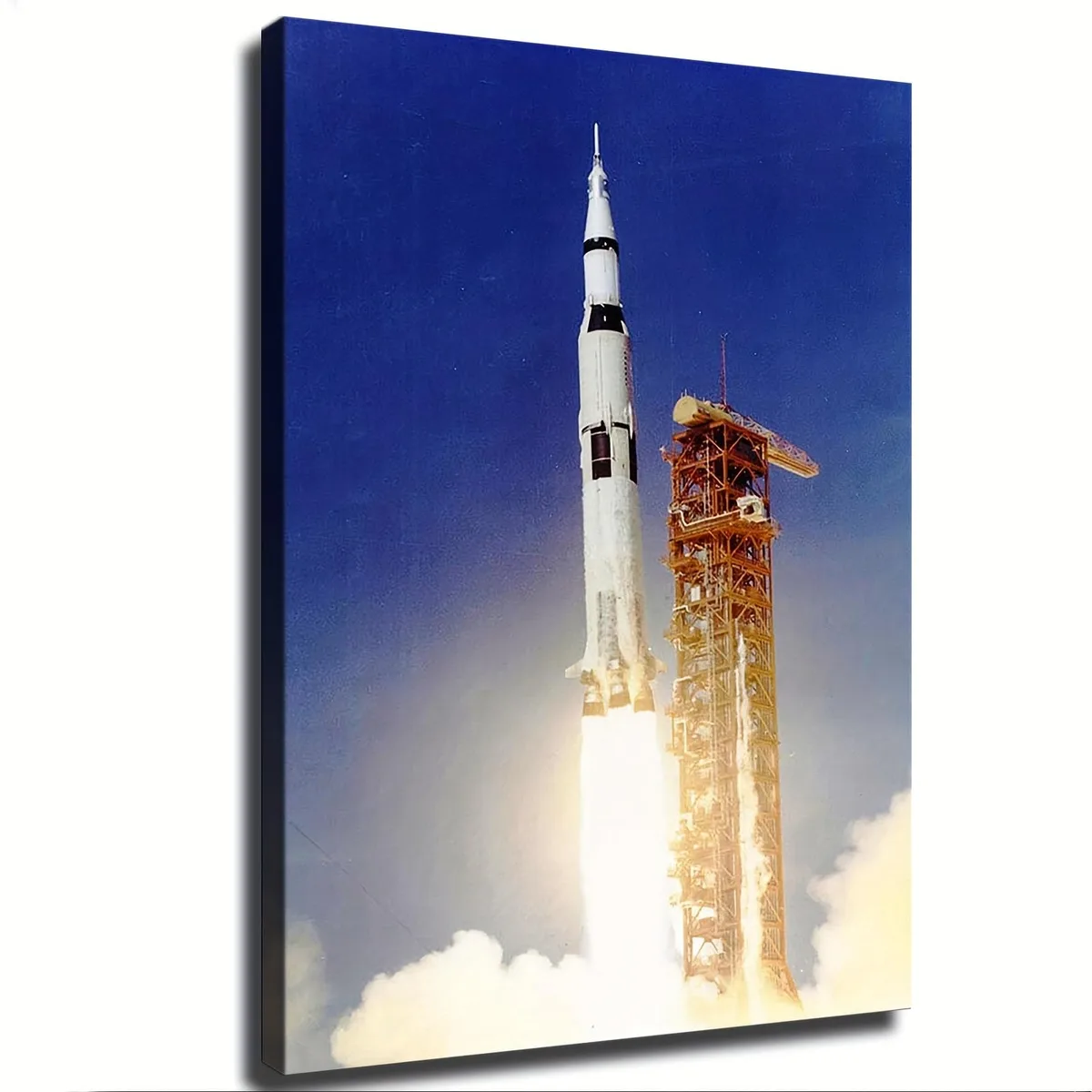
The colossal Saturn V rocket, used in the Apollo program, famously required over 85% of its launch mass to be propellant, illustrating the 'tyranny of the rocket equation' that limits deep-space missions. (Source: amazon.com)
Electric propulsion: Too slow for humans
Ion thrusters brought a big jump in fuel efficiency. NASA’s Dawn spacecraft, launched in 2007, used ion propulsion to orbit Vesta and Ceres. This mission proved the tech could get huge velocity changes with little fuel. So, many people see electric propulsion as the next step for deep-space engines.
This excitement often misses an important trade-off: thrust. Ion thrusters make incredibly low thrust, just millinewtons. Dawn took four years to reach Vesta. Its total acceleration lasted years. Dr. Bruce Campbell, an aerospace propulsion expert at The Aerospace Corporation, makes this clear. He says ion drives, though efficient, are “too slow for human missions.” They work great for robotic probes carrying small things over long times. But human missions must cut transit time. This lessens radiation exposure and psychological stress for astronauts.
A human Mars trip using chemical rockets might take six to nine months one way. The same trip with today’s ion propulsion would take years. This makes mission risks and costs skyrocket. NASA’s NEXT thruster hit an Isp of 4,100 seconds. But its top thrust was still just 236 millinewtons. This crawling speed buildup kills any chance for crewed exploration.
Nuclear power: A past promise, a current problem
The U.S. poured money into nuclear thermal rocket (NTR) research in the 1960s. Project NERVA (Nuclear Engine for Rocket Vehicle Application) ran many tests. For example, the Kiwi-B series showed a reactor working at full power in 1964. NTRs had an Isp roughly double chemical rockets, about 900 seconds. This promised much faster trips to Mars. Many think NTRs are the clear answer to link chemical and more advanced propulsion.
NERVA got canceled in 1972, despite good test results. Most people blame Cold War politics and budget cuts. But real technical problems remained. These included material issues at extreme temperatures. Plus, worries about testing nuclear reactors on the ground and handling radioactive exhaust still exist. Dr. Franklin Chang Díaz, CEO of Ad Astra Rocket Company, calls NTRs “old nuclear technology.” He thinks they still bring too many environmental and political problems.
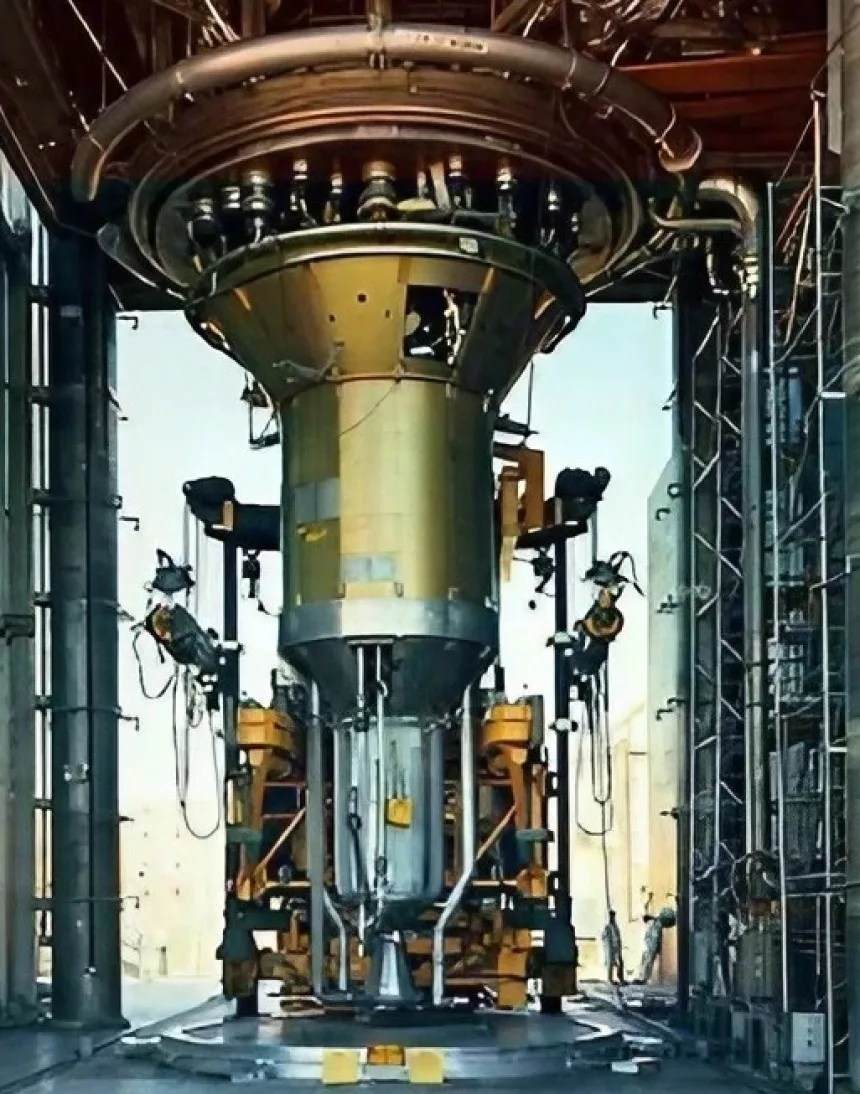
Project NERVA (Nuclear Engine for Rocket Vehicle Application) was a U.S. program in the 1960s that successfully tested nuclear thermal rocket engines. Despite promising results, including the Kiwi-B series reactor operating at full power in 1964, the project was canceled in 1972 due to Cold War politics, budget cuts, and unresolved technical and environmental concerns. (Source: autoevolution.com)
Chang Díaz champions a more advanced idea: plasma rockets. His VASIMR engine (Variable Specific Impulse Magnetoplasma Rocket) heats propellants into plasma with radio waves. Magnetic fields then accelerate this plasma. VASIMR aims for Isp values from 3,000 to 30,000 seconds. It also offers more thrust than ion engines. This design tries to get around the limits of solid-core nuclear reactors.
Exotic concepts: Not just sci-fi
Scientists are actively researching propulsion methods like fusion and antimatter drives. Most space talk writes them off as too far away or just theory. But this ignores real science looking into these ideas. They aren’t just fantasy. They’re serious efforts to use basic physics for propulsion.
Fusion propulsion, for example, tries to copy the sun’s power. The Princeton Plasma Physics Lab (PPPL) actively studies compact fusion reactors. These could power spacecraft someday. It’s decades off, but their work on confinement and heating is important. A fusion rocket could theoretically get exhaust velocities far beyond any chemical or nuclear thermal system. This would greatly cut travel times.
Antimatter propulsion is still highly speculative. Making and storing it poses huge challenges. But theoretical physicist Dr. Gerald Smith at Penn State has looked into its potential. He showed how antimatter annihilating with matter could turn almost 100% of mass into energy. This gives the highest energy density possible for propulsion. Even tiny bits of antimatter could provide massive thrust. The hurdles are huge, but we understand the physics of antimatter annihilation. It’s not magic.
The hidden variable: Fuel and infrastructure
Future engine discussions often overlook the critical role of fuel sourcing and infrastructure. Most plans assume we’ll always launch all needed propellant from Earth. This idea greatly limits every propulsion concept, even advanced ones. It misses a key part of the puzzle.
In-situ resource utilization (ISRU) offers a huge change. Dr. Phil Metzger, a planetary scientist at the Planetary Science Institute, champions ISRU. He says making propellants on the Moon or Mars changes everything. If future engines can use local water ice to make hydrogen and oxygen, the “tyranny of the rocket equation” lessens. We won’t have to lift all that mass from Earth.
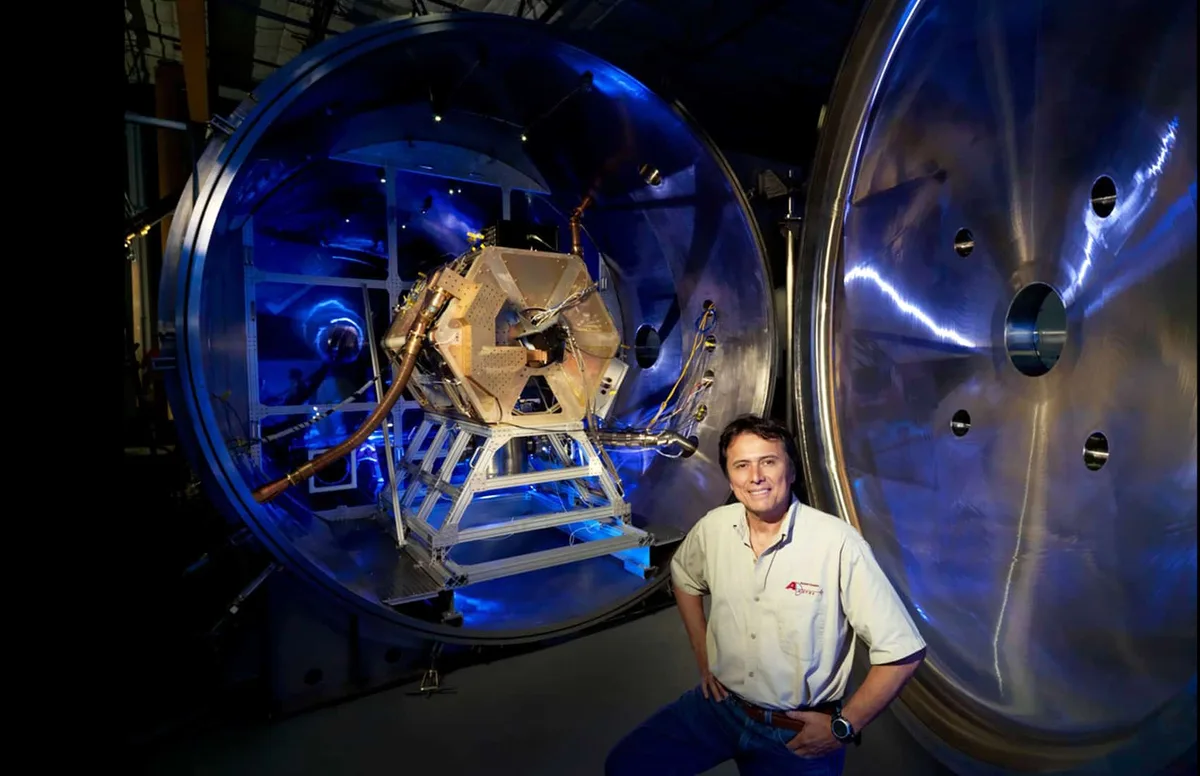
The VASIMR (Variable Specific Impulse Magnetoplasma Rocket) engine, championed by former astronaut Franklin Chang Díaz, heats propellants into plasma with radio waves and uses magnetic fields for acceleration. This innovative design aims to achieve unprecedented specific impulse values, potentially enabling much faster space travel. (Source: ticotimes.net)
The ESA PROSPECT program, for instance, builds tech to get water from lunar dirt. If it works, lunar refueling stations become real. Rockets could then launch from Earth with less fuel. They’d top off in lunar orbit before going to Mars. This infrastructure is as important as new engines. It completely changes the money and movement of space travel.
The real goal: Speed, safety, sustainability
Achieving true deep-space travel requires more than small improvements to existing engines. This misses the real goal. Future space engines don’t just need more power. They need much higher exhaust velocity for fast travel. This matters for human safety and mission success. We must cut radiation exposure on long trips. We also need to lessen the mental strain of long confinement.
This means we must move away from chemical combustion. We need to adopt ultra-high specific impulse systems. These may have less initial thrust, but they offer huge cumulative speed. Dr. Marc Millis, who once led NASA’s Breakthrough Propulsion Physics program, stressed this. His work looked at systems that needed no propellant or vastly better Isp. The final goal is to stop carrying all reaction mass.
So, space travel’s future isn’t about bigger explosions. It’s about smarter physics. We need to build engines that shoot out propellant faster than ever before. This means exploring advanced plasma, fusion, and even antimatter ideas. At the same time, we must build fuel depots off-world. Only then can we make space travel truly sustainable, safe, and swift for humanity’s reach across the solar system. This isn’t just about getting there; it’s about making the journey possible.
FAQ
What is specific impulse? Specific impulse (Isp) measures a rocket engine’s efficiency. It indicates how effectively an engine uses its propellant to produce thrust. A higher Isp means more thrust per unit of propellant mass, allowing for greater speeds or longer operating times.
Why are chemical rockets still used so much? Chemical rockets are powerful and reliable for their intended purpose: lifting heavy payloads quickly off Earth. They provide high thrust, necessary to overcome Earth’s strong gravity. The technology is mature and well-understood, making them cost-effective for current launch needs.
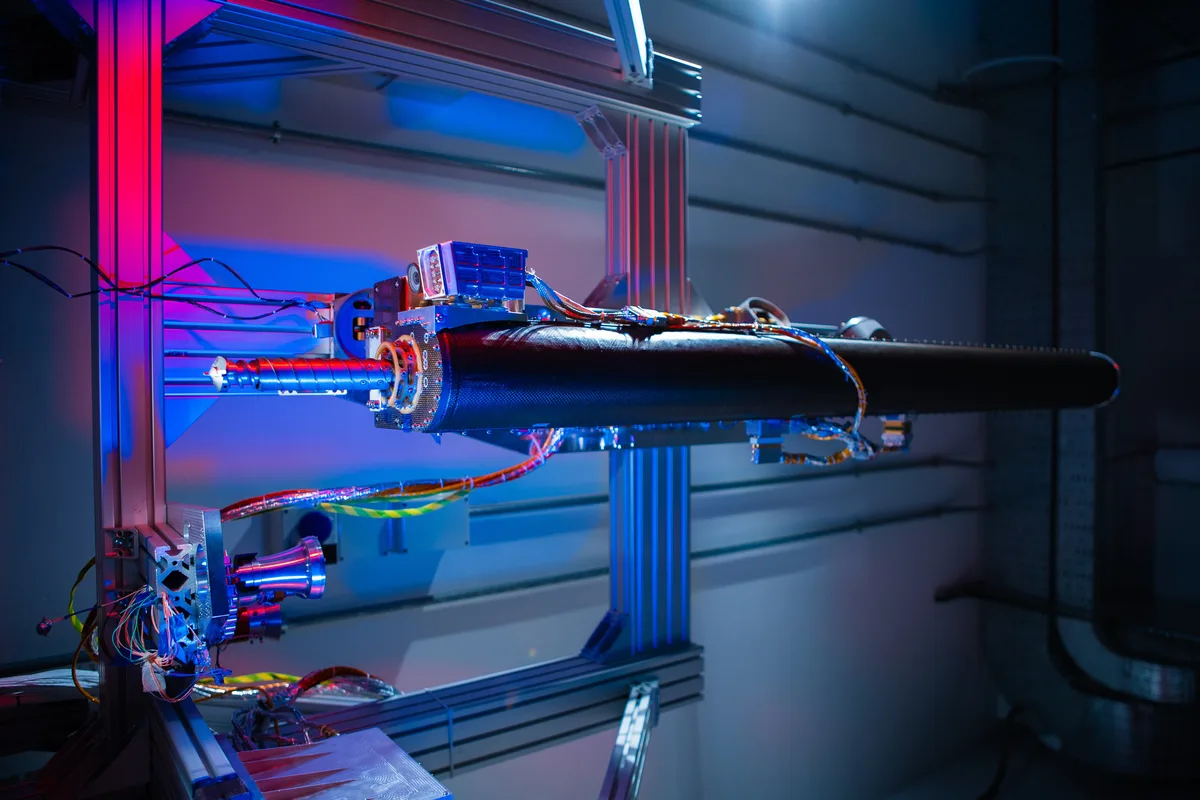
The ESA PROSPECT program is developing advanced technology to extract water ice from lunar regolith, a crucial step towards establishing sustainable lunar refueling stations. This resource utilization could drastically reduce the amount of fuel rockets need to carry from Earth, making deep-space travel more feasible. (Source: esa.int)
What is ISRU? ISRU stands for In-Situ Resource Utilization. It involves using local resources found on other celestial bodies, like the Moon or Mars, to produce necessities. This includes propellant, water, or building materials. ISRU reduces the need to launch everything from Earth, making deep-space missions more sustainable.
How do “warp drives” fit into future engine discussions? Warp drives are highly theoretical concepts that propose distorting spacetime to travel faster than light. While currently considered pure science fiction, they represent the ultimate aspiration for interstellar travel. Researchers study their underlying physics, but practical application remains far beyond our current technological capabilities.
You might also like:
👉 Why 1960s Rocket Tech Won’t Get Us to Mars Fast Enough