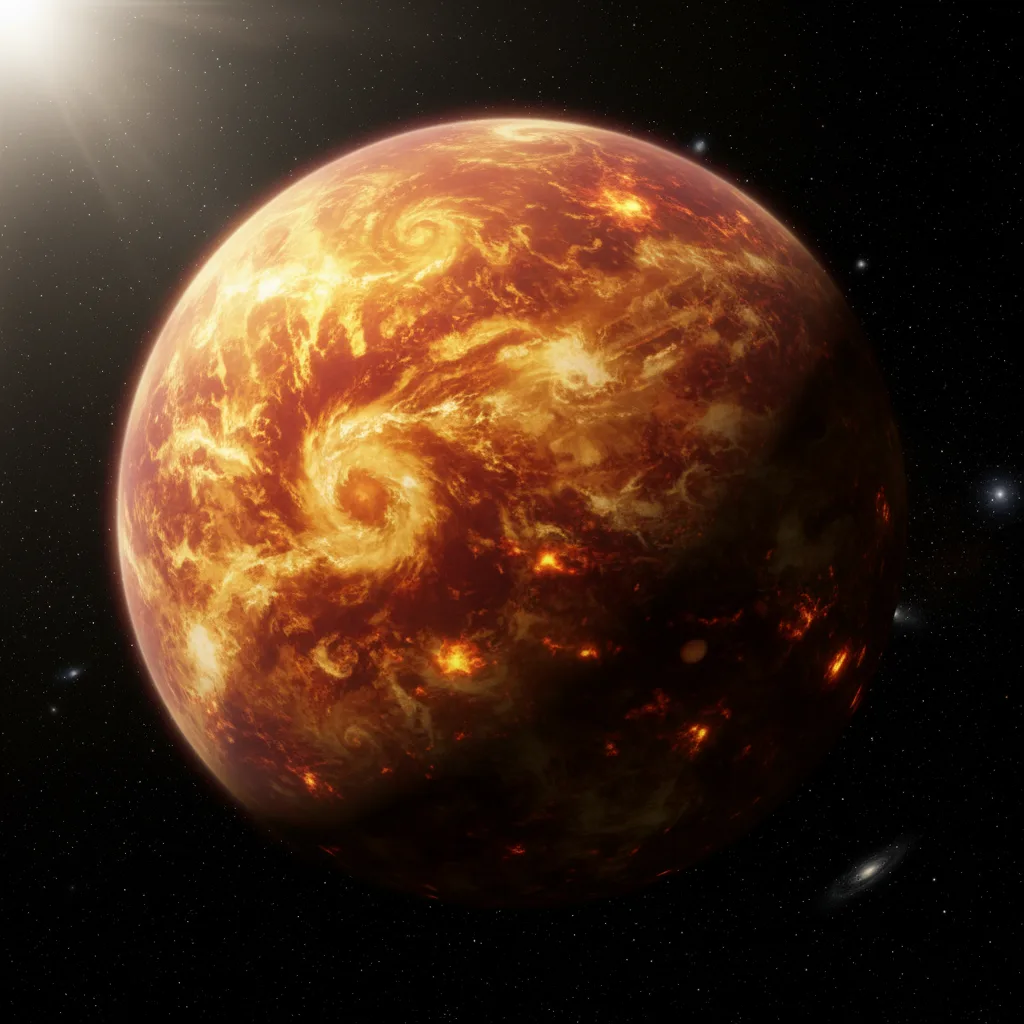
Venus: Why 475°C Hell Holds Earth's Climate Future
Despite surface temperatures averaging 475°C, Venus offers vital clues about planetary evolution and Earth's potential climate future.
Venus: Earth’s ‘Evil Twin’ and Our Next Big Challenge
Venus is hell. Everyone knows that. But this scorching, dead world is far from scientifically useless. It holds vital clues about how planets evolve. It also shows what Earth’s climate might become. We need to explore it.
Venus is Earth’s closest neighbor. It is often called our “sister planet.” This is because of its similar size and mass. But the similarities stop there. Surface temperatures average 475°C (900°F). That’s hot enough to melt lead.
Atmospheric pressure is 92 times Earth’s sea level. Imagine being a mile deep in Earth’s ocean. This thick air is mostly carbon dioxide. Sulfuric acid clouds trap heat. This creates a runaway greenhouse effect.
Early missions struggled. The Soviet Union’s Venera landers reached the surface in the 1970s and 80s. They sent brief images. Then the harsh conditions destroyed them. NASA’s Magellan orbiter mapped Venus with radar. This happened in the early 1990s. Japan’s Akatsuki orbiter still studies its atmosphere.
But here’s a twist. Venus’s upper atmosphere, between 50 and 60 kilometers up, feels much like Earth. Temperatures there match Earth’s sea level. The pressure is also comparable. This region fascinates scientists. In 2020, researchers announced phosphine gas in these clouds. That finding is now heavily debated. Still, it sparked new talks about possible signs of life.
Building for hell: engineering challenges
Exploring Venus means building machines that can survive hell. Extreme heat, crushing pressure, and corrosive air destroy standard electronics quickly. Thick clouds block sunlight. This makes simple solar power impossible on the surface. Past Venera landers lasted only minutes. The longest lasted just over two hours. They needed heavy armor.
Future missions need advanced, heat-resistant tech. NASA’s Glenn Research Center develops “Venusianized” electronics. These use silicon carbide semiconductors. Such parts can work at hundreds of degrees Celsius. They can do this for a long time. Imagine a computer running inside a blast furnace.
Some ideas skip electronics entirely. JPL’s Automaton Rover for Extreme Environments (AREE) is one example. This clockwork rover would use wind power. It could operate for months.
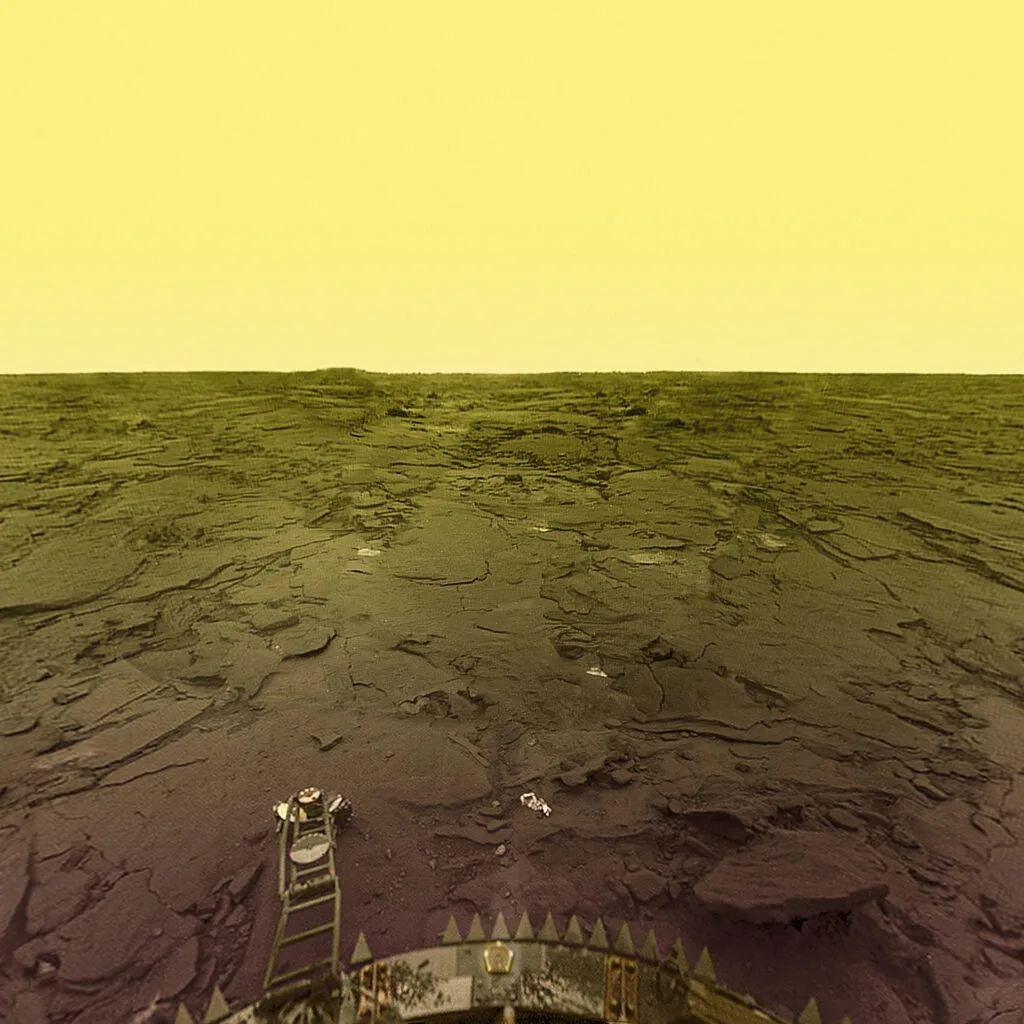
The Soviet Venera landers were the first and only probes to successfully land on Venus, sending back brief images from its scorching surface before succumbing to the extreme heat and pressure within minutes to hours. (Source: reddit.com)
Aerobots—high-altitude balloons—are another option. They could float in the temperate upper atmosphere. They could stay there for a long time. NASA’s HAVOC (High Altitude Venus Operational Concept) even suggests crewed missions. These would use these aerobots. They’d stay far above the surface.
Powering these missions matters. Radioisotope thermoelectric generators (RTGs) turn heat into electricity. This heat comes from decaying radioactive material. RTGs are needed for surface work. Solar power cannot reach there. Scientists also explore Stirling engines. These turn heat into mechanical work. These power sources are key for any long stay.
New missions will reveal Venus’s secrets
The 2020s and early 2030s will bring new missions to Venus. These spacecraft will study the planet’s mysteries. They’ll send back new data. This data will cover its atmosphere, geology, and potential for life.
NASA’s DAVINCI+ (Deep Atmosphere Venus Investigation of Noble gases, Chemistry, and Imaging) mission will launch in the late 2020s. It will send a probe directly into Venus’s atmosphere. This descent sphere will measure the air’s makeup. This includes noble and trace gases. These measurements are vital for understanding Venus’s origin. They also show how it evolved, says NASA’s Dr. James Garvin. The probe will also take high-resolution images. It will do this as it drops.
NASA’s VERITAS (Venus Emissivity, Radio Science, InSAR, Topography, and Spectroscopy) orbiter will also launch in the late 2020s. It will map Venus’s surface. It will use synthetic aperture radar. This detailed mapping will help scientists. It will help them understand the planet’s geology, volcanism, and tectonic activity. Dr. Sue Smrekar, VERITAS’s principal investigator, says it will show Venus’s volcanic history. It will also search for signs of past water.
The European Space Agency (ESA) develops EnVision. This orbiter will launch in the early 2030s. EnVision will study Venus’s atmosphere. It will map its surface with advanced radar. It has a sounder instrument. This will look beneath the surface. This will help scientists understand the planet’s interior structure. It will also reveal volcanic processes. It will also analyze trace gases in the atmosphere.
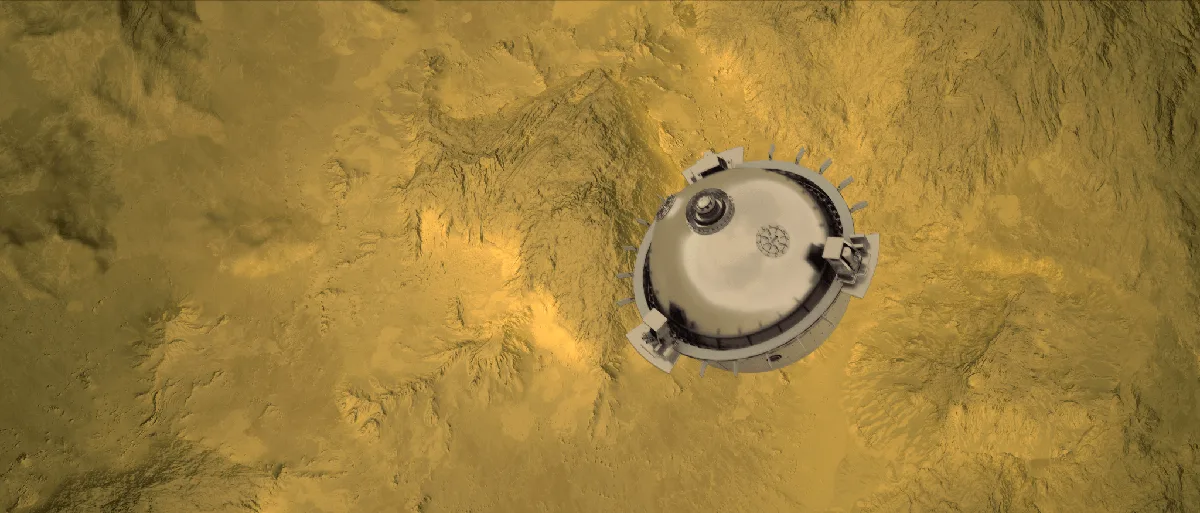
NASA's DAVINCI+ mission will send a robust descent sphere directly into Venus's scorching atmosphere in the late 2020s. This probe will measure the air's chemical makeup and capture high-resolution images as it plunges, offering unprecedented insights into Venus's formation and evolution. (Source: nasa.gov)
India’s Space Research Organisation (ISRO) also plans Shukrayaan-1. This orbiter may launch by 2031. It will study the Venusian atmosphere and surface. It will carry instruments from India, France, and Sweden.
Beyond government agencies, private companies are getting involved. Rocket Lab plans a small probe mission to Venus. This could happen as early as 2024. This mission will search for phosphine again. Dr. Sara Seager at MIT leads this privately funded effort. It shows new interest in Venus’s potential for life.
Why Venus matters: lessons for Earth
Exploring Venus offers important lessons. These go beyond just one planet. It is a natural laboratory for how planets evolve. Understanding Venus helps us guess if exoplanets can host life.
Venus gives us a clear lesson. It teaches about the runaway greenhouse effect. Its current state shows what happens. It shows what happens when a planet’s climate spirals out of control. Studying Venus helps scientists improve models of Earth’s climate. NASA’s Dr. James Garvin calls Venus “Earth’s cautionary tale.” It offers important clues for handling our own planet’s environmental challenges.
Scientists wonder why Venus evolved so differently from Earth. Both planets started similar in size and position. One became a habitable haven. The other became a searing inferno. Understanding this difference is important. It helps us understand how planets become habitable. It also shows how they might lose that habitability.
Searching for life on Venus expands what we know about astrobiology. This search is controversial. If microbes live in Venus’s clouds, it would change our understanding. It would change how we understand where life can thrive. It suggests life might adapt better than we thought. This adds new places to look for extraterrestrial life.
Finally, tech developed for Venus missions has wider uses. Creating electronics and materials helps other deep space missions. These survive extreme heat and pressure. This new tech can also help industries on Earth. Future human exploration might even use high-altitude stations on Venus. These could be stepping stones for deeper solar system missions.
FAQ
Q: Can humans land on Venus? A: No, humans can’t currently land on Venus. The surface temperatures and pressures are lethal. Future concepts involve high-altitude atmospheric platforms. Conditions are more temperate there.
Q: Did Venus ever have oceans? A: Scientific models suggest Venus likely had liquid water oceans. This happened early in its history. This period could have lasted for hundreds of millions of years. Understanding how it lost this water is a key goal for upcoming missions.
Q: What is phosphine and why is it important for Venus? A: Phosphine is a gas. On Earth, it’s often associated with anaerobic biological activity. Its controversial detection in Venus’s atmosphere sparked discussions. These talks are about potential microbial life in the clouds.
Q: Is Venus volcanically active today? A: Evidence suggests Venus has been geologically active. This happened in the relatively recent past. Upcoming missions like VERITAS and EnVision will search for clear signs of current volcanic eruptions.
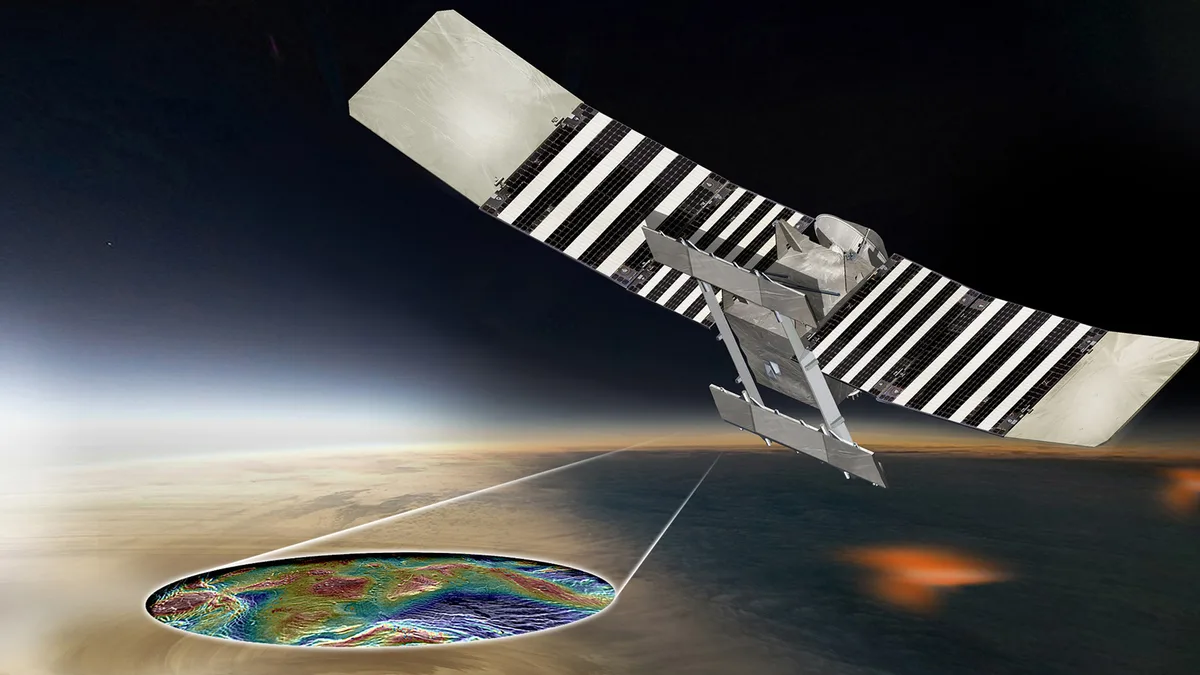
NASA's VERITAS mission spacecraft, set to launch in the early 2030s, will map Venus's surface with unprecedented detail to understand its geological history and search for signs of active volcanism, a key goal for future exploration. (Source: nasa.gov)
You might also like:
👉 Space Colonization: The Grand Illusion & Earth’s Real Solutions
👉 Super El Niño 2026 Predictions: Global Impact & What to Expect
👉 Unexplained Mysteries of Science: Cosmos, Quantum & Beyond