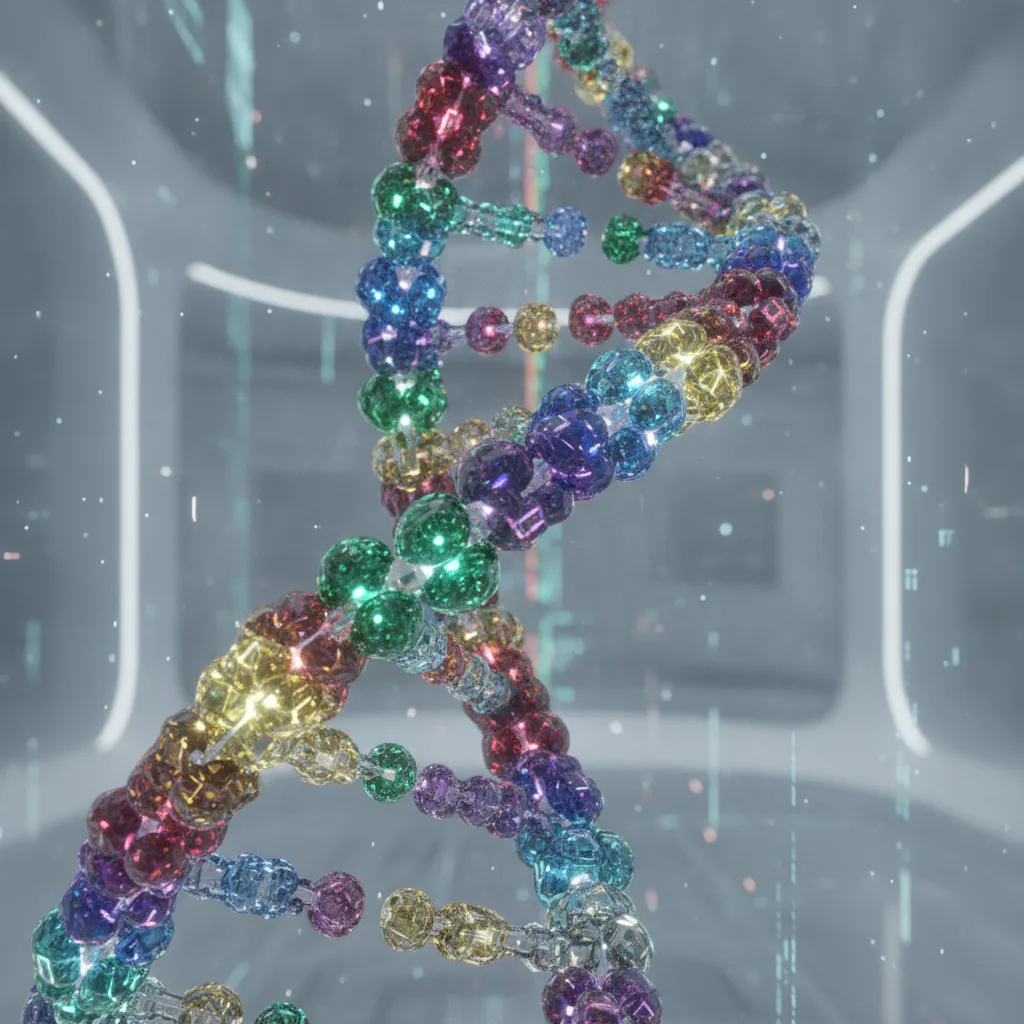
Cosmic Kitchen: How Space Cooked Life's Complex Organic Molecules
Scientists found complex organic molecules in space samples, proving the cosmos actively synthesizes life's building blocks, challenging Earth-centric theories.
The universe’s recipe: how space built life’s blocks
Life needs ingredients. The universe makes them. Scientists have found complex organic molecules, the very stuff of biology, in samples from space. This proves the cosmos actively synthesizes life’s building blocks. It challenges the old idea that Earth alone brewed these first chemicals.
Ingredients from space
Scientists think life on Earth began from non-living matter. This process is called abiogenesis. It started with simple chemicals reacting to form more complex organic compounds. For a long time, researchers debated the exact conditions on early Earth that allowed this to happen. But new research increasingly points to a big helping hand from space.
For billions of years, space has sent a constant supply of materials to Earth. This includes asteroids, comets, and tiny meteorites. These cosmic visitors carried many different chemicals. Many of these compounds are essential for life to develop.
Space is a chemical factory
Space is a vast chemical factory. Cold, dense regions between stars, called interstellar clouds, hold a surprising number of organic molecules. These clouds are mostly hydrogen and helium. They also contain dust grains, which help chemical reactions happen.
Astronomers use radio telescopes to find unique radio signals from these molecules. Dr. Anthony Remijan, a research astrophysicist at NASA Goddard Space Flight Center, studies space chemistry. His work shows there are amino acids, sugars, and even nucleobases in nebulae. These are the basic parts of proteins, RNA, and DNA.
Ultraviolet radiation and cosmic rays drive many of these reactions. They give the energy needed to break old chemical bonds and form new ones. Over millions of years, these processes make complex molecules. This chemical complexity exists across the entire galaxy.
How comets, asteroids, and dust deliver the goods
Once formed in interstellar space, these organic molecules join new solar systems. They gather in swirling disks of gas and dust, forming comets, asteroids, and dust particles. These objects then deliver them. They carry these compounds across vast cosmic distances.
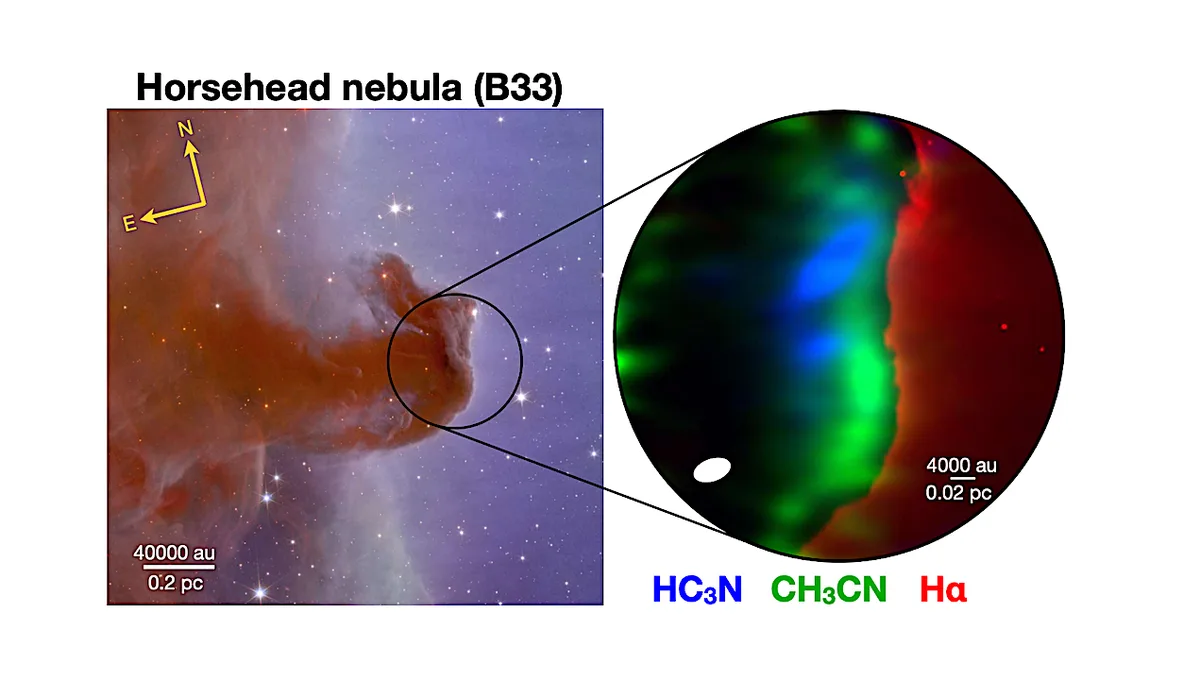
Nebulae are vast interstellar clouds of gas and dust, often called 'cosmic chemical factories,' where scientists have discovered complex organic molecules essential for life. These stunning celestial nurseries are where the universe actively synthesizes life's building blocks, challenging the old idea that Earth alone brewed these first chemicals. (Source: astrobiology.com)
The Murchison meteorite, which fell in Australia in 1969, shows this directly. NASA scientists, including Dr. George Cooper, analyzed it. They found over 100 different amino acids. Many of these amino acids are rare on Earth, confirming they came from space. The meteorite also held nucleobases and other nitrogen compounds.
NASA’s Stardust mission brought back samples from Comet Wild 2 in 2006. Scientists at the University of California, Berkeley, and other institutions studied them. They identified glycine, a simple amino acid, and other complex organic molecules. This showed that comets also contain life’s building blocks. The European Space Agency’s Rosetta mission to Comet 67P/Churyumov-Gerasimenko also found similar things. Its Philae lander detected many carbon and nitrogen compounds.
Early Earth got a cosmic boost
Early Earth was a chaotic place. Frequent asteroid and comet impacts defined the Hadean eon, over four billion years ago. These impacts weren’t just destructive. They also brought lots of water and organic material. This likely made Earth’s primordial soup richer.
Classic experiments like the Miller-Urey experiment in 1952 showed how life could begin. Stanley Miller and Harold Urey demonstrated that lightning in an early Earth atmosphere could create amino acids. However, people now question their atmospheric model. The presence of extraterrestrial organics gives another way, or helps the first one.
Dr. Danny Glavin, a senior astrochemist at NASA Goddard Space Flight Center, points this out. He says meteorites provide “a natural laboratory” for studying the chemistry before life. The delivered molecules could have started or sped up life’s formation. They gave a chemical toolkit, ready to build things.
Panspermia: did life itself travel?
The idea of panspermia suggests life itself, or its dormant spores, traveled through space. This is different from just chemicals arriving. Early supporters included Svante Arrhenius in the early 20th century. He proposed that spores pushed by radiation could travel between planets.
Modern panspermia ideas look at stronger ways this could happen. Lithopanspermia says microbes in rocks, blasted off by impacts, could survive space travel. These rocks might then plant life on other planets when they hit. The Martian meteorite ALH84001, found in Antarctica, started this debate in 1996. NASA scientists claimed it held fossilized microbes.
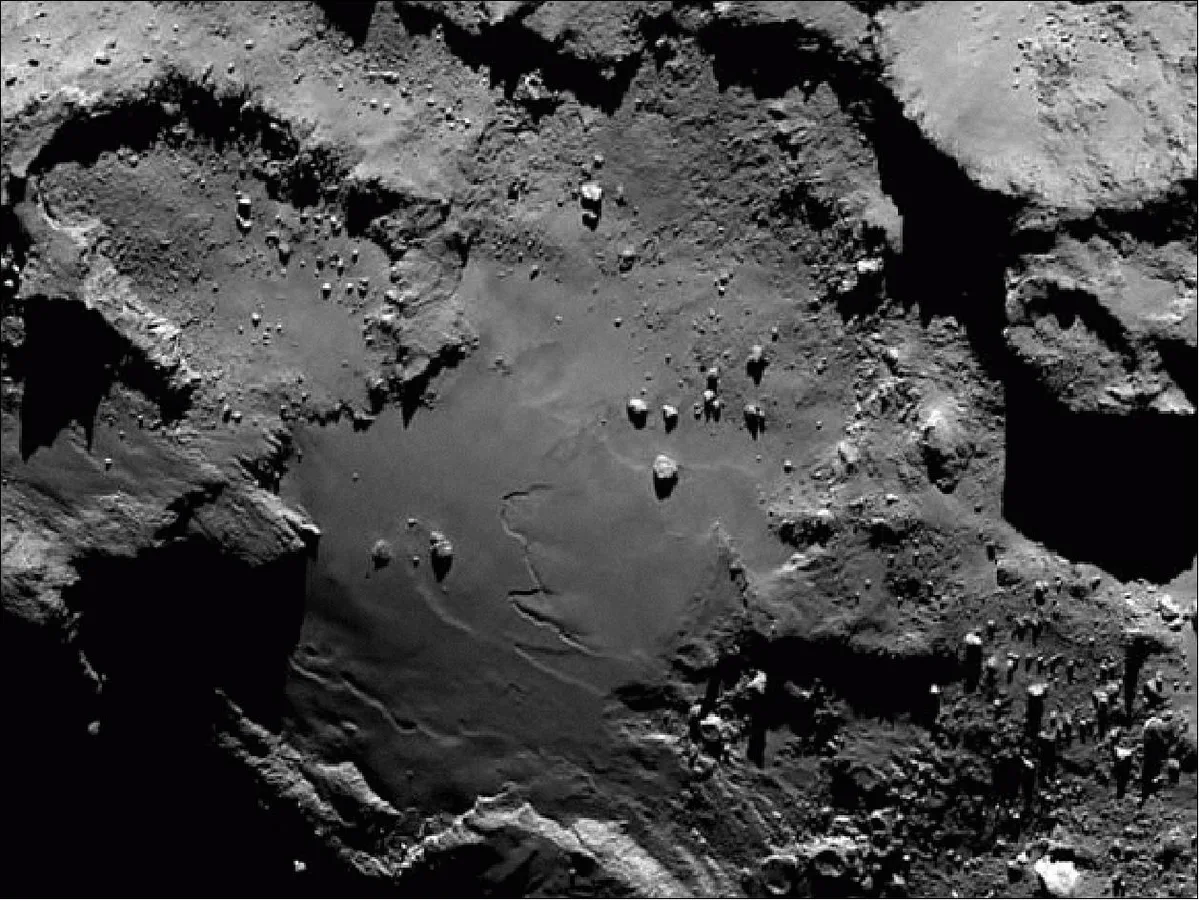
The European Space Agency's Rosetta mission extensively studied Comet 67P/Churyumov-Gerasimenko, finding numerous carbon and nitrogen compounds. These discoveries support the theory that comets delivered essential building blocks for life to early Earth. (Source: eoportal.org)
These claims are still highly debated. Dr. David S. McKay, a NASA astrobiologist, led the initial ALH84001 study. Many independent analyses since then have found other, non-biological explanations for the observed structures. No definitive evidence of extraterrestrial life has yet been found in meteorites. The extreme conditions of space, like radiation and vacuum, make it very hard for microbes to survive long journeys.
Questions you might have
Q: What’s the main difference between cosmic origins of life and panspermia? A: Cosmic origins of life is about space delivering organic building blocks. These molecules then help life start on Earth. Panspermia says life itself, maybe as sleeping microbes, started elsewhere and came here.
Q: Are amino acids from space the same as those on Earth? A: Many extraterrestrial amino acids are the same as those in Earth’s proteins. But meteorites also contain more types of amino acids than Earth life usually uses. This suggests space held a lot of chemistry that set the stage for life.
Q: How do scientists find organic molecules in space? A: Astronomers use large radio telescopes. They detect unique radio signals. Different molecules give off or soak up radiation at special frequencies. This helps scientists figure out what they’re made of, even from far away.
The search continues
The search for cosmic origins continues with new missions. NASA’s OSIRIS-REx mission recently returned samples from asteroid Bennu. Early analysis confirms water-bearing clays and carbon-rich organic materials are there. This shows again the asteroid’s role as a potential source of life’s ingredients.
The James Webb Space Telescope gives us new views of protoplanetary disks and interstellar clouds. Its advanced spectroscopy finds complex organic molecules more precisely. This helps map where they are and how they form. Dr. Ewine van Dishoeck, a leading astrochemist, uses JWST to study water and organics around young stars.
Future missions aim to explore ocean worlds like Europa and Enceladus. These moons have subsurface oceans and hydrothermal activity. Such environments are great places for life to start outside Earth. Understanding the cosmic input to Earth helps scientists interpret potential signs of life found elsewhere. The universe holds life’s secrets. We’re chasing them.
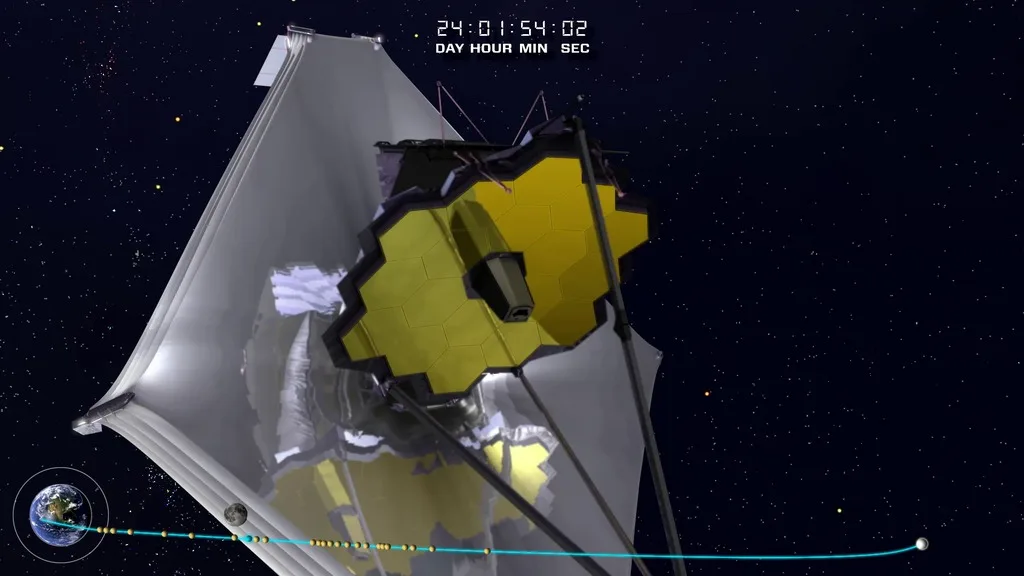
The James Webb Space Telescope (JWST) is a marvel of engineering, using advanced spectroscopy to detect complex organic molecules in distant protoplanetary disks and interstellar clouds. Its infrared capabilities allow scientists to map the distribution and formation of these crucial building blocks of life across the cosmos. (Source: svs.gsfc.nasa.gov)
You might also like:
👉 Unexplained Mysteries of Science: Cosmos, Quantum & Beyond