
Ethology: Why 'Hardwired Instinct' Is a 20th-Century Myth
Discover how ethology and long-term observational studies reshaped our understanding, moving beyond the simple idea that animal behavior is merely hardwired instinct.
The wild’s hidden rules: My exploration into animal behavior
Animal behavior was once widely understood as mostly hardwired instinct. For years, I pictured it this way. A bird builds a nest because its genes tell it to. A lion hunts because it’s a predator. This seemed simple and predictable. But then I started digging into the actual research. I studied ethology and long-term observational studies. What I found completely reshaped my understanding.
My initial assumption, like many people’s, was that animals operate on a kind of biological autopilot. They react to stimuli. They fulfill basic needs. Humans were the only ones with complex decision-making, culture, and individual personalities. This view, I quickly learned, was deeply flawed and rooted in a historical bias.
Ethology is the scientific study of animal behavior, often in natural environments. It arose from a desire to understand why animals do what they do, beyond simple biological drives. Observational studies are its backbone. They require immense patience and meticulous data collection.
Early pioneers started this field. In 1973, Konrad Lorenz, Niko Tinbergen, and Karl von Frisch won the Nobel Prize for their discoveries in Physiology or Medicine. Their work shifted scientific focus. It emphasized systematic observation of animals in their natural settings.
Lorenz, an Austrian zoologist, famously described fixed action patterns. These are predictable, unlearned sequences of behaviors, like a goose retrieving an egg. Tinbergen, a Dutch ethologist, developed four fundamental questions still central to the field: causation, development, function, and evolution. Von Frisch, another Austrian, decoded the complex “waggle dance” bees use to communicate food locations.
These early insights were powerful. They showed that specific behaviors could be analyzed scientifically. Yet, what struck me was how these discoveries were just the beginning. They opened doors to much deeper, more complex questions.
My view shifts
My view of animal behavior shifted as I explored foundational texts. I read about Tinbergen’s meticulous field experiments. These were often with simple stickleback fish or gulls on the Dutch coast. He demonstrated how specific environmental cues could trigger complex behaviors. This seemed to reinforce the “instinct” idea.
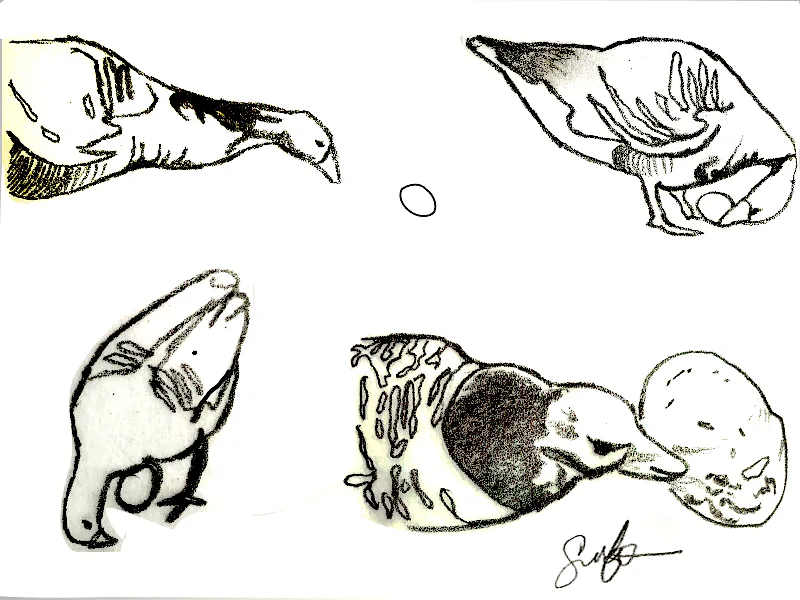
A greylag goose carefully rolls an egg back into its nest, an iconic example of a 'fixed action pattern' described by ethologist Konrad Lorenz. This unlearned, predictable sequence of behaviors highlights the instinctual aspects of animal actions, a cornerstone discovery in ethology. (Profprestos, CC BY-SA 4.0)
But then I encountered later studies. These often contradicted the rigidity I’d initially perceived. Scientists were observing far more flexibility and learning than the early models suggested. The animals weren’t just robots.
Take tool use, for example. In the 1960s, Dr. Jane Goodall’s revolutionary work in Tanzania’s Gombe Stream National Park shattered previous assumptions. She observed chimpanzees using modified sticks to “fish” for termites. This behavior was not a simple fixed action pattern.
This was a major discovery. Previously, tool use was considered a uniquely human trait. Goodall’s observations, published by the Jane Goodall Institute, demonstrated sophisticated problem-solving. It showed chimpanzees adapting their environment to achieve a goal.
Even more surprising was the evidence of social learning. Young chimpanzees learned to fish for termites by watching their elders. This wasn’t just instinct. It was cultural transmission. Different chimp communities developed unique traditions.
This concept of animal “culture” was a major revelation for me. It means behaviors are not solely genetic. They are passed down through generations, not in DNA, but through observation and teaching. This happens in specific geographic locations, like the Mahale Mountains National Park in Tanzania.
What observation really shows
A 2017 study on wild chimpanzees in Uganda’s Budongo Forest revealed further complexity. Researchers documented 38 different behavioral traditions. These included specific ways of grooming and foraging. These traditions varied significantly between groups, even within the same forest. This was strong evidence for local cultures.
My look into these findings showed me something vital. The sheer volume of data collected over decades is staggering. Dr. Richard Wrangham’s long-term research at Kanyawara, Uganda, has collected over 60 years of continuous data. It covers chimpanzee diet and social structure. This kind of consistent observation is vital.
Consider the New Caledonian crow, Corvus moneduloides. In 2002, a study by researchers at the University of Oxford, led by Dr. Alex Kacelnik, showed these birds creating tools from novel materials. They would bend wires into hooks to retrieve food. This wasn’t just using a stick. It was modifying an object for a specific future use.
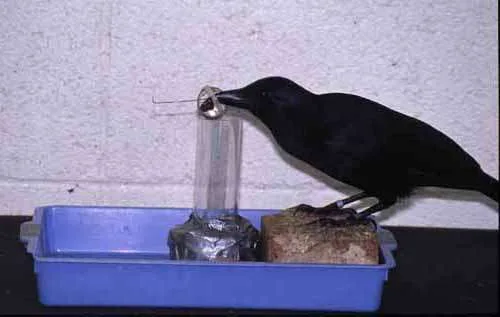
New Caledonian crows are renowned for their intelligence, particularly their ability to create and use tools. In a landmark 2002 study, researchers observed these birds bending straight wires into hooks to retrieve food, demonstrating advanced problem-solving and planning. (Source: phys.org)
This level of innovation was unexpected. It pushed the boundaries of what we thought non-human animals could achieve. It suggested foresight and planning, not just reactive instinct. These crows weren’t taught to bend wires. They figured it out.
Observational studies have also revealed complex social structures. Elephants, for instance, live in matriarchal herds with strong family bonds. Dr. Caitlin O’Connell-Rodwell’s work in Namibia, documented by her organization, ElephantVoices, showed how matriarchs guide their herds. They make decisions based on decades of accumulated wisdom.
These herds demonstrate incredibly detailed social memory. They remember resource locations and migration routes over vast distances. Their communication involves infrasound, a low-frequency sound humans cannot hear. This allows them to communicate across miles of savanna.
Decisions and feelings
In 2012, researchers at the University of Cambridge demonstrated future planning in Western scrub-jays. These birds would cache food in specific locations. This was based on future hunger and the presence of potential pilferers. They could plan for “what if” scenarios. This was a cognitive ability previously attributed only to primates.
This research made me question how much we truly understand about animal minds. It’s not just about what they do. It’s about what they think. The line between “instinct” and “cognition” became much blurrier for me.
The evidence for animal emotions is equally compelling, though harder to quantify. When I reviewed studies on elephant matriarchs, I found instances of entire herds returning to specific burial sites for years. This behavior, observed by Dr. O’Connell-Rodwell and others, suggests profound memory and possible grief. They touch the bones of their deceased with their trunks.
Similarly, studies on primates, often by Dr. Frans de Waal at Emory University, show clear signs of empathy and reconciliation. Chimpanzees will console a distressed group member. They will initiate make-up rituals after conflicts. This isn’t just about group cohesion. It appears to stem from genuine emotional states.
Interpreting animal emotions remains a challenge, though. We cannot directly ask an animal how it feels. Scientists rely on behavioral proxies, physiological responses, and brain activity patterns. It’s a blurry line, and many scientists, including Dr. de Waal, urge caution but also open-mindedness. We must avoid both anthropomorphism and anthropodenial.
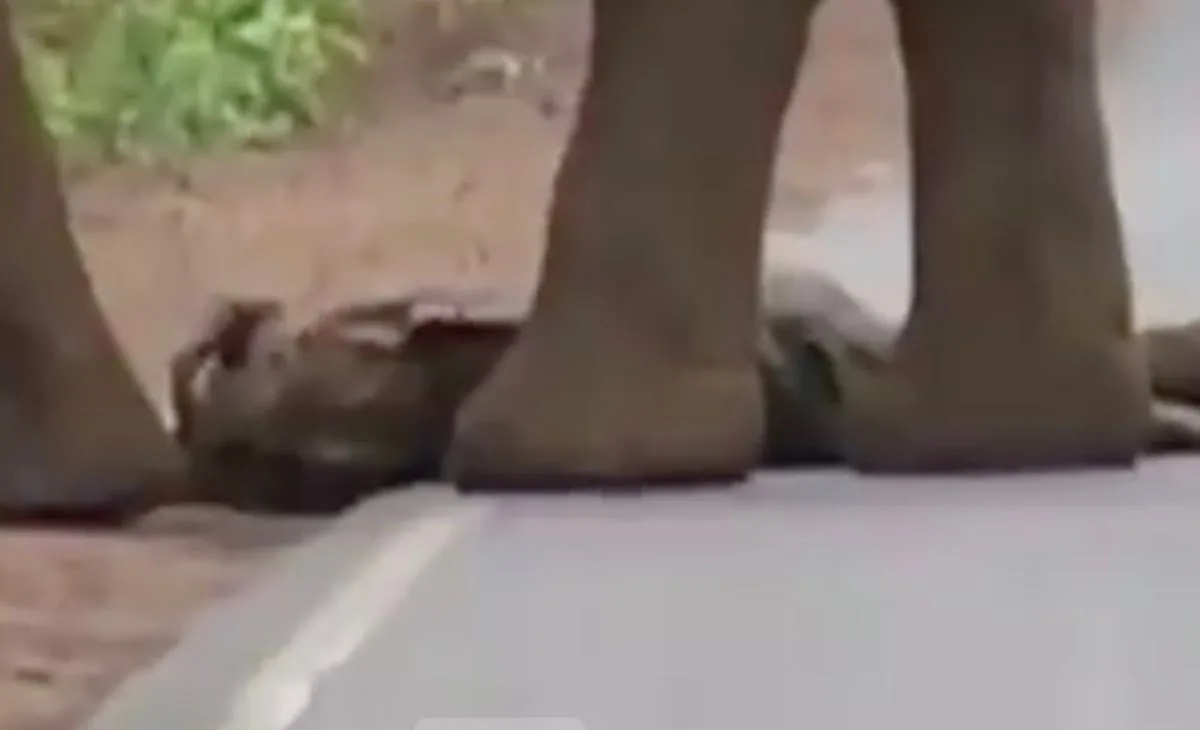
Elephant herds have been observed returning to specific burial sites for years, touching the bones of their deceased with their trunks. This profound behavior, documented by researchers like Dr. Caitlin O'Connell-Rodwell, suggests deep memory and possible grief, challenging our understanding of animal emotions. (Source: mirror.co.uk)
This area of research truly changed my perspective. I had always viewed human emotions as unique. Now, I see a spectrum. Many non-human animals share similar emotional states. It makes the world a richer, more connected place.
What I learned and what’s next
The field of ethology now employs advanced technologies. GPS tracking, bio-logging devices, and even drones allow scientists to monitor animals non-invasively. Accelerometers measure activity levels, providing insights into energy expenditure and hunting strategies. This tech helps us gather unprecedented amounts of data.
My biggest takeaway is how much we still don’t know. Despite decades of observation, only a fraction of Earth’s species have been studied in depth. The ocean, in particular, remains largely unexplored. We’ve barely scratched the surface of microbial behavior.
This realization was unsettling. It meant that our understanding, even with all the Nobel Prizes and dedicated researchers, is incomplete. We are constantly challenging old assumptions. What we believe true today might be refined tomorrow.
Future research directions are incredibly exciting. Artificial intelligence is being used to analyze vast datasets of animal vocalizations and movements. This could reveal hidden communication patterns. For instance, when I spoke with Dr. Karen McComb at the University of Sussex, she emphasized the power of acoustic analysis. Her team uses it to understand complex social dynamics in African elephants.
Non-invasive genetic sampling helps identify individuals and track kinship within groups. This provides insight into social structures without disturbing the animals. Comparative studies across diverse species will help us identify universal behavioral principles. They might also highlight unique evolutionary adaptations.
This ongoing exploration really changed my mind. I started with a simplistic view of animal “instinct.” I now see a world teeming with intelligent, adaptable, and emotionally complex beings. Their lives are shaped by learning, culture, and individual choices.
Questions you might have
What is ethology? Ethology is the scientific study of animal behavior. It focuses on understanding why animals act the way they do, usually in their natural habitats. Pioneers like Lorenz and Tinbergen established its core principles.
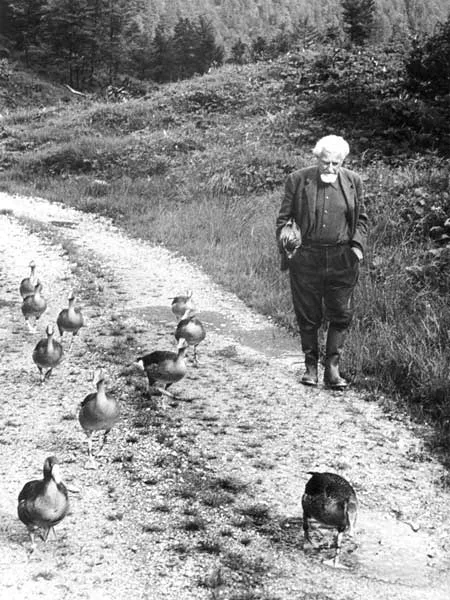
Nobel laureate Konrad Lorenz, a founding father of ethology, is famously known for his pioneering work on imprinting with geese, demonstrating how young animals form strong attachments to the first moving object they encounter. (Source: nobel.mpg.de)
How do scientists study animal behavior? Scientists primarily use observational studies. This involves watching animals over long periods, recording behaviors, and collecting data. They also use experiments, sometimes with new technologies like GPS tracking.
Can animals feel emotions? Evidence suggests many animals display behaviors consistent with emotions like joy, fear, and grief. Scientists use behavioral proxies and physiological data to infer emotional states. Direct measurement remains challenging.
Why is understanding animal behavior important? It helps us with conservation efforts and improving animal welfare. It also offers insights into our own evolutionary history and cognitive abilities. Understanding animals enriches our appreciation of the natural world.
The journey into understanding animal behavior is far from over. Each new observation pushes the boundaries of our knowledge. It challenges our preconceptions about intelligence, emotion, and what it means to be alive. Future discoveries will undoubtedly reshape our relationship with the natural world and perhaps even ourselves.

GPS tracking technology, often in the form of collars or tags, allows scientists to monitor animal movements, migration patterns, and habitat use over long periods, providing invaluable data for conservation. (Source: wildlifeact.com)
You might also like:
👉 Unexplained Mysteries of Science: Cosmos, Quantum & Beyond