
Kate Hudson Almost Famous
A comprehensive guide about kate hudson almost famous.
Kate Hudson and the “Almost Famous” Myth: Deconstructing a Career Narrative
 The narrative is firmly etched in Hollywood lore: **Kate Hudson's role as Penny Lane in Cameron Crowe's 2000 film, *Almost Famous*, was her definitive breakout moment.** It’s a compelling story, complete with an Oscar nomination, critical adoration, and a character that became an instant cultural touchstone. Conventional wisdom dictates that this was the launchpad, the singular event that catapulted her from promising ingénue to bona fide star. But what if this widely accepted truth is, in fact, a convenient oversimplification? A closer, more analytical look at Hudson's career trajectory suggests that while *Almost Famous* was undeniably a critical triumph, its impact on her long-term commercial viability and subsequent career choices was far more complex and nuanced than the popular narrative allows. We often mistake critical acclaim for a universal career catalyst, overlooking the strategic pivots and industry forces that truly shape a star's path.
The Golden Glow of Penny Lane: Critical Acclaim and Oscar Buzz
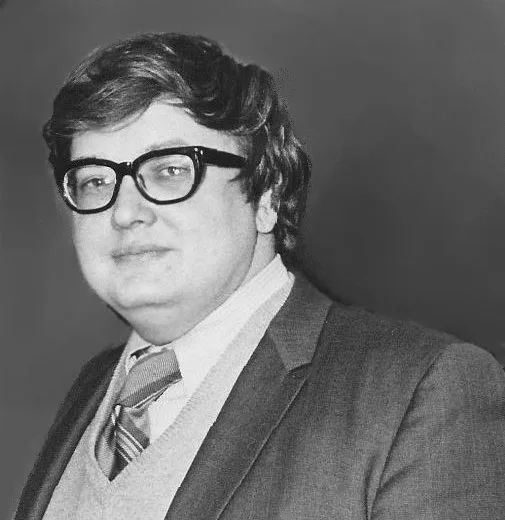 There is no denying the profound critical success and cultural resonance of *Almost Famous*. Cameron Crowe’s semi-autobiographical coming-of-age film captured the zeitgeist of 1970s rock and roll with an authenticity and warmth that resonated deeply with audiences and critics alike. Kate Hudson’s portrayal of Penny Lane, the enigmatic "Band-Aid" who guides young William Miller through the intoxicating world of touring rock bands, was lauded as a revelation. Her performance earned her a **Golden Globe Award for Best Supporting Actress** and an **Academy Award nomination** in the same category. Critics universally praised her ability to infuse Penny with a blend of vulnerability, wisdom, and an almost ethereal charm, making her the heart of the film. Roger Ebert, for instance, called her performance "luminous," capturing the character's unique blend of innocence and experience.
The film itself garnered immense critical praise, securing an Oscar for Best Original Screenplay for Crowe, and is consistently ranked among the best films of the 2000s. Its enduring legacy is undeniable, with Penny Lane frequently cited in lists of iconic film characters. This confluence of critical adoration for both the film and Hudson’s performance would, by all traditional metrics, constitute the quintessential breakout role. The industry spotlight was undeniably on her, offering what appeared to be an open invitation to a career of challenging dramatic roles and leading lady status. However, the subsequent chapters of her career tell a different story, one less about a direct ascent from this peak and more about a strategic, and perhaps commercially necessary, detour.
Post-Penny Lane: The Immediate Aftermath and Strategic Divergence
Following the critical triumph of Almost Famous, an analyst might expect Kate Hudson to immediately capitalize on her newfound prestige with a string of high-profile, critically ambitious projects. Yet, her choices in the immediate aftermath suggest either a deliberate strategy to diversify or a lack of immediate, suitable A-list dramatic offers. In 2000, the same year Almost Famous premiered, she also appeared in About Adam, a modest Irish romantic comedy-drama that saw limited theatrical release in the U.S., and Robert Altman’s ensemble comedy-drama Dr. T & the Women. While working with Altman was a prestigious opportunity, her role was part of a large cast, not a central leading performance.
 Her next significant film, ***The Four Feathers*** (2002), was a period war drama directed by Shekhar Kapur, co-starring Heath Ledger. Despite its grand scale and serious intentions, the film was a critical and commercial disappointment, failing to recoup its budget. These roles, while varied, did not build directly on the specific dramatic gravitas or whimsical charm of Penny Lane. They were diverse, often smaller, or less commercially successful projects that, retrospectively, indicate a period of experimentation rather than a clear, accelerated trajectory towards consistent dramatic leading roles. This period raises questions: Was Hudson deliberately avoiding typecasting, or was the industry itself struggling to define her post-Oscar-nomination identity beyond the "Band-Aid" persona? The immediate post-*Almost Famous* landscape was not a direct path to the dramatic stardom one might have predicted.
The Rom-Com Reinvention: A Calculated Pivot or Industry Default?
The true commercial “breakout” for Kate Hudson, arguably, did not stem from the critical darling that was Almost Famous, but from a calculated, or perhaps inevitable, pivot to the romantic comedy genre. This strategic shift began in earnest with the resounding success of How to Lose a Guy in 10 Days (2003). Co-starring Matthew McConaughey, this film was a massive box office hit, grossing over $177 million worldwide on a $50 million budget. Its success firmly established Hudson as a bankable romantic comedy lead, a far cry from the critically lauded but financially modest Almost Famous ($47.4 million worldwide).

This wasn’t an isolated incident. Hudson subsequently starred in a string of commercially successful rom-coms: Alex & Emma (2003), Raising Helen (2004), You, Me and Dupree (2006), Fool’s Gold (2008) – again opposite McConaughey – and Bride Wars (2009). These films consistently delivered strong box office returns, cementing her status as one of Hollywood’s go-to actresses for lighthearted, charming fare. Industry analysts at the time noted the consistent appeal of Hudson’s effervescent screen presence within this genre. This genre offered a distinct commercial identity and a reliable revenue stream that Almost Famous, for all its critical accolades, simply did not provide. The rom-com era represented not just a change in genre, but a fundamental redefinition of her market value and public perception.
The Elusive A-List: Beyond the Rom-Com Persona
Despite her undeniable success in romantic comedies, the question remains whether Kate Hudson ever truly ascended to the “A-list” in the multifaceted way her Almost Famous Oscar nomination might have foreshadowed. The A-list, in its traditional sense, implies not just commercial success, but also the consistent ability to headline major dramatic or action films, command significant upfront fees, and consistently draw audiences to diverse projects. While Hudson certainly became a recognized and popular figure, her career largely remained confined to the romantic comedy space for over a decade.
Her attempts to venture outside this comfort zone were met with mixed results. Films like the thriller The Skeleton Key (2005) performed reasonably well, but didn’t redefine her image. Nine (2009), a star-studded musical, allowed her to showcase singing and dancing, but she was part of an ensemble. The critical and commercial landscape of the 2000s and early 2010s saw the rom-com genre itself begin to wane, making the transition to other leading roles even more challenging. Unlike contemporaries such as Reese Witherspoon, who leveraged rom-com success into broader dramatic roles and producing power, Hudson’s post-Almost Famous dramatic roles, while present, rarely achieved the same critical or commercial impact, leaving her largely defined by her lighter fare. This created a ceiling for the kind of multifaceted “A-list” status typically associated with Oscar-nominated performers.
Nepotism’s Shadow: The Elephant in the Room
To discuss Kate Hudson’s career trajectory without acknowledging her lineage would be a disservice to a comprehensive analysis. As the daughter of Academy Award-winning actress Goldie Hawn and acclaimed actor Kurt Russell, Hudson entered Hollywood with an undeniable advantage. This isn’t to diminish her talent or hard work, but simply to recognize the inherent privilege and access that comes with being a “nepo baby.” This familial connection undoubtedly opened doors, providing opportunities for auditions and networking that are unavailable to most aspiring actors. It likely played a role in her landing the Almost Famous role itself, a highly sought-after part.
However, the shadow of nepotism is a double-edged sword. While it provides a foot in the door, it also creates immense pressure and an often-unfair lens through which one’s achievements are viewed. For Hudson, the critical success of Almost Famous was her chance to prove herself independent of her parents’ legacy. Yet, the subsequent pivot to rom-coms, while commercially savvy, might have been perceived by some as a safer, less challenging path than continually striving for the dramatic roles that might have solidified her artistic independence. This background undeniably shaped the initial opportunities and the subsequent perceptions surrounding her career choices, adding another layer of complexity to the “breakout” narrative.
Legacy and Longevity: Redefining “Breakout” for Kate Hudson
Ultimately, a nuanced understanding of Kate Hudson’s career post-Almost Famous requires redefining what “breakout” truly signifies. If a breakout is solely about critical acclaim and award nominations, then Almost Famous certainly fits the bill. However, if it encompasses the establishment of commercial viability, consistent work, and sustained public recognition, then her string of romantic comedies proved to be the more significant, if less critically celebrated, “breakout.” Her longevity in Hollywood, now spanning over two decades, is a testament to her adaptability and business acumen, extending far beyond the silver screen.
In recent years, Hudson has strategically diversified her portfolio. She ventured into television with recurring roles in popular series like Glee and Truth Be Told, showcasing her musical talents and dramatic range. Crucially, she has become a successful entrepreneur, co-founding the activewear brand Fabletics in 2013, which has grown into a billion-dollar enterprise. This shift highlights a modern celebrity career path where traditional acting roles are just one component of a broader brand. Her career demonstrates that while a critical darling like Almost Famous can provide a moment of artistic validation, a sustained career often relies on a combination of commercial pragmatism, strategic pivoting, and entrepreneurial spirit. The enduring image of Penny Lane is powerful, but the reality of Kate Hudson’s sustained success is built on a much broader, and arguably more impactful, foundation.
FAQ Section
Q1: Was Almost Famous a box office success? A1: No, not conventionally. While critically acclaimed, Almost Famous grossed only $47.4 million worldwide on a $60 million budget, making it a modest commercial performer. Its impact was primarily critical and cultural, not financial.
Q2: Did Kate Hudson consistently pursue critically acclaimed dramatic roles after Almost Famous? A2: While she took on some dramatic roles, such as The Skeleton Key (2005) and Nine (2009), her career largely pivoted towards romantic comedies, which became her most commercially successful genre for over a decade.
Q3: How did her family background influence her career? A3: Being the daughter of Goldie Hawn and Kurt Russell undoubtedly provided early access and opportunities in Hollywood, potentially aiding her in securing significant roles like Penny Lane. However, it also brought unique pressures and scrutiny.
Q4: What is Kate Hudson’s most commercially successful film to date? A4: Her most commercially successful film is How to Lose a Guy in 10 Days (2003), which grossed over $177 million worldwide, significantly outperforming Almost Famous at the box office.
So, what does this really mean? It means that the conventional wisdom surrounding “breakout” roles often conflates critical success with universal career trajectory. For Kate Hudson, Almost Famous was an artistic pinnacle, a moment of profound critical validation that proved her acting prowess. Yet, her actual path to sustained commercial viability and enduring celebrity was paved not by a direct follow-up to Penny Lane’s dramatic depth, but by a shrewd embrace of the romantic comedy genre, followed by a savvy expansion into entrepreneurial ventures. Her career serves as a powerful case study, challenging the simplistic notion that a single, critically lauded performance automatically dictates the entirety of a star’s commercial journey. It underscores the complex interplay of talent, market forces, strategic choices, and even inherited privilege in shaping a lasting presence in Hollywood.
You might also like:
👉 John Mayer Albums in Order: A Journey Through His Discography
👉 Lewis Hamilton vs. Nico Rosberg: Deconstructing F1’s Fiercest Rivalry