
March Madness Bracketology: Science, Psychology & Predictions
Dive into the complex world of March Madness bracketology. Explore how data science collides with human psychology in the pursuit of the perfect bracket, revealing the unseen forces behind predictions.
The Unseen Architect: Deconstructing The Science and Psychology Behind March Madness Bracketology
What if the pursuit of a perfect March Madness bracket isn’t merely a game of chance, but a complex battlefield where the cold logic of data collides with the chaotic brilliance of human psychology? For decades, millions have plunged into this annual ritual, meticulously (or haphazardly) filling out their predictions, convinced they possess the secret formula. Yet, the statistical chasm between belief and reality is staggering. We’re not just talking about long odds; we’re discussing an endeavor so improbable that the average participant has a better chance of being struck by lightning multiple times, winning the lottery, and then being struck by lightning again, all in the same afternoon. This article delves into the hidden architecture of March Madness bracketology, peeling back layers of statistical improbability, cognitive biases, and strategic gambits to reveal the true forces at play.
The Quintillion-to-One Delusion: Unpacking the Odds of Perfect Bracketology
 The myth of the perfect bracket is a powerful one, yet its statistical reality borders on the absurd. Consider the raw numbers: 63 games in the NCAA Men's Basketball Tournament. If you were to pick every winner randomly, your odds of a flawless bracket stand at an astronomical **1 in 9,223,372,036,854,775,808** – that's over 9.2 quintillion. To put this into perspective, **Professor Jeff Bergen** of DePaul University, a long-time statistician fascinated by the tournament, often highlights that even with expert knowledge, the odds only improve to a still-impossible **1 in 128 billion**. This colossal disparity between perceived control and actual probability underpins the entire bracket experience, creating an irresistible illusion of skill where pure chance predominantly reigns.
This illusion is a cornerstone of our collective engagement. We invest hours in research, debate with friends, and scrutinize every matchup, all while subconsciously ignoring the fundamental randomness baked into a single-elimination, 68-team tournament. The sheer unlikelihood doesn’t deter us; it fuels a peculiar form of hope, a testament to the human spirit’s capacity for optimism, even against insurmountable odds. Every year, millions enter pools, from small office wagers to high-stakes corporate challenges like Warren Buffett’s Quicken Loans Billion Dollar Challenge in 2014 (which, predictably, saw no winners), driven by the tantalizing, albeit statistically impossible, dream of perfection.

The statistical bedrock of bracketology is a harsh mistress. While upsets are rare on a game-by-game basis – higher seeds generally win 70-80% of the time – their cumulative effect across 63 games is devastating to any perfect prediction. A single incorrect pick in the first round, say an 11-seed over a 6-seed, immediately shatters the dream. This relentless win-or-go-home format means that one unexpected surge from a lower seed, one ill-timed injury, or one controversial foul call can derail an entire meticulously crafted bracket, underscoring the precariousness of any predictive model in such a high-variance environment.
The Data Scientists’ Arena: Algorithmic Approaches to March Madness Bracketology
In the face of such statistical chaos, a growing legion of data scientists and statisticians has entered the fray, armed with algorithms and computational power. Pioneers like Ken Pomeroy, whose KenPom.com metrics have become gospel for many serious fans, analyze decades of data to develop sophisticated predictive models. These models go beyond simple win-loss records, delving into adjusted offensive and defensive efficiency, strength of schedule, tempo, and advanced player statistics. Similarly, platforms like FiveThirtyEight and ESPN’s Basketball Power Index (BPI) leverage vast datasets to simulate tournaments thousands of times, generating probabilities for each team’s advancement.
These algorithmic approaches offer a stark contrast to intuitive picking. They operate on the premise that historical performance, when properly weighted and analyzed, can reveal underlying strengths and weaknesses invisible to the casual observer. For instance, a team with a seemingly mediocre record might be ranked highly by KenPom due to a brutal conference schedule and consistently strong efficiency metrics in close losses. These models often highlight “underseeded” teams that are statistically stronger than their tournament seed suggests, providing a data-driven edge that can diverge significantly from public perception.
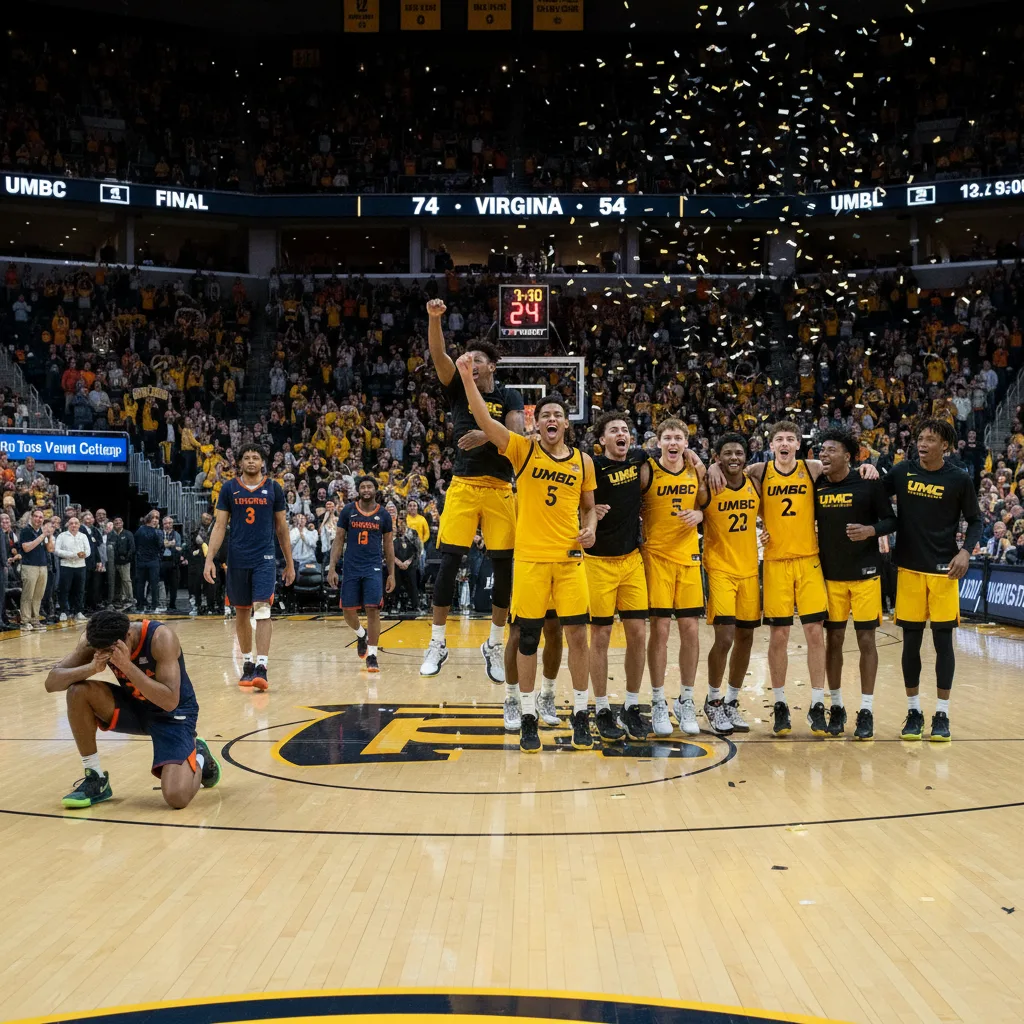
However, even the most advanced algorithms are not infallible. The 2018 tournament provided a harsh lesson when 16-seed UMBC (University of Maryland, Baltimore County) stunned 1-seed Virginia, a team that KenPom had ranked among the nation’s elite, with a 74-54 thrashing. This historic upset, the first time a 16-seed had ever beaten a 1-seed in the men’s tournament, sent shockwaves through the data community. It underscored the inherent unpredictability of March Madness: while data can tell us what should happen, it cannot fully account for a team having an extraordinary day, an opponent having an off-day, or the psychological pressures of a single-elimination format where one bad quarter can end a season. The science points to probabilities, but the game is played by humans.
The Human Brain’s Biases: Psychology’s Grip on Bracket Selection
While data offers one lens, the human mind, with its inherent biases, often distorts our perception of reality in bracketology. Behavioral economists Daniel Kahneman and Amos Tversky revolutionized our understanding of decision-making under uncertainty, and their work provides a crucial framework for dissecting the psychological pitfalls of bracket picking. One pervasive bias is Confirmation Bias: we tend to seek out and interpret information that confirms our existing beliefs. If you’re a fan of Duke, you’ll likely focus on their strengths and downplay their weaknesses, even when presented with objective counter-evidence.
Another powerful cognitive shortcut is the Availability Heuristic, where we overestimate the likelihood of events that are easily recalled or vivid in our memory. A team that just won a dramatic conference championship might be overvalued, even if their season-long performance doesn’t justify it. Similarly, the Anchoring Bias often comes into play with seeding. We anchor our expectations to the seed number, assuming a 1-seed is inherently superior to an 8-seed, often overlooking specific matchups, injuries, or recent performance trends that might suggest otherwise. The seed becomes a mental anchor, disproportionately influencing our picks.
Perhaps most insidious in bracket pools is Herd Mentality or Social Proof. In large office pools, there’s a subconscious pressure to conform, to pick popular teams or follow the consensus. Nobody wants to be the only one with a radically different bracket that tanks in the first round. This often leads to a clustering of picks around favorites, inadvertently reducing the potential for differentiation and making it harder to win larger pools where unique, successful picks are paramount. The psychology of wanting to belong, or at least not to stand out for failure, can override rational decision-making, leading to predictable, and often losing, brackets.
The “Underdog” Paradox: Strategic Deviations and Risk Management
The allure of the underdog is undeniable, but the strategic integration of upsets into a bracket presents a paradox. Statistically, higher seeds win the vast majority of games. A 1-seed has never lost to a 16-seed prior to 2018 (and only once since), and 1-seeds beat 8-seeds roughly 80% of the time. Yet, the winning bracket often features a few shrewdly chosen upsets. The challenge lies in identifying the right upsets and understanding the diminishing returns of picking too many. A bracket filled with Cinderellas rarely triumphs; a bracket devoid of any upsets rarely separates itself from the pack.
This delicate balance is where strategic risk management becomes critical. Savvy bracketologists understand the concept of expected value – maximizing their potential points, not just picking the team they think will win every game. This often means identifying a few high-value upsets, particularly in the later rounds, that are less commonly picked but have a reasonable chance of success. For example, a strong 5-seed playing a vulnerable 4-seed in the second round might be a more valuable upset pick than a random 12-seed over a 5-seed in the first round, simply because fewer people will pick it, and it yields more points.
The “Sweet Sixteen” phenomenon illustrates this perfectly. While first-round upsets grab headlines, the tournament quickly normalizes, with higher seeds dominating the later rounds. By the Sweet Sixteen, it’s rare to see more than one or two double-digit seeds remain. A common mistake is to pick too many early-round upsets, depleting the bracket’s strength for the more heavily weighted later rounds. A truly strategic approach involves picking a handful of carefully researched upsets, often in the 7-10 seed range, and then largely sticking with favorites for the Elite Eight and Final Four, particularly in larger pools where differentiation is key.
The “Cinderella Story” Effect: Emotional Resonance and Narrative Bias
Beyond pure statistics and cold data, the human element of March Madness is powerfully influenced by emotional resonance and narrative bias. The tournament’s enduring appeal often lies in its capacity for the “Cinderella story” – the plucky underdog, often from a smaller conference, defying all expectations to make a deep run. Think of George Mason in 2006, an 11-seed reaching the Final Four, or VCU in 2011, also an 11-seed, doing the same. More recently, Florida Gulf Coast University in 2013 captivated the nation as a 15-seed making the Sweet Sixteen. These narratives are compelling, inspiring, and deeply human.

This powerful storytelling impacts bracket choices, sometimes irrationally. We want to believe in the underdog, to root for the long shot. This emotional attachment can override objective analysis, leading us to pick a beloved mid-major over a statistically superior power conference team, simply because their story resonates more deeply. Alma maters, regional favorites, or teams with charismatic coaches often receive preferential treatment in brackets, even if their performance metrics don’t justify it. The media plays a significant role here, amplifying these narratives, creating heroes and villains, and subtly shaping public perception, which in turn influences millions of bracket picks.
The “Cinderella Story” effect is a prime example of how System 1 thinking (fast, intuitive, emotional) often overrides System 2 thinking (slow, deliberate, rational) in the heat of bracket season. While our rational brain might acknowledge the low probability of a 12-seed winning three games, our emotional brain is drawn to the narrative of triumph against adversity. This isn’t necessarily a flaw; it’s part of what makes March Madness so captivating. It transforms a statistical exercise into a dramatic narrative, a reflection of our collective desire for surprise and inspiration, even if it comes at the cost of a lower bracket score.
The Pool Dynamics: Game Theory in Action
Bracketology isn’t just about predicting outcomes; it’s a game of strategy against other players in a pool, a fascinating real-world application of Game Theory. Your optimal bracket strategy shifts dramatically based on the size and stakes of your pool. In a small, casual pool among friends or family, a relatively safe bracket, picking mostly favorites with a few mild upsets, might be the best approach to ensure a respectable finish and bragging rights. The goal here is often to simply do better than your immediate peers.
However, in large, high-stakes pools – like the millions-strong national contests – a fundamentally different strategy is required. Here, the goal isn’t just to pick winners; it’s to pick winners that others aren’t picking. This is where the concept of “ownership percentage” becomes critical. If 80% of the pool picks a certain team to win it all, and that team does win, you gain no significant advantage over the vast majority of your competitors. To win a large pool, you must differentiate your bracket by making bolder, less popular, yet still plausible, picks, particularly for the Final Four and champion. This often means “fading” heavily favored teams that are over-owned by the public.
This strategic deviation from consensus requires a deep understanding of probabilities and a willingness to embrace risk. It’s about maximizing your chances of having a unique, high-scoring bracket, even if it means picking a few teams that might seem like long shots. For example, if Duke is overwhelmingly picked to win the championship, a game theory approach might suggest picking another strong 1-seed or even a strong 2-seed (like a Purdue or Houston) that has lower ownership but a comparable chance of winning. The goal isn’t necessarily to pick the most likely champion, but the most likely champion among the less popular picks, thereby creating a significant scoring differential if your contrarian choice pays off.
The Unpredictable Variable: Player Performance and Momentum Shifts
Even with the most sophisticated data models and the keenest psychological insights, March Madness retains an ultimate, irreducible element of chaos: the unpredictable variable of human performance. A star player’s off-night, a sudden injury in the first half, a controversial referee’s call in the final seconds, or a team simply catching fire at the right moment can shatter all statistical predictions and psychological analyses. This is the beauty and the frustration of the tournament – it is ultimately played by young athletes, subject to all the vagaries of human emotion and physical capability.
Consider the phenomenon of a team “getting hot.” While statisticians might dismiss the “hot hand” as a fallacy, the psychological impact of momentum is undeniable. A team that wins a nail-biter in the first round, gaining confidence and cohesion, might carry that momentum deep into the tournament, performing above its statistical average. Conversely, a team that struggles to close out games, or experiences internal strife, can unravel quickly. These intangible factors, the ebb and flow of human spirit and performance under immense pressure, are almost impossible to quantify, yet they profoundly shape tournament outcomes.
This inherent chaos is the final, unresolved question in bracketology. We can analyze historical data, dissect cognitive biases, and apply game theory, but we cannot perfectly predict the human element. The single-elimination format amplifies every mistake, every unexpected surge, every moment of brilliance or despair. One bad bounce of the ball, one missed free throw, or one heroic block can end a season, defying all rational expectations. This fundamental unpredictability is precisely why March Madness remains such a compelling spectacle and why the quest for the perfect bracket, however futile, continues to captivate millions.
FAQ
Q: What are the true odds of a perfect bracket? A: The raw odds of picking a perfect bracket by pure chance are 1 in 9.2 quintillion (9.2 x 10^18). Even with expert knowledge, these odds only improve to approximately 1 in 128 billion, still astronomically small.
Q: Do professional statisticians or data scientists win bracket pools more often? A: While statisticians and data scientists use sophisticated models that often outperform random picks, the inherent unpredictability of a single-elimination tournament means even their brackets are highly unlikely to be perfect. Their advantage lies in making more informed picks, which can lead to higher average scores in pools, but winning a large pool still requires a significant amount of luck and often a contrarian strategy.
Q: Is it better to pick favorites or upsets? A: A balanced approach is generally best. While favorites win most games, picking a few carefully selected upsets (especially in the 7-10 seed range or a strong 5-seed over a weak 4-seed) can differentiate your bracket. Over-picking upsets, particularly in later rounds, is usually detrimental, as higher seeds tend to dominate as the tournament progresses.
Q: How does pool size affect bracket strategy? A: In small pools (e.g., family or office), a relatively safe bracket with mostly favorites and a few mild upsets is often sufficient. In large, high-stakes pools, a more aggressive, contrarian strategy is advised. You need to differentiate your bracket by picking less popular but still plausible teams to win later rounds, as many competitors will have picked the same obvious favorites.
The journey into March Madness bracketology reveals a fascinating duality. On one side stands the rigorous, data-driven pursuit of predictability, striving to tame the chaos with algorithms and statistical models. On the other, the deeply human landscape of psychology, where biases, emotions, and narratives subtly steer our choices, often away from objective truth. The enduring allure of the bracket lies precisely in this tension: the rational mind battling the irrational heart, all set against the backdrop of a thrilling, unpredictable athletic spectacle. Ultimately, the perfect bracket remains an elusive dream, but the annual quest for it illuminates the intricate ways we grapple with chance, knowledge, and the irresistible desire to believe we can master the unmasterable.
You might also like:
👉 Predicting Stock Market Trends: ML & Sentiment Analysis Guide
👉 Fascinating Psychology Case Studies: Unlocking the Human Mind