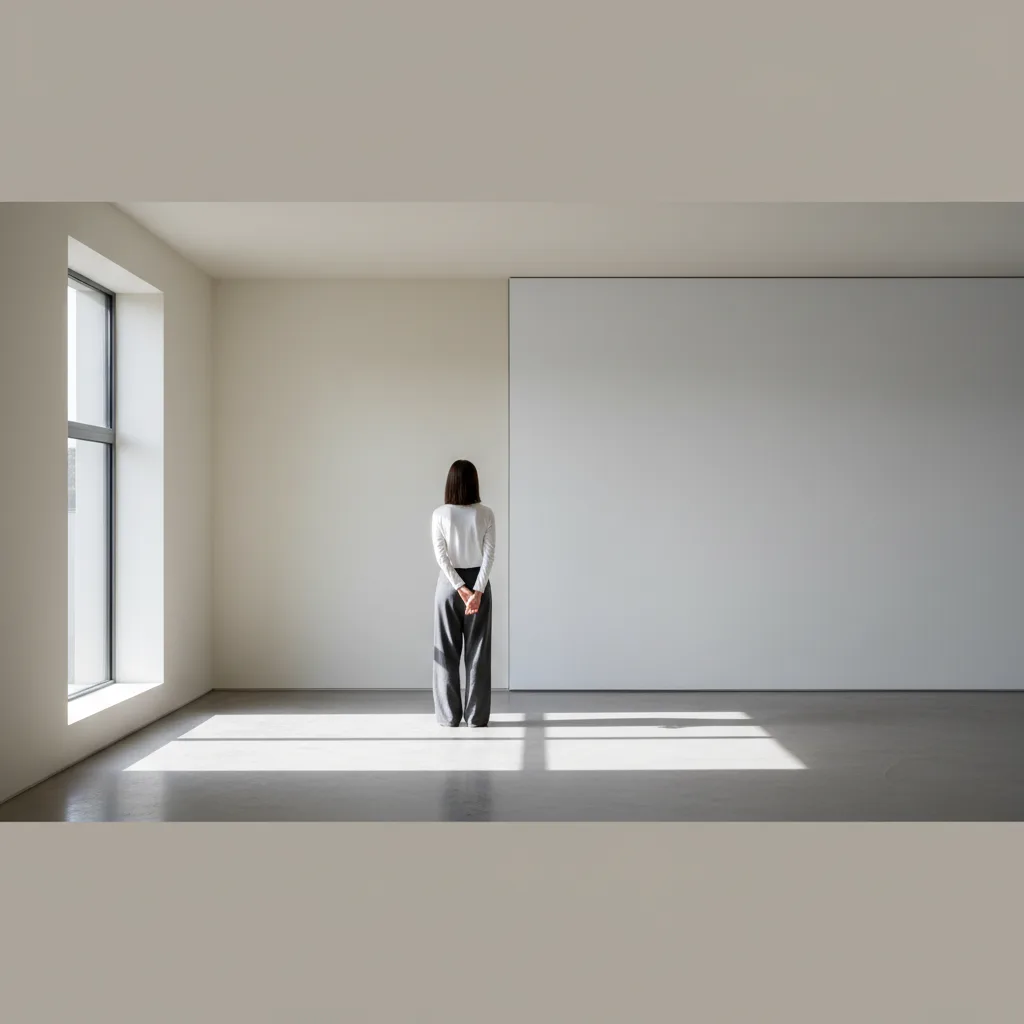
Minimalism's Impact: The Death of Detail in a Modern World
Explore how the rise of minimalism is quietly erasing intricate details from our objects and culture. This article delves into the loss of stories and history embedded in complex designs, examining the profound impact on our world.
The Quiet Erasure: How Minimalism and the Death of Detail Reshape Our World
Remember the intricate scrollwork on your grandmother’s antique dresser? The hand-stitched embroidery on a family heirloom quilt? Or perhaps the bewildering yet beautiful complexity of a vintage Swiss watch movement? These weren’t just objects; they were stories, histories etched in every curve, every filigree, every minute component. Today, we live in an era increasingly defined by the sleek, the sparse, the utterly unadorned. Minimalism, a siren song of decluttering and clarity, promises freedom from visual noise. But what if, in our relentless pursuit of “less,” we’re inadvertently orchestrating the death of detail, stripping away the very richness that gives our world character, depth, and soul?
This isn’t an indictment of minimalism itself, but an urgent inquiry into its unintended consequences. We’re witnessing a profound shift, not just in aesthetics, but in how we perceive value, interact with objects, and even shape our environments. Join us as TrendSeek peels back the layers of this pervasive trend, uncovering the hidden costs of our collective simplification obsession.
From Baroque Grandeur to Bauhaus Bareness: A Historical Pendulum Swing
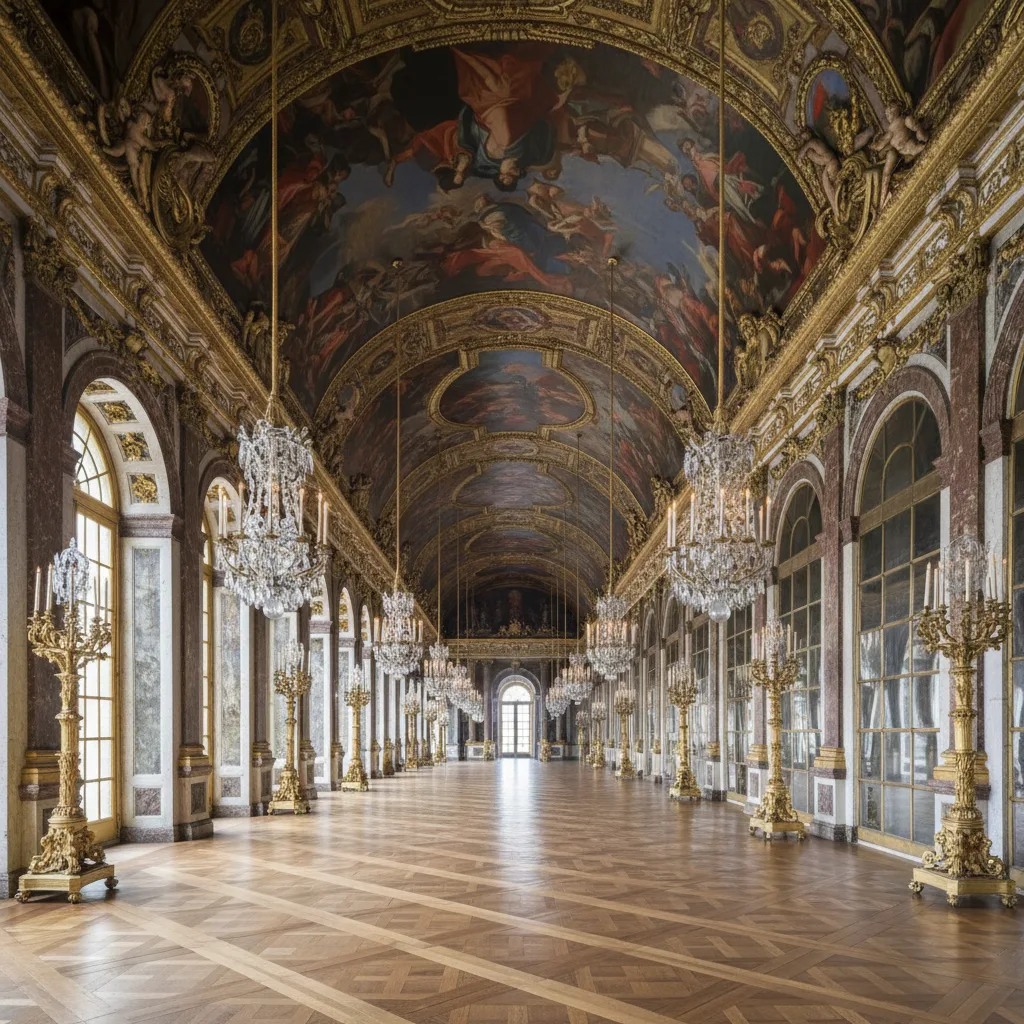
The tension between extravagance and austerity is as old as civilization itself. Consider the opulent, detail-laden grandeur of the Baroque era, epitomized by the Palace of Versailles, where every surface, from ceiling frescoes to gilded furniture, screamed abundance and intricate artistry. Fast forward to the early 20th century, and a radical counter-movement emerged: Modernism. Figures like Walter Gropius and Ludwig Mies van der Rohe, founders of the Bauhaus school, championed “form follows function” and “less is more.” Their stark, geometric buildings and furniture, devoid of ornamentation, were a deliberate rejection of historical excess.
This shift wasn’t merely stylistic; it was philosophical, a belief that honest materials and clean lines represented a new, progressive future. Le Corbusier’s concrete “machines for living” or Marcel Breuer’s tubular steel Wassily Chair offered a vision of efficiency and universal applicability. While undeniably revolutionary and often beautiful, this movement laid the groundwork for a design language that increasingly prioritized universal legibility over unique expression, setting the stage for our current fascination with the utterly unadorned.
The Digital Divide: UI/UX and the Stripping of Skeuomorphism
Nowhere is the death of detail more evident than in the digital realm. Cast your mind back to the early days of the smartphone revolution. Apple’s original iOS, under the guidance of Steve Jobs and Scott Forstall, embraced skeuomorphism – designing digital interfaces to resemble their real-world counterparts. The iBooks app featured a wooden bookshelf, Notes looked like a legal pad, and the Podcasts app boasted a reel-to-reel tape recorder. These details weren’t just aesthetic; they provided intuitive visual metaphors, making unfamiliar technology feel familiar and approachable.

Then came iOS 7 in 2013, a seismic shift spearheaded by Jony Ive. Gone were the textures, the shadows, the three-dimensional depth. In their place emerged a flat, minimalist design characterized by bright colors, thin fonts, and simplified icons. Google’s Material Design followed suit. While lauded for its clean aesthetic and improved scalability across devices, this transition stripped away much of the playful, tactile richness that once defined our digital interactions. The immediate recognition offered by a digital representation of a physical object was traded for a more abstract, learned language of symbols. What did we gain in clarity, and what did we lose in intuitive warmth?
Empty Spaces and Lost Stories: Minimalism and the Death of Detail in Our Homes
Walk into almost any contemporary home goods store today, from IKEA to West Elm, and you’ll encounter a pervasive aesthetic: neutral palettes, clean lines, sparse decor, and an almost clinical sense of order. This “Instagram aesthetic” of minimalist interiors has become the aspirational benchmark for many. Marie Kondo’s global phenomenon, “The Life-Changing Magic of Tidying Up,” perfectly captured the zeitgeist, urging us to discard anything that doesn’t “spark joy.” While liberating for some, this relentless pursuit of emptiness can lead to environments devoid of personal history and unique character.
 Dieter Rams, influential industrial designer whose ‘less but better’ principles shaped modern minimalist design, including Apple’s aesthetic. (Timothy Akolamazima, CC BY-SA 4.0)
Consider the stark, unadorned walls replacing shelves crammed with books, travel souvenirs, or framed family photos. The carefully curated single vase on an otherwise bare table. While clutter can indeed be overwhelming, the absence of detail often leads to sterile, interchangeable spaces that lack the warmth, eccentricity, and visual narrative that truly make a house a home. This trend, often driven by designers like Dieter Rams (whose principles influenced Apple’s design philosophy), prioritizes function and longevity, but sometimes at the expense of human connection and the rich tapestry of lived experience.
Craft, Culture, and the Fading of the Artisan’s Touch
Beyond our digital screens and living rooms, the impact of the detail-averse mindset ripples through the world of craftsmanship and cultural preservation. Historically, intricate details were the hallmark of skill, dedication, and cultural identity. Think of the delicate filigree of antique jewelry, the elaborate patterns of a hand-woven rug from Persia, or the precise, interlocking joinery of traditional Japanese woodworking, where no nails are used. These details weren’t superfluous; they were integral to the object’s integrity, beauty, and narrative.

Today, in a world dominated by mass production and efficiency, such intricate, labor-intensive details are often deemed economically unviable. The push for streamlined aesthetics often translates into simplified manufacturing processes, leading to products that are cheaper and quicker to produce, but lacking the unique “soul” imbued by the artisan’s hand. As a result, traditional crafts and the detailed knowledge required to execute them are slowly fading, replaced by homogenized, machine-made uniformity. We risk losing not just objects, but entire lineages of skill and cultural heritage that tell stories through their very construction.
The Paradox of Simplicity: When Less Becomes Less Engaging
The core promise of minimalism is clarity and focus. By removing distractions, we are supposed to better appreciate what remains. Yet, there’s a critical point where “less” stops being insightful and starts becoming simply “less engaging.” When every building adopts a similar minimalist facade, every product packaging looks like a generic pharmaceutical box, and every website design adheres to a flat, featureless grid, the world begins to blend into an undifferentiated beige.
Where is the surprise? Where is the delight of discovering a hidden motif, an unexpected texture, or a narrative woven into the very fabric of an object? A truly engaging experience often involves a degree of complexity, a subtle interplay of elements that invite closer inspection and reward prolonged attention. When detail dies, so too does much of the opportunity for wonder, for emotional resonance, and for the kind of rich, multi-layered storytelling that truly captivates the human spirit.
Conclusion: Reclaiming the Richness
The allure of minimalism is undeniable, offering a respite from the overwhelming clutter of modern life. It forces us to be intentional, to question what truly serves us. Yet, in our haste to simplify, we must pause and consider what we are sacrificing. The death of detail isn’t just an aesthetic concern; it’s a cultural one, impacting our connection to history, craftsmanship, and the very richness of human expression.
The challenge, then, is not to reject minimalism outright, but to embrace a more nuanced approach. It’s about discerning between superfluous noise and meaningful complexity. It’s about advocating for “thoughtful detail” – elements that enhance function, tell a story, or evoke genuine emotion, rather than mere ornamentation. Let us not fear the intricate, the unique, or the beautifully complex. In a world increasingly homogenized, the preservation and appreciation of detail might just be our most powerful act of cultural rebellion, ensuring our world remains vibrant, engaging, and deeply human.
You might also like:
👉 Minimalism and the Death of Detail: Navigating Simplicity’s Edge
👉 Minimalism: Living a Meaningful Life in a World of Excess
👉 Minimal-ish Minimalism: Intentional Living & Joyful Motherhood