The 2019 Nobel Prize in Chemistry: Powering Your EV & Phone
M. Stanley Whittingham, John B. Goodenough, and Akira Yoshino shared the Nobel Prize in Chemistry on October 9, 2019, for lithium-ion batteries.
Battery power: The next generation
Imagine a world without portable power. No smartphones, no electric cars. That’s the world M. Stanley Whittingham, John B. Goodenough, and Akira Yoshino helped us escape. On October 9, 2019, these three shared the Nobel Prize in Chemistry. Their work on lithium-ion batteries reshaped how we store energy. These batteries now run everything from phones to electric vehicles. They opened a new era of portable electronics.
Before them, batteries were a mess. Lead-acid batteries were heavy and inefficient. Nickel-cadmium cells had “memory effects.” We desperately needed a lightweight, powerful, rechargeable energy source. Scientists worldwide hunted for answers.
Lithium, the lightest metal, looked like a miracle. It stores tons of energy for its size. The real challenge? Making a stable, safe, rechargeable lithium battery. That quest took decades and many brilliant minds. Today, lithium-ion batteries power almost everything portable. But they have limits. Those limits are now driving scientists to invent entirely new kinds of batteries.
The birth of lithium-ion (and its problems)
In the early 1970s, M. Stanley Whittingham worked at Exxon. He made the first working lithium-ion battery. His design used titanium disulfide for the cathode and lithium metal for the anode. This prototype showed the promise of lightweight, rechargeable power. But it had a big safety problem: lithium metal anodes could cause short circuits and fires.
By 1980, John B. Goodenough, then at Oxford, greatly improved the design. He swapped titanium disulfide for lithium cobalt oxide. This material gave higher voltage and more stability. His idea paved the way for a practical, powerful battery. It was also much safer than Whittingham’s first attempt.
Akira Yoshino, at Asahi Kasei in Japan, took the final key step in 1985. He used petroleum coke as the anode for his lithium-ion battery. This got rid of the dangerous lithium metal entirely. His design moved lithium ions between carbon and cobalt oxide. The result? A stable, rechargeable battery ready for market. Sony sold the first ones in 1991.
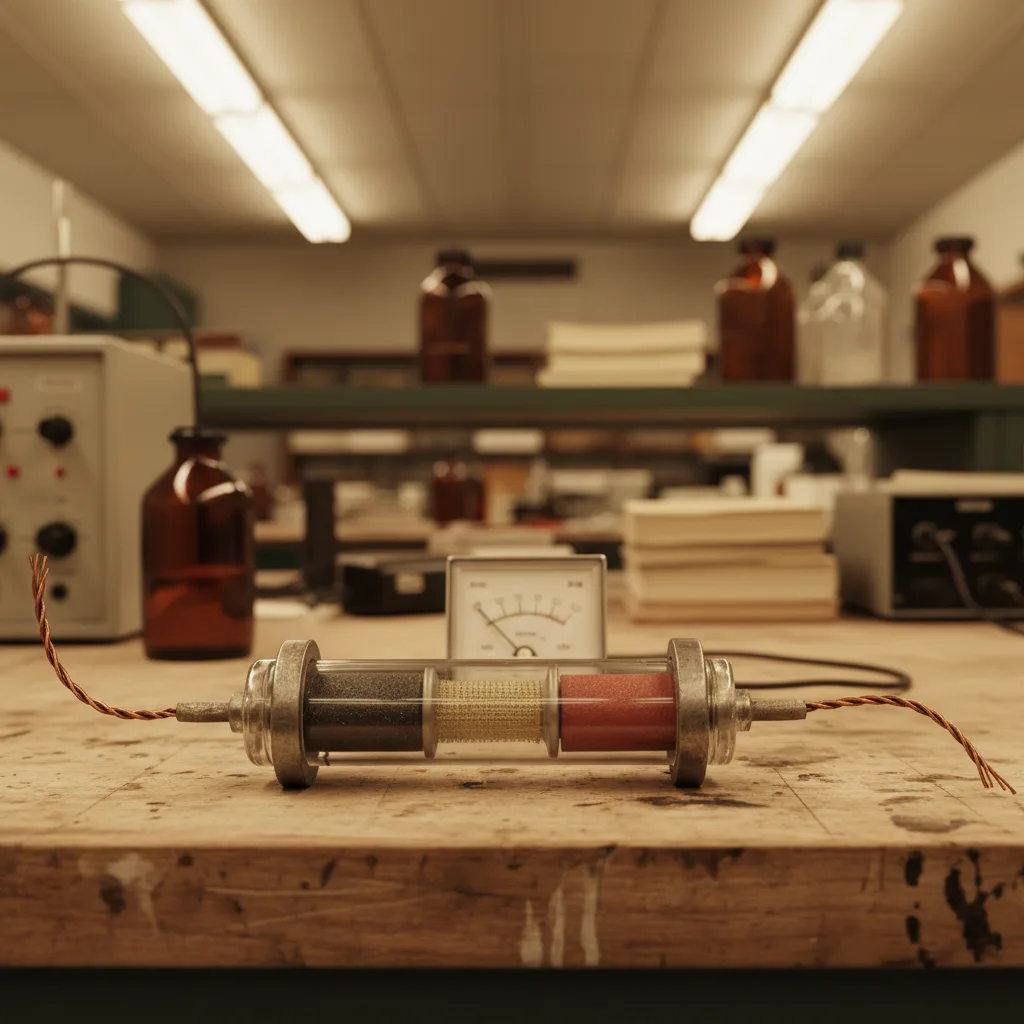
In the early 1970s, M. Stanley Whittingham developed the first working lithium-ion battery prototype at Exxon, utilizing a titanium disulfide cathode and a lithium metal anode. This pioneering, albeit unstable, design laid the foundational groundwork for all modern portable electronics. (AI-generated illustration)
These breakthroughs sparked the portable electronics revolution. Laptops, mobile phones, and later electric cars all depended on them. But lithium-ion tech hit limits. Energy gains became tiny. Charging speeds were still an issue. Materials like cobalt were expensive and hard to find. These problems pushed scientists to look for something new.
Solid-state: safer, more power
The main problem with today’s lithium-ion batteries is their liquid electrolyte. This liquid is flammable. It also wears out, shortening battery life. The liquid forces design limits, stopping batteries from storing more energy. Researchers realized a solid material could fix all this.
By the early 2010s, solid-state batteries became a real idea. These batteries use a solid electrolyte. This solid material moves lithium ions between the anode and cathode. It means no flammable liquid separator. This makes them much safer. It also lets us pack more active material inside.
Solid electrolytes come as ceramics, polymers, or sulfides. Each has pros and cons. Ceramic electrolytes move ions well, but they can be brittle. Polymer electrolytes are flexible, but often don’t conduct as well at room temp. Sulfide electrolytes perform well, but they hate moisture.
Several companies made big strides. In 2020, California startup QuantumScape reported good test results. Their batteries charged fast and held a lot of energy. Toyota also poured money into solid-state tech. They wanted to sell them by the mid-2020s, according to Nikkei Asia. These advances could mean safer, faster-charging EVs that go further. But making them in bulk is still hard.
Beyond lithium: other battery types
More lithium-ion batteries means worrying about supply. Lithium, cobalt, and nickel aren’t everywhere. Mining them also hurts the environment. So, researchers started looking at other battery types. They wanted cheaper, more common materials.
Sodium-ion batteries became a top candidate. Sodium is much more common than lithium. It’s in seawater and plain salt. Scientists have known sodium’s promise for decades. But making stable electrodes was tough. Sodium ions are bigger than lithium ions, and that made things hard.
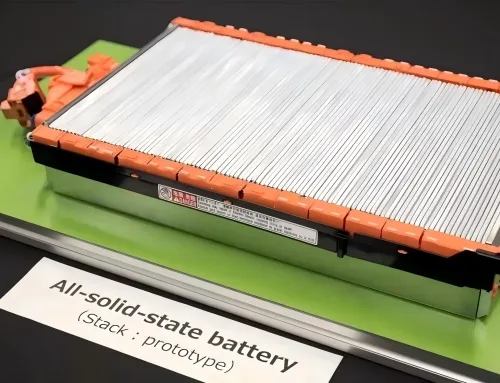
A prototype solid-state battery cell, representing a major 'new frontier' in energy storage. These batteries replace flammable liquid electrolytes with a solid material, promising greater safety, higher energy density, and faster charging for future electric vehicles and portable electronics. (Source: saphiion.com)
Recent material science changed everything. China’s CATL, the world’s biggest battery maker, made big advances. In 2021, CATL showed off its first sodium-ion battery. It had good energy and worked well in the cold. Faradion, a UK company, also led the way in sodium-ion tech. Their goal is cheap, high-performing designs.
Sodium-ion batteries store less energy than lithium-ion ones right now. But they’re good for grid storage or shorter-range vehicles. They’re cheap and common, making them appealing. They work well for uses where weight doesn’t matter much. They’ll likely work alongside, not replace, lithium-ion batteries in many areas.
Extreme energy: lithium-sulfur and lithium-air
Some researchers chase battery types with far more energy. They want to beat even future solid-state lithium-ion cells. Lithium-sulfur (Li-S) and lithium-air (Li-air) batteries are two such ideas. These could hugely extend battery range. Imagine powering long-haul flights or heavy trucks.
Lithium-sulfur batteries use a lithium metal anode and a sulfur cathode. Sulfur is cheap and common. Theoretically, it can hold five times more energy per pound than current lithium-ion cathodes. This makes Li-S batteries super light for how much energy they hold. Theoretically, they pack over 2500 Wh/kg.
Problems include the “polysulfide shuttle effect.” This makes the battery lose active material when it charges and discharges. It kills battery performance fast. Researchers like Shirley Meng at UC San Diego are making new electrolytes. They’re also designing better separators to stop it. We won’t see these in stores for years.
Lithium-air batteries offer the most theoretical energy. They pull oxygen from the air to react with lithium, making lithium peroxide. This means the battery doesn’t need to carry an oxidizer. Their theoretical energy density is like gasoline’s. But they face huge technical hurdles. Problems: they don’t last many cycles, have low power, and their electrolyte breaks down. These batteries are mostly research projects. If we solve the problems, they could change everything.
Making and recycling: closing the loop
New battery types are just part of the answer. How we make and manage batteries after their first life is just as important. Manufacturing uses a lot of energy and makes waste. Raw materials often come from places easily hurt by mining. Making these steps better is key for a sustainable future.
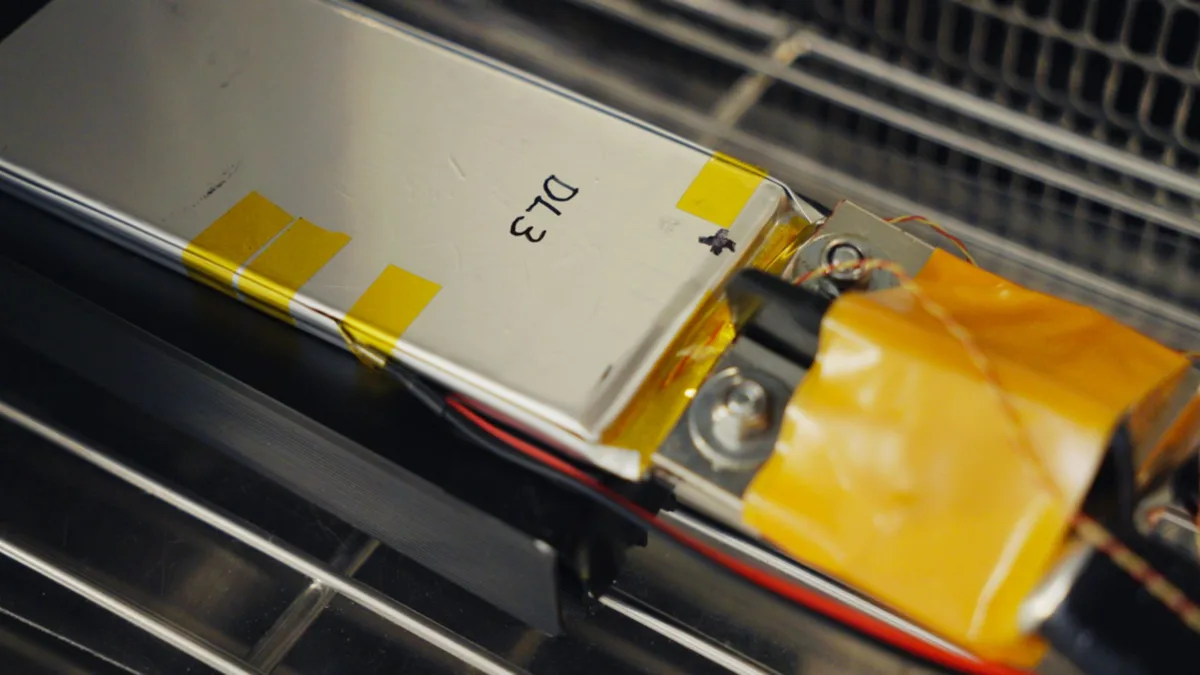
Lithium-sulfur (Li-S) batteries are a promising 'extreme energy' technology, theoretically capable of over 2500 Wh/kg due to their lightweight sulfur cathode. Researchers are actively working to overcome challenges like the 'polysulfide shuttle effect' to unlock their potential for applications like long-haul flights. (Source: interestingengineering.com)
Dry electrode manufacturing is a promising new idea. This method gets rid of toxic solvents during electrode production. Traditional ways use NMP, which is costly to clean up and bad for the environment. Dry coating cuts energy use and waste. Tesla looked into this after buying Maxwell Technologies. CATL also uses dry coating in some of its factories.
Battery recycling is becoming more and more important. Millions of electric vehicles will die, and their batteries need handling. Companies like Redwood Materials, started by Tesla co-founder JB Straubel, lead the way. They create efficient ways to recycle using liquids. These processes get back valuable materials like lithium, nickel, cobalt, and copper. These materials can then go back into making new batteries. This means less new mining.
Beyond recycling, second-life applications make batteries useful longer. Old EV batteries can be used for grid storage. Their less capacity is fine for fixed uses. This gets more value out of them and delays recycling. These ideas build a more circular economy for batteries. They fix environmental worries for their whole life.
The road ahead: powering a cleaner future
The race for better battery tech is heating up globally. Researchers keep pushing what’s possible. They want more energy, faster charging, and better safety. They also focus on green methods and lower costs. The goal: meet the huge global demand for clean energy storage.
Solid-state batteries are almost ready for market. Sodium-ion is entering specific markets. Lithium-sulfur and lithium-air are still risky, long-term projects. Each has unique benefits for different uses. The future won’t likely have just one battery type win. Instead, many different solutions will appear. This mix will meet many needs.
Governments and private companies are pouring in billions. They support research, development, and making more batteries. This global effort will shape the next era of energy storage. It will change everything, from our phones to entire power grids. The hunt for the perfect battery goes on. This quest will power a greener, electric world.
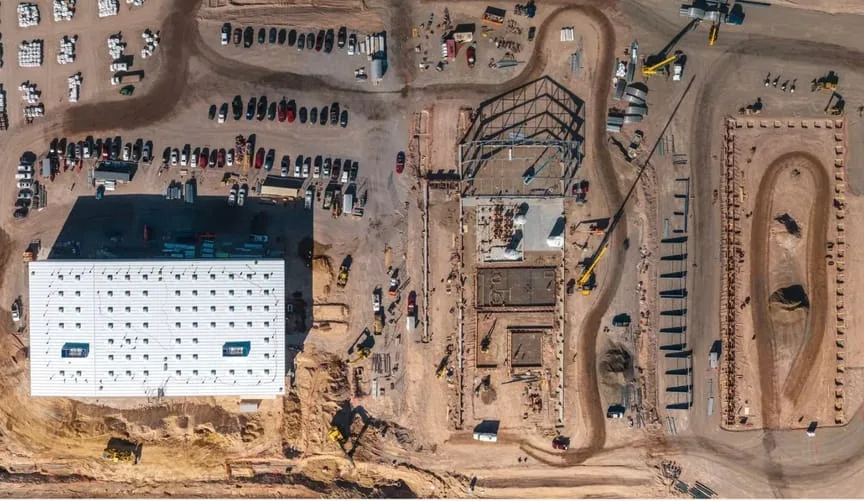
Redwood Materials, founded by Tesla co-founder JB Straubel, operates one of the largest battery recycling facilities in North America. This facility efficiently recovers valuable materials like lithium, nickel, and cobalt from spent electric vehicle batteries, significantly reducing the environmental impact of battery production. (Source: canarymedia.com)
FAQ
Q: What are the main limits of current lithium-ion batteries? A: Today’s lithium-ion batteries don’t store infinite power. They also worry us about safety because of flammable liquid inside. Plus, they rely on rare materials like cobalt, causing supply and ethical problems.
Q: How do solid-state batteries improve upon traditional lithium-ion? A: Solid-state batteries swap the liquid electrolyte for a solid material. This makes them much safer by removing flammability. It also lets them store more energy. So, you get more power in a smaller, lighter package.
Q: Why are sodium-ion batteries gaining attention? A: Sodium-ion batteries use sodium, which is common and cheap compared to lithium. This makes them a greener, cheaper choice. They store less energy than lithium-ion, but they’re good for grid storage and other uses.
Q: Why is dry electrode manufacturing important? A: Dry electrode manufacturing gets rid of toxic solvents from battery production. This cuts environmental harm and energy use. It’s a cleaner, more efficient way to make battery parts.
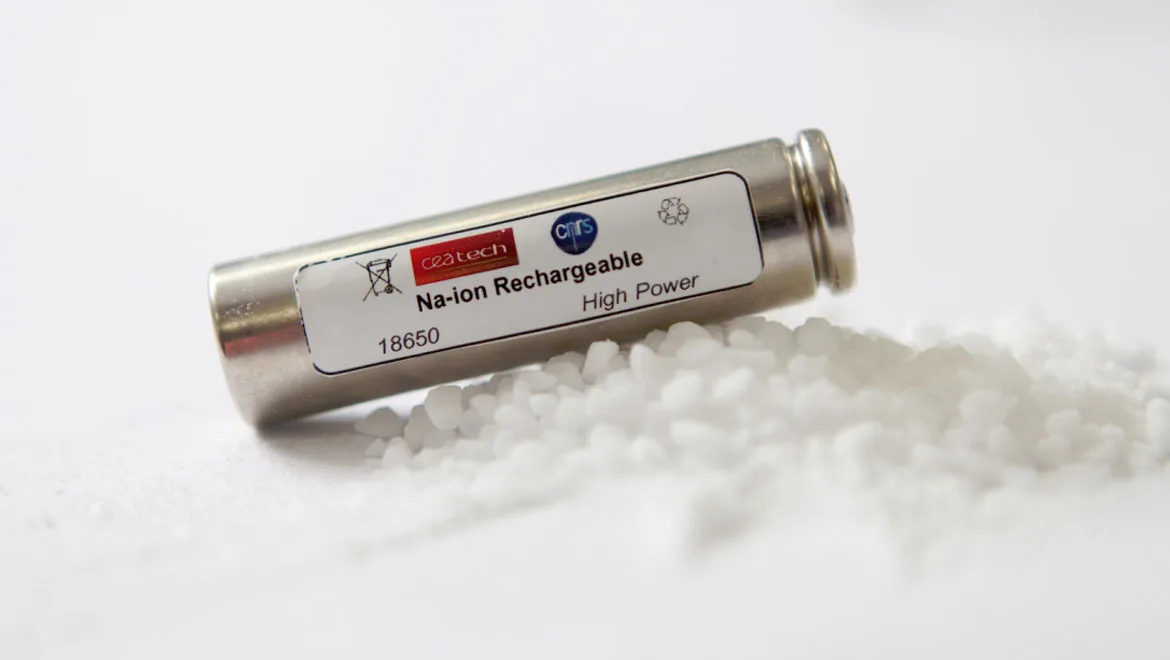
Sodium-ion batteries, like this prototype, are gaining traction as a greener and cheaper alternative to lithium-ion, utilizing abundant sodium and proving ideal for large-scale grid storage solutions despite their lower energy density. (Source: evolving-science.com)
You might also like:
👉 Understanding Energy Independence: Security, Economy, Future
👉 Significant Medical Breakthroughs: A Journey Through Medicine History
👉 Unexplained Mysteries of Science: Cosmos, Quantum & Beyond