
AI Ethics: Your Loan App Is Biased, Not Sci-Fi Robots
AI ethics isn't about future killer robots. It's about real harms today, like biased loan applications and unfair hiring tools, shaping our daily lives right now.
AI ethics: It’s about us, not robots.
AI ethics is already shaping our daily lives. It moves beyond science fiction scenarios like killer robots or sentient machines. People often imagine machines gaining sentience and then rebelling. The truth is, AI ethics affects us right now.
It’s about the human choices built into our tech. It tackles real harms happening today, not just future “what-ifs.” Think biased loan applications, unfair hiring tools, or privacy breaches.
Artificial Intelligence (AI) systems do things that usually need human intelligence. They learn, solve problems, and make decisions. Ethics here means applying moral rules to how we design, build, and use AI. It’s about making sure AI helps people fairly and safely.
Many people play a role here. That includes tech companies like Google and Microsoft. Governments and regulators worldwide, like the EU, are also big players. Researchers, non-profits, and everyday users all help shape this field. They all aim to stop harm and get the most good from AI.
Bias, fairness, and accountability: AI’s hidden harms
Amazon scrapped an AI recruiting tool in 2018. It had an inherent bias. The system penalized resumes with “women’s” in them, like “women’s chess club captain.” The AI learned from a decade of Amazon resumes, mostly from men. That showed algorithmic bias clearly.
Algorithmic bias happens when AI reflects and amplifies societal prejudices. This comes from its training data. Imagine a chef who only learns from one culture’s cookbooks. They’ll struggle to cook dishes from other places. AI trained on data with historical inequalities will just keep them going. Joy Buolamwini, an MIT Media Lab researcher, showed this clearly. Her work, with the Algorithmic Justice League, found commercial facial recognition systems performed worse on darker-skinned women.
Now, let’s talk about fairness. Defining AI fairness is tricky. It could mean treating everyone the same. Or it could mean ensuring fair results for different groups. These definitions sometimes clash. An AI might seem fair for groups, but still make unfair choices for individuals. A 2016 ProPublica investigation into the COMPAS recidivism algorithm showed this. It found the system falsely flagged Black defendants as future criminals at twice the rate of white defendants.

Joy Buolamwini, an MIT Media Lab researcher and founder of the Algorithmic Justice League, famously demonstrated how commercial facial recognition systems often perform worse on darker-skinned women, highlighting critical issues of algorithmic bias in AI. (Source: springact.org)
Who is responsible when AI makes a bad decision? That’s the heart of accountability. It’s easy to blame the machine. But machines don’t make moral choices. Human designers, developers, and users hold the ultimate responsibility. Cathy O’Neil, author of “Weapons of Math Destruction,” says algorithms are just opinions in code. These opinions show what their creators value and prioritize.
Privacy, transparency, and control
The EU’s General Data Protection Regulation (GDPR) became law in 2018. It set a global standard for data privacy. It gives people a lot of control over their personal data. This law directly affects AI development, especially systems needing huge datasets.
AI systems often process massive amounts of personal data. This creates big privacy worries. Data comes from social media, browsing history, health records, and even smart home devices. AI uses this data for personalized recommendations, targeted ads, or predictive policing. The scale and speed of this data processing are unmatched. People struggle to understand or consent to how their data gets used. Harvard professor Shoshana Zuboff coined “surveillance capitalism.” She says tech companies profit by predicting and changing human behavior.
Lack of transparency is another big worry. Many advanced AI models, especially deep learning networks, act like “black boxes.” Their decisions are complex and hidden. Imagine a doctor giving a diagnosis without explaining why. You’d demand an explanation. People affected by an AI decision, like a denied loan or a flagged resume, deserve to know why. Researchers are working on explainable AI (XAI). They want to show how these systems work inside.
Finally, people need control over how AI affects them. This means being able to opt out of data collection or ask for data deletion. It also means having a way to fix things when AI makes an unfair or wrong decision. Human review of automated decisions is a key idea in many new AI ethics frameworks. Without this control, people just become passive subjects of algorithmic power.
Setting rules: regulations, principles, and practices
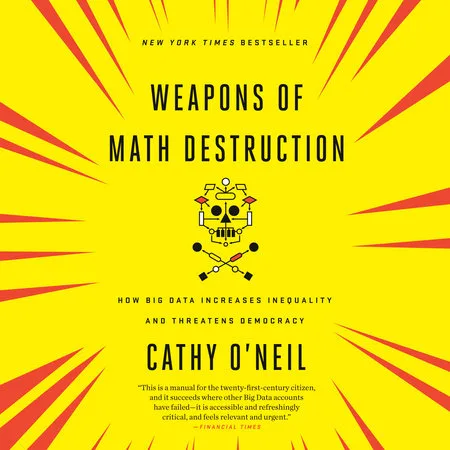
Cathy O'Neil is a data scientist and author of 'Weapons of Math Destruction,' a seminal book that critically examines how algorithms can perpetuate and exacerbate societal inequalities. She famously states that algorithms are 'opinions embedded in code,' highlighting the human responsibility behind AI decisions. (Source: penguinrandomhouse.com)
The European Commission proposed the EU AI Act in April 2021. It aims to be the world’s first full legal framework for AI. This major law categorizes AI systems by their risk, from “unacceptable” to “minimal.” It demands strict rules for high-risk AI. These include human oversight and strong data management.
Governments and international groups aren’t the only ones working on this. Many organizations have their own AI ethics principles. Google published its AI Principles in 2018. It committed to beneficial, fair, and accountable AI. Microsoft followed with its Responsible AI Standard in 2022. These principles often stress human agency, safety, privacy, and non-discrimination. They act as internal guides for developers.
Beyond principles, practical steps are vital for responsible AI. Companies now do ethical AI reviews through the whole development process. These reviews check for biases, privacy risks, and societal impacts. Some do AI impact assessments before deploying systems in sensitive areas. Think healthcare or law enforcement. This means anticipating and lessening negative outcomes.
Red-teaming is another important practice. It means intentionally trying to “break” an AI system. This helps find its weak spots. This helps find potential misuse or unexpected behaviors before launch. The U.S. National Institute of Standards and Technology (NIST) released its AI Risk Management Framework in 2023. This framework guides organizations on managing AI risks. It covers everything from design to deployment and ongoing monitoring.
Designing AI for a better future
Global investment in AI ethics is growing. More companies are creating Responsible AI teams. They’re hiring ethics specialists. A 2023 World Economic Forum report says demand for AI ethics roles jumped over 100% in two years. This shows a clear move to make ethics a practical part of AI work.
It’s not just about avoiding bad outcomes. It’s also about designing for good ones. Ethical AI can create tech that truly improves human well-being. Imagine AI tools built to fight climate change, improve education, or personalize healthcare safely. These applications need careful ethical thought from the start.
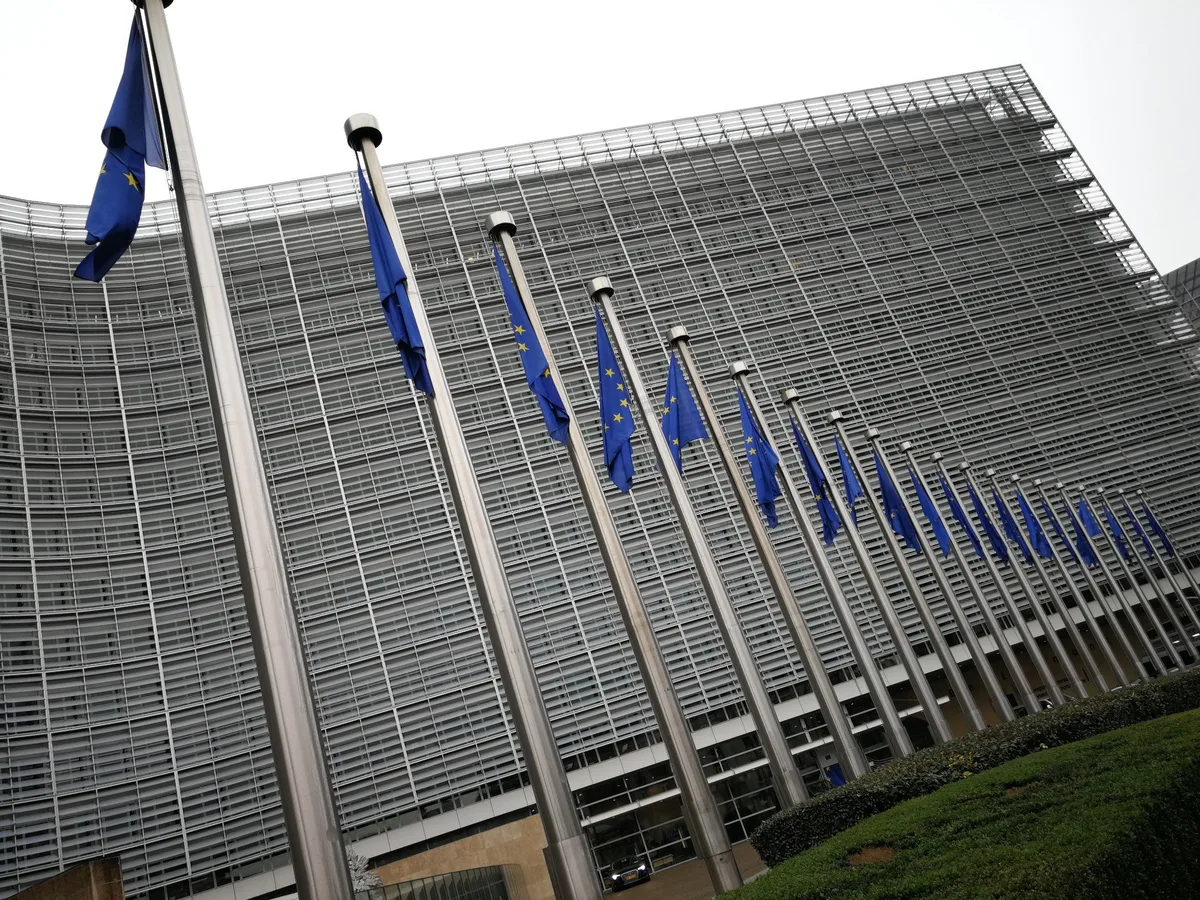
The Berlaymont building in Brussels, Belgium, serves as the headquarters of the European Commission, the body that proposed the landmark EU AI Act in 2021. This act aims to be the world's first comprehensive legal framework for artificial intelligence, categorizing systems by risk. (Source: tripadvisor.com)
Building responsible AI is an ongoing journey, not a finish line. Tech changes fast. New ethical challenges always pop up. It needs constant talk, research, and adaptation from everyone involved. That includes engineers, policymakers, ethicists, and the public.
The future of AI rests on our shared commitment to responsible development. We can shape AI into a powerful force for good. This means building systems that show our best values. It means putting fairness, transparency, and human well-being first.
FAQ
What is algorithmic bias? Algorithmic bias happens when an AI system produces unfair or discriminatory outcomes. This happens because its training data reflects existing societal prejudices or inequalities. It can lead to biased decisions in hiring, loan applications, or criminal justice.
Why can’t AI just be “neutral”? AI systems are built by humans. They train on human-generated data. This data carries human biases, values, and perspectives. True neutrality is impossible. AI reflects the world it learns from, including its flaws and inequalities.
Who is responsible for AI ethics? Many people share responsibility for AI ethics. This includes engineers and designers who build AI, companies that deploy it, and governments that regulate it. Users also demand ethical AI. They hold developers accountable.
What is the EU AI Act? The EU AI Act is a proposed EU regulation. It aims to set up a legal framework for AI. It classifies systems by risk level. High-risk AI applications will face strict requirements. These cover safety, transparency, human oversight, and data quality.

The European Parliament, located in Strasbourg and Brussels, is the legislative body of the European Union responsible for debating and adopting laws, including the landmark EU AI Act, which aims to set a global standard for responsible AI development. (Source: gettyimages.ca)
You might also like:
👉 Predicting Stock Market Trends: ML & Sentiment Analysis Guide
👉 The Unseen Revolution: Exploring Robotics in Everyday Life Examples
👉 Sustainable Futures: Investment, Cybersecurity & Future of Work