
AI's Hidden Cost: 1.5% of World's Power in 2022
AI's digital facade hides a massive physical footprint. In 2022, data centers consumed 1.5% of global electricity, with AI adding to this unseen environmental cost.
AI is often perceived as a purely digital concept. However, it relies on substantial physical infrastructure. This infrastructure consumes significant energy and resources. Such resource use has environmental costs, often unseen by users.
1. AI’s physical reality
In 2022, global data centers used an estimated 240-340 terawatt-hours of electricity. That is about 1-1.5% of the world’s total. AI operations add to these figures. We use AI through apps or voice assistants. These tools require powerful hardware.
Your smartphone app is not just running on your phone. It connects to a giant server farm. These server farms, called data centers, are warehouses packed with computers. They process and store all the digital information that runs AI systems.
These data centers sit across the globe, from the United States to Ireland and Singapore. Companies like Google, Microsoft, and Amazon run thousands of them. They hold the special chips and servers that do complex AI math. Teaching an AI model takes huge processing power and time.
A model, like a large language model (LLM), must learn from massive datasets. This learning is called training. It means processing vast amounts of data for weeks or months. This constant work makes a lot of heat, needing big cooling systems.
2. AI’s hunger for power and water
Training one large AI model can release as much carbon as five cars do in their lifetime. A 2019 study by Emma Strubell and her team at the University of Massachusetts Amherst found this. They looked at the energy cost of training common large AI models. The study highlighted the environmental impact of AI development.
Energy use: AI models, especially for deep learning, use huge amounts of power. Training GPT-3, for example, used an estimated 1,287 megawatt-hours of electricity. This energy made 552 metric tons of carbon dioxide equivalent, according to a 2020 OpenAI paper. This figure does not count the energy for research and development before the final training run.
Water use: Data centers also consume significant amounts of water. They use it to cool their hot servers. Google’s data centers, for instance, used 5.6 billion gallons of water in 2021, its 2022 Environmental Report showed. Much of this water directly cools the servers.
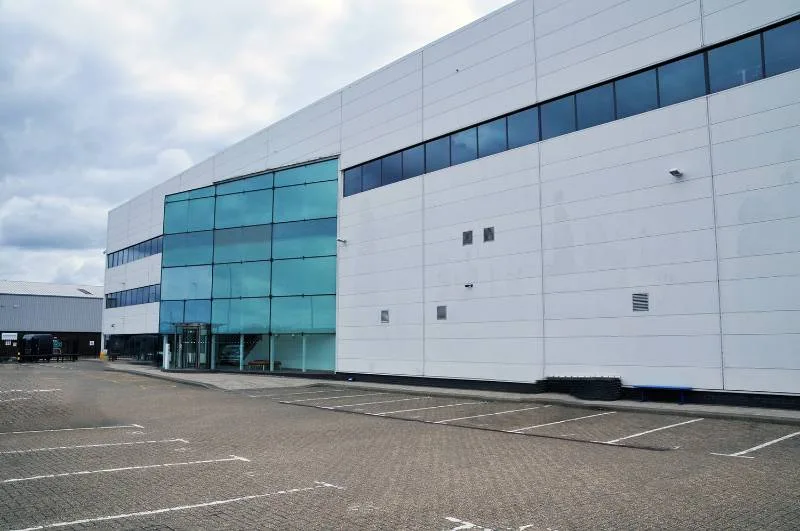
Massive data centers, like this one, are the physical backbone of AI systems. These 'warehouses packed with computers' consume vast amounts of electricity and water, with Google's data centers alone using 5.6 billion gallons of water in 2021 for cooling. (Source: serverfarmllc.com)
Servers require constant cooling to prevent failures and maintain operation. In dry areas, this water demand stresses local environments. For example, Google’s data center in The Dalles, Oregon, took 359 million gallons of water in 2021. This strained local water during drought.
Rare minerals and e-waste: AI hardware needs specific materials. These include rare earth elements and metals like cobalt, lithium, and gold. Mining these often damages the environment. It can cause deforestation, water pollution, and soil damage.
Once AI hardware dies, it becomes e-waste. This means old servers, chips, and cooling units. The United Nations Environment Programme (UNEP) reported in 2023 that global e-waste grows fast. Much of this waste holds toxic chemicals. Bad e-waste disposal often harms people and the environment in poorer countries.
3. Fair play: AI, justice, and who’s responsible
AI development’s environmental cost often hits vulnerable communities hardest. For example, the Democratic Republic of Congo supplies over 70% of the world’s cobalt. This metal is key in AI hardware and batteries. Mining there often involves dangerous work and child labor, Amnesty International reported in 2023. Mine damage also poisons local water and land.
AI’s huge energy use makes carbon emissions. These emissions speed up climate change for everyone. Climate change disproportionately affects communities already facing social and economic challenges. They often lack ways to cope with extreme weather or rising sea levels.
Assigning responsibility for AI’s environmental harm is complex. Major tech companies building AI models hold much of the blame. However, governments, researchers, and even users also contribute. Some companies “greenwash,” making big claims about their eco-efforts. This hides their true impact.
The International Energy Agency (IEA) noted in its 2022 World Energy Outlook that digital demand for energy is growing. Data centers, including those powering AI, are a big reason why. This growing demand means tech giants need to report clearly and cut emissions.
4. A greener path: Solutions for AI
In 2021, Google said it aims to run on 24/7 carbon-free energy by 2030. This is a step toward greener AI. Many companies see the environmental problems and are looking for answers. Addressing these issues requires new ideas, regulations, and a shift in perspective.

The Democratic Republic of Congo supplies over 70% of the world's cobalt, a critical metal for AI hardware and batteries. Mining operations there often involve dangerous conditions and child labor, leading to severe environmental and human rights concerns. (Source: ilo.org)
Smarter algorithms: Researchers are making AI models more efficient. These “Green AI” methods get similar results with less computing power. Instead of training one huge model, scientists try things like model compression and sparse training. These cut the energy needed for AI.
Renewable energy for data centers: Efforts are underway to power data centers with clean energy. Microsoft and Amazon also promise to buy renewable power. They invest in solar and wind farms to offset their energy use. This helps shrink AI’s carbon footprint.
Better hardware: Chip design matters. More efficient Graphics Processing Units (GPUs) and special AI accelerators can slash power needs. Better cooling also uses less water. Researchers are looking at liquid cooling, which outperforms traditional air cooling systems.
Rules and policy: Governments are starting to tackle AI’s environmental impact with laws. The European Union’s AI Act, for example, considers environmental aspects. Such rules can demand clear reporting on AI’s energy use. They can also push for greener AI tech. These policies make developers accountable for their footprint.
User awareness: Users also have a role. Asking tech companies for transparency about their environmental impact can force change. Supporting sustainable companies helps speed up the move to greener AI. A sustainable future for AI requires collective action and environmental consideration.
FAQs
Q1: Is all AI bad for the environment? No, not all AI is bad. AI can also help solve environmental problems. It can make energy grids run better or predict climate patterns. The worry is how many resources it takes to build and run some big AI models.
Q2: What’s AI’s biggest environmental impact? The biggest impact right now comes from data centers’ huge energy use, especially for training and running large AI models. This energy use creates a lot of carbon and needs tons of water for cooling.
Q3: What can I do about AI’s environmental impact? You can back companies that care about the environment and ask tech firms for clear reports. You can also push for policies that encourage green AI and smart resource handling.

High-performance Graphics Processing Units (GPUs) are the workhorses of modern AI, enabling complex computations but also consuming significant energy. Developing more efficient GPU designs is a key strategy to reduce AI's overall carbon footprint. (Source: intuitionlabs.ai)
You might also like:
👉 Understanding Energy Independence: Security, Economy, Future