
The Unseen Editors: AI Moderation's Global Human Team
AI content moderation isn't just automated bots. It's a constant partnership between AI and a global team of human reviewers, a complex evolution from the early 2000s.
The Unseen Editors: How AI Shapes Your Online World
Online content moderation often seems like a simple, automated process. Many believe AI bots simply zap spam or hate speech. The truth is more complex. AI content moderation relies heavily on people. It involves a constant partnership between artificial intelligence and a global team of human reviewers.
Before AI, managing online content was an overwhelming, manual job. In the early 2000s, forums and early social media sites relied on human volunteers or small teams. The internet was a smaller place. Today, Meta (Facebook, Instagram) and Google (YouTube) host billions of users. They generate an unimaginable volume of content every minute. This scale forced tech companies to build automated solutions.
AI’s Real Job: Triage, Not Deletion
In 2023, Facebook removed 1.3 billion pieces of content. That’s according to Meta’s own transparency report. This huge number proves something: no human team could handle this alone. The biggest misconception is that AI just deletes “bad” content directly. Instead, AI acts like a fast triage nurse. It identifies potential issues and flags them for human review.
Imagine a giant digital library. Millions of books arrive daily. An AI system doesn’t read every word. It quickly scans for keywords, covers, or suspicious patterns. It pulls aside books that might contain forbidden material. Then, the AI hands these flagged items to human librarians for a closer look and final decision. This partnership brings speed and accuracy, mixing automation with human judgment.
How AI Spotters Work
Major platforms started pouring money into AI moderation tools around the mid-2010s. These tools do many jobs, from spotting spam to finding child sexual abuse material (CSAM).
Machine Learning (ML) lets systems learn from huge amounts of past rule-breaking content. The more data they process, the better they get at recognizing patterns.
Natural Language Processing (NLP) helps AI understand human language. It can detect hate speech, harassment, or misinformation. It even handles slang or misspellings. For images and videos, Computer Vision (CV) algorithms identify objects, scenes, and actions. CV can spot nudity, violence, or logos linked to extremist groups. The AI doesn’t “understand” like a human; it just matches patterns against its training data.

Behind the scenes of online content moderation, global teams of human reviewers work in tandem with AI systems. While AI flags billions of pieces of content, these dedicated individuals make the crucial final decisions on complex cases, ensuring accuracy and nuance that algorithms often miss. (Source: wired.com)
YouTube, for example, reported something big. In Q3 2023, automated systems detected 93% of videos removed for violating community guidelines. This shows AI handles large amounts of content. These systems look for specific signatures. They find known harmful images or phrases. They also flag unusual activity, like a sudden flood of identical comments.
Why Humans Still Matter
Even with AI’s speed, human moderation remains vital. AI systems struggle with sarcasm, cultural context, and quickly changing threats. A 2020 report by the AI Now Institute at New York University highlights these limits. For example, a phrase harmless in one culture might deeply offend another. An innocent joke about a sensitive topic could get flagged by AI.
This is where human moderators take over. They review AI-flagged content that falls into a grey area. They make final judgments on appeals. These reviewers often work for third-party vendors, spread globally to cover all time zones and languages. They’re the “librarians” making the final call on controversial “books.” Their job is central to fairness and accuracy.
But this human work comes at a high price. Moderators see disturbing content daily. This leads to psychological distress and trauma. A 2020 study in The Lancet Psychiatry showed the severe mental health impact on these workers. Facebook, for example, has faced lawsuits from moderators. They allege poor support for the trauma they experience. Their important work often goes unseen, yet the whole system depends on it.
Why AI Had to Happen
The internet’s rapid growth made AI moderation necessary. Every minute, over 500 hours of video go up on YouTube. Hundreds of thousands of posts appear on X (formerly Twitter). Moderating this volume with only humans would be too expensive and physically impossible. The sheer scale prevents any human-only solution.
AI brings the speed needed to fight viral harmful content. Misinformation, hate speech, or graphic violence can spread globally in minutes. AI can detect and often remove such content far faster than human teams could react. During crisis events, for instance, AI quickly suppresses the initial rush of harmful rumors. This fast response lessens real-world harm, says Meta’s head of content policy, Monika Bickert.

Monika Bickert, Meta's Head of Content Policy, oversees the strategies for moderating content across Facebook, Instagram, and other Meta platforms. Her insights are crucial in understanding the balance between AI and human moderation in combating harmful content. (Source: exchange4media.com)
Platforms also face growing legal and reputational pressure. Regulations like the EU’s Digital Services Act (DSA), enacted in 2022, demand platforms remove illegal content quickly. They also must be transparent about their moderation. AI helps platforms meet these tough rules. Without AI, platforms would drown in harmful content. They’d risk massive fines and users leaving.
AI’s Flaws: Bias, Error, and Secrecy
AI content moderation faces several issues. A major one is algorithmic bias. AI systems learn from human-created data. This data can reflect society’s prejudices. For instance, research by Joy Buolamwini and Timnit Gebru at MIT’s Media Lab showed higher error rates for facial recognition systems with darker skin tones. This bias can unfairly affect certain groups’ moderation outcomes.
False positives (harmless content flagged as harmful) and false negatives (harmful content missed) are also constant issues. A comedian’s satire might get removed. Meanwhile, subtle calls for violence could slip through. This frustrates users and brings accusations of censorship. The algorithms work like a “black box.” Their decision process is often hidden, even from their creators. This lack of transparency makes it hard to appeal decisions or know why content was removed.
Balancing free speech with user safety is tough. Platforms must protect users from harm, but also allow diverse expression. AI’s limits in understanding context can lead to over-moderation, silencing legitimate speech. This tension fuels an ongoing ethical debate. Tech companies constantly update their models to cut errors and better understand context.
What’s Next for AI Moderation
Researchers are developing explainable AI (XAI). This aims to make AI decisions more understandable to people. It could help users know why their content was moderated. It would also help developers find and fix biases more effectively. The EU’s DSA also pushes for more transparency. It requires platforms to share more about their moderation processes.
Platforms are also trying new techniques like federated learning. This lets AI models learn from decentralized data without sharing specific user content, boosting privacy. The goal isn’t to get rid of human moderators. It’s to give them better tools. AI will keep handling most simple violations. This frees up humans for hard, subtle cases.

Joy Buolamwini, founder of the Algorithmic Justice League, is a leading voice in the fight against algorithmic bias. Her pioneering research at MIT's Media Lab revealed how facial recognition systems often exhibit higher error rates for individuals with darker skin tones, highlighting critical issues in AI content moderation. (Source: chartwellspeakers.com)
The real challenge is building AI systems that are both efficient and ethical. This means investing in diverse training data, strong checks, and better support for human reviewers. The goal is safer, more inclusive online spaces. Here, harmful content is minimal, and free expression thrives. This future depends on technologists, ethicists, policymakers, and users working together.
FAQ
What is AI content moderation? AI content moderation uses artificial intelligence, like machine learning and computer vision. It automatically identifies and flags or removes online content that breaks platform rules or legal standards. It helps manage the huge amount of user-generated content on platforms.
Can AI moderate content perfectly? No, AI can’t moderate perfectly. It’s very efficient for big tasks, but AI struggles with sarcasm, cultural context, and changing language. It can also show biases from its training data, leading to mistakes.
What are the biggest challenges for AI moderation? Main challenges include algorithmic bias, which can lead to unfair results. There are also frequent false positives and negatives, where AI wrongly flags or misses content. The lack of transparency in AI’s decisions is another big problem.
How does AI content moderation affect me? AI content moderation directly affects your online experience. It shapes the content you see by removing harmful material. But it can also sometimes wrongly remove your own posts. It changes the overall safety and tone of digital public spaces.
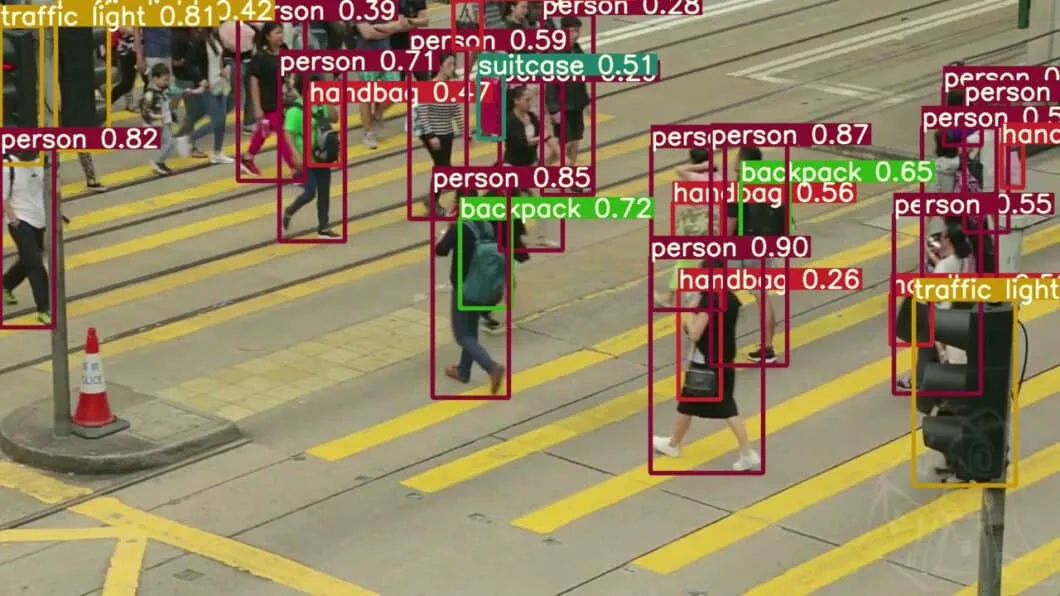
Computer vision, a key component of AI content moderation, enables machines to 'see' and interpret digital images and videos. This technology is crucial for automatically identifying visual content that may violate platform rules, such as hate symbols or graphic violence. (Source: viso.ai)
You might also like:
👉 Unmasking Online Bots: The X & Facebook Mimicry Challenge
👉 Zuckerberg’s 2021 Meta: Why Your Virtual Self Isn’t Free
👉 The Future of DeFi Protocols: Navigating Web3’s Financial Revolution