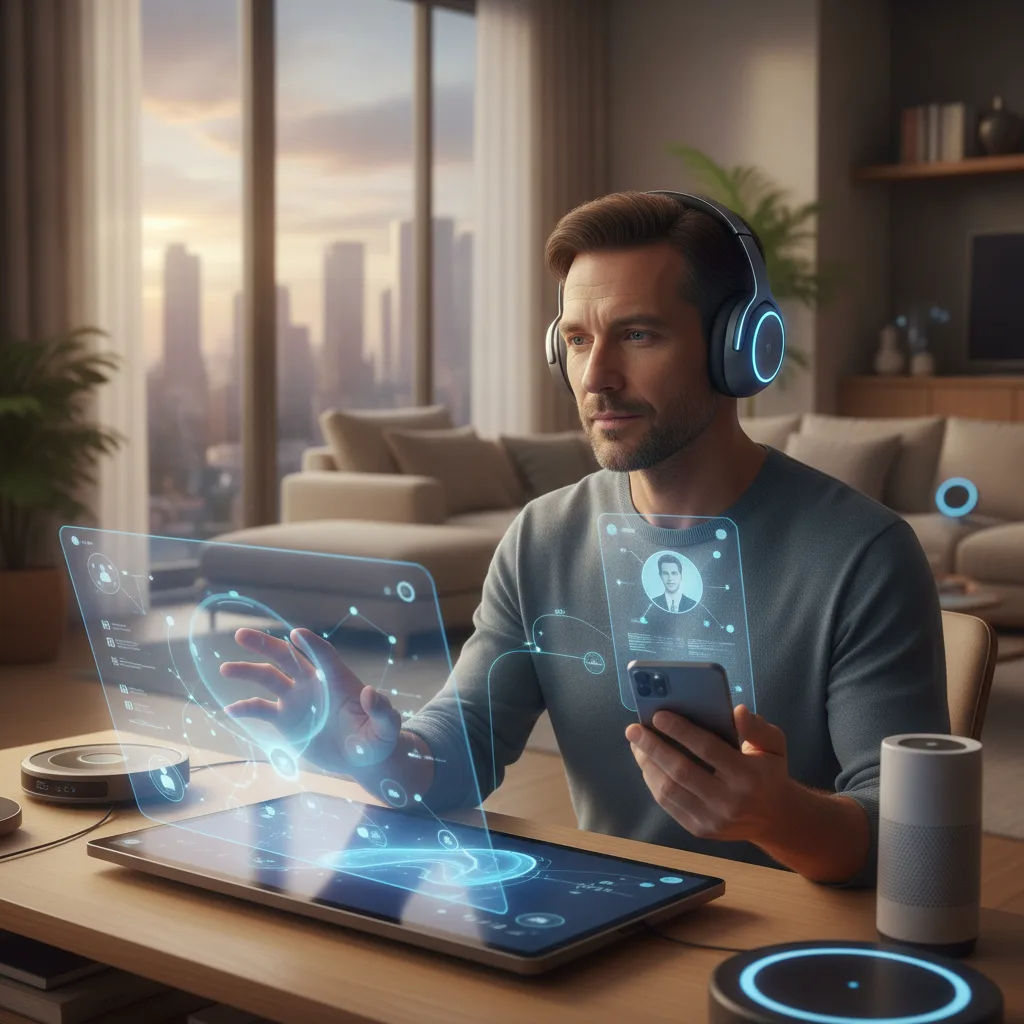
The $226 Billion AI Device Boom: What 2025 Means for Your Tech
By 2025, consumers will spend $226 billion on AI-enabled devices as processing shifts from cloud to phones, home tech, and wearables.
Your devices will get smarter by 2025
By 2025, consumers will spend an estimated $226 billion on AI-enabled devices. This shows a significant increase in personalized technology. A 2023 IDC report projects this trend. It highlights a shift towards more advanced AI on our devices. AI processing is moving from cloud data centers. It’s going directly onto phones, home devices, and wearables.
AI is already part of everyday life. Voice assistants like Alexa and Siri still use cloud servers for big requests. They send your data to central computers. Then, they send back results. This model has established expectations for years.
Billions of devices make up the global tech market. Major companies like Apple, Google, Amazon, and Samsung dominate this market. Chip makers like Qualcomm and Nvidia are also important for AI processing. These companies now focus on AI that works locally on devices.
This shift means faster responses and better data privacy for you. On-device AI means devices don’t always need internet. It also stops sensitive data from going to outside servers. This significantly affects device security and how you use technology.
On-device AI is growing rapidly
By 2025, consumer devices will increasingly use edge AI. This means devices will process AI locally. Qualcomm’s Snapdragon 8 Gen 3 processor, released in late 2023, demonstrates this shift. It includes a Neural Processing Unit (NPU) that processes AI 98% faster than the previous version.
This power lets devices use advanced AI even offline. You can edit photos, transcribe audio, or make text right on your phone. Apple’s A17 Pro chip, in the iPhone 15 Pro, also has a powerful 16-core Neural Engine. This engine does 35 trillion operations per second. It accelerates local machine learning.
IDC expects over half of all new devices to have AI acceleration by 2025. That means PCs, phones, and IoT gadgets. This move reduces delays and makes AI apps more reliable. It also eases concerns about data privacy.
Google puts specialized Tensor chips into its Pixel phones. These chips improve AI performance for things like high-quality photos and live translation. This strategy prioritizes efficiency and user experience. It makes on-device AI a main selling point in a competitive market.

The Qualcomm Snapdragon 8 Gen 3 processor, released in late 2023, is a key enabler of on-device AI, featuring a Neural Processing Unit (NPU) that processes AI tasks 98% faster than its predecessor. This allows devices to perform complex AI functions like photo editing and transcription directly on the device, enhancing speed and privacy. (Source: androidpolice.com)
Your AI assistant will know you
By 2025, digital assistants will become more anticipatory and situation-aware. Current assistants simply follow direct orders. Future versions will anticipate your needs based on your habits and surroundings. Google’s “Project Astra,” introduced in early 2024, aims to create a versatile AI agent. This agent will understand and interact with the world in many ways.
These new assistants will function effectively across all your devices. They’ll adapt to your preferences over time. For example, an assistant might suggest ways to avoid traffic before you even ask. It could also change home settings based on your daily routine. This personalization enhances the usefulness of these AI tools.
Alexa, for example, already gets more AI features that generate content. Future versions will converse more naturally and complete complex tasks. Dr. Rohit Prasad, Head Scientist for Alexa AI, discussed these changes in a 2023 interview. He emphasized moving beyond simple commands and responses.
On-device processing will drive these advanced assistants. Local processing means faster replies and better privacy for sensitive requests. You’ll control your personal data more. This fosters trust in these powerful AI systems.
AI for your health, home, and car
By 2025, AI will significantly enhance consumer health technology. Wearables will offer more than activity tracking. They will provide personalized health insights and early warnings. For example, the Apple Watch already monitors heart rate and detects falls. Future versions will use AI to anticipate health issues.
Glucose monitors and smart rings will use AI. They’ll detect subtle health changes. These devices will alert you to problems before symptoms even show. Dr. Jessilyn Dunn, a biomedical engineer at Duke University, showed this in a 2023 study. She noted AI can find disease markers from wearable data. This could transform preventative care.
Home devices will also become more capable. AI will let appliances and security systems adapt to your habits. This makes fully automated, responsive homes. Smart thermostats will conserve energy based on who’s home and the weather. AI cameras will distinguish between pets, family, and intruders.

Unveiled in early 2024, Google's Project Astra is an ambitious AI agent designed to be a versatile, situation-aware assistant that understands and interacts with the world in real-time, aiming for seamless integration across all user devices. (Source: techradar.com)
In cars, AI will enhance driving and navigation. Advanced driver-assistance systems (ADAS) will be commonplace, not exclusive to luxury cars. These systems use AI for improved object detection, lane keeping, and adaptive cruise control. Tesla, for instance, regularly updates its AI software. This enhances its self-driving features. The Consumer Technology Association (CTA) predicts a significant increase in AI car features by 2025.
Privacy and trust: The big questions
As AI grows in consumer technology, privacy and trust become major concerns. AI handles more personal data. Safeguarding this information is crucial. People worry about how companies collect, store, and use their data. A 2023 Pew Research Center study found 63% of Americans worry about how companies use AI.
On-device AI offers a partial solution to privacy concerns. Processing data locally means less sensitive information goes to the cloud, reducing the risk of data breaches on remote servers. This also provides users with more direct control over their information, a point Apple strongly emphasizes with its privacy-first AI. Despite these benefits, on-device AI is not a complete fix. Device makers still collect anonymous usage data to improve products. Therefore, clear data policies are essential for building user trust. Companies must clearly state what data AI systems collect and how they use it.
Governments are creating new rules for AI privacy. The EU’s AI Act, passed in 2024, sets strict rules for AI systems. It sorts AI risks and demands transparency. This law could influence global standards for consumer AI. Ultimately, the widespread adoption of AI depends on public trust.
What’s next for consumer AI?
Looking ahead, AI in consumer tech will significantly change how we use devices. We will move beyond simple automation. We will find meaningful digital assistance. Devices will anticipate our needs and provide highly tailored experiences. This shift is driven by powerful new chips and advanced AI models.
AI will soon become an integrated component within all consumer electronics. It will improve daily life, from effective health tracking to smart homes. This widespread adoption requires constant innovation and strong privacy measures. Companies must prioritize both usefulness and user trust.

The European Parliament, particularly its building in Strasbourg, is where the EU's landmark AI Act was debated and passed in 2024. This legislation is the world's first comprehensive law on artificial intelligence, setting global standards for AI safety and transparency in consumer technology. (Source: multimedia.europarl.europa.eu)
Expect further advancements in AI that processes text, audio, images, and video. These systems will understand and generate content across text, audio, images, and video. This will create new methods for human-computer interaction. The consumer tech industry faces a significant transformation. The real question isn’t if AI will take over our devices. It’s how well companies balance impressive features with strong privacy protection. Get ready for a future where your tech not only listens but also understands.
Questions you might have
What is on-device AI? On-device AI, or edge AI, processes data right on your device. It doesn’t send data to remote cloud servers. This results in faster performance and greater privacy.
How will AI assistants change by 2025? By 2025, AI assistants will be more anticipatory and situation-aware. They’ll anticipate your needs based on what they learn about you. No more just simple voice commands.
What privacy concerns exist with future AI tech? People worry about how companies collect, store, and use their data. On-device AI can mitigate some risks by keeping data local. New laws also aim to address these issues.
Which consumer tech areas will AI impact most? AI will most significantly impact health wearables, smart homes, and car systems. It’ll also enhance entertainment and digital assistants with greater personalization.
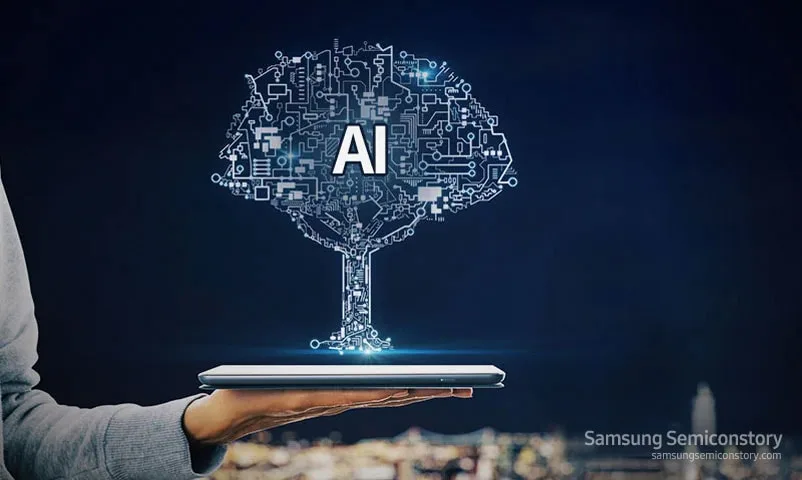
On-device AI, also known as edge AI, processes data directly on your device, enhancing privacy and speed by eliminating the need to send information to remote cloud servers. This technology is crucial for the future of personalized and secure consumer tech, keeping your data local. (Source: semiconductor.samsung.com)
You might also like:
👉 Youth & AI: The Global Risks in Apps & Social Media