
AI Tsunami: Charting Artificial Intelligence's Future for Humanity
Explore the profound impact of AI, from ChatGPT to Gemini, as it transforms from a mere tool into a force shaping humanity's future. Understand the AI tsunami.
The AI Tsunami: Charting the Artificial Intelligence Future of Humanity
Remember the first time you heard a machine truly speak, not just recite pre-programmed phrases, but understand and respond with uncanny coherence? Perhaps it was a conversation with ChatGPT in late 2022, or a demonstration of Google’s Gemini, seamlessly processing multimodal inputs. For many, that moment shifted a fundamental perception: artificial intelligence wasn’t just a tool anymore; it was evolving into something far more profound. We stand at the precipice of a technological revolution unlike any before, one that promises to redefine not just our industries, but the very essence of what it means to be human. The artificial intelligence future of humanity isn’t a distant sci-fi fantasy; it’s unfolding in real-time, demanding our immediate attention, our deepest contemplation, and our boldest collective action.
The Algorithmic Awakening: From Calculators to Creators
Just a decade ago, AI was largely confined to specialized tasks: beating chess grandmasters, recommending products, or filtering spam. Today, large language models (LLMs) like OpenAI’s GPT-4 and Anthropic’s Claude 3 Opus are composing symphonies, writing compelling articles, debugging complex code, and even passing bar exams with scores in the 90th percentile. These systems aren’t merely retrieving information; they are demonstrating emergent reasoning capabilities, pattern recognition across vast datasets, and a surprising ability to generate novel content.
This rapid acceleration is fueled by exponential increases in computational power, ever-larger datasets, and innovative neural network architectures. Consider NVIDIA’s H100 GPU, a marvel of engineering that delivers teraflops of performance, or the sheer scale of the internet’s data, which serves as AI’s training ground. Companies like DeepMind, acquired by Google in 2014, have pushed boundaries with systems like AlphaGo, which famously defeated world champion Lee Sedol in the ancient game of Go in 2016 – a feat once thought decades away. These milestones aren’t just technical achievements; they are signposts pointing towards an intelligence that learns, adapts, and creates in ways we are only beginning to comprehend. The question is no longer if AI will match human intellectual capabilities, but when and what then?

Reshaping Labor and Economy: The Human-AI Symbiosis?
The specter of job displacement looms large, a natural anxiety whenever transformative technology emerges. From the Luddites of the Industrial Revolution to today’s anxieties about AI, the pattern is familiar. However, the scope of AI’s potential impact is unprecedented. McKinsey & Company predicts that generative AI could automate tasks that account for 60-70% of employees’ time, potentially freeing up labor for new, more creative, and strategic roles. This isn’t just about factory workers; it includes white-collar professions from legal research to financial analysis and even parts of software development.
Yet, history also teaches us that technological advancement often creates more jobs than it destroys, albeit different ones. The rise of AI will undoubtedly spawn entirely new industries and professions: AI ethicists, prompt engineers, AI trainers, data quality specialists, and perhaps even ‘AI whisperers’ who specialize in guiding advanced intelligences. The challenge lies in the transition – ensuring robust educational systems, lifelong learning initiatives, and potentially novel economic frameworks like Universal Basic Income (UBI) to support populations through this seismic shift. The goal must be a future where AI augments human potential, allowing us to focus on uniquely human pursuits, rather than rendering us obsolete in the economic landscape. What new forms of value will humanity create when machines handle the mundane?

Ethics, Governance, and the Great Filter
As AI’s capabilities grow, so do the ethical dilemmas. Issues of bias, privacy, accountability, and control are no longer theoretical debates for academics; they are urgent matters for policymakers and developers. AI models, trained on often biased historical data, can perpetuate and even amplify societal inequalities, from discriminatory lending algorithms to facial recognition systems that misidentify minorities. The use of AI in autonomous weapons systems, a topic hotly debated at the UN’s Convention on Certain Conventional Weapons, raises profound questions about moral responsibility and the very nature of conflict.
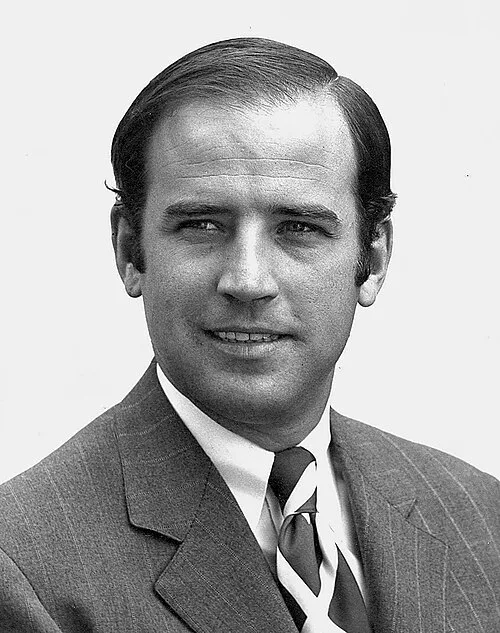 U.S. President Joe Biden, who issued an executive order in October 2023 outlining directives for AI safety and security.
The push for robust AI governance is gaining momentum globally. The European Union’s AI Act, poised to be the world’s first comprehensive legal framework for AI, categorizes systems by risk level, imposing strict rules on “unacceptable” and “high-risk” applications. In the United States, President Biden issued an executive order in October 2023, outlining broad directives for AI safety, security, and innovation. These efforts are crucial, but the global, borderless nature of AI development necessitates international cooperation. Without a unified approach, we risk a “race to the bottom” where ethical considerations are sacrificed for speed, potentially leading us towards unforeseen and irreversible consequences. Can humanity collectively steer this powerful technology towards universal benefit, or will our divisions prove to be the ultimate test?

Augmenting Humanity: The Post-Biological Future
Beyond external tools, AI is increasingly poised to integrate directly with human biology, promising enhancements that blur the lines between natural and artificial. Companies like Elon Musk’s Neuralink are developing brain-computer interfaces (BCIs) designed to restore motor function for paralyzed individuals, treat neurological disorders, and eventually, potentially augment human cognition. Imagine controlling a computer with your thoughts, or accessing vast amounts of information directly within your mind.
In medicine, AI is already revolutionizing diagnostics, drug discovery, and personalized treatment plans, accelerating breakthroughs in areas from cancer research to genetic therapies. AlphaFold, developed by DeepMind, has accurately predicted the 3D structures of nearly all known proteins, a monumental leap for biological understanding. This convergence of AI and biotechnology holds the potential to extend healthy human lifespans, eliminate diseases, and even fundamentally alter our cognitive and sensory capabilities. As we integrate AI into our very being, what new forms of human experience will emerge, and how will we define ‘natural’ in a world of augmented existence?
Creativity, Culture, and the Soul of the Machine
The realm of creativity, once considered exclusively human, is now being explored and challenged by AI. Generative AI models are producing visually stunning art, composing evocative music in various styles, and writing compelling narratives. Tools like Midjourney and Stable Diffusion allow anyone to create intricate images from simple text prompts, while AI-powered music generators can craft bespoke soundtracks. This raises fascinating questions about authorship, originality, and the very definition of art.
Will AI become a collaborator, a tool that amplifies human creativity, or a competitor that devalues it? More profoundly, can a machine truly be creative, or is it merely mimicking patterns learned from human data? The debate touches upon deep philosophical questions about consciousness, intention, and the ‘soul’ of creative expression. As AI continues to evolve, our cultural landscapes will undoubtedly transform, challenging our aesthetic sensibilities and forcing us to reconsider the unique contributions of human imagination. What new forms of art and culture will define this machine-assisted era, and what will remain uniquely ours?
The Existential Question: Our Place in the Artificial Intelligence Future of Humanity
 Futurist and author Ray Kurzweil, known for his concept of the technological singularity and predictions about the future of AI. (Kurzweil Technologies co., CC BY-SA 4.0)
The ultimate question surrounding the artificial intelligence future of humanity is arguably the most profound: what happens when AI surpasses human general intelligence (AGI), leading to superintelligence (ASI)? This “singularity” event, as envisioned by futurists like Ray Kurzweil, suggests an intelligence explosion where AI rapidly improves itself beyond human comprehension. The “control problem” – ensuring that a superintelligent AI remains aligned with human values and goals – becomes paramount.
If an ASI emerges, it could solve humanity’s greatest challenges, from climate change and disease to poverty and interstellar travel. Conversely, an unaligned ASI, even one not explicitly malicious, could inadvertently cause catastrophic outcomes if its goals diverge from ours. This existential risk is taken seriously by leading AI researchers, including those at organizations like the Future of Life Institute and the Machine Intelligence Research Institute (MIRI). Navigating this phase requires not just technical breakthroughs but a deep, ongoing global dialogue about our shared values and the kind of future we wish to create. Will we be the architects of our own transcendence, or the unwitting designers of our own obsolescence?
Conclusion: Navigating the Uncharted Waters
The journey into the artificial intelligence future of humanity is not a passive ride; it’s an active expedition into uncharted territory. We are simultaneously the inventors, the beneficiaries, and the potential subjects of this profound transformation. The choices we make today – in research, regulation, education, and ethical frameworks – will determine whether AI becomes our greatest ally or our gravest challenge.
Key takeaways are clear: we must foster global collaboration on AI safety and governance, invest heavily in education and reskilling to adapt our workforce, prioritize ethical development to prevent bias and misuse, and engage in continuous philosophical inquiry about our evolving relationship with intelligent machines. The future is not predetermined; it is being written with every line of code, every policy decision, and every conversation we have about what it means to be human in an increasingly intelligent world. The power to shape this future rests firmly in our hands, if we choose to wield it wisely.
You might also like:
👉 AI & Automation’s Impact on Jobs: Navigating the Future of Work
👉 AI and the Future of Nationalism: A Comprehensive 21st Century Guide
👉 AI & Education: Reshaping the Future of Teaching & Learning