Ampersand Symbol: Comprehensive Guide to Its History & Usage
Dive into the fascinating world of the ampersand symbol. Discover its ancient origins, evolving symbolism, and practical applications in modern typography, writing, and design.
The Ampersand: A Comprehensive Guide to Its Enduring Symbolism and Usage
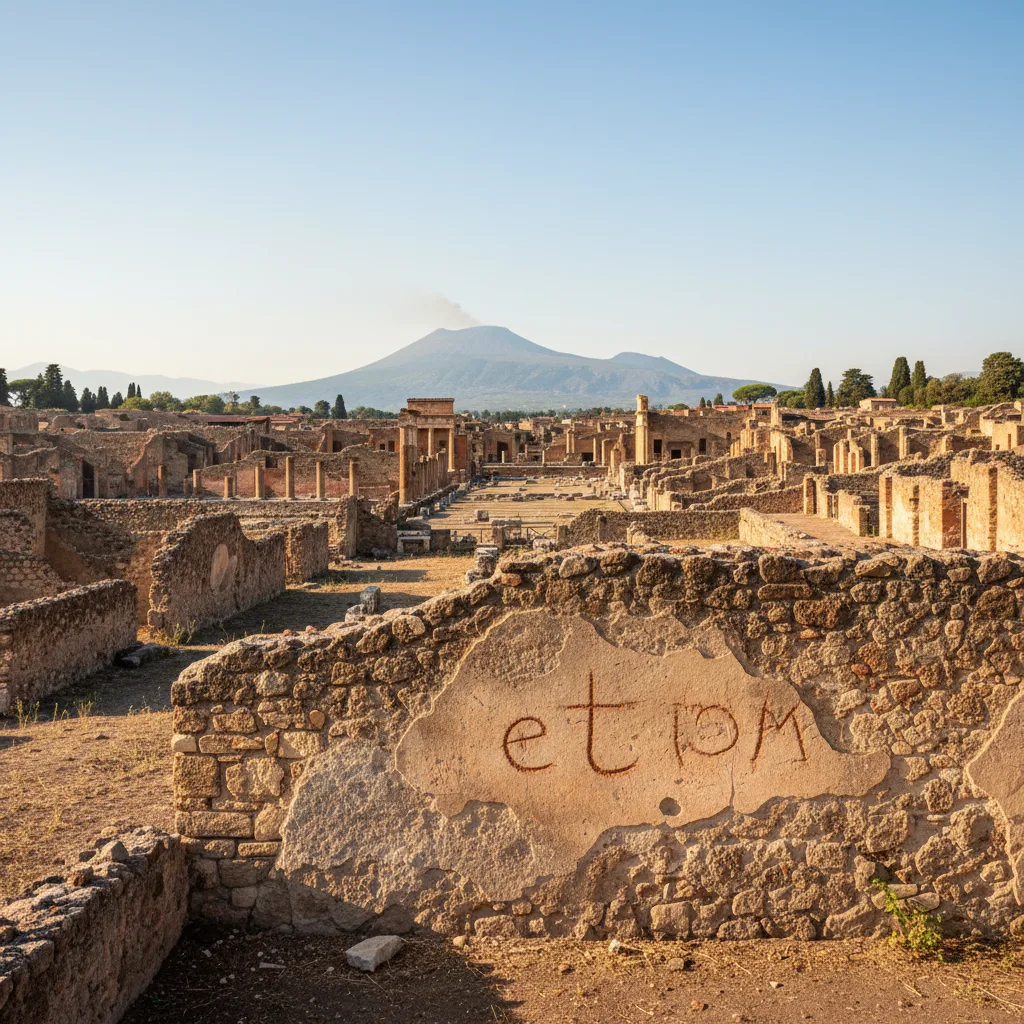
 Imagine standing amidst the sun-baked ruins of Pompeii, the ghost of Vesuvius looming in the distance. The air, thick with the scent of ancient dust and a faint echo of forgotten chatter, seems to carry whispers from a time long past. As your gaze drifts across the weathered frescoes and the scrawled graffiti on a humble wall, a familiar shape catches your eye. It’s not a grand inscription, but a fluid, almost playful mark—a ligature, an elegant knot of two letters woven together. This is where our journey begins, a deep dive into the fascinating world of the ampersand, a symbol whose silent presence belies a history rich with innovation, artistry, and linguistic evolution. We embark on an immersive expedition to create a comprehensive guide to the ampersand symbol and its usage, uncovering its secrets from dusty papyri to gleaming digital screens.
The Lure of the Looped Mark: Tracing the Ampersand’s Ancient Origins
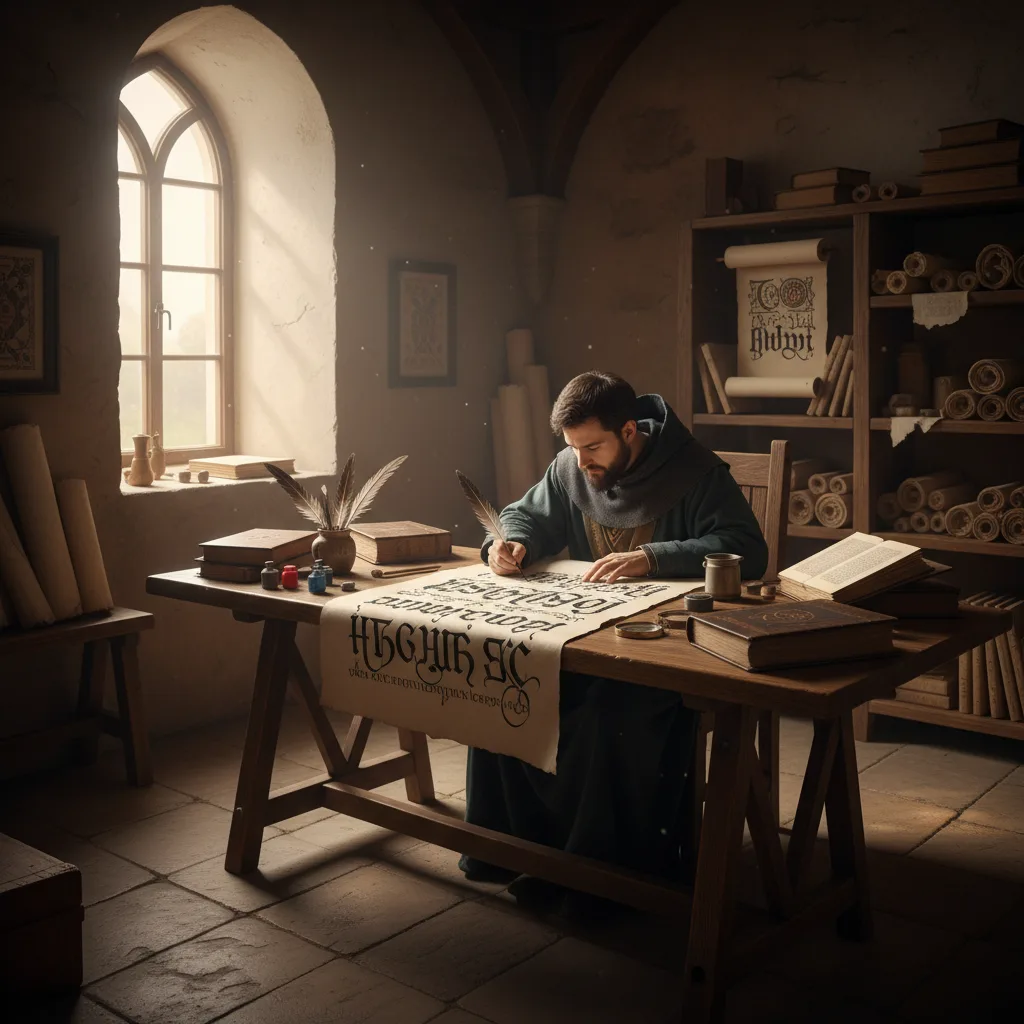
Our first stop takes us further back, to the bustling scriptoria of ancient Rome, where the rhythm of quill on parchment was the heartbeat of knowledge. Here, amidst the flickering lamplight and the faint aroma of ink, we witness the genesis of the ampersand. It wasn’t born as a standalone symbol but as a practical solution: a swift, elegant abbreviation for the Latin word “et,” meaning “and.” Roman scribes, constantly battling the twin constraints of time and expensive writing materials, developed a system of ligatures—fusing letters together—to speed their work. The earliest forms, visible in the Pompeian graffiti of the 1st century AD and on countless Roman manuscripts, show a clear, almost crude, merging of the ‘E’ and ‘T’. The horizontal stroke of the ‘E’ would extend to become the crossbar of the ‘T’, its vertical descending from the ‘E’s curve.
As centuries turned, this utilitarian scribble began its slow, graceful metamorphosis. By the time of the Carolingian Renaissance in the 8th century, under the scholarly patronage of Charlemagne and the meticulous hand of figures like Alcuin of York, the Roman cursive ‘et’ had evolved significantly. Scribes in monastic scriptoria refined and stylized the mark, transforming it from a mere ligature into a distinct, beautiful character. The ‘E’ and ‘T’ became less overtly discernible, weaving into a complex, almost calligraphic flourish. This period solidified the ampersand’s form, moving it from a simple abbreviation to an accepted, visually appealing graphic element. It was a testament to the power of human ingenuity, turning a practical necessity into an enduring piece of visual communication.

From Scriptorium to Schoolroom: The Ampersand’s Journey Through Alphabets and Pedagogy
Our expedition now leads us through the hallowed halls of early English education, where the ampersand claimed a curious, albeit temporary, place in the alphabet itself. For centuries, right up until the 19th century, this looped mark was considered the 27th letter of the English alphabet. Imagine a child in a dimly lit classroom, tracing letters on a hornbook—a paddle-shaped primer—reciting “A, B, C… X, Y, Z, and per se and.” This peculiar phrase, “and per se and,” is the very origin of the symbol’s name. “Per se” means “by itself” in Latin, so the phrase literally meant “and [the symbol that] by itself [means] and.” Over time, the phrase slurred, became compressed, and eventually birthed the word “ampersand.”

The widespread adoption of the printing press in the 15th century, while standardizing letterforms, also played a crucial role in the ampersand’s evolution. Printers and type designers, from Aldus Manutius to William Caslon, embraced the symbol, each crafting their own unique interpretations. We see how the ampersand became a veritable playground for typographic artistry. A Caslon ampersand, for instance, exhibits a robust, traditional elegance, while a Bodoni ampersand offers a sleek, almost architectural precision. Crucially, type designers often create two distinct versions: one for roman type and a more flowing, often more calligraphic version for italic type. This duality underscores its unique status—a symbol that, unlike most letters, often boasts two entirely separate designs within the same typeface family, a silent tribute to its calligraphic roots and its enduring aesthetic appeal. Its inclusion in elementary alphabets cemented its status, even as its function gradually shifted from a ‘letter’ to a specialized connective symbol.
Crafting Identity: The Ampersand in Branding, Design, and Typography
Stepping into the modern era, our exploration reveals the ampersand’s powerful role as a cornerstone of visual identity. It transcends its linguistic function to become an artistic statement, a symbol of partnership, collaboration, and enduring legacy. In the realm of branding, it’s not merely a shortcut; it’s a deliberate choice, imbuing names with a sense of established tradition and connection. Think of the iconic logos that adorn our world: Procter & Gamble, its ampersand a testament to a long-standing partnership; Tiffany & Co., where the symbol exudes luxury and timeless elegance; Johnson & Johnson, signifying trust and reliability. These are not mere abbreviations; they are carefully chosen design elements that contribute significantly to brand perception.
The ampersand’s aesthetic versatility makes it a darling of graphic designers and typographers alike. Its intricate curves and counter-forms offer endless opportunities for creative interpretation. Designers often leverage its inherent balance and symmetry to create visually compelling logos for law firms, architectural practices, and creative agencies, instantly conveying a sense of teamwork and professionalism. The choice of an ampersand in a logotype can subtly communicate a brand’s ethos—whether it’s the classical gravitas of a traditional serif ampersand or the sleek, minimalist flair of a modern sans-serif iteration. Its ability to visually connect two entities, often with a more sophisticated or less casual feel than the word “and,” makes it an indispensable tool in the designer’s toolkit, a silent storyteller weaving narratives of alliance and continuity.
Navigating the Nuances: Proper Usage of the Ampersand Symbol in Contemporary Writing
Our journey now shifts to the practical landscape of contemporary writing, where the ampersand, for all its charm, demands a nuanced understanding of its appropriate usage. While ubiquitous in branding and design, its role in formal prose is far more restricted. The cardinal rule for most standard English writing is clear: avoid using the ampersand as a substitute for the word “and” in the main body of a text. Its informality can disrupt the flow and professionalism of academic papers, journalistic articles, and formal reports. However, like any good rule, there are specific, well-defined exceptions where the ampersand not only permitted but often preferred.
These exceptions primarily fall into categories where the ampersand functions as an integral part of a proper name or a stylistic convention. It is correct to use it when it is part of an official company name (e.g., Barnes & Noble, M&M’s), a movie, book, or song title (e.g., Sense & Sensibility, Of Mice & Men), or in certain established abbreviations (e.g., R&B for Rhythm and Blues). In academic citations, particularly following APA style, the ampersand is mandatory when listing multiple authors within parenthetical citations (e.g., (Smith & Jones, 2023)), though the word “and” is used in narrative citations (e.g., Smith and Jones (2023) found…). Furthermore, in more informal contexts such as headlines, lists, tables, or signage, the ampersand offers brevity and visual impact. Understanding these distinctions is key to wielding this ancient symbol with precision and elegance, ensuring its rich history enhances rather than detracts from your message.
Beyond the Basic ‘And’: Unearthing Lesser-Known Ampersand Applications and Variations
Our exploration deepens as we unearth the ampersand’s less-traveled paths, discovering its surprising utility in domains far removed from its original calligraphic home. Beyond its common function as a conjunction, the ampersand occasionally appears as a shorthand for “et cetera” when paired with “c” as in “etc.,” although this is a derived and not intrinsic meaning. More significantly, in the digital realm, the ampersand takes on entirely new and powerful roles. In computer programming, particularly in languages like C, C++, and Java, the single ampersand (&) often denotes a bitwise AND operator, manipulating individual bits of data, while a double ampersand (&&) represents a logical AND operator, used in conditional statements. In web development, the ampersand is crucial for separating parameters in a URL query string (e.g., ?name=John&age=30), requiring careful encoding as %26 to prevent misinterpretation.
Linguistically, we find fascinating historical cousins. The Tironian et (⁊), an ancient shorthand symbol for “and” dating back to the Roman Empire, often found in medieval Irish and Scottish Gaelic texts, serves a similar function but possesses a distinct visual lineage. While not an ampersand itself, it highlights the universal human need for efficient written communication. In genealogical records, the ampersand has sometimes been used to denote a marriage, indicating a union between two individuals. These diverse applications underscore the symbol’s remarkable adaptability and its capacity to transcend its primary linguistic role, demonstrating a versatility that continues to evolve with technological advancements and specialized fields, proving its enduring relevance far beyond the written word.
The Ampersand’s Cultural Footprint: From Pop Culture to Philosophical Inquiry
 Our journey culminates in a panoramic view of the ampersand's pervasive cultural footprint, a testament to its enduring appeal as both a functional tool and a captivating aesthetic element. It graces the covers of classic literature, from Jane Austen's *Sense & Sensibility* to John Steinbeck's *Of Mice & Men*, lending a timeless elegance to their titles. In popular music, it defines genres like R&B (Rhythm & Blues) and frequently appears in band names, album titles, and song lyrics, visually connecting disparate concepts into a harmonious whole. Its intricate, often graceful form has made it a favorite motif in graphic art, tattooing, and interior design, celebrated for its inherent beauty and the sense of connection it embodies.
Beyond its artistic applications, the ampersand subtly speaks to deeper philosophical concepts: duality, partnership, and the harmonious joining of distinct entities. It’s a symbol of synthesis, representing not just two things, but the relationship between them. From the practical shorthand of Roman scribes to the sophisticated branding of global corporations, from the logical operators of computer code to the artistic flourishes of typography, the ampersand has journeyed across millennia, adapting, evolving, and always captivating. It stands as a silent, looping testament to the enduring power of symbols, a small mark with an enormous story, forever linking past, present, and future.
Frequently Asked Questions (FAQ)
Q: Why is it called an “ampersand”? A: The name “ampersand” is a corruption of the phrase “and per se and.” For centuries, the symbol was taught as the 27th letter of the alphabet. When children recited the alphabet, they would conclude with “X, Y, Z, and per se and,” meaning “and [the symbol that] by itself [means] and.” Over time, this phrase slurred into “ampersand.”
Q: When should I never use an ampersand in formal writing? A: You should generally never use an ampersand as a direct substitute for the word “and” in the main body of formal prose, academic papers, or journalistic articles. It is considered too informal and can disrupt the flow of reading.
Q: Do all typefaces have the same ampersand design? A: No, absolutely not. The ampersand is one of the most creatively interpreted characters in typography. Type designers often create highly distinct ampersand designs for different typefaces, and many typefaces even feature separate, unique designs for their roman (upright) and italic versions.
Q: Can I use an ampersand with an Oxford comma? A: Generally, no. The Oxford comma (or serial comma) is used before the conjunction “and” (or “or”) in a list of three or more items (e.g., “apples, oranges, and bananas”). Since the ampersand itself acts as a conjunction and is typically used in specific contexts where lists are short or stylized (e.g., company names), combining it with an Oxford comma is almost never appropriate or necessary.
Our journey through the labyrinthine history and diverse applications of the ampersand reveals a symbol far more profound than its humble appearance suggests. From its birth as a practical ligature in ancient Rome to its sophisticated role in modern branding, coding, and design, the ampersand has proven itself a remarkably resilient and adaptable character. It stands as a testament to the power of human ingenuity, transforming a simple abbreviation into an iconic mark that continues to connect, define, and inspire across cultures and centuries. The next time you encounter this elegant loop, remember the epic story woven into its very form.
You might also like:
👉 The Black Stone of Mecca: History, Legends & Spiritual Significance
👉 Ancient Rome: Rise, Fall, & Legacy of a Great Empire
👉 History of World-Changing Inventions: Human Ingenuity & Impact