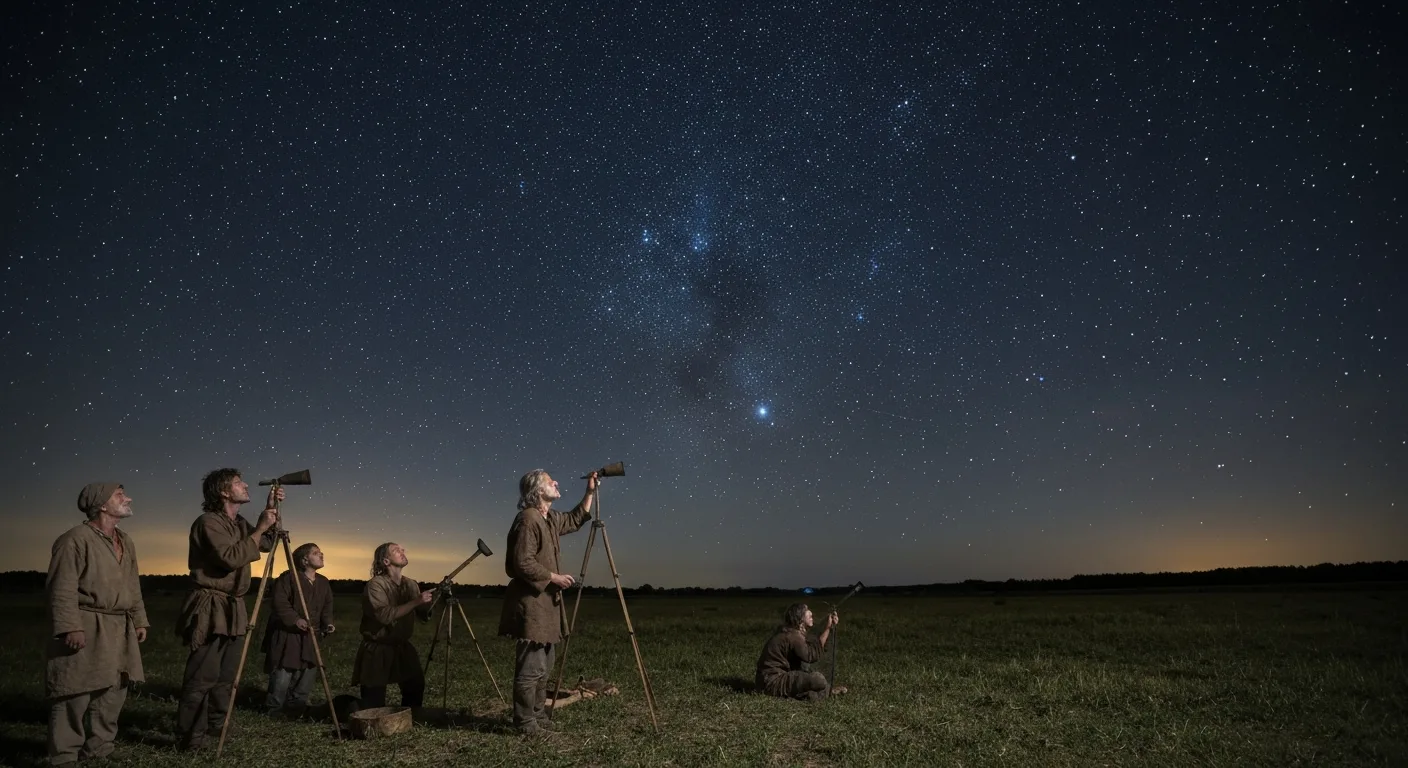
1600 BCE: Babylon's 21-Year Venus Chart for King Ammisaduqa
Ancient Babylonians meticulously tracked Venus for 21 years, starting 1600 BCE, using the Venus Tablet of Ammisaduqa to predict omens for their king.
Observing the Unseen: Ancient Eyes on the Cosmos
Imagine a Babylonian priest, 1600 BCE, hunched over clay. He’s not just scribbling; he’s charting Venus. For 21 years, this Venus Tablet of Ammisaduqa tracked the planet’s every move. Why? To predict omens for King Ammisaduqa, says Dr. John Steele of Brown University. It was a matter of life and death, or at least, kingly foresight.
For thousands of years, humans looked up with only their eyes. They searched for patterns, meaning, and guidance. The night sky was a giant clock. It set seasons, guided farming, and shaped religious rituals. People everywhere depended on the heavens to live their lives.
Ancient societies didn’t have our scientific method. But they found clever ways to watch and read the sky. Their observations helped us understand the universe. These early skywatchers made future astronomical revolutions possible.
Sumer to Stone: Charting the Sky
Around 3000 BCE, Sumerian priests in Mesopotamia started writing down where stars and planets were. They used ziggurats, huge stepped pyramids, to watch. These structures gave them clear views of the horizon. Their records linked planet movements to earthly events, creating early astrology.
Babylonian astronomers, who followed the Sumerians, made these methods much better. They invented a base-60 number system. This let them precisely calculate lunar and planetary cycles. By 700 BCE, they could predict eclipses with remarkable accuracy. Dr. David Brown’s research on Babylonian planetary astronomy confirms this.
Around 2500 BCE in ancient Egypt, priests saw a link between the star Sirius (Sopdet) and the Nile River’s yearly flood. Sirius’s first appearance before sunrise, called its heliacal rising, told them the flood was coming. This key prediction helped farmers get ready for planting. Pyramids, like the Great Pyramid of Giza, also point to celestial north.
Across Europe, huge stone structures were ancient observatories. Stonehenge, built in England around 3000 BCE, lines up perfectly with the summer solstice sunrise. At Nabta Playa in southern Egypt, a stone circle from 4500 BCE marked the summer solstice. These alignments showed an early understanding of the sun’s cycles. This widespread sky-watching created farming and ritual calendars for many different cultures.
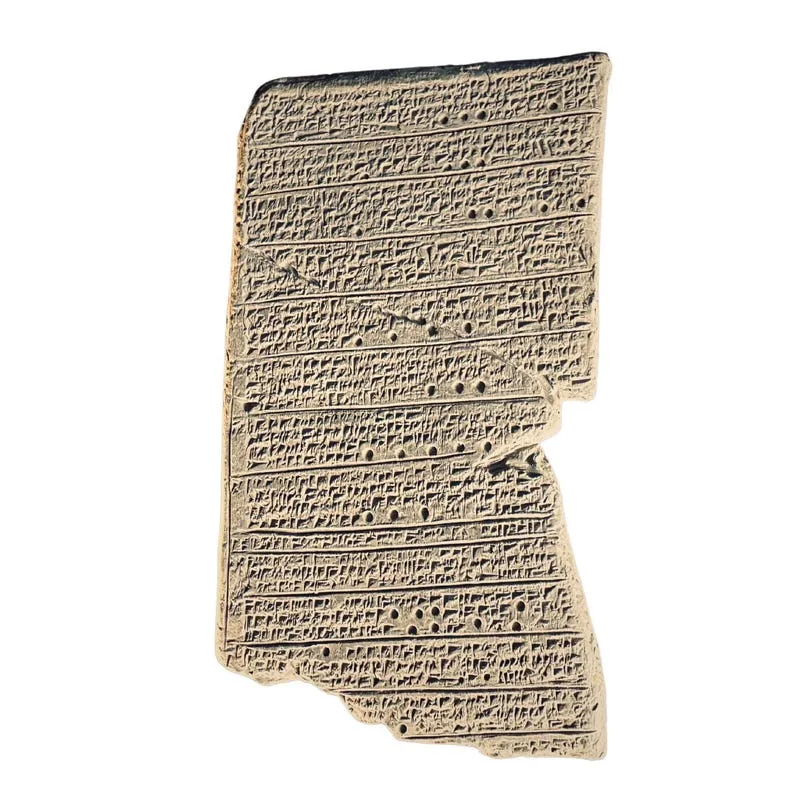
This ancient clay tablet, dating back to 1600 BCE, meticulously records the movements of Venus over 21 years. Babylonian priests used such detailed observations to predict omens and provide foresight for King Ammisaduqa. (Source: etsy.com)
China and the Maya: Predicting the Sky
In China, court astronomers were very important starting with the Shang Dynasty (c. 1600–1046 BCE). They wrote down supernovae, comets, and solar eclipses. People saw these events as omens reflecting the emperor’s divine right to rule. The Book of Han, for example, describes a supernova seen in 185 CE. This was likely the first recorded supernova.
Chinese astronomers like Gan De and Shi Shen, in the 4th century BCE, made huge star catalogs. Gan De recorded over 800 stars. He also saw Jupiter’s moons with his naked eye, though he thought they were small red stars. These exact records gave China a continuous astronomical history for thousands of years.
Meanwhile, the Maya in Mesoamerica created a complex system for watching the sky. Around 250 CE, they built observatories like El Caracol at Chichen Itza. These buildings lined up with Venus’s extreme positions. Venus was deeply important for Maya religion and calendars.
The Dresden Codex, one of the few surviving Maya books, holds detailed sky tables. It accurately predicted solar and lunar eclipses. It also tracked Venus’s 584-day cycle, says researcher Dr. Anthony Aveni. The Maya used these observations with their complex Long Count calendar. This let them chart time over huge periods. These advanced predictions made priestly classes in China and Maya lands very powerful.
Greek Thinkers and the Sky’s Machines
By the 6th century BCE, Greek thinkers started to look past omens. They wanted logical answers for what they saw in the sky. Thales of Miletus, around 585 BCE, reportedly predicted a solar eclipse. This changed how people thought about astronomy, making it more scientific. Anaxagoras, in the 5th century BCE, correctly said the Moon reflects the Sun’s light.
Eudoxus of Cnidus, around 370 BCE, suggested a system of 27 concentric spheres. These spheres carried the Sun, Moon, and planets around a stationary Earth. His model tried to explain the complex, uneven movements seen in the sky. It was an early geometric way to study astronomy.
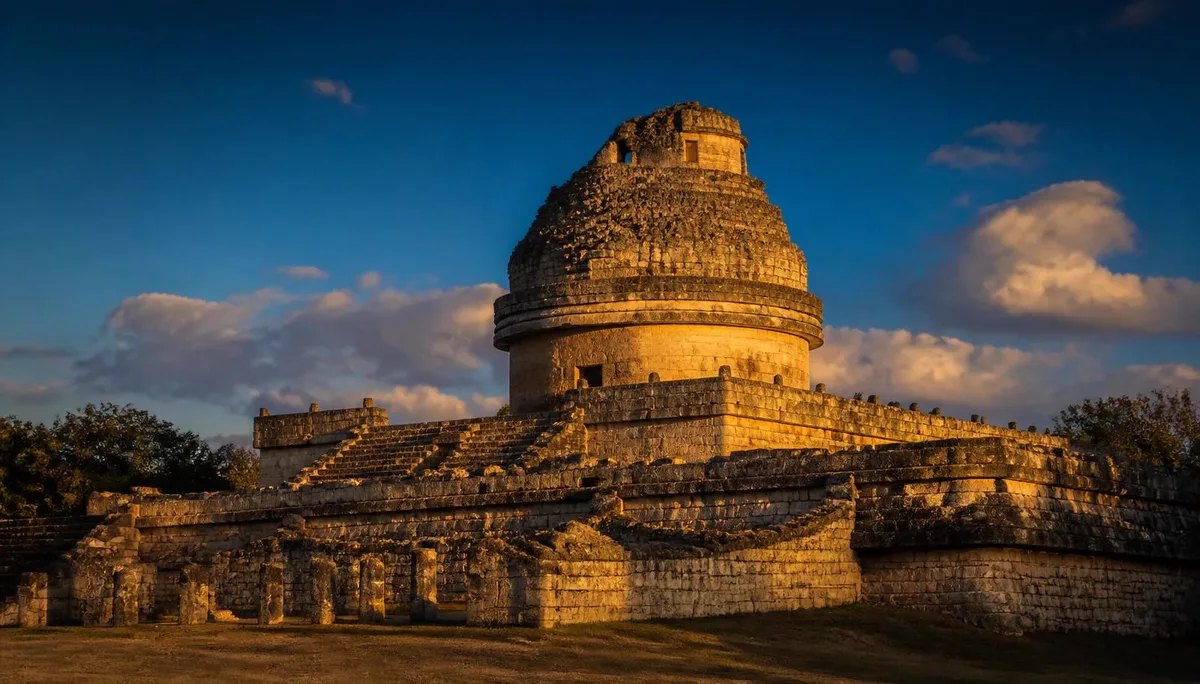
El Caracol, meaning 'The Snail' for its spiral staircase, is a Maya observatory at Chichen Itza. Its windows and alignments were meticulously designed to track the movements of celestial bodies, particularly Venus, which was crucial for Maya religion and calendrical systems. (Source: chichenitzaprivatetour.com)
Aristarchus of Samos, around 270 BCE, bravely proposed a heliocentric model. He said the Earth revolved around the Sun. He even guessed the relative sizes and distances of the Sun and Moon. His contemporaries mostly rejected his ideas. The geocentric view, with Earth at the center, remained the main belief.
Hipparchus of Nicaea, active around 150 BCE, was a master observer. He made a detailed star catalog of over 850 stars. He also found the precession of the equinoxes, a slow wobble in Earth’s axis. This discovery showed a sharp understanding of long-term sky changes. His work deeply influenced Ptolemy. Ptolemy’s Almagest, written around 150 CE, presented a geocentric model that ruled Western thought for 14 centuries. It gave a detailed, mathematical plan for predicting where planets would be.
Islam’s Golden Age: Refining Sky Observation
After the Roman Empire fell, Islamic scholars became the main keepers of sky knowledge. From the 8th to the 15th centuries, they saved and built on Greek and Indian texts. They translated works like Ptolemy’s Almagest into Arabic. This started a lively time of astronomical research.
Observatories became key for Islamic science. The Maragha Observatory in Persia, founded in 1259 by Nasir al-Din al-Tusi, was a big research hub. It had large quadrants and armillary spheres for exact naked-eye measurements. Al-Tusi developed the “Tusi-couple,” a math tool. It could make straight motion from two spinning circles. This helped fix issues in Ptolemy’s model without ditching the Earth-centered view.
Astronomers like Al-Battani (c. 858–929 CE) greatly improved calculations. He found the solar year with more accuracy than Ptolemy. He also refined the values for the precession of the equinoxes. Al-Biruni (973–1048 CE) measured the Earth’s circumference with impressive precision. He used a geometric method that involved mountain heights.
Ibn al-Haytham (c. 965–1040 CE), known as Alhazen, made big discoveries in optics. His Book of Optics explained how we see and what light does. His theories on lenses were essential. They directly led to the telescope’s invention centuries later. This era of careful watching and new math created key foundations. It connected ancient astronomy to the coming scientific revolution.
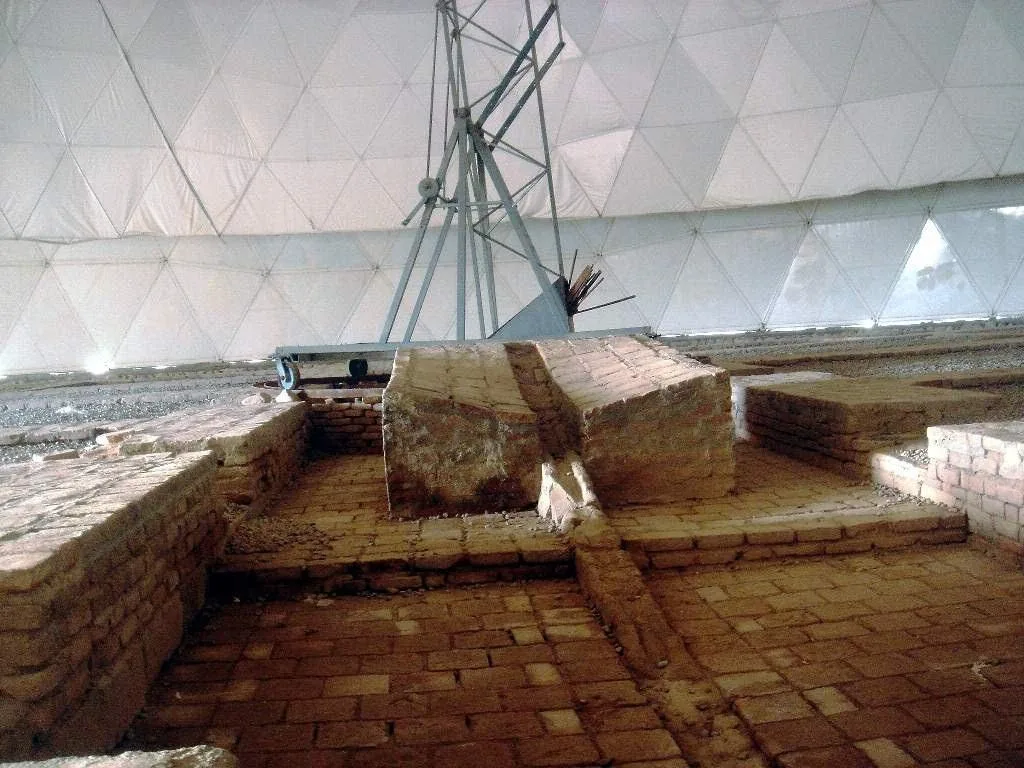
The Maragha Observatory, founded in 1259 in Persia, was a pivotal research hub during the Islamic Golden Age. It housed massive instruments like quadrants and armillary spheres, enabling precise naked-eye astronomical measurements that advanced sky observation for centuries. (Source: tripadvisor.com)
The Last Great Naked-Eye Watchers
The peak of naked-eye astronomy came with Tycho Brahe (1546–1601). He worked in the late 16th century, just before telescopes became common. Brahe was the last great observer without optical help. King Frederick II of Denmark gave him the island of Hven. There, Brahe built Uraniborg, a top-notch observatory.
Brahe designed and built huge, very accurate instruments. These included giant quadrants and armillary spheres. He carefully recorded star and planet positions for over 20 years. His observations of a supernova in 1572 challenged the old belief that the heavens never changed. He also accurately measured a great comet’s path in 1577. This showed it moved through the planetary spheres, not Earth’s air.
His assistant, Johannes Kepler, got all of Brahe’s data. Kepler used this data to create his three laws of planetary motion. These laws described elliptical orbits. They shattered the old idea of perfect circular movement. Brahe’s precision, achieved without a telescope, gave the factual basis for Kepler’s big theoretical discoveries.
Galileo Galilei pointed his first telescope at the sky in 1609. He quickly found Jupiter’s moons, Venus’s phases, and mountains on the Moon. These observations instantly confirmed the heliocentric model. They also showed a universe far more complex and active than anyone had imagined. The era of naked-eye astronomy ended for good. Still, centuries of patient watching, careful record-keeping, and deep thought had prepared humanity. Their work set us up to grasp the telescope’s revolutionary insights.
FAQ
What was the most important early sky discovery? The biggest early discovery was that sky events happen in cycles. Watching the Sun move each day and the Moon’s phases each month let people create calendars and track time.
How did ancient people use the sky to track time? They watched the Sun’s position for days and seasons. The Moon’s phases marked months. Certain stars or constellations rising before dawn (heliacal rising) told them specific seasons or farming times were coming.
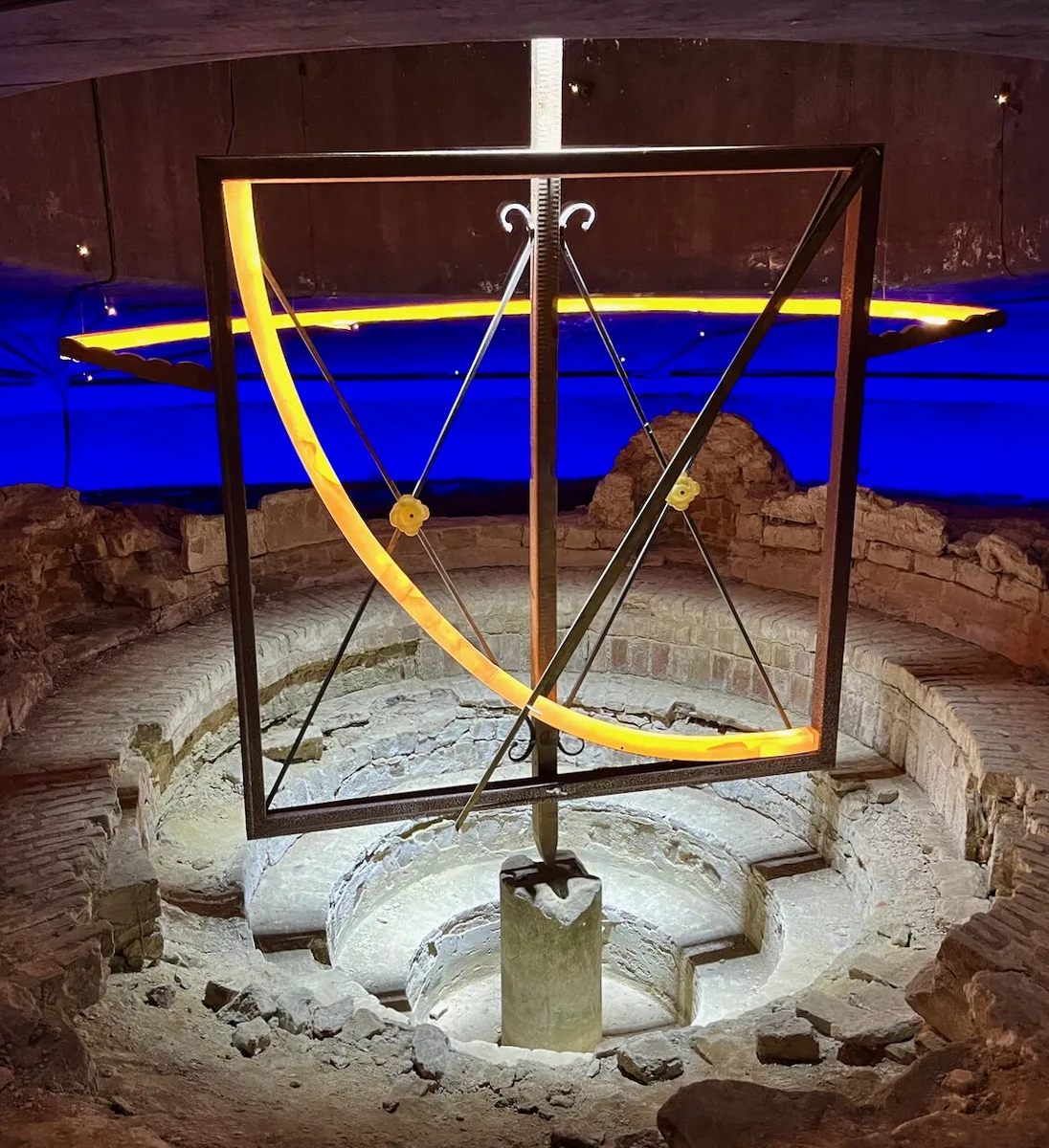
Uraniborg, built by Tycho Brahe on the island of Hven, was a groundbreaking 16th-century observatory and research institute. It housed Brahe's massive, custom-built instruments, enabling the most precise naked-eye astronomical observations ever made. (Source: tripadvisor.com)
Did ancient sky-watchers think Earth was flat? No. Many ancient cultures, including the Greeks, knew Earth was a sphere. Eratosthenes, around 240 BCE, famously calculated Earth’s circumference. He used shadows and geometry, clearly understanding a curved Earth.
Why did ancient people build observatories? Ancient observatories had many uses. They were places for exact sky measurements. They helped create calendars. They also supported religious or astrological practices by tracking omens.
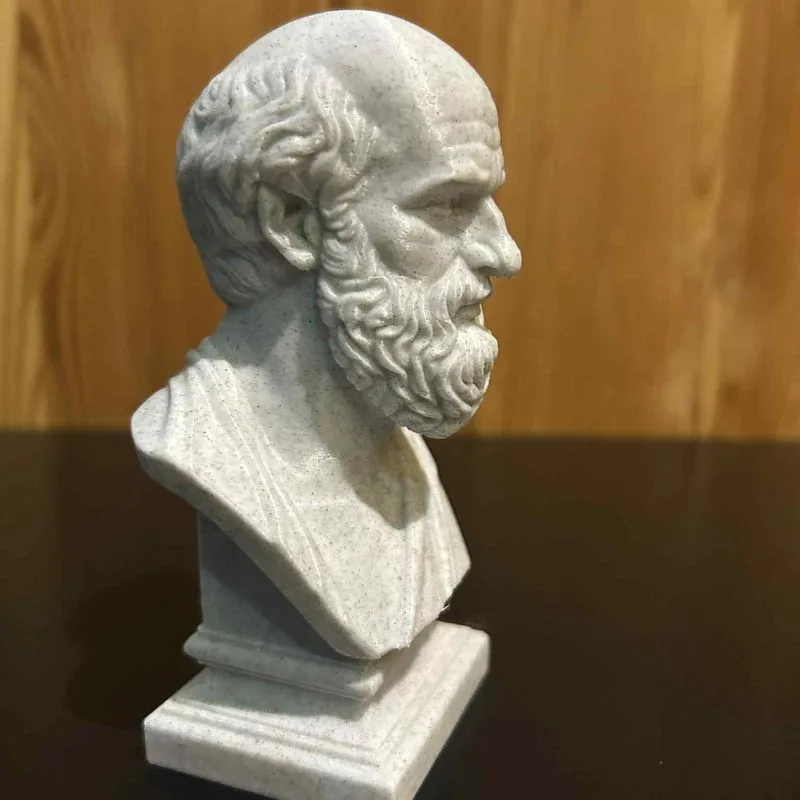
Eratosthenes, a Greek polymath from the 3rd century BCE, famously calculated the Earth's circumference with remarkable accuracy using only shadows and geometry, demonstrating ancient knowledge of a spherical Earth. (Source: printables.com)
You might also like:
👉 Unearthing History: Famous Archaeological Discoveries & Their Impact
👉 Lost Worlds: Unraveling the Most Mysterious Civilizations
👉 Unexplained Mysteries of Science: Cosmos, Quantum & Beyond