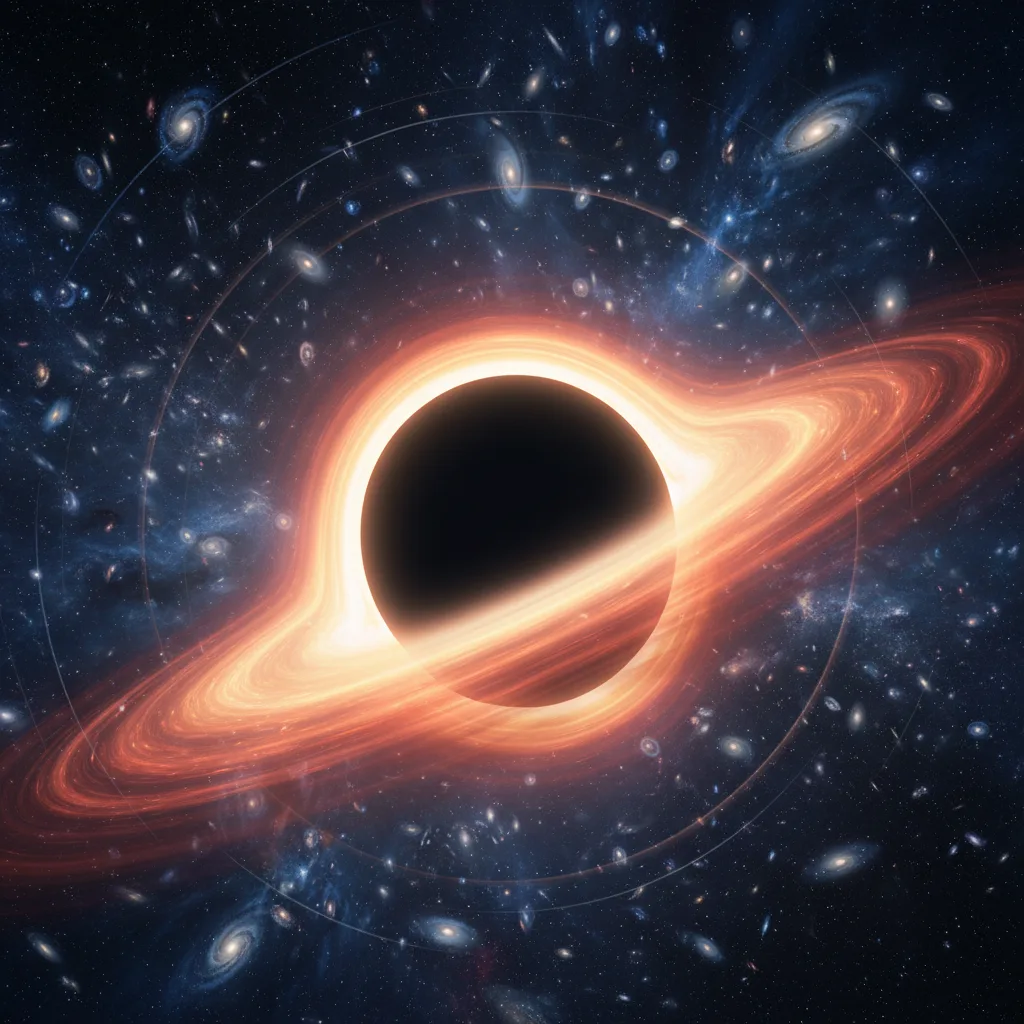
Black Holes Explained: Light Trapped Beyond the Event Horizon
Journey into black holes, cosmic phenomena where light cannot escape. Learn how the Event Horizon Telescope captured the first image of M87*, revealing the ultimate light traps.
Black Holes: Where Light Itself is Trapped
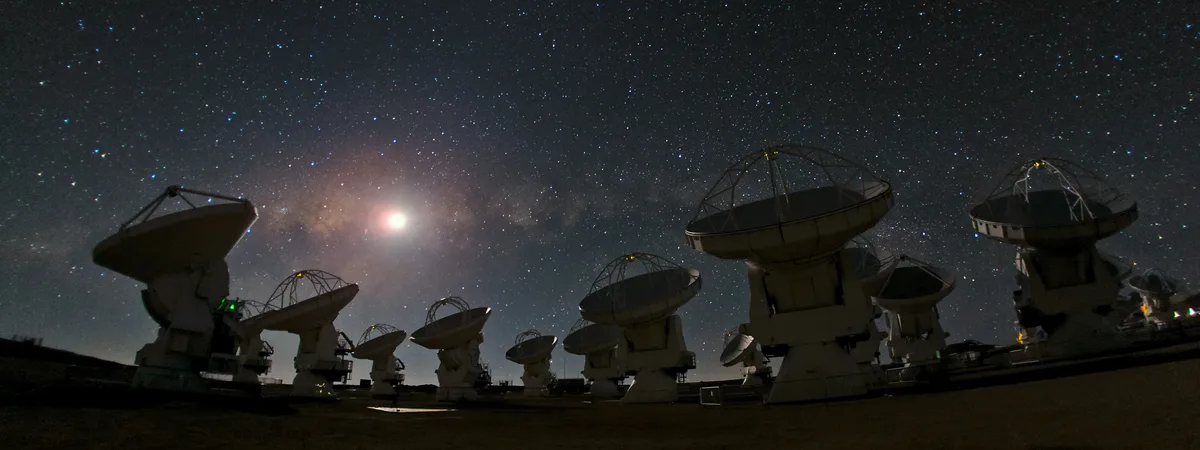 In 2019, humanity achieved the impossible: capturing the first direct image of a black hole, M87*. This monumental feat, akin to photographing something so distant and dense it consumes light itself, required an unprecedented scientific and computational effort. The Event Horizon Telescope (EHT) synthesized an astounding **5 petabytes of data** from a global network of radio telescopes—a volume of information equivalent to every book ever written, thousands of times over, or 20,000 years of HD video. Such an immense undertaking prompts the question: what cosmic phenomenon necessitates this staggering computational power simply to be glimpsed?
The phenomenon in question is a black hole. These cosmic entities are regions where gravity is so profound that nothing—not even light, the fastest entity known—can escape once it crosses a critical boundary. What began as a theoretical construct has evolved into a tangible reality, compelling us to re-evaluate the fundamental laws of physics. For those accustomed to market dynamics, the sheer scale of energy, mass, and information involved is genuinely astonishing. We are discussing forces that dwarf the global economy and data capacities that render even the largest cloud servers insignificant.
The Schwarzschild Radius: A Point of No Return
 The conceptual journey of black holes began not with observation, but with theoretical physics. Our initial insights into these objects emerged from Albert Einstein's general theory of relativity. Merely months after Einstein's publication, German physicist **Karl Schwarzschild** calculated in **1916** the precise radius at which an object's gravity would become so intense that escape would be impossible—a boundary now known as the Schwarzschild radius. For our Sun, this radius is a mere **3 kilometers**. To grasp the implications, imagine the Sun, with its 1.4 million-kilometer diameter, compressed into a sphere smaller than most cities. The resulting density defies comprehension.
This type of gravitational collapse is not merely a theoretical exercise; it represents the dramatic end-stage of massive stars. When a star approximately eight times the mass of our Sun exhausts its nuclear fuel, its core can no longer withstand its own immense gravitational force. It rapidly implodes, frequently initiating a supernova explosion that expels its outer layers into space. If the remnant core possesses sufficient mass, it transforms into a black hole.

“The universe is remarkably efficient at recycling matter,” observes Dr. Priyamvada Natarajan, a theoretical astrophysicist at Yale University, renowned for her research on black hole formation and growth. She emphasizes that these stellar collapses are not solely destructive; they are the genesis events for these powerful gravitational wells. Their prevalence is significant; our Milky Way galaxy alone may harbor over 100 million stellar mass black holes, as indicated by a 2022 study in The Astrophysical Journal by Dr. James Bullock and his team at the University of California, Irvine. This amounts to roughly one black hole for every few hundred stars—a pervasive, unseen presence throughout our cosmic neighborhood, each marking a star’s dense, silent demise.
The Event Horizon: A Point of No Return
The concept most commonly associated with a black hole is its event horizon. This is not a tangible surface, but a boundary in spacetime. Once crossed, there is no return; the escape velocity at this point equals the speed of light, meaning even light itself is irrevocably drawn inward. It functions as a cosmic one-way membrane, a point of no informational egress.
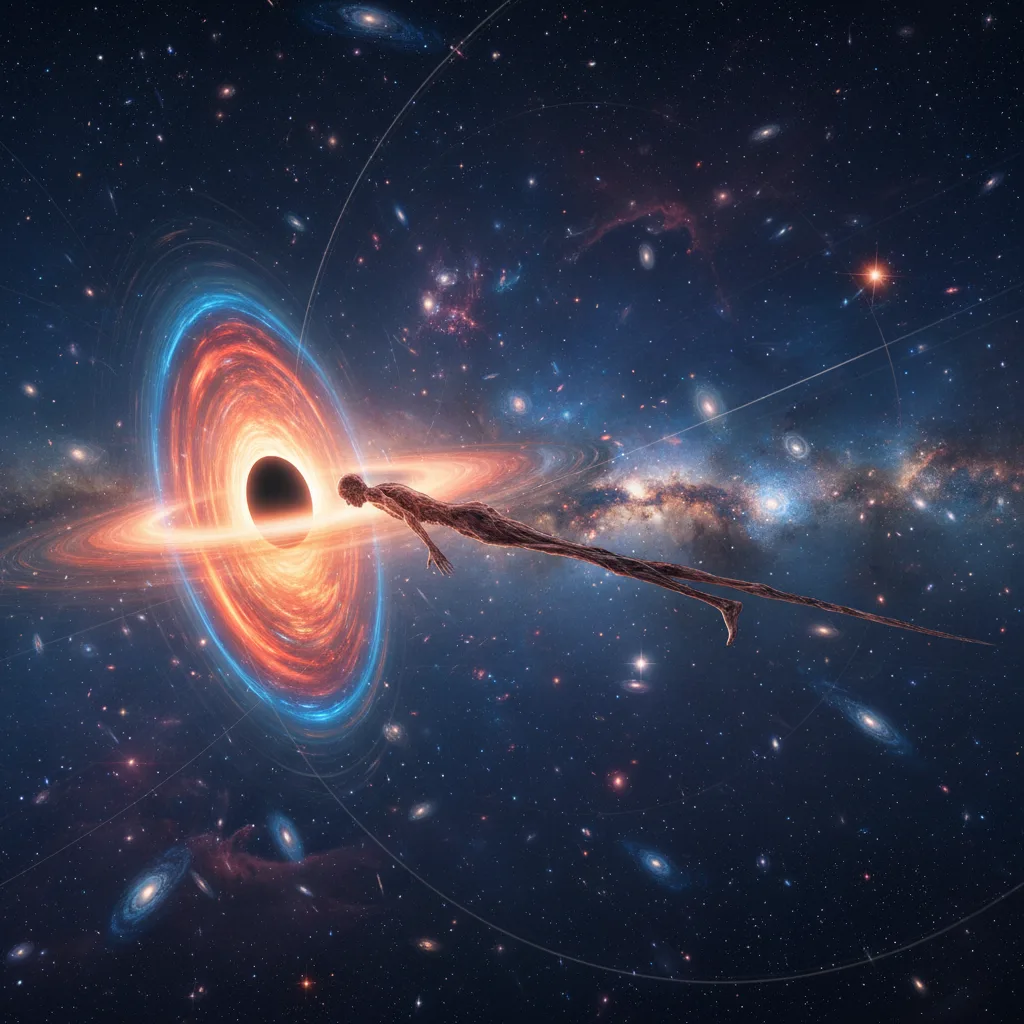
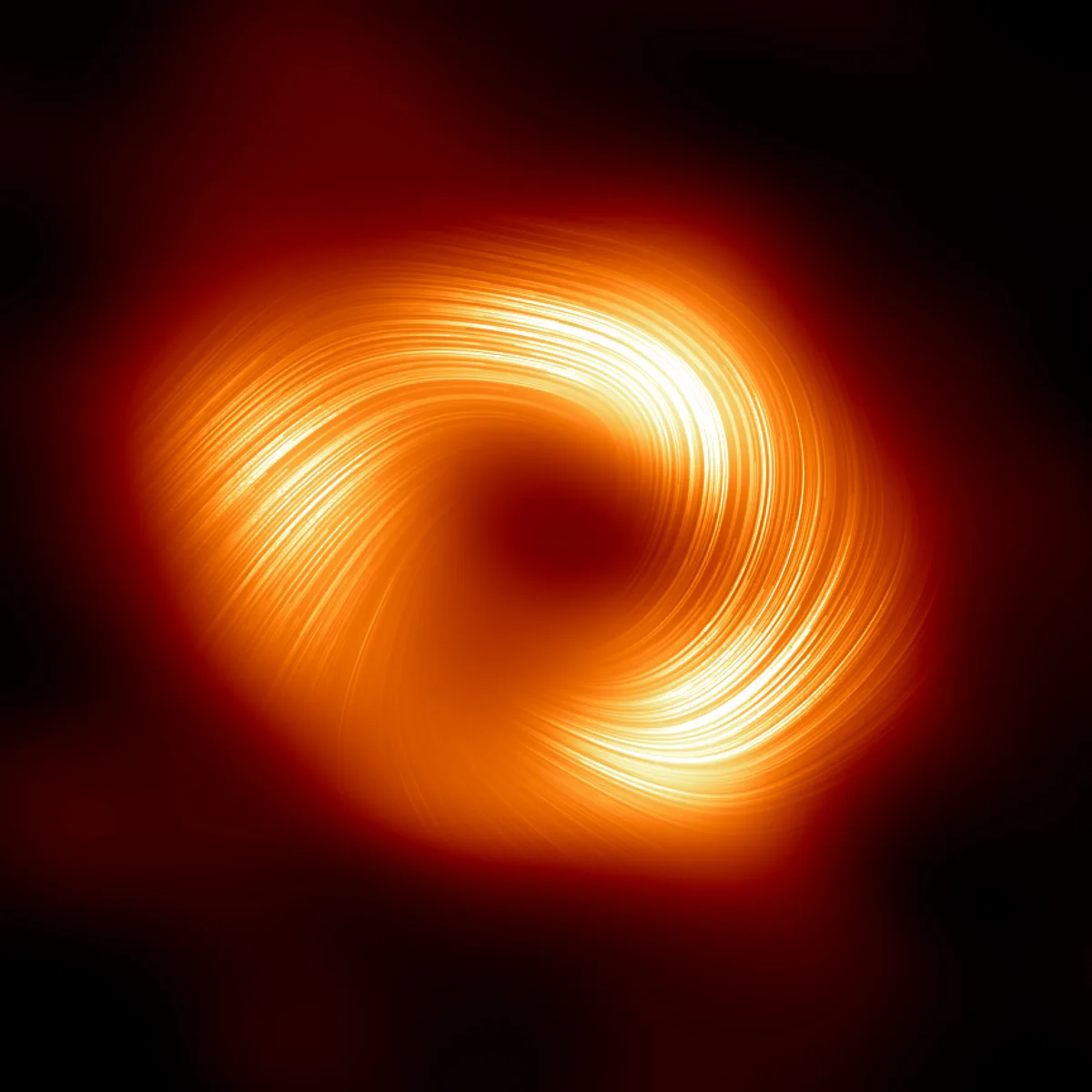 Consider Sagittarius A* (Sgr A*), the supermassive black hole residing at the heart of our Milky Way. Its event horizon spans approximately **25 million kilometers**, roughly the diameter of Mercury's orbit around the Sun. Within this comparatively small volume, it contains an astonishing **4.3 million times our Sun's mass**. The gravitational gradients near this boundary are extreme. If one were to fall feet-first into a smaller, stellar mass black hole, the differential gravitational pull on the feet compared to the head would be so immense as to stretch the body into an elongated form—a phenomenon vividly termed **spaghettification**. For supermassive black holes, this tidal stretching occurs less acutely *before* crossing the event horizon, making the initial descent appear smoother, though the ultimate outcome remains unchanged.
“The event horizon isn’t a ‘thing’ you can touch,” explains Dr. Kip Thorne, a Nobel laureate and theoretical physicist at Caltech, whose work has profoundly advanced our understanding of black holes and gravitational waves. “It’s a boundary of causality. Once you cross it, all paths lead inward, toward the singularity.” This singularity, a point of infinite density at the black hole’s core where spacetime warps infinitely, persists as one of physics’ most profound puzzles. It represents the limit where the laws of general relativity, our most robust theory of gravity, cease to apply. A comprehensive theory of quantum gravity is currently lacking to explain phenomena under such extreme conditions.
A Hierarchy of Darkness: From Stellar to Supermassive
Black holes are not monolithic entities; they exhibit a diverse range of sizes, each type forming through distinct processes and fulfilling varied cosmic roles. They are generally categorized into three primary types, encompassing vast differences in mass.
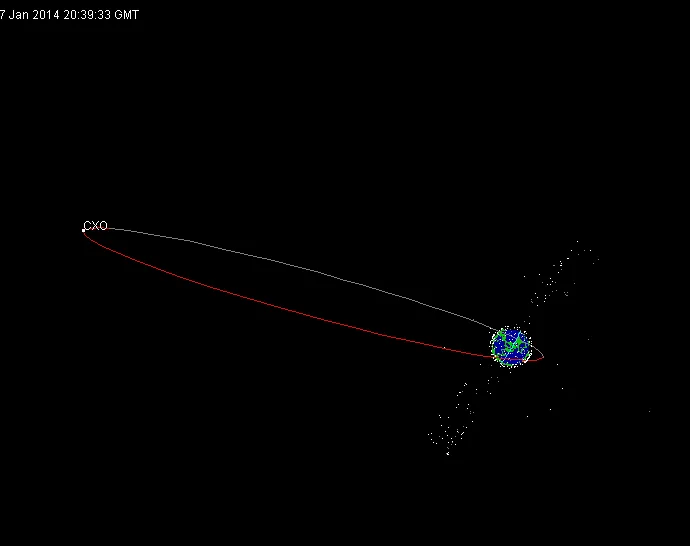 The most prevalent are **stellar mass black holes**. These originate from the gravitational collapse of individual massive stars, as previously discussed. Their masses typically range from **3 to several tens of solar masses**. NASA's Chandra X-ray Observatory, for example, has identified numerous such objects by detecting X-rays emitted from superheated material spiraling into them. Cygnus X-1 serves as a classic illustration, estimated at approximately **21 times the mass of our Sun**, orbiting a blue supergiant star roughly **6,000 light-years** distant. Its discovery in the 1970s provided definitive evidence for the existence of stellar black holes.
Next are supermassive black holes (SMBHs), situated at the core of nearly every large galaxy, including our own. These colossal objects can span millions to billions of solar masses. Sgr A*, at 4.3 million solar masses, is relatively modest compared to some of its counterparts. The SMBH in galaxy M87, for instance (the subject of the initial EHT image), weighs in at an astounding 6.5 billion solar masses—approximately 1,500 times heavier than Sgr A*. The formation mechanisms for these immense entities remain a significant area of research, but prevailing theories propose their growth occurs through the accretion of vast quantities of gas and dust from their environment, and via mergers with other black holes. This process of cosmic accretion profoundly influences galactic evolution.
An even more elusive category, intermediate mass black holes (IMBHs), occupies the range between stellar and supermassive types, with masses from hundreds to hundreds of thousands of solar masses. They are challenging to definitively confirm but are hypothesized to represent a crucial evolutionary link in black hole development. “Finding clear evidence for IMBHs is like searching for a specific needle in a very large haystack,” says Dr. Ann Hornschemeier, an astrophysicist at NASA’s Goddard Space Flight Center. “They might be the building blocks for supermassive black holes, forming in dense star clusters. It’s an area where new observational techniques are continuously being developed.” Recent discoveries, such as gravitational waves from merging black holes totaling hundreds of solar masses, are beginning to provide crucial insights into this missing piece of the cosmic puzzle.
Seeing the Unseen: The Era of Direct Observation
How does one actually observe something that, by its very nature, is invisible? This question posed a significant challenge to scientists for decades. While black holes do not emit light, their immense gravity profoundly influences their surroundings. Matter spiraling into a black hole heats to millions of degrees, emitting powerful X-rays and radio waves that are detectable. Additionally, jets of particles, accelerated to near light-speed, can erupt from the poles of actively accreting black holes, creating cosmic displays visible across vast distances.
A pivotal development came with the Event Horizon Telescope (EHT). By synchronizing radio telescopes across the globe—from Hawaii to Chile, Spain to Antarctica—the EHT effectively created a single, Earth-sized virtual telescope. This configuration achieved unprecedented resolution, comparable to discerning an orange on the Moon.
On April 10, 2019, the EHT collaboration unveiled humanity’s first direct image of a black hole’s shadow—specifically, that of M87* at the center of galaxy M87. The image depicted a bright ring of emission encircling a dark central region: the black hole’s shadow, defined by its event horizon. This observation, meticulously documented in six papers published in The Astrophysical Journal Letters, provided irrefutable visual evidence of black holes and enabled scientists to test Einstein’s theory of general relativity under the most extreme gravitational conditions. A subsequent EHT image, released in May 2022, finally revealed the shadow of Sgr A*, affirming that our galaxy’s central black hole also conforms precisely to Einstein’s predictions.
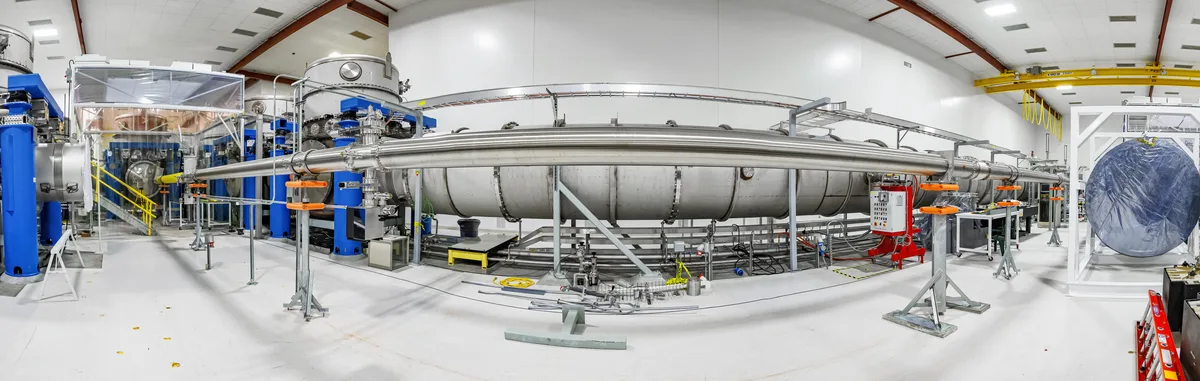 Beyond direct imaging, a transformative observational tool has emerged: **gravitational wave astronomy**. In **September 2015**, the Laser Interferometer Gravitational-Wave Observatory (LIGO) marked a historic milestone by detecting ripples in spacetime. These were generated by the merger of two black holes, each approximately 30 solar masses, occurring about **1.3 billion light-years** distant. This event, designated GW150914, constituted the first direct detection of gravitational waves, a phenomenon Einstein had predicted a century prior. Subsequently, LIGO and its European collaborator, Virgo, have identified dozens of black hole mergers, providing a novel "audio channel" to probe the universe's most cataclysmic events. These detections confirm the existence of binary black hole systems and offer profound insights into their populations and evolutionary pathways.
The Next Frontier: Probing the Information Paradox and Quantum Gravity
Our understanding of black holes is still in its nascent stages. The forthcoming generation of telescopes and theoretical frameworks promises to advance our knowledge significantly, delving into some of physics’ most profound questions. A primary enigma is the reconciliation of general relativity and quantum mechanics, particularly concerning the information paradox. Stephen Hawking famously proposed that black holes emit “Hawking radiation” and eventually evaporate, seemingly destroying any information that entered them. However, this contradicts a fundamental tenet of quantum mechanics: that information can never be truly lost.
New observatories are indeed on the horizon. The next-generation Event Horizon Telescope (ngEHT) aims to drastically expand its network, enhancing sensitivity and resolution tenfold. This will enable the creation of more detailed “movies” of black hole accretion disks and shadows, providing crucial insights into matter’s behavior near the event horizon. Concurrently, future space-based gravitational wave observatories, such as the Laser Interferometer Space Antenna (LISA)—a joint ESA and NASA project slated for the mid-2030s—will detect lower-frequency gravitational waves. This capability will permit the observation of supermassive black hole mergers, offering a window into galactic growth and the formation of the early universe.
“We’re entering an era where black holes are no longer merely abstract ideas; they are tangible laboratories for scrutinizing the fundamental nature of spacetime,” says Dr. Feryal Özel, a theoretical astrophysicist at the University of Arizona and a key member of the EHT collaboration. “The data we are collecting, and what we will collect, represents our most promising avenue for comprehending gravity at its most extreme, and perhaps even glimpsing that elusive theory of quantum gravity.” This endeavor to understand these cosmic enigmas extends beyond mere scientific curiosity. It is about uncovering fundamental truths about the universe, truths that could profoundly alter our perception of reality itself. The billions of dollars and decades of dedicated effort invested in these colossal projects underscore the immense knowledge these dark, mysterious objects are poised to unveil.
Frequently Asked Questions: Cosmic Phenomena Where Light Cannot Escape
Q: What is a black hole? A: A black hole is a region of spacetime where gravity is so intense that nothing, not even light, can escape. It forms when a vast amount of matter is compressed into an exceptionally small volume.
Q: How do black holes form? A: Stellar mass black holes primarily form from the gravitational collapse of very massive stars at the end of their life cycles. Supermassive black holes, located at the centers of galaxies, grow by accreting gas and dust and through mergers with other black holes.
Q: Can we actually see black holes? A: No, black holes cannot be directly observed because light cannot escape their gravitational pull. However, they are detected indirectly by observing their effects on surrounding matter, such as the emission of X-rays from superheated gas spiraling inward. Gravitational waves produced during black hole mergers also provide a means of detection. The Event Horizon Telescope has further provided direct images of the “shadow” cast by their event horizons.
Q: Are black holes a danger to Earth? A: No, there are no known black holes in close enough proximity to Earth to pose a threat. The supermassive black hole at the center of our Milky Way, Sgr A*, is approximately 26,000 light-years distant, and its gravitational influence is confined to the galactic core.
You might also like:
👉 Unexplained Mysteries of Science: Cosmos, Quantum & Beyond