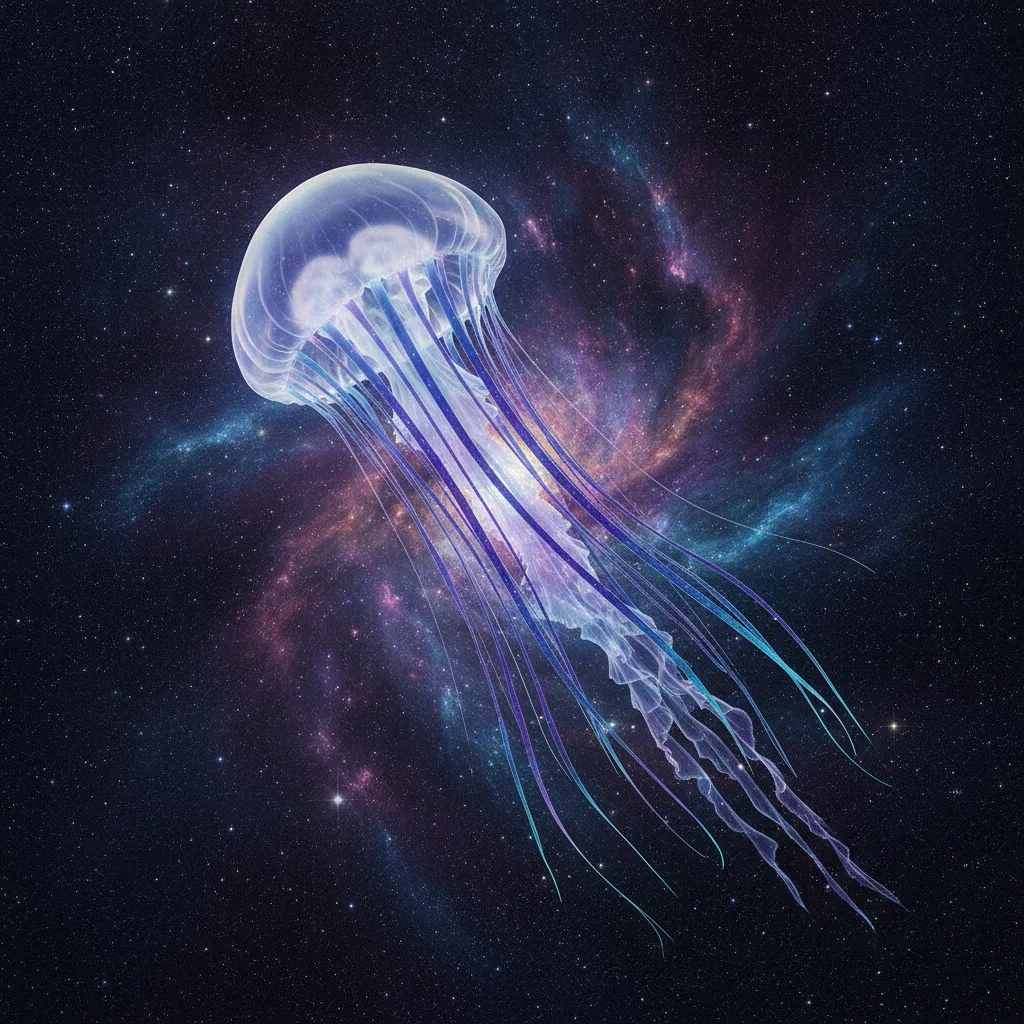
Cosmic Jellyfish: Centuries of Sky Flashes Dismissed by Science
Strange, colorful lights shaped like massive jellyfish or carrots have been reported for centuries above thunderstorms. Scientists long dismissed them.
Cosmic jellyfish: the sky’s secret discharges
For centuries, people reported strange flashes high above thunderstorms. They described fleeting, colorful lights, often shaped like massive jellyfish or carrots. Scientists largely dismissed these accounts as folklore, optical illusions, or even outright fabrications. The sheer volume of these historical sightings across different cultures felt too consistent to ignore. The official stance just didn’t align with the persistent whispers.
These mysterious phenomena have a scientific name: sprites. They aren’t regular lightning. Instead, they’re a unique electrical discharge far above thunderclouds. Sprites belong to a broader category called Transient Luminous Events, or TLEs. They appear in the mesosphere and lower ionosphere, 50 to 90 kilometers above Earth’s surface. That’s well above commercial aircraft and typical storm clouds.
Scientists were skeptical for a long time. Researchers lacked clear, repeatable evidence. The events were too brief and too high to study easily. For decades, the scientific community hesitated to accept their existence. Many thought these events must be extremely rare, but researchers were surprised to learn how common they actually are.
First encounters: the elusive glow
On June 26, 1989, a University of Minnesota team made an accidental discovery. They were testing a new low-light video camera for a rocket launch. Their target was 300 miles away, focused on a patch of clear sky. Instead, they captured an upward flash of light, stretching high above a distant thunderstorm. Dr. John R. Winkler, a team member, later described the footage. It showed two luminous columns extending from the cloud tops.
This was the first photographic evidence of what we now call a sprite. Many scientists reacted with disbelief. Some suggested it was just a reflection or a camera artifact. Others thought the team had simply captured an unusual lightning bolt. The idea of electrical activity reaching so high into the atmosphere seemed too fantastical.
Professor Davis Sentman of the University of Alaska Fairbanks was one of the few who took early observations seriously. He dedicated his career to studying these events. Sentman coined the term “sprite” in the early 1990s. This name fit their elusive, fairy-like quality. His research helped prove the phenomenon was real.
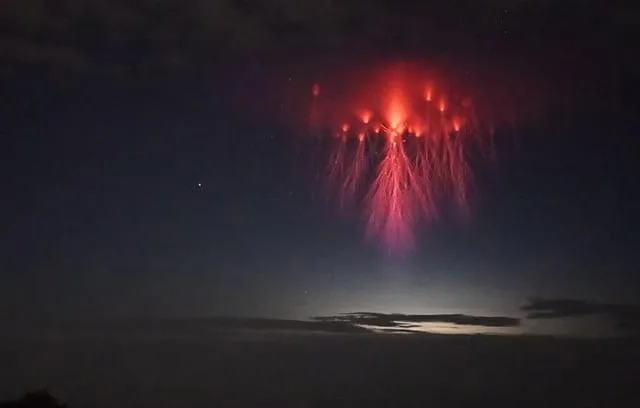
Sprites are a type of Transient Luminous Event (TLE) that occur high above thunderstorms in the mesosphere, often appearing as fleeting, colorful flashes shaped like jellyfish or carrots. They were first photographically documented in 1989 by a University of Minnesota team, proving their existence after centuries of anecdotal reports. (Source: reddit.com)
Further observations confirmed sprites were real. Scientists set up dedicated observation sites. They used specialized cameras and equipment. These efforts proved sprites weren’t isolated incidents. They were a regular feature of Earth’s upper atmosphere.
How sprites come to life
Sprites form in mere milliseconds, appearing and disappearing almost instantly. How they form is complex. It involves powerful positive cloud-to-ground lightning strikes (CG+) in a thunderstorm below. These lightning bolts are exceptionally strong. They transfer a significant net positive charge from the cloud to the ground. This leaves the upper part of the thundercloud with an enormous negative charge.
This huge charge imbalance creates an intense electric field. The field extends upwards into the low-pressure air of the mesosphere. It becomes strong enough to break down the air molecules. This process, known as dielectric breakdown, is similar to what happens inside a fluorescent light tube. Air molecules, primarily nitrogen, get excited by the electrical discharge. They then emit light, making the sprite visible.
The characteristic red color of sprites comes mostly from excited nitrogen molecules. These molecules emit light in the red and orange spectrum. Shapes vary greatly. Scientists describe them as “jellyfish sprites,” with a bright core and dangling tendrils. Other common forms include “carrot sprites,” which are more column-like. There are also simpler “column sprites.” These shapes arise from how electrical streamers move through the thin air.
A typical sprite event lasts only tens of milliseconds. This extreme brevity makes them challenging to observe. Researchers like Dr. Hans Stenbaek-Nielsen, also from the University of Alaska Fairbanks, use high-speed cameras. These cameras capture hundreds of frames per second. This allows scientists to analyze their rapid evolution. Space-based instruments also provide important data. The Imager of Sprites and Upper Atmospheric Lightning (ISUAL) is aboard Taiwan’s FORMOSAT-2 satellite. It has recorded thousands of sprites from orbit.
Beyond sprites: other sky events
Thousands of TLEs occur daily worldwide. Most go unnoticed by the public. Sprites are just one type among several fascinating high-altitude electrical events. This entire category challenges our traditional understanding of lightning, showing a much more dynamic and electrically active upper atmosphere.
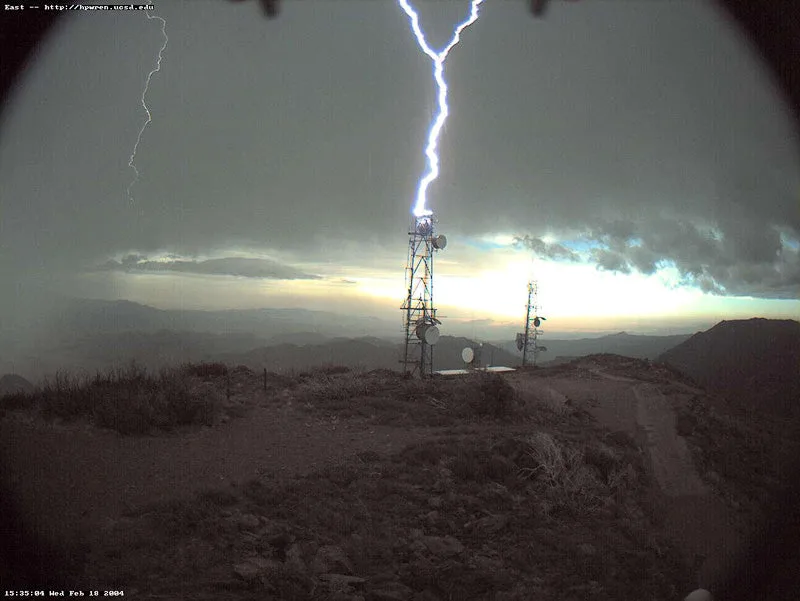
A powerful positive cloud-to-ground lightning strike (CG+) is the crucial first step in the formation of sprites. These exceptionally strong bolts transfer a significant net positive charge from the cloud to the ground, setting the stage for the upper atmospheric phenomenon. (Source: acurite.com)
Blue jets are another type of TLE. They’re cone-shaped electrical discharges. Blue jets launch upwards from the top of active thunderclouds. They extend into the stratosphere, typically reaching 40 to 50 kilometers high. Their blue color comes from excited nitrogen molecules at these lower altitudes. This is a different excitation state than the red of sprites. Blue jets are faster and appear more like conventional lightning.
Elves represent yet another distinct TLE. They’re huge, rapidly expanding rings of light. Elves form even higher, in the ionosphere, up to 100 kilometers. They’re triggered by the electromagnetic pulse (EMP) generated by very powerful lightning strikes. This EMP rapidly heats and ionizes a disc-shaped region of the ionosphere. The light from an Elve can expand to hundreds of kilometers in diameter in less than a millisecond.
Then there are gigantic jets. These are the rarest and most powerful TLEs. Gigantic jets connect the top of a thundercloud directly to the ionosphere. They can extend up to 90 kilometers high, similar to sprites. They’re much larger and brighter, though. They bridge the gap between thunderstorms and the very edge of space. Dr. Steven Cummer from Duke University studies these events extensively. His work helps measure their properties and frequency.
TLEs don’t spread uniformly across the globe. They tend to concentrate over major storm systems. These systems are especially active over landmasses during summer months. For example, the Great Plains of the United States and parts of South America are sprite hotspots. Observing them is hard. They’re fleeting, and often occur above severe weather.
The unseen electric sky: why it matters
Space weather research increasingly considers TLEs as significant phenomena. They play a role in the complex electrical interactions between Earth’s surface and space. Scientists are still uncovering their full impact, but initial findings point to several important implications.
One concern is their potential impact on radio communications. TLEs create transient disturbances in the ionosphere. The ionosphere reflects radio waves. These disturbances can interfere with long-range radio signals. This affects everything from military communications to GPS systems. Researchers are studying how frequently and intensely these disruptions occur.
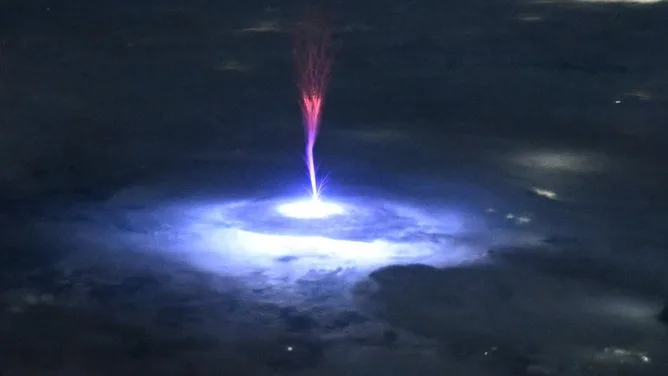
Gigantic jets are the rarest and most powerful type of Transient Luminous Event (TLE), connecting the top of a thundercloud directly to the ionosphere, extending up to 90 kilometers high. These spectacular discharges are much larger and brighter than sprites, bridging the gap between thunderstorms and the very edge of space. (Source: foxweather.com)
TLEs also influence atmospheric chemistry. The intense electrical discharges can produce nitrogen oxides (NOx) in the upper atmosphere. Nitrogen oxides are reactive gases. They play a role in ozone depletion. Understanding the exact chemical pathways and quantities produced by TLEs is an ongoing research effort. This could refine our models of atmospheric composition.
Ultimately, TLEs are a key part of Earth’s global electric circuit. This circuit involves the continuous flow of electricity between the ground, the atmosphere, and the ionosphere. Sprites, jets, and elves represent upward branches of this circuit. They help transfer charge from the lower atmosphere to the upper atmosphere. This maintains our planet’s overall electrical balance.
Future research will likely involve more sophisticated space-based observation platforms. These could include dedicated satellites or instruments on the International Space Station. Citizen scientists are also making valuable contributions. Amateur astronomers with specialized equipment are capturing new sprite data. These new insights will help us map this unseen electrical environment more completely. The “cosmic jellyfish” and their relatives remind us that Earth’s atmosphere holds many secrets. We’re only just beginning to understand its dynamic electrical environment.
FAQ
What are cosmic jellyfish? “Cosmic jellyfish” is a descriptive term for sprites. Sprites are large, brief electrical discharges that occur high above thunderstorms. They appear red and often have a jellyfish-like shape.
Are sprites dangerous? No, sprites aren’t dangerous to people on Earth. They occur 50 to 90 kilometers up, far above commercial aircraft. They’re also incredibly brief.
How often do sprites occur? Sprites and other Transient Luminous Events (TLEs) occur thousands of times daily across the globe. They’re hard to see from the ground because they’re so brief and happen above active storm clouds.
Can I see a sprite? It’s very difficult but possible to see sprites with the naked eye under specific conditions. You need a powerful, distant thunderstorm, clear dark skies, and a low horizon. Many sightings are now made by amateur astronomers using sensitive cameras.
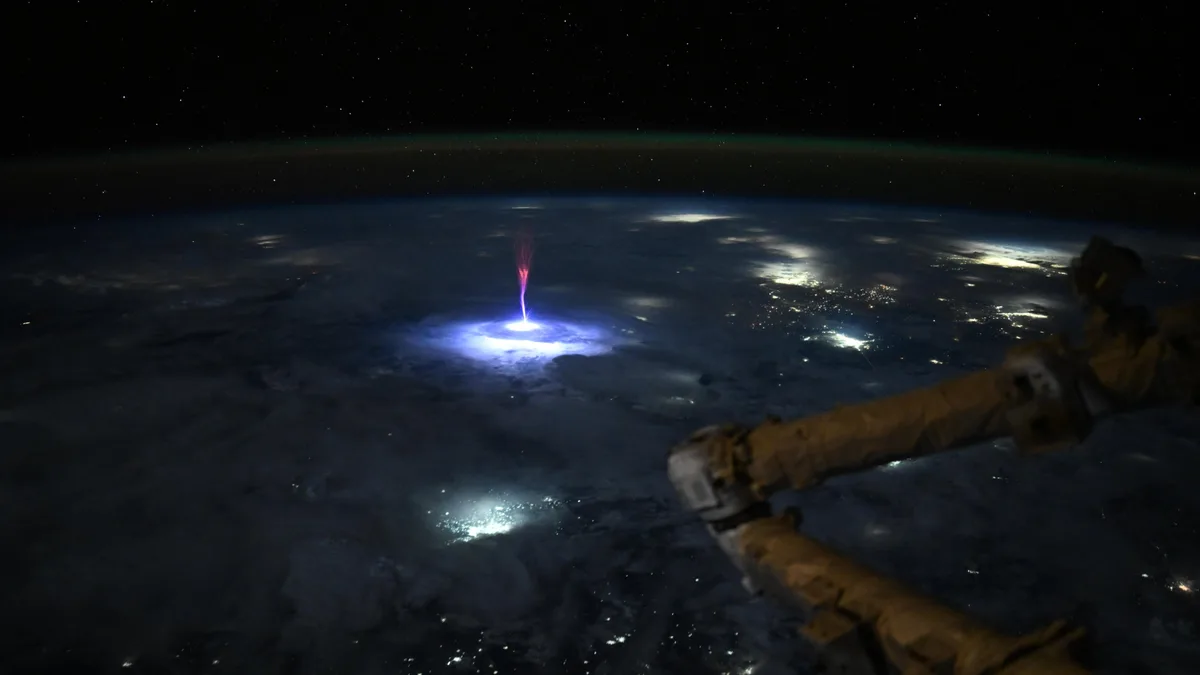
The International Space Station (ISS) is a crucial platform for Earth observation, with its instruments potentially playing a future role in studying Transient Luminous Events (TLEs) like cosmic jellyfish, helping scientists map our planet's dynamic electrical environment. (Source: space.com)
You might also like:
👉 Unexplained Mysteries of Science: Cosmos, Quantum & Beyond