
Boston 1954: The 23-Year-Old Who Started Organ Ethics
The 1954 Boston kidney transplant, where Richard Herrick, 23, received a kidney from his twin, sparked an ongoing debate on organ donation ethics. Uncover its complex legacy.
A Second Chance, a Steep Price: The Ethics of Organ Donation
On December 23, 1954, Boston saw a quiet miracle. At Peter Bent Brigham Hospital, Dr. Joseph Murray and his team prepared for a daring operation. Richard Herrick, 23, was dying from kidney disease. His identical twin brother, Ronald, offered one of his own kidneys.
Before this, kidney failure meant certain death. No treatments worked. Dialysis machines were still years from common use. Dr. Murray aimed to change that.
The surgery worked. Ronald’s kidney functioned perfectly in Richard. Richard lived eight more years, marrying and starting a family. This success earned Dr. Murray a Nobel Prize decades later.
The first human organ transplant proved the impossible. It gave hope to many patients. But it also raised serious ethical questions. Doctors had to figure out who could donate and how.
Transplants Begin: A Difficult Start
The Herrick transplant’s initial success was limited. It worked only because the brothers were identical twins. Their genetic match prevented the body from rejecting the new organ. Most patients needing organs did not have such a perfect donor.
Doctors soon tried transplants between non-identical donors and recipients. They saw immediate, severe organ rejection. The immune system attacked the foreign tissue. This meant most potential donors, even family members, were not suitable.
This problem led doctors to develop immunosuppressive drugs. These medicines suppressed the recipient’s immune system. They made transplants from non-identical donors possible. By the 1960s, more complex transplants could happen.
Medical success brought new ethical problems. A living donor faced surgical risks. Was it right to expose a healthy person to such danger? What if the donor felt pressured? No one had easy answers.
A New Definition of Life and Death
By the mid-1960s, medical technology advanced rapidly. Respirators and intensive care units could keep bodies functioning. They sustained breathing and heart activity. However, some patients suffered irreversible brain damage.
Their brains stopped working entirely. They had no consciousness or hope of recovery. Even so, their hearts still beat with machine support. This situation created a new kind of patient.
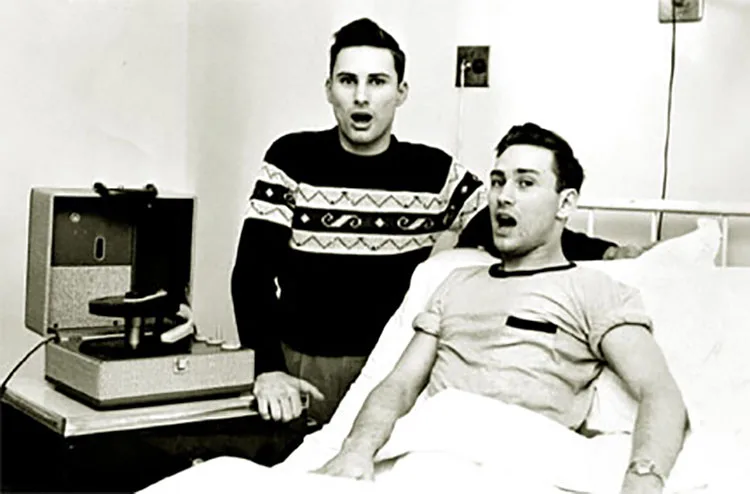
Richard Herrick (left) and his identical twin brother Ronald Herrick (right) whose pioneering kidney transplant in 1954 at Peter Bent Brigham Hospital marked the first successful human organ transplant. Ronald's selfless donation allowed Richard to live for eight more years, marrying and starting a family. (Source: massgeneralbrigham.org)
Doctors faced a difficult moral problem. Could they take organs from someone whose heart still beat? Many saw a beating heart as the ultimate sign of life. This view stopped deceased organ donation.
In 1968, the Harvard Ad Hoc Committee on Brain Death published an important report. It offered a new definition of death. This definition focused on when all brain function stopped for good. The committee called this “irreversible coma,” or brain death.
This new standard meant a person was legally dead even if their heart kept beating. It gave a clear ethical and medical guide. Now, doctors could get organs from these deceased people. This greatly expanded the pool of potential donors. The change led to thousands of life-saving transplants in the following years.
The Organ Market: Ethical Concerns
By the 1980s, organ transplants became more common. Demand for organs increased sharply, but the supply remained low. This gap created a serious ethical problem.
Reports showed desperate patients seeking organs overseas. Some paid large sums for kidneys. These organs often came from vulnerable people. They received little money and faced big health risks. This was the start of organ trafficking.
The World Health Organization (WHO) responded to this crisis. In 1991, it issued Guiding Principles on Human Organ Transplantation. These rules clearly stated human cells, tissues, and organs should not be bought or sold. This was a global rejection of commercialization.
Governments also took action. In the US, Congress passed the National Organ Transplant Act (NOTA) in 1984. This law made it illegal to buy or sell human organs. It aimed to protect both donors and recipients from exploitation.
Despite these efforts, organ trafficking continues worldwide. The WHO estimates up to 10% of all transplanted organs come from illegal markets. This situation highlights a huge ethical problem: How do we ensure fairness and stop exploitation when organs are so desperately needed?
Your Choice: Consent and Society’s Needs
Consent is central to organ donation ethics. Societies use different approaches to handle it. These methods reflect varied cultural and legal values. The two main types are “opt-in” and “opt-out.”

In 1968, the Harvard Ad Hoc Committee on Brain Death published this groundbreaking report, introducing 'irreversible coma' or brain death as a new legal definition of death. This pivotal document provided the ethical and medical framework that allowed for deceased organ donation, greatly expanding the pool of potential donors. (Photo: The New York Public Library / Unsplash)
An “opt-in” system requires clear consent. People must actively sign up to donate organs. This is common in countries like the US. It prioritizes individual choice and freedom.
An “opt-out” system works differently. It assumes consent unless someone has clearly refused. People often call this “presumed consent.” Spain adopted this system in 1979 and became a world leader in organ donation rates.
The ethical debate around these systems is strong. Opt-out supporters point to higher donation rates. They argue it saves more lives. Ethicist Dr. Arthur Caplan notes Spain’s high donor rates are directly linked to its presumed consent policy.
Critics, however, argue presumed consent can limit individual freedom. They say it places the burden of refusal on the person. Family roles also differ. In some opt-out countries, families can still stop a donation. This makes presumed consent more complicated.
This ongoing discussion shapes national policies. It shows society’s challenge: How do we balance individual rights with the collective need for life-saving organs? Each system affects patients, families, and healthcare.
New Methods, Enduring Questions: The Future of Organ Ethics
Medical science continues to advance. New techniques and technology challenge existing ethical rules. One such method is Donation after Circulatory Death (DCD). With DCD, doctors take organs after a patient’s heart and breathing stop, rather than after brain death.
This process pushes boundaries. It questions the “dead donor rule.” This rule states organs must only come from a dead person. Bioethicist Dr. Robert Truog of Harvard Medical School questions how strictly we define death in DCD cases. He calls for careful ethical review.
Another new field is xenotransplantation. This involves putting animal organs into humans. In January 2022, David Bennett Sr. received a genetically modified pig heart. This was a significant step forward. He lived for two months after the surgery.
Xenotransplantation brings serious ethical concerns. These include animal welfare, the possibility of disease spreading from animals, and what it means for human identity. The long-term effects for recipients are still unknown. This creates a difficult ethical situation.
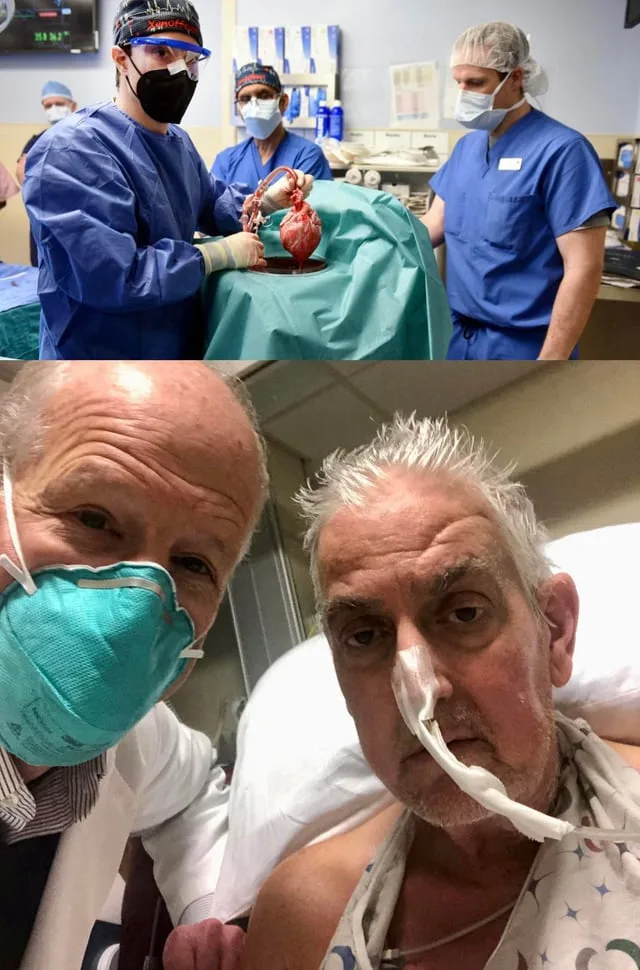
In January 2022, David Bennett Sr. made history as the first human recipient of a genetically modified pig heart, a pioneering xenotransplantation. He lived for two months after the surgery, and his case sparked global discussions on the ethics, potential, and challenges of using animal organs in humans. (Source: reddit.com)
The main ethical problems of organ donation will remain. Scarcity is still a large issue. Ensuring organs are given fairly and stopping exploitation are constant efforts. Society must keep updating its rules. It needs to balance new science with human values, always remembering the steep price of a second chance.
FAQ
What is brain death? Brain death means all brain function has completely and permanently stopped. This includes the brainstem, which controls vital actions like breathing. A person is legally dead, even if machines keep their heart beating.
Do all religions allow organ donation? Most major religions support or permit organ donation as an act of charity. Islam, Christianity, Judaism, and Buddhism generally view it favorably. However, specific groups or individuals might hold different opinions.
Can I choose who gets my organs? No. Organs go to people based on strict medical rules and ethical guidelines. These prioritize factors like the urgency of need, compatibility, and time spent waiting. This ensures fairness.
What is organ trafficking? Organ trafficking is the illegal trade of human organs for money. It often exploits vulnerable people. They might be forced or tricked into selling an organ. International groups widely condemn this practice.

Organ trafficking is the illegal trade of human organs, often exploiting vulnerable individuals who are coerced or deceived into selling their organs for illicit profit. This global criminal enterprise is widely condemned for its severe human rights violations. (AI-generated illustration)
You might also like:
👉 Virtual Reality in Healthcare: Revolutionizing Medicine & Patient Care