Grand Cayman, 1983: The Wearable That Conquered the Deep
The Edge, the world's first commercial dive computer, launched August 16, 1983, off Grand Cayman, transforming diver safety and ocean exploration.
The Ocean’s Digital Skin: Wearable Tech Explores the Deep
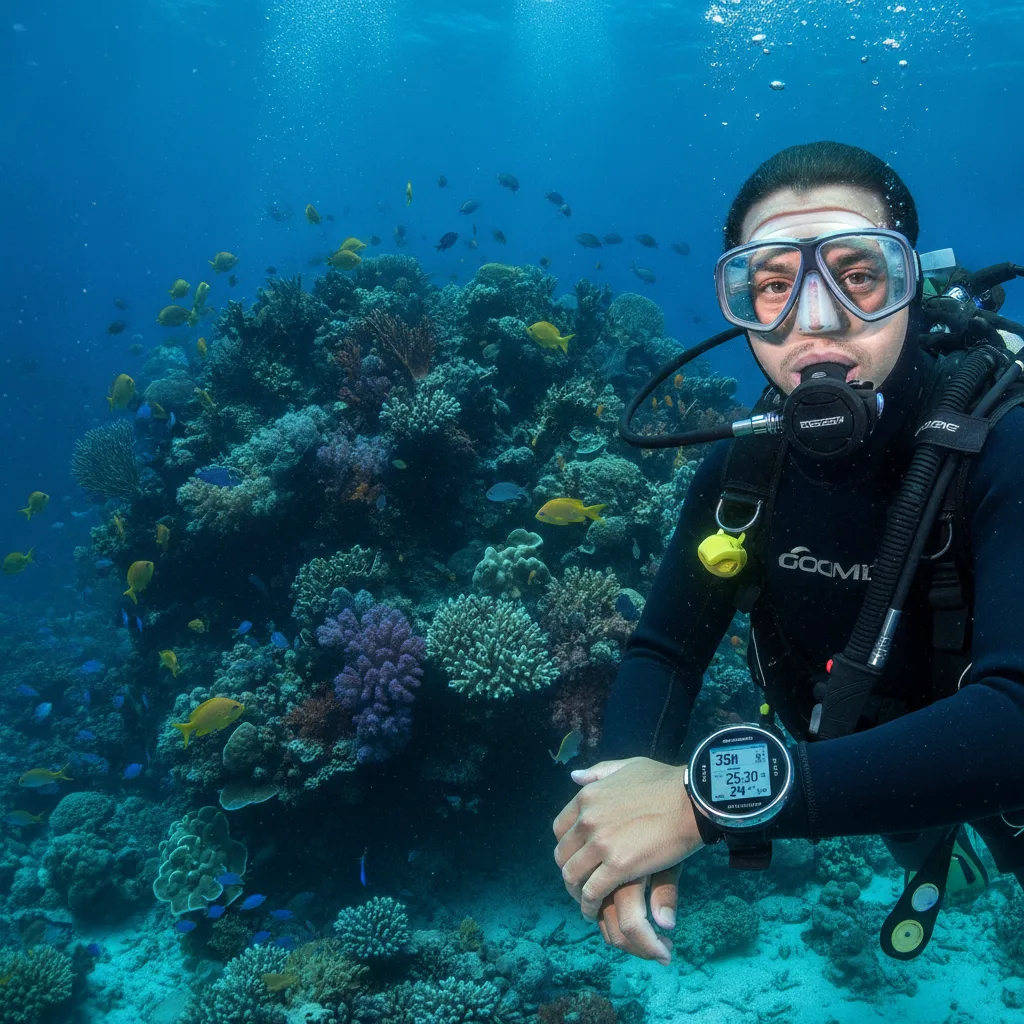
On August 16, 1983, a lone scuba diver plunged into the clear waters off Grand Cayman. He wore a heavy, rubberized device on his wrist. This was the Edge, one of the world’s first commercial dive computers. It tracked his depth and bottom time. It also calculated safe ascent profiles.
Before this invention, divers relied on printed tables and manual timing. Mistakes could lead to decompression sickness, a painful and sometimes fatal condition. The Edge was a big step forward. This wearable device made diving safer. It helped people explore deeper into the ocean.
The ocean covers over 70% of Earth. Much of it remains unexplored. Its vastness and extreme conditions pose huge challenges. Researchers, explorers, and divers need specialized tools to gather data and operate safely underwater.
“Ocean wearables” are technology worn by humans or marine animals. These devices collect data, monitor health, and help with navigation underwater. They work under immense pressure, in corrosive saltwater, and often without direct human oversight. This tough environment demands specialized engineering.
Early devices were bulky and limited to basic functions. They set the stage for today’s advanced marine wearables. A constant drive for more data, greater safety, and deeper understanding has pushed this technology forward.
From analog dials to digital depths
The early 20th century saw basic underwater tools appear. Divers used mechanical depth gauges and compasses. These tools provided essential information. Yet, this information was limited. They also required constant manual interpretation.
By the 1960s, a few smart engineers started thinking about electronic solutions. Dr. Albert Behnke, a pioneer in hyperbaric medicine, saw the need for better decompression tools. His work on human physiology under pressure shaped future devices. Still, practical wearable computers were decades away.
The 1980s marked a turning point. Microprocessors became small enough for wrist-worn applications. The first digital dive computers appeared. Devices like the Orca Edge offered real-time calculations of decompression limits. This was a huge safety leap for both recreational and professional divers.
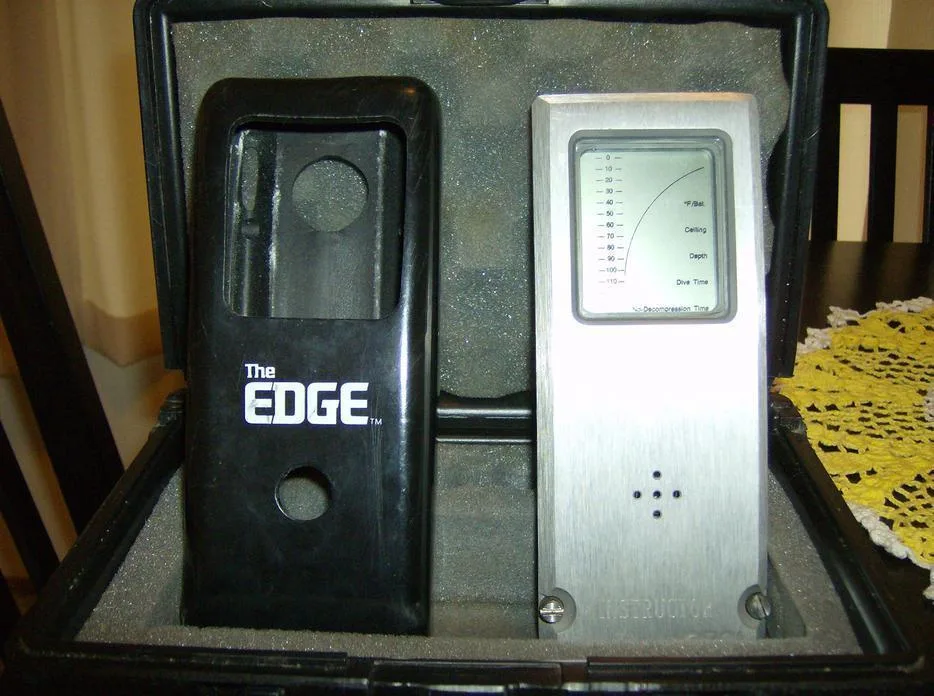
Introduced in 1983, the Orca Edge was one of the world's first commercial dive computers. This pioneering wearable device revolutionized diving safety by tracking depth and bottom time, and calculating safe ascent profiles, replacing cumbersome manual tables. (Source: allthingsdiving.com)
These early computers weren’t perfect. They were expensive and sometimes prone to errors. But they showed the power of digital processing underwater. They let divers push boundaries more safely. They also helped divers gather more information from their underwater trips.
Tracking giants: animals and the smart tag revolution
As human-worn devices improved, so did the desire to track marine life. Researchers wanted to understand migration patterns, feeding habits, and ocean health. Traditional methods, like visual observation, simply couldn’t work for vast, open ocean environments.
In the 1990s, satellite telemetry tags began to shrink. Researchers could attach these tags to large marine animals. They transmitted data when the animal surfaced. Dr. Barbara Block, a marine biologist at Stanford University, pioneered these tags. Her team attached pop-up satellite archival tags (PSATs) to bluefin tuna.
By the early 2000s, Block’s Tagging of Pacific Predators (TOPP) program used better tags. These devices collected a wealth of data on tuna, sharks, and other pelagic species. They recorded depth, temperature, and light levels. This allowed researchers to reconstruct entire migration routes across the Pacific Ocean.
These animal-worn wearables revealed surprising behaviors. They showed how marine animals use different ocean layers. They also showed how animals react to environmental changes. This data became vital for conservation efforts. It highlighted critical habitats and migration corridors needing protection.
The connected ocean: real-time data and better safety
The 2010s saw connectivity and sensor integration boom. Wearable devices, for both humans and animals, became “smarter.” They packed more capabilities into smaller packages. This era saw real-time data transmission and multi-sensor platforms grow.
For divers, devices like the Shearwater Perdix dive computer offered full-color displays. They integrated multiple gas sensors and provided detailed ascent profiles. Divers could monitor their own physiological data, such as heart rate, directly on their wrist. This greatly increased safety and situational awareness, especially for technical divers.
For marine research, acoustic telemetry networks expanded. Researchers at institutions like the Woods Hole Oceanographic Institution (WHOI) deployed arrays of underwater receivers. These receivers detected signals from tagged animals. Dr. Greg Skomal, a shark biologist with UMass Dartmouth and the MA Division of Marine Fisheries, uses these tags extensively. He monitors white shark movements along the Atlantic coast.
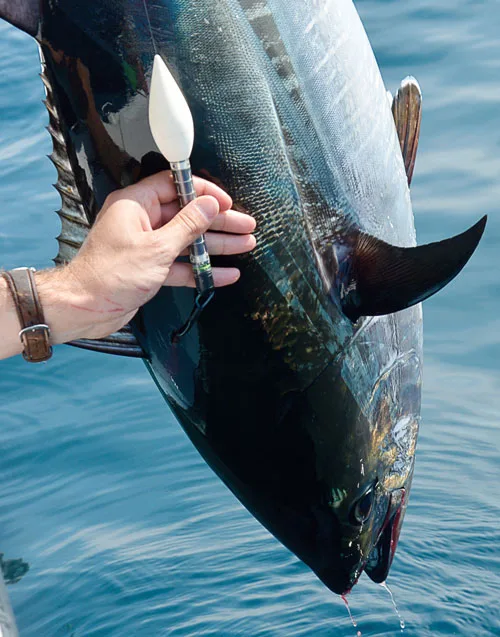
A pop-up satellite archival tag (PSAT) attached to a bluefin tuna, a technology pioneered by Dr. Barbara Block. These tags record depth, temperature, and light, then detach and float to the surface to transmit data, revealing crucial migration routes across vast oceans. (Source: onthewater.com)
These networks provide continuous location data. They reveal fine-scale movements and interactions between individuals. This helps scientists understand predator-prey dynamics and habitat use in incredible detail. It changed how researchers studied elusive marine species.
AI, environmental sensing, and the future of exploration
Today, wearable ocean devices are becoming more capable. Artificial intelligence and machine learning are analyzing vast datasets. New sensor technologies are emerging. These advances promise deeper insights into marine ecosystems.
OceanX, an exploration initiative, uses advanced wearables and robotics. Their divers use integrated helmets with communication systems and augmented reality displays. This allows them to interact with scientists on the surface in real time. It makes underwater exploration a team effort.
Researchers are also developing “bio-logging” tags with better environmental sensors. Some tags can detect environmental DNA (eDNA). This allows them to sample genetic material shed by organisms in the water. It provides a non-invasive way to identify species present in an area.
AI helps process complex data. It can identify patterns in animal behavior or environmental changes. This capability supports predictive modeling for climate change impacts. It also aids in detecting pollution events. These intelligent wearables are becoming autonomous research assistants.
The future of ocean wearables promises even greater autonomy and integration. Imagine self-charging tags that communicate through underwater acoustic networks. They could monitor coral reef health for decades. These devices will likely become smaller, more powerful, and more resilient. They will offer continuous, high-resolution insights into the ocean’s complex systems. These tools will be key as we face accelerating environmental changes. They can help us understand and protect our planet’s most important ecosystem.
FAQ
What are the biggest challenges for wearable devices in the ocean? The ocean environment is extremely harsh. Devices must withstand immense pressure, corrosive saltwater, and extreme temperatures. Communication is also difficult underwater. Radio signals don’t travel far.
How do scientists track marine animals using wearables? Scientists attach specialized tags to animals. These tags can use satellites to transmit data when the animal surfaces. Or they can use acoustic signals detected by underwater receivers.
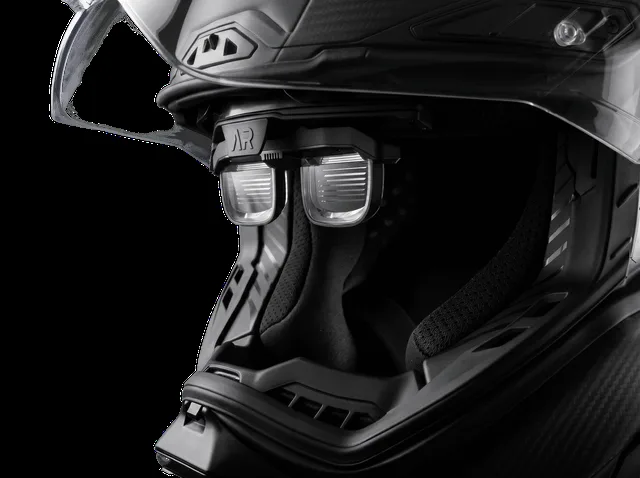
OceanX, a non-profit ocean exploration initiative, equips its divers with advanced integrated helmets featuring communication systems and augmented reality displays, enabling real-time interaction with scientists on the surface during deep-sea missions. (Source: reddit.com)
What kind of data do ocean wearables collect? They collect various data points. These include depth, temperature, salinity, light levels, acceleration (for movement), and even heart rate for human divers. Some advanced tags can also sample environmental DNA.
Are there ethical concerns with using wearables on marine animals? Yes, researchers minimize impact by using small, streamlined tags. They ensure the tags don’t harm the animal or interfere with its natural behavior. Ethical guidelines are strictly followed.
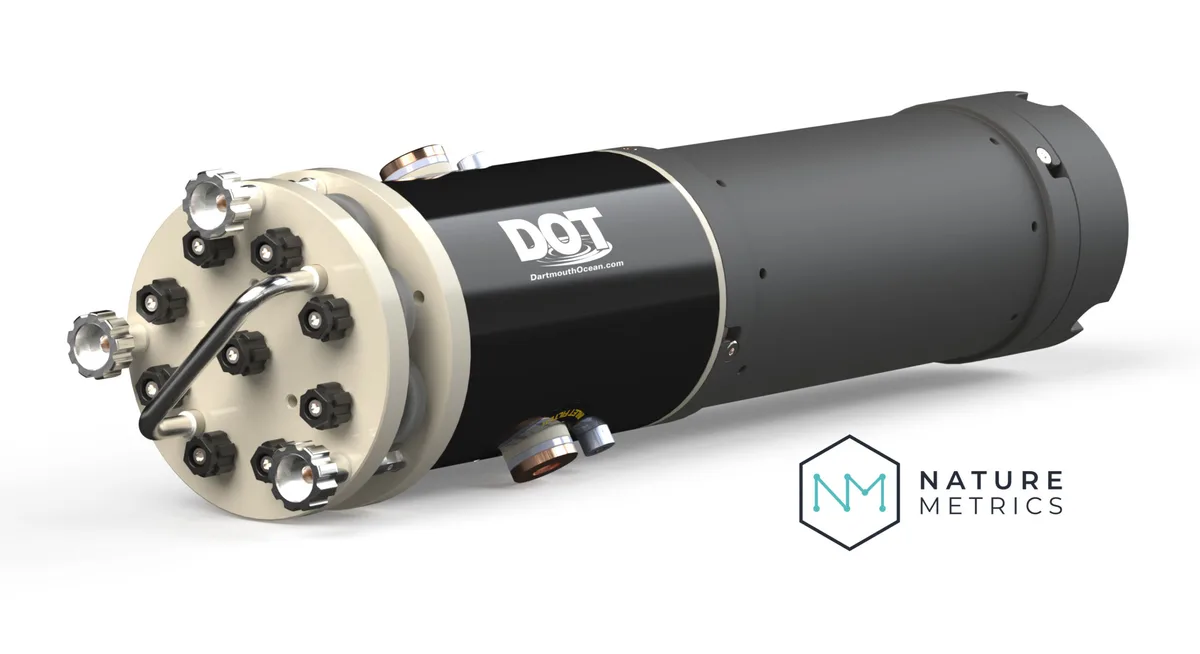
Specialized underwater devices are crucial for collecting environmental DNA (eDNA) from the ocean, allowing scientists to detect the presence of marine species from genetic material shed into the water. This non-invasive method provides vital data for biodiversity monitoring and ecosystem health assessments. (Source: dartmouthocean.com)
You might also like:
👉 Why 1960s Rocket Tech Won’t Get Us to Mars Fast Enough
👉 Venus: Why 475°C Hell Holds Earth’s Climate Future
👉 Virtual Reality Applications: Exploring VR’s Impact Across Industries