
Is Michael Smerconish Unbiased? Analyzing His Political Stance
Explore Michael Smerconish's unique political journey. Is he truly an unbiased voice in American politics, or a strategic maverick navigating a polarized landscape? We analyze his evolving stance since 2009.
Is Smerconish Unbiased? The Unfolding Chronicle of a Political Maverick
The year was 2009. America, still reeling from the financial cataclysm of the previous autumn, found itself navigating the nascent, often bewildering, landscape of the Obama presidency. Healthcare reform loomed, the Tea Party movement was a nascent rumble, and the political chasm, already wide, seemed poised to yawn further. It was into this charged atmosphere that a voice, long associated with the Republican establishment, chose to declare his independence. Michael Smerconish, a man whose career had been forged in the conservative crucible of Philadelphia talk radio, a former Bush administration appointee, stood before his audience, not in a grand hall, but across the airwaves and in his syndicated column, and announced he was leaving the Republican Party. It was not a whisper, but a pronouncement, a deliberate rupture from an identity that had defined him for decades. The move sent ripples through the political commentariat, forcing a fundamental re-evaluation: was this the ultimate act of impartiality, or merely a strategic repositioning in the ever-shifting currents of American ideology? The question of is Smerconish unbiased began, for many, in earnest at this pivotal moment.
The Republican’s Rupture: A Turning Point in the Quest for Impartiality
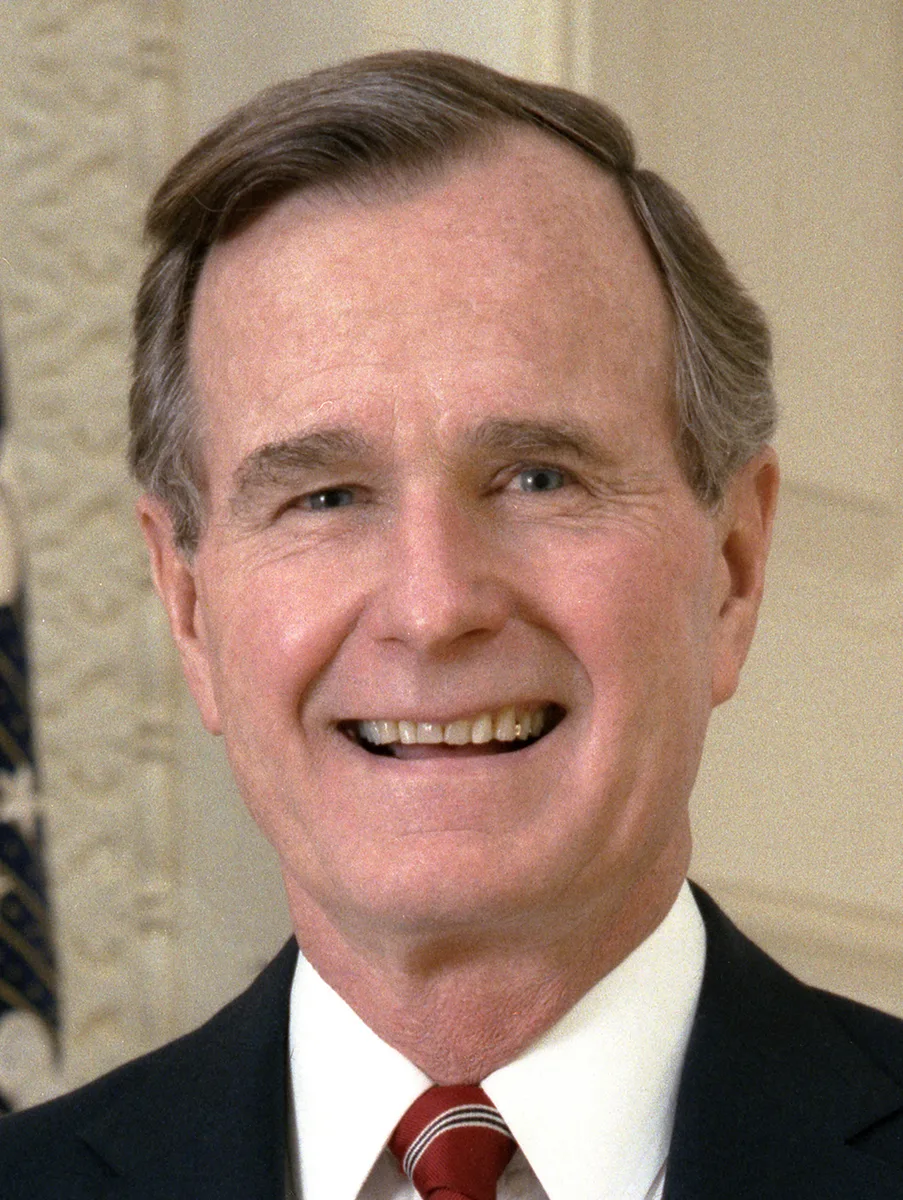 Before his dramatic declaration, Smerconish was a recognizable figure within Republican circles, a pragmatic conservative who had cut his teeth advising President **George H.W. Bush** and later serving as a U.S. Attorney under his administration. His early radio career, particularly on WPHT in Philadelphia, cultivated an image as a sharp, articulate voice for the right, capable of both robust debate and engaging interviews. Listeners knew him for his measured tones, his preference for facts over histrionics, even when advocating for conservative principles. He was not a firebrand; he was an analyst, albeit one firmly rooted in the GOP. This grounding, however, also meant that his later pivot carried significant weight, viewed by some as a betrayal, by others as an evolution.
The decision to shed his Republican affiliation in 2009 was not impulsive. It was the culmination of years of growing discomfort with what he perceived as the party’s ideological rigidity and its increasing susceptibility to dogmatism. He spoke of feeling “ideologically homeless,” a sentiment that resonated with a burgeoning segment of the American electorate. His column, “I’m Leaving the Republican Party,” articulated a frustration with both parties’ inability to compromise, but particularly with the GOP’s perceived abandonment of its moderate wing. This wasn’t merely a political statement; it was a professional rebranding, a public commitment to a path less traveled in an era demanding partisan loyalty. The smell of the studio coffee, the hum of the broadcast equipment, would have felt different to him after that declaration, imbued with the weight of a new, self-imposed mission.
The immediate aftermath was predictable: a mixture of praise from those tired of partisan gridlock and scathing criticism from former allies who saw his move as opportunistic or even disingenuous. Yet, Smerconish pressed on, embracing the independent label, not as a neutral void, but as an active stance—a commitment to evaluating issues on their merits rather than through a party lens. This foundational shift would define his subsequent career, setting the stage for his unique role in an increasingly polarized media landscape, perpetually inviting the question: could a man so deeply steeped in one political tradition truly shed its influence and achieve genuine impartiality?
The Crucible of Cable News: Navigating Partisan Waters on CNN
 Smerconish’s transition to national television, particularly his prominent role on CNN, thrust him into an entirely new arena where the question of **is Smerconish unbiased** became a weekly, sometimes daily, referendum. CNN itself, a network often scrutinized for its own perceived leanings, provided a challenging, yet opportune, platform for someone aiming to occupy the political center. From the moment he took his seat under the bright, unforgiving studio lights, Smerconish sought to distinguish himself. He aimed to be the voice of reason, the interlocutor who could engage with guests from across the political spectrum without descending into the cacophony of typical cable news shouting matches.
His Saturday morning show, Smerconish, became a unique forum. Viewers grew accustomed to seeing him dissecting complex issues, often challenging conventional wisdom from both the left and the right. He would invite guests with opposing viewpoints, not to orchestrate a conflict, but to facilitate a genuine exchange of ideas. One might recall a segment where he pressed a conservative pundit on the nuances of immigration policy, only to pivot and challenge a progressive commentator on the economic realities of a proposed social program. The tension in the studio, palpable yet restrained, was a testament to his deliberate effort to avoid echo chambers.
This approach, while lauded by many weary of partisan media, also exposed him to criticism from all sides. For some conservatives, his critiques of figures like Donald Trump were evidence of a liberal drift, despite his continued willingness to question progressive narratives. For some liberals, his past Republican ties and occasional conservative stances, such as his skepticism on certain aspects of climate policy or his support for specific corporate initiatives, were seen as proof that he hadn’t truly shed his ideological skin. He was often seen walking a tightrope, the faint scent of the pre-broadcast coffee mingling with the lingering aroma of political contention, a constant reminder of the difficulty inherent in his chosen path. His very presence on CNN, a network with its own powerful brand identity, further complicated the perception of his objectivity, forcing him to constantly reaffirm his independent stance through his questions and commentary.
The Shifting Sands of Public Opinion: Is Smerconish Unbiased in the Age of Polarization?
The political landscape of America underwent a seismic shift in the mid-2010s, culminating in the 2016 presidential election and its tumultuous aftermath. This era of hyper-polarization, characterized by deep tribalism and an erosion of trust in traditional institutions, intensified the scrutiny on anyone claiming to be an impartial arbiter of truth. For Smerconish, the challenge of maintaining and demonstrating his non-partisanship became exponentially greater. In a world increasingly demanding that you pick a side, his refusal to do so often left him isolated, a target for those on the far ends of the spectrum.

During the Trump administration, Smerconish frequently criticized the former president’s rhetoric and policies, particularly his attacks on democratic norms and institutions. These critiques, while often grounded in constitutional principles and a concern for national unity, were inevitably interpreted by some as evidence of a liberal bias. Yet, he also took issue with the Democratic Party’s own ideological excesses, its perceived drift to the left, and what he saw as an increasing intolerance for dissenting viewpoints within its ranks. He often spoke of the “intellectual honesty” required to acknowledge flaws on both sides, a concept that felt increasingly alien in the era of “alternative facts” and “fake news.”
The sheer volume of online commentary, the digital roar of social media, ensured that every segment, every column, was dissected and judged through a partisan lens. A single phrase, a particular guest, could trigger a torrent of accusations of bias from one side or the other. Smerconish himself acknowledged the difficulty, remarking on the challenge of appealing to a “common ground” that seemed to be shrinking. The very concept of objectivity, once a journalistic ideal, was now often dismissed as a myth or, worse, a cover for hidden agendas. The question, “is Smerconish unbiased?” transformed from a simple inquiry into a complex philosophical debate about the very nature of truth and perception in a fractured society, where the sense of division was almost palpable in the very air.
The Pen and the Pulpit: Smerconish’s Print and Radio Philosophy
 Beyond the visual immediacy of cable news, Smerconish has consistently leveraged the enduring power of the written word and the intimate connection of radio to articulate his unique philosophy. His syndicated column, reaching millions weekly, provides a platform for more sustained, nuanced arguments than the constraints of a television segment allow. Here, readers can trace the deliberate logic of his arguments, the careful parsing of facts, and his consistent effort to challenge preconceived notions, regardless of their political origin. The rustle of a newspaper or the glow of a tablet screen brings his voice directly to the reader, unfiltered by the urgency of live television.
His SiriusXM radio show, a daily fixture for many, further cements his role as a voice striving for reason. Radio, with its absence of visual cues, places a premium on the spoken word, on the tone, the cadence, and the substance of the argument. On this platform, Smerconish engages with callers from every corner of the country, representing a vast spectrum of political beliefs. He listens intently, challenges respectfully, and often guides conversations away from partisan talking points toward a deeper exploration of underlying issues. He has often stated his belief that the media’s role is not to tell people what to think, but to provide them with the information and context necessary to think for themselves, a philosophy that underpins his broadcast approach.
His consistent message across these diverse platforms is one of intellectual humility and a call for common sense. He often draws parallels between the current political climate and historical periods of intense division, urging a return to civility and a willingness to engage with opposing viewpoints. He uses his books, like Talk: A Novel or Clowns to the Left of Me, Jokers to the Right, to explore these themes in greater depth, weaving narratives that highlight the absurdities and dangers of extreme partisanship. These mediums allow him to build a more comprehensive case for his independent stance, demonstrating that his pursuit of balance is not a fleeting act, but a deeply held professional and personal creed, a constant hum in the background of his professional life.
The Enduring Enigma: The Smerconish Legacy and the Pursuit of Objectivity
The story of Michael Smerconish is, in many ways, a microcosm of the larger struggle for objectivity in modern media. His journey from an established Republican operative to a self-declared independent, constantly interrogated about his impartiality, highlights the profound difficulty of occupying the middle ground in an era that increasingly demonizes it. He stands as a testament to the persistent desire, for both journalists and audiences, for voices that transcend partisan divides, even as the forces pushing towards fragmentation grow stronger. The question of is Smerconish unbiased remains a subjective one, perhaps unanswerable in any absolute sense, precisely because “unbiased” itself is often defined by the listener’s own political vantage point.
Yet, his impact is undeniable. Smerconish has carved out a unique and significant niche, demonstrating that a broadcast personality can attract and retain an audience by eschewing predictable partisan loyalties. He has given voice to the “exhausted majority,” those Americans who feel alienated by the extreme rhetoric of both the far left and the far right. His career underscores that the pursuit of impartiality, even if never perfectly achieved, is a vital endeavor—a constant striving that enriches public discourse and offers an alternative to the echo chambers that threaten to consume it. He has shown that challenging both sides, rather than just one, can be a viable, albeit often lonely, path in media.
Ultimately, Smerconish’s legacy may not be defined by whether he was perfectly unbiased, but by the relentless, often courageous, effort he made to be so. He embodies the ongoing, Sisyphean task of seeking truth and fostering understanding in a world seemingly determined to obscure both. His presence serves as a crucial reminder that while absolute objectivity may be an elusive ideal, the commitment to approaching issues with an open mind, a critical eye, and a willingness to challenge one’s own assumptions remains an indispensable virtue in a healthy democracy.
FAQ Section
Q1: When did Michael Smerconish publicly declare himself an independent? A1: Michael Smerconish publicly announced his departure from the Republican Party and declared himself an independent in 2009, citing ideological discomfort with the party’s direction.
Q2: What is Smerconish’s primary argument for his impartiality? A2: Smerconish argues that his independent status allows him to evaluate issues and criticize figures from both the Democratic and Republican parties without partisan obligation. He aims to foster reasoned debate and seek common ground rather than adhering to a fixed ideological agenda.
Q3: Where can I typically find Smerconish’s content? A3: Michael Smerconish hosts a weekly program, Smerconish, on CNN and a daily radio show on SiriusXM’s POTUS channel (channel 124). He also writes a widely syndicated column for The Philadelphia Inquirer and other newspapers.
Q4: Why is the question of “is Smerconish unbiased” so persistent? A4: The question persists due to the highly polarized media environment, where audiences often view media figures through a partisan lens. Smerconish’s past as a Republican and his current role of criticizing both sides mean he is constantly scrutinized by those seeking to identify his underlying leanings, making “unbiased” a subjective and often debated concept.
You might also like:
👉 Deconstructing Kat Abughazaleh’s Audacious Self-Attack Ad
👉 AI & Journalism’s Future: Reshaping News Reporting & Media
👉 Supreme Court Affirmative Action Ruling: A New Era for Admissions