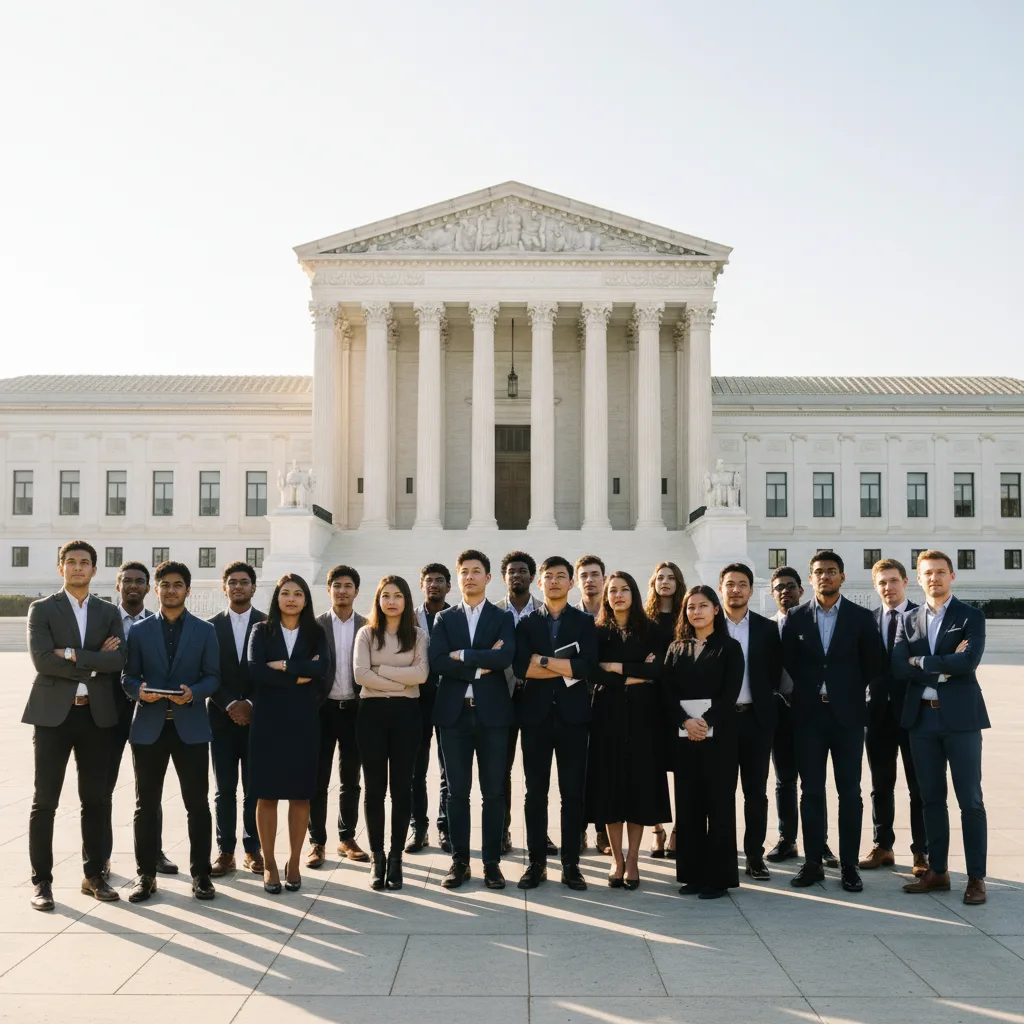
Supreme Court Affirmative Action Ruling: A New Era for Admissions
Unpack the Supreme Court's landmark affirmative action decision from June 2023, analyzing its seismic shift on college admissions and the future of higher education in the US.
The Seismic Shift: Unpacking the Supreme Court’s Affirmative Action Ruling
Imagine a generation of students, meticulously crafting their college applications, pouring over essays, agonizing over test scores, and then, in the blink of an eye, the very rules governing their futures are fundamentally rewritten. This isn’t a dystopian novel; it’s the reality ushered in by the Supreme Court’s affirmative action decision on June 29, 2023. For nearly half a century, race-conscious admissions policies have been a cornerstone of American higher education, a controversial but deeply embedded attempt to rectify historical injustices and foster diverse learning environments. But on that momentous summer day, the highest court in the land declared these practices unconstitutional, sending shockwaves through universities, workplaces, and the very fabric of American society.
What led to this seismic shift? Who were the key players, and what precisely does this ruling mean for the future of equality and opportunity in the United States? Join us as we dissect a decision that didn’t just change admissions policies, but fundamentally redefined the ongoing national conversation about race, merit, and the pursuit of a more perfect union.
A Legacy Unravels: The Road to SFFA v. Harvard/UNC
To understand the magnitude of the 2023 ruling, one must first grasp the long, winding legal road that affirmative action traveled. Its roots trace back not to an idealistic civil rights activist, but to a pragmatic executive order. In 1961, President John F. Kennedy used the term “affirmative action” to describe measures taken to ensure non-discrimination in employment. It was President Lyndon B. Johnson, however, who in 1965 articulated the proactive goal: “You do not take a person who, for years, has been hobbled by chains and liberate him, bring him up to the starting line of a race and then say, ‘you are free to compete with all the others,’ and still justly believe that you have been fair.” This powerful sentiment laid the groundwork for policies designed to actively foster opportunities for groups historically denied them.
For decades, the Supreme Court navigated a complex legal tightrope, neither fully endorsing nor entirely rejecting race-conscious admissions. In 1978, Regents of the University of California v. Bakke struck down racial quotas but affirmed that race could be one factor among many in a “holistic review” to achieve a diverse student body. A quarter-century later, in 2003, Grutter v. Bollinger reaffirmed this principle, stating that the educational benefits of diversity were a compelling government interest, but cautioned that such policies must be “narrowly tailored” and “limited in time.” The expectation was that within 25 years, race-conscious admissions would no longer be necessary.
However, the legal challenges never ceased. Enter Edward Blum, a conservative legal strategist who had spent years challenging race-conscious policies, from voting rights to university admissions. Through his organization, Students for Fair Admissions (SFFA), Blum spearheaded lawsuits against Harvard College and the University of North Carolina at Chapel Hill (UNC). SFFA alleged that these institutions’ admissions policies discriminated against Asian American applicants by penalizing them for their race, effectively giving preference to Black and Hispanic applicants, and thus violating the Equal Protection Clause of the 14th Amendment and Title VI of the Civil Rights Act of 1964. The lawsuits meticulously detailed how Harvard allegedly scored Asian American applicants lower on “personal” ratings, even with superior academic credentials. After years of lower court battles, the stage was set for the Supreme Court to finally, definitively, weigh in on the future of affirmative action.
The Verdict Heard ‘Round the World: The Supreme Court’s Affirmative Action Decision
The morning of June 29, 2023, crackled with anticipation. The Supreme Court, having heard oral arguments in October 2022, was poised to deliver a decision that would reshape higher education. When the opinions were released, the 6-3 majority ruling, penned by Chief Justice John Roberts, was unequivocal: the admissions programs at Harvard and UNC were unconstitutional. Roberts asserted that the programs “lack sufficiently focused and measurable objectives necessary to satisfy strict scrutiny” and “unavoidably employ race in a negative manner,” perpetuating racial stereotyping.
The core of the decision declared that race can no longer be a “determinative factor” in college admissions. While the Court acknowledged the importance of diversity, it found that the means used by Harvard and UNC were not narrowly tailored to achieve it, and instead violated the Equal Protection Clause. This effectively overturned the precedents set by Bakke and Grutter, dismantling nearly 45 years of established legal understanding regarding race-conscious admissions.
Yet, Roberts’s majority opinion did leave a narrow pathway open. He stated that nothing in the opinion should be construed as prohibiting universities from considering “how race affected his or her life, be it through discrimination, inspiration, or otherwise.” This “personal story” caveat suggested that an applicant’s individual experiences with race, when tied to a quality or characteristic they can contribute to the university, could still be considered. However, the line between an applicant’s story and using race as a factor in itself remains a significant gray area, a tightrope universities are now forced to walk.
The dissenting justices minced no words. Justice Sonia Sotomayor, joined by Justices Kagan and Jackson, argued that the majority opinion “rolls back decades of precedent and further entrench[es] racial inequality.” She emphasized that ignoring race does not make racial inequality disappear, and that race-conscious admissions were a necessary tool to address ongoing systemic disparities. Justice Ketanji Brown Jackson, in a powerful dissent, underscored that “deeming race irrelevant in law does not make it so in life,” highlighting the persistent realities of racial hierarchy and disadvantage that affirmative action sought to address. The ruling, while decisive, only deepened the national divide on how to best achieve a truly equitable society.
The Architects of Change: Key Players and Their Motivations
Behind every landmark Supreme Court decision are individuals and organizations whose unwavering commitment shapes the legal landscape. In the case of the Supreme Court’s affirmative action ruling, one figure stands out: Edward Blum. A white conservative activist, Blum has dedicated his career to challenging policies he believes grant preferential treatment based on race. His legal strategy is meticulous: find plaintiffs who feel aggrieved by race-conscious policies, support their lawsuits, and shepherd them through the judicial system, often with the express goal of reaching the Supreme Court to overturn established precedents. His previous successes include Shelby County v. Holder (2013), which gutted key provisions of the Voting Rights Act. Blum’s motivation is rooted in a colorblind philosophy, arguing that the government should never consider race in any context, even to remedy past discrimination.
Blum’s vehicle for these lawsuits was Students for Fair Admissions (SFFA), an organization he founded. SFFA represented a group of anonymous Asian American students who alleged discrimination by Harvard and UNC. Their arguments, detailed across thousands of pages of court documents, presented statistical evidence and individual testimonies claiming that Asian American applicants were held to a higher standard and received lower “personal” ratings than applicants of other racial backgrounds. SFFA’s legal team meticulously built a case that portrayed affirmative action not as a tool for equity, but as a discriminatory practice against deserving students based on their ethnicity.
On the other side were Harvard University and the University of North Carolina at Chapel Hill. Their defense centered on the well-established “educational benefits of diversity” rationale. They argued that a diverse student body, encompassing a wide range of backgrounds, experiences, and perspectives, enriches classroom discussions, prepares students for a diverse workforce and society, and fosters a more robust learning environment. Both institutions employed a “holistic review” process, considering numerous factors beyond grades and test scores, including essays, extracurriculars, recommendations, and an applicant’s background – including, as one factor among many, their race. They maintained that this process was essential to creating a vibrant intellectual community and preparing leaders for an increasingly complex world.
The legal battle also drew in a vast array of amici curiae, or “friends of the court,” briefs from groups across the ideological spectrum. Major corporations like Apple, Google, and Starbucks filed briefs supporting affirmative action, arguing that a diverse workforce starts with diverse educational pipelines. Military leaders emphasized the importance of diversity for national security. Civil rights organizations, of course, passionately defended race-conscious policies, while conservative legal foundations rallied behind SFFA. The sheer volume and diversity of these briefs underscored the profound societal implications of the case, illustrating just how deeply this issue resonated across different sectors of American life, leaving many wondering which vision of America would ultimately prevail.
Beyond the Ivy Gates: Ripple Effects on Education and Employment
The immediate aftermath of the Supreme Court’s affirmative action ruling saw a flurry of activity across higher education. Universities, particularly highly selective institutions, scrambled to revise their admissions policies and training programs. The challenge is immense: how to maintain diversity, which many still see as a crucial educational and societal good, without explicitly considering race? Admissions offices are now exploring alternative avenues, such as emphasizing socioeconomic factors, first-generation college status, neighborhood disadvantage, and essay prompts that encourage applicants to discuss how their backgrounds, including experiences with race, have shaped their lives and perspectives.
The projected impact on diversity metrics is a significant concern. States like California, Michigan, and Washington, which banned affirmative action decades ago, experienced substantial and persistent declines in minority enrollment, particularly among Black and Hispanic students, in their most selective public universities. For example, after California’s Proposition 209 passed in 1996, Black and Hispanic enrollment at UC Berkeley and UCLA initially plummeted by over 50%. While some recovery has occurred over time through intensive outreach and alternative strategies, it has been slow and incomplete. Critics fear a similar, if not more pronounced, effect nationwide, potentially creating a “pipeline” problem for graduate schools, professional programs (law, medicine), and eventually, leadership roles in various industries.
The ripple effects extend beyond college campuses. The ruling has sparked intense debate and scrutiny over Diversity, Equity, and Inclusion (DEI) initiatives in the corporate world. While the Supreme Court’s decision directly addressed university admissions under the Equal Protection Clause and Title VI, the underlying legal principles raise questions about the legality of race-conscious programs in employment, contracting, and other sectors. Companies are now reviewing their DEI programs, particularly those with explicit racial targets or preferences, to ensure compliance with anti-discrimination laws. Legal experts anticipate new challenges to corporate DEI, potentially leading to a chilling effect on efforts to foster diverse workplaces.
The decision forces a fundamental re-evaluation of how society defines and pursues equity. If race cannot be explicitly considered, what mechanisms remain to address systemic inequalities that disproportionately affect certain racial groups? The ruling compels institutions to innovate, but also raises the specter of a less diverse future for many elite sectors, forcing a national reckoning with the complex interplay between law, opportunity, and the enduring legacy of race in America.
A Nation Divided: Public Reaction and Political Fallout
The Supreme Court’s ruling on affirmative action immediately ignited a firestorm of public reaction, vividly illustrating the deep ideological chasm that persists in American society. Polls conducted in the wake of the decision consistently showed a polarized nation: a significant majority of Americans generally oppose race being a factor in college admissions, aligning with the Court’s decision, but a substantial minority, particularly Black and Hispanic Americans, strongly support affirmative action as a necessary tool for equity. This divergence reflects differing views on the nature of systemic racism, the concept of merit, and the role of government in addressing social inequalities.
Politically, the reactions were swift and predictable. Democrats largely condemned the decision, with President Joe Biden stating he “strongly disagrees” with the ruling and urging universities to find new ways to ensure diverse student bodies. Progressive leaders and civil rights organizations decried the decision as a step backward for racial justice, warning of its detrimental effects on minority representation and opportunity. They emphasized that a “colorblind” approach ignores the realities of persistent racial disparities.
Republicans, conversely, celebrated the ruling as a victory for equality under the law and a long-overdue end to what they viewed as discriminatory “reverse discrimination.” Conservative commentators and politicians lauded the Court for upholding the principle of individual merit over group identity. Figures like Senator Ted Cruz hailed it as a triumph for civil rights, arguing that it finally fulfilled the promise of the 14th Amendment. This stark partisan divide ensures that affirmative action, or its absence, will remain a potent political issue, likely influencing the 2024 election cycle and beyond, particularly as candidates stake out their positions on issues of race, equity, and the role of the judiciary.
Beyond the political rhetoric, protests and demonstrations erupted across the country. Students, activists, and civil rights groups gathered outside courthouses and university campuses, expressing anger and disappointment, while supporters of the ruling also voiced their approval. The decision further fueled debates about the legitimacy and perceived politicization of the Supreme Court, with many questioning whether the Court’s conservative supermajority was legislating from the bench rather than interpreting the law. The ruling didn’t just change policy; it intensified the cultural wars, reminding everyone that the struggle for a truly equitable America is far from over.
The Path Forward: Innovation in Admissions and the Future of Equity
With the explicit consideration of race now off-limits in admissions, universities are forced to innovate, seeking new strategies to cultivate diverse student bodies while adhering to the letter of the law. One prominent alternative gaining traction is socioeconomic affirmative action. This approach focuses on factors like family income, parental education level, neighborhood poverty, and whether a student is first-generation. The premise is that socioeconomic disadvantage often correlates with racial disadvantage, and by prioritizing students from low-income or challenging backgrounds, universities can indirectly achieve racial diversity without explicitly using race.
Another strategy, already implemented in states like Texas and California, is the “Top 10%” plan (or similar percentage plans). Under this model, a certain percentage of the top students from every high school in the state are guaranteed admission to public universities. The idea is that because high schools are often racially and socioeconomically segregated, admitting the top students from a broad range of schools will naturally lead to a more diverse incoming class. While these plans have shown some success, they also face challenges, including the potential for “academic mismatch” if students from under-resourced schools are not adequately prepared for highly competitive university environments.
Universities are also refining their holistic review processes, carefully crafting essay prompts and interview questions to allow applicants to organically share their life experiences, including how race may have shaped their identity, challenges, and aspirations, without making race itself a deciding factor. This requires meticulous training for admissions officers to ensure compliance and avoid unconscious bias. Furthermore, increased investment in targeted outreach and pipeline programs aimed at K-12 students in underserved communities is seen as crucial. By nurturing academic talent and college readiness years before the application process, universities hope to expand the pool of qualified minority applicants.
The challenge ahead is not merely about finding legal workarounds; it’s about redefining “merit” in a comprehensive way that values diverse life experiences and perspectives alongside traditional academic metrics. The ongoing legal landscape also remains uncertain, with potential future challenges to other forms of DEI initiatives, scholarships, or programs that might be perceived as race-conscious. The Supreme Court’s affirmative action decision has undeniably closed one chapter in the pursuit of equity, but it has simultaneously opened a new, complex one, demanding creativity, vigilance, and a renewed commitment to ensuring that opportunity is truly accessible to all.
FAQ: Your Burning Questions Answered
1. What exactly did the Supreme Court rule in SFFA v. Harvard/UNC? The Supreme Court ruled that the race-conscious admissions programs at Harvard and the University of North Carolina violated the Equal Protection Clause of the 14th Amendment and Title VI of the Civil Rights Act of 1964. This means universities can no longer use race as a specific, determinative factor in admissions decisions.
2. Does this mean race can never be mentioned in a college application? Not necessarily. Chief Justice Roberts’s majority opinion stated that universities can still consider “how race affected his or her life, be it through discrimination, inspiration, or otherwise,” provided that this discussion is “tied to a quality or characteristic the applicant can contribute to the university.” The distinction lies between using race as a direct factor and considering an applicant’s individual experiences with race as part of their personal story.
3. How might this decision affect private scholarships or corporate DEI initiatives? The direct impact is on university admissions for institutions receiving federal funding. However, the legal principles underlying the decision (equal protection) could inspire future challenges to race-conscious programs in other sectors, including private scholarships and corporate DEI initiatives that explicitly use racial preferences. Many organizations are currently reviewing their programs for legal compliance.
4. What are universities doing to maintain diversity now? Universities are exploring various race-neutral strategies, including emphasizing socioeconomic factors (income, first-generation status), increasing outreach to underserved communities, guaranteeing admission to top students from diverse high schools (percentage plans), and refining essay prompts to encourage applicants to discuss their unique life experiences, including how race may have impacted them, without directly using race as a factor in the admissions decision.
Conclusion
The Supreme Court’s decision on affirmative action is a monumental turning point in American legal and social history. It closes a chapter that began over 60 years ago with a vision of proactively leveling the playing field, and it opens another, far more uncertain one, demanding new approaches to the enduring challenge of achieving equality. While proponents celebrate the ruling as a victory for colorblind justice, critics lament it as a setback for racial equity, arguing that ignoring race does not erase the deep-seated disparities that persist in our society.
The path forward for universities, corporations, and indeed the entire nation, will require ingenuity, empathy, and an unwavering commitment to fostering genuine opportunity for all. The tools may have changed, but the fundamental aspiration remains: to build a society where every individual, regardless of their background, has an equal chance to learn, to thrive, and to contribute to the rich tapestry of American life. The conversation is far from over; in many ways, it has only just begun.
You might also like:
👉 AI & Education: Reshaping the Future of Teaching & Learning
👉 20 Global School Differences: Culture’s Impact on Education
👉 Building Future Education Museums: Evolving Learning Ecosystems