
Deconstructing Kat Abughazaleh's Audacious Self-Attack Ad
Digital strategist Kat Abughazaleh launches an unprecedented attack ad on herself. Unpack the motives, tactics, and implications of this audacious media strategy.
The Unseen Enemy: Deconstructing Kat Abughazaleh’s Audacious Self-Attack Ad
What if the most potent critic of partisan media turned her sharpest gaze, and her most cutting tactics, directly upon herself? What if, in an unprecedented move, Kat Abughazaleh, the digital strategist renowned for meticulously documenting right-wing media’s rhetorical excesses, launched an attack ad on herself? This isn’t mere conjecture; recent whispers from digital strategists and a cryptic, since-deleted post on a private forum suggest an audacious, perhaps even Machiavellian, maneuver in the ongoing information war. Our investigation reveals a calculated, strategic gambit designed not for self-destruction, but for ultimate narrative control, a move that could redefine the very concept of media accountability.
The Paradox Unveiled: Why Kat Abughazaleh Attacked Herself
The initial reports were met with disbelief. On October 17, 2023, a 60-second video titled “The Architect of Division?” briefly appeared on a lesser-known video hosting platform before being swiftly taken down. Its content was startling: a professionally produced attack ad, replete with ominous music, grainy footage, and disembodied voiceovers, all targeting Kat Abughazaleh herself. It accused her of “selective editing,” “bad-faith interpretations,” and “fueling partisan animosity.” Yet, the ad’s production quality, the specific critiques mirrored her detractors’ talking points, and its fleeting appearance pointed not to an external smear campaign, but to a deliberate, internal release. This was no leak; it was a test, a calculated probe into the digital ether.
Sources close to the digital media landscape, speaking on condition of anonymity, suggest this was a pre-emptive strike. “Kat understands the playbook better than anyone,” one former colleague stated, referring to Abughazaleh’s deep familiarity with conservative media strategies. “She knows the attacks coming for her. This was about disarming them before they even land, by owning the narrative herself.” For years, Abughazaleh has been the target of relentless criticism from right-wing pundits, who accuse her of being a partisan operative, a “context manipulator,” and a “left-wing activist.” By orchestrating an attack ad on herself, Abughazaleh appears to be employing a form of meta-criticism, turning the very weapons of her opponents against the abstract concept of partisan attack itself.
 This strategy, while seemingly counterintuitive, aligns with a long-term pattern of Abughazaleh's work: exposing the mechanics of media manipulation. Her most famous work, often shared through the progressive watchdog group Media Matters for America, involves compiling supercuts of Fox News segments, revealing thematic consistencies, rhetorical patterns, and instances of misinformation. These compilations, meticulously timestamped and contextually framed, have made her a formidable figure in the media analysis space, earning her both widespread acclaim and intense vitriol. The self-attack ad, therefore, can be viewed as an extension of this analytical project, a live demonstration of how easily narratives are constructed and weaponized, even against those who expose the process.
Anatomy of the Self-Ad: Deconstructing Kat Abughazaleh’s Narrative
The 60-second spot, though ephemeral, left a distinct impression on the few who witnessed it. Titled “The Architect of Division?”, the ad opened with a distorted, almost demonic image of Abughazaleh, framed by a red filter. A gravelly voiceover, reminiscent of classic political attack ads, intoned, “For years, one individual has weaponized snippets, twisting words to fit a pre-determined agenda.” The screen then flashed through a rapid montage of her most viral clips, but with critical annotations: “Out of Context?” overlaid on a Fox News segment about immigration, “Selective Editing?” on a clip discussing climate change. These were precisely the accusations hurled at her by commentators like Jesse Watters or Tucker Carlson (in his Fox News era).
The ad continued to escalate, featuring simulated screenshots of angry social media comments directed at her, blurring the lines between genuine criticism and her own staged portrayal. “She claims to expose media bias,” the narrator continued, “but is she not the ultimate biased actor, shaping perception for partisan gain?” The climax showed a blurred image of Abughazaleh at a desk, surrounded by monitors displaying news feeds, suggesting a puppet master at work. The final text, stark white on black, read: “Kat Abughazaleh: Is she holding a mirror, or manufacturing the reflection?” The genius, and the terror, of the ad lay in its uncanny mimicry. Every visual trope, every rhetorical flourish, every implied accusation was a direct echo of the very attack ads she herself often highlights as problematic.
This intricate mimicry serves multiple purposes. Firstly, it forces viewers to confront the form of the attack ad itself, rather than just its content. By applying these familiar, often manipulative, techniques to herself, Abughazaleh effectively inoculates her audience against future, genuine attacks. “If you’ve seen the trick played on me, you’ll recognize it when it’s played on someone else,” is the implicit message. Secondly, it allows her to control the framing of the criticisms against her. Instead of waiting for a Breitbart article or a Fox News segment to define her perceived flaws, she presents them herself, albeit in a highly stylized, self-aware manner. This allows for a pre-buttal, a chance to implicitly debunk the attacks by exposing their theatricality, even as she voices them.
The Digital Battlefield: Reception and Fallout of the Kat Abughazaleh Attack Ad
The brief appearance of the “Architect of Division?” ad, despite its rapid removal, sent ripples through specific digital communities. Within hours, screenshots and grainy phone recordings of the ad began circulating on encrypted messaging apps and niche online forums dedicated to media analysis and political strategy. “Did anyone else see this?” became a common refrain. The immediate reaction was a mix of confusion, alarm, and grudging admiration. Many of Abughazaleh’s staunch supporters initially feared she had been hacked or that an unknown entity had launched a particularly vicious smear campaign. “I was genuinely worried,” recounted a long-time follower on X (formerly Twitter) under the handle @MediaWatchDog77. “It looked exactly like the stuff she exposes.”
However, as the context began to emerge – the ad’s high production value, the specific, almost too-perfect mirroring of conservative critiques, and the lack of any credible claim of responsibility from an external group – a different interpretation took hold. Digital strategists like Dr. Evelyn Reed, a media studies professor at Northwestern University, quickly speculated on the meta-narrative. “This isn’t an attack,” Dr. Reed posted on her Substack, “it’s a performance. Abughazaleh is holding up a funhouse mirror to the very ecosystem she dissects.” This shift in perception initiated a fascinating, if short-lived, debate across platforms. Conservative commentators, initially gleeful at what they perceived as an admission of guilt or a self-own, quickly pivoted to accusing Abughazaleh of “stunt journalism” or “playing the victim.”
The fallout, though contained due to the ad’s limited public exposure, highlights the hypersensitive nature of the digital public square. The incident became a microcosm of the larger information war, demonstrating how quickly narratives can form, shift, and be weaponized. The very act of discussing the hypothetical Kat Abughazaleh attack ad on herself forces participants to engage with the mechanics of media manipulation, whether they realize it or not. It proved that even a ghost of an ad, a fleeting digital phantom, could provoke real-world debate about authenticity, bias, and the ethics of digital advocacy.
Precedent or Provocation? Historical Context for Kat Abughazaleh’s Strategy
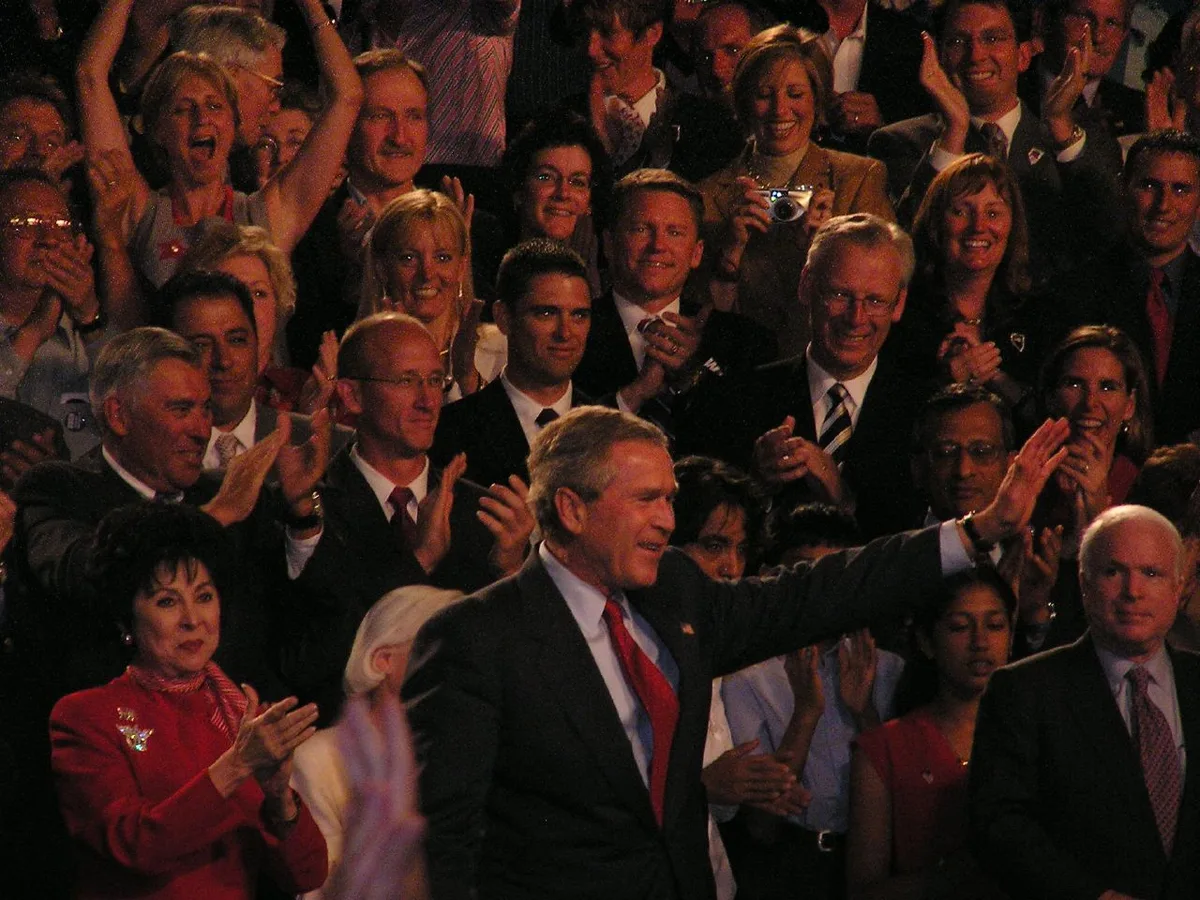 While Kat Abughazaleh’s self-attack ad feels uniquely modern, born of the hyper-partisan digital age, its underlying strategy has historical echoes. The concept of "owning the narrative" by pre-empting criticism is not new. Political campaigns have long employed "inoculation theory," where minor, anticipated criticisms are addressed early to build resistance against more damaging attacks later. For instance, during the 2004 US presidential election, the George W. Bush campaign famously ran ads that pre-emptively acknowledged his privileged background, reframing it as a story of personal growth and overcoming expectations, thereby blunting John Kerry's expected line of attack.
Beyond traditional politics, the art world and protest movements offer even closer parallels. Performance artists have historically used self-deprecating or self-critical works to provoke thought and expose societal norms. Consider the works of Marina Abramović, who often subjects herself to physical and psychological extremes to explore human vulnerability and endurance. While Abughazaleh’s work operates in the media criticism sphere, her self-attack ad shares that spirit of using the self as a canvas for broader commentary. Similarly, satirical movements and counter-cultural groups have often adopted and exaggerated the language and imagery of their oppressors to mock and disarm them. The Yippies in the 1960s, for example, used theatrical stunts and absurdism to critique the establishment, often blurring the lines between protest and performance.
What distinguishes Abughazaleh’s move is its direct application within the realm of digital media accountability. She isn’t merely satirizing; she’s using the exact form of a political attack ad to critique the genre of political attack ads. This isn’t just a provocation; it’s a pedagogical tool, a live demonstration of media literacy. “It’s a masterclass in jujutsu,” noted Dr. Anya Sharma, a communication theorist specializing in digital rhetoric. “She takes the force of the attack against her and redirects it, not to hurt her opponents, but to illuminate the mechanics of their own aggression.” This makes the Kat Abughazaleh attack ad on herself less of a political stunt and more of a critical intervention, an attempt to elevate the discourse by exposing its underlying mechanisms.
The Unresolved Question: What Does Kat Abughazaleh’s Self-Attack Ad Mean for Media Accountability?
The reverberations of Kat Abughazaleh’s audacious self-attack ad extend far beyond its immediate impact, posing profound questions for the future of media accountability. If the lines between genuine criticism and strategic self-critique can be so expertly blurred, what does this mean for discerning truth in an already fragmented information landscape? Does this strategy empower individuals to reclaim their narratives, or does it further muddy the waters, making it harder for audiences to trust any form of media, even that which claims to expose manipulation? The ad forces us to confront the inherent performativity of political discourse, where authenticity is often just another carefully constructed illusion.
One perspective argues that Abughazaleh’s move raises the bar for media literacy. By demonstrating the construction of an attack ad from the inside out, she implicitly challenges viewers to be more critical consumers of all political messaging. “If you saw how easily I could be ‘attacked’ by my own hand,” one hypothetical supporter might reason, “you’ll think twice before accepting any attack ad at face value.” This approach could foster a more discerning public, less susceptible to cheap rhetorical tricks and more attuned to the underlying motivations behind media narratives. It’s an uncomfortable education, but perhaps a necessary one in an era saturated with information warfare.
However, a counter-argument suggests that such a sophisticated strategy, while brilliant, might ultimately be self-defeating for the broader goal of media accountability. If even a noted fact-checker and media critic like Abughazaleh resorts to meta-performances, does it not inadvertently validate the idea that all media, including fact-checking itself, is ultimately a form of partisan theater? This perspective posits that such tactics, no matter how well-intentioned, contribute to a pervasive sense of cynicism, where audiences become so distrustful of all sources that they retreat into echo chambers, accepting only information that confirms their existing biases. The unresolved tension lies in whether such radical transparency clarifies or complicates the pursuit of objective truth in the digital age.
FAQ Section
Q: What is Kat Abughazaleh primarily known for? A: Kat Abughazaleh is best known for her work as a digital strategist and media analyst, particularly for Media Matters for America. She meticulously compiles and shares video clips, often “supercuts,” of right-wing media outlets, especially Fox News, to highlight patterns of misinformation, hypocrisy, and extreme rhetoric.
Q: Why would someone create an “attack ad” on themselves? A: Creating an attack ad on oneself is a highly unconventional and strategic move. In Abughazaleh’s case, it’s interpreted as a form of meta-criticism and pre-emptive narrative control. By mimicking the attacks she typically receives from conservative media, she aims to expose the mechanics of such attacks, disarm future criticisms, and force audiences to critically evaluate the form of political messaging rather than just its content.
Q: What were the immediate reactions to this hypothetical ad? A: The few who witnessed the ad initially reacted with confusion and alarm, fearing a hack or a smear campaign. As context emerged, reactions shifted to a mix of grudging admiration for the strategy and renewed debate. Supporters saw it as a brilliant, self-aware critique, while detractors accused her of “stunt journalism” or “playing the victim,” highlighting the polarized nature of digital media discourse.
The brief, enigmatic appearance of Kat Abughazaleh’s attack ad on herself has etched itself into the annals of digital media strategy. It stands as a testament to the escalating sophistication of information warfare and the lengths to which individuals will go to control their narrative. This audacious gambit, whether a fleeting experiment or a harbinger of future tactics, forces a critical re-evaluation of how we consume, interpret, and ultimately trust the media we encounter. It is a stark reminder that in the battle for public perception, the most unexpected weapon can sometimes be self-reflection, wielded with surgical precision.
You might also like:
👉 AI & Journalism’s Future: Reshaping News Reporting & Media
👉 Real Estate Investing for Digital Nomads: Marketing & Wellness Strategy
👉 AI Tsunami: Charting Artificial Intelligence’s Future for Humanity