
The Ishango Bone: Africa's 25,000-Year-Old Math Secret
Uncover Africa's overlooked genius. The Ishango Bone, a 25,000-year-old baboon fibula from Congo, reveals early mathematical prowess.
Ancient Africa’s forgotten genius
Humanity began in Africa. So did much of its genius. This continent, home to diverse cultures and ecosystems, birthed innovations that changed the world. Yet, history often overlooks these African discoveries.
Early math and stargazing
The Ishango Bone, found in 1950, shows early math. This artifact came from Lake Edward in the Congo. It’s 20,000 to 25,000 years old. The bone is a carved baboon fibula. It has notched markings.
Belgian geologist Jean de Heinzelin de Braucourt discovered it. Some scholars think the notches are a lunar calendar. Others see prime number sequences. Mathematics historian Dr. Dirk Huylebrouck studied its patterns. He thinks the markings track lunar phases.
Ancient Egyptians made a 365-day calendar. They watched the star Sirius rise with the sun. This calendar was very accurate for its time. Dr. Zahi Hawass, former Minister of State for Antiquities Affairs, confirms it was precise. It split the year into three seasons. Each season had four months.
The Nilometer, an ancient Egyptian invention, measured the Nile River’s flood levels. This device was vital for farming. It helped plan crops and taxes. Nilometers were found at many sites. Elephantine Island and Roda Island had them. Egyptians used them from at least the Old Kingdom. Its accuracy helped predict crop yields.
Early stargazing also appeared in Africa. The Nabta Playa megalithic complex in southern Egypt dates to around 4500 BCE. It has stone alignments. These alignments line up with the summer solstice. Astrophysicist Dr. J. McKim Malville studied these structures. He thinks they mark celestial events.
Building big, working metal
Africa developed iron smelting technology much earlier than we thought. Evidence from Tanzania dates back to 1000 BCE. This came before widespread European iron production. The Haya people of Tanzania built excellent iron furnaces. These furnaces reached very high temperatures.
Archaeologist Dr. Peter Schmidt documented this discovery. He dug up furnaces near Lake Victoria. His research shows clever preheating methods. These methods made iron production efficient. The Haya used iron for tools and weapons.
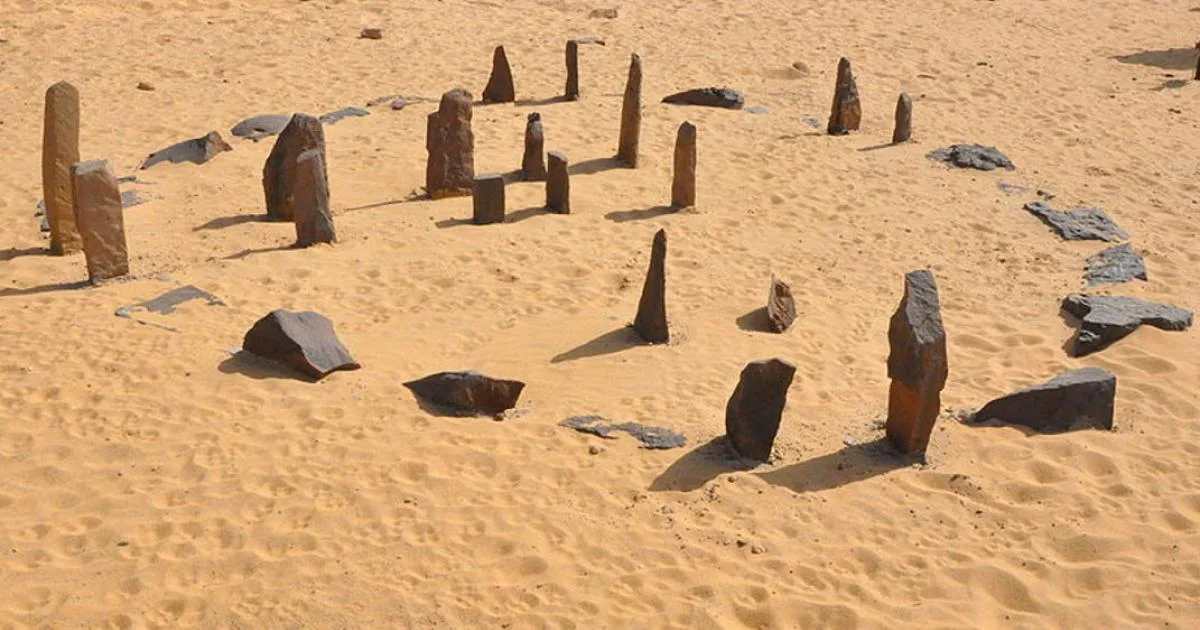
The Nabta Playa megalithic complex in southern Egypt, dating to around 4500 BCE, is one of the world's earliest known astronomical alignments, predating Stonehenge by a millennium. Its stone structures align with the summer solstice, indicating advanced understanding of celestial events by ancient African peoples. (Source: ancient-origins.net)
The Kingdom of Meroë, in modern-day Sudan, was a big iron center. It thrived from 800 BCE to 350 CE. Meroë’s “slag heaps” are huge. They show massive iron production. Meroitic iron tools and weapons were traded widely. Professor Joseph Okpaku, an African history scholar, points out Meroë’s industrial scale.
Ancient Egyptians built the Pyramids of Giza. This needed advanced engineering. The Great Pyramid alone used 2.3 million stone blocks. Its construction began around 2580 BCE. This huge task needed precise quarrying and transport. Ramps, levers, and rollers were likely used.
American Egyptologist Dr. Mark Lehner studies pyramid building methods. He points out the amazing organization needed. Egyptian engineers also built complex irrigation systems. These systems diverted Nile waters to fields. They made farming thrive.
Early architecture also appeared beyond Egypt. The Great Zimbabwe complex in southern Africa has impressive dry-stone masonry. Construction began around the 11th century CE. Its walls reach over 11 meters high. Archaeologist Dr. Innocent Pikirayi describes its construction. The site was a royal palace.
Healing and feeding people
Ancient Egyptians performed advanced medical procedures. The Edwin Smith Papyrus, from 1600 BCE, describes surgical methods. It details 48 injury cases. This papyrus explains diagnosis, prognosis, and treatment. It talks about setting broken bones. It also describes treating dislocated jaws.
Egyptologist Dr. James P. Allen analyzed the papyrus. He points out its rational approach to medicine. The Ebers Papyrus, from around 1550 BCE, has over 700 remedies. It describes treatments for many illnesses. This includes heart conditions and tumors.
Early vaccination also appeared in Africa. Historical accounts point to smallpox inoculation in West Africa. This happened centuries before Edward Jenner in Europe. Variolation meant exposing people to mild disease. This built immunity. Medical historian Dr. Sofie Lay mentions early African methods. Cotton Mather documented similar practices in Boston in 1721. He learned it from his enslaved West African servant, Onesimus.
African farming discoveries fed huge populations. Early plant domestication happened in the Sahel region around 5000 BCE. Crops like sorghum, millet, and African rice were first grown here. These staples spread across the continent. Archaeologist Dr. Dorian Q. Fuller at UCL studies these origins. He points out independent domestication centers.
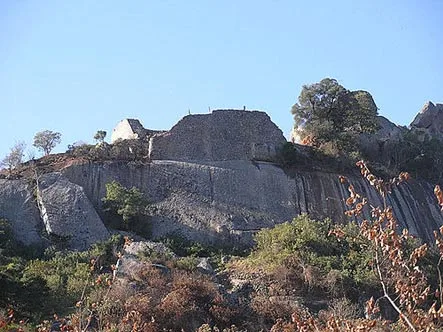
The Great Zimbabwe complex, a UNESCO World Heritage site, showcases impressive dry-stone masonry walls, some reaching over 11 meters high, built without mortar by the ancestors of the Shona people starting around the 11th century CE. (Source: ancient-origins.net)
Terracing and irrigation systems helped intensive farming. The Engaruka site in Tanzania has complex irrigation. It dates back over 3,000 years. Stone-lined furrows diverted water to fields. This increased crop yields in dry areas. Tanzanian archaeologist Dr. Fidelis Masao documented Engaruka’s systems. This cleverness ensured long-term food security.
Writing and artistry
Writing systems grew independently in ancient Africa. Hieroglyphic script appeared in Egypt around 3200 BCE. This system mixed pictures, syllables, and alphabet letters. It was used for religious texts and administration. Egyptologist Dr. Toby Wilkinson describes its evolution. Hieroglyphs recorded pharaonic history on monuments and papyri.
The Meroitic script, from the Kingdom of Meroë, replaced Egyptian hieroglyphs. It appeared around the 3rd century BCE. This alphabetic script had 23 signs. It was simpler than hieroglyphs. It became Meroë’s official script. Dr. Claude Rilly, an expert on Meroitic language, studies its decipherment. Many texts remain undeciphered.
Ancient African societies created amazing artistic crafts. The Nok culture of West Africa made terracotta sculptures. They date from 1500 BCE to 500 CE. These life-sized figures have complex details. They are early forms of West African art. Archaeologist Dr. Frank Willett documented Nok art thoroughly. Their purpose remains debated.
Glassmaking was an ancient Egyptian craft. Evidence of glass production dates to around 3500 BCE. Early examples are beads and amulets. Egyptians mastered core-forming techniques. They created vessels with colorful patterns. Archaeologist Dr. Paul T. Nicholson studied Egyptian glass. Amarna was a big production center for colored glass.
Other crafts include gold working. The ancient Egyptians mastered complex gold jewelry. The Ashanti people of Ghana created clever gold weights. These weights, from the 18th century onward, measured accurately. They showed proverbs and cultural symbols. Art historian Dr. Doran H. Ross studied what they meant.
A lasting legacy, new discoveries
Ancient African innovations built important foundations for global progress. These contributions are often ignored in history. Colonial biases helped cause this oversight. Dr. Molefi Kete Asante, an Africology scholar, argues for Afrocentric views. He emphasizes Africa’s central role in human civilization.

Nok culture terracotta sculptures, dating from 1500 BCE to 500 CE, are among the earliest and most distinctive forms of West African art, known for their elaborate hairstyles and enigmatic expressions, whose original purpose remains debated by archaeologists. (Source: chairish.com)
Ongoing research keeps finding new evidence. Discoveries question established timelines of technological development. They change how we see human cleverness. The African Archaeological Review publishes current findings. These new insights make our historical understanding richer.
We must recognize these inventions for a balanced history. It shows the full range of human creativity. It makes us understand interconnected societies better. Future generations deserve a complete history. This builds a broader appreciation for diverse cultures. Ignoring Africa’s deep contributions means missing half the story of human innovation.
You might also like:
👉 Unearthing History: Famous Archaeological Discoveries & Their Impact