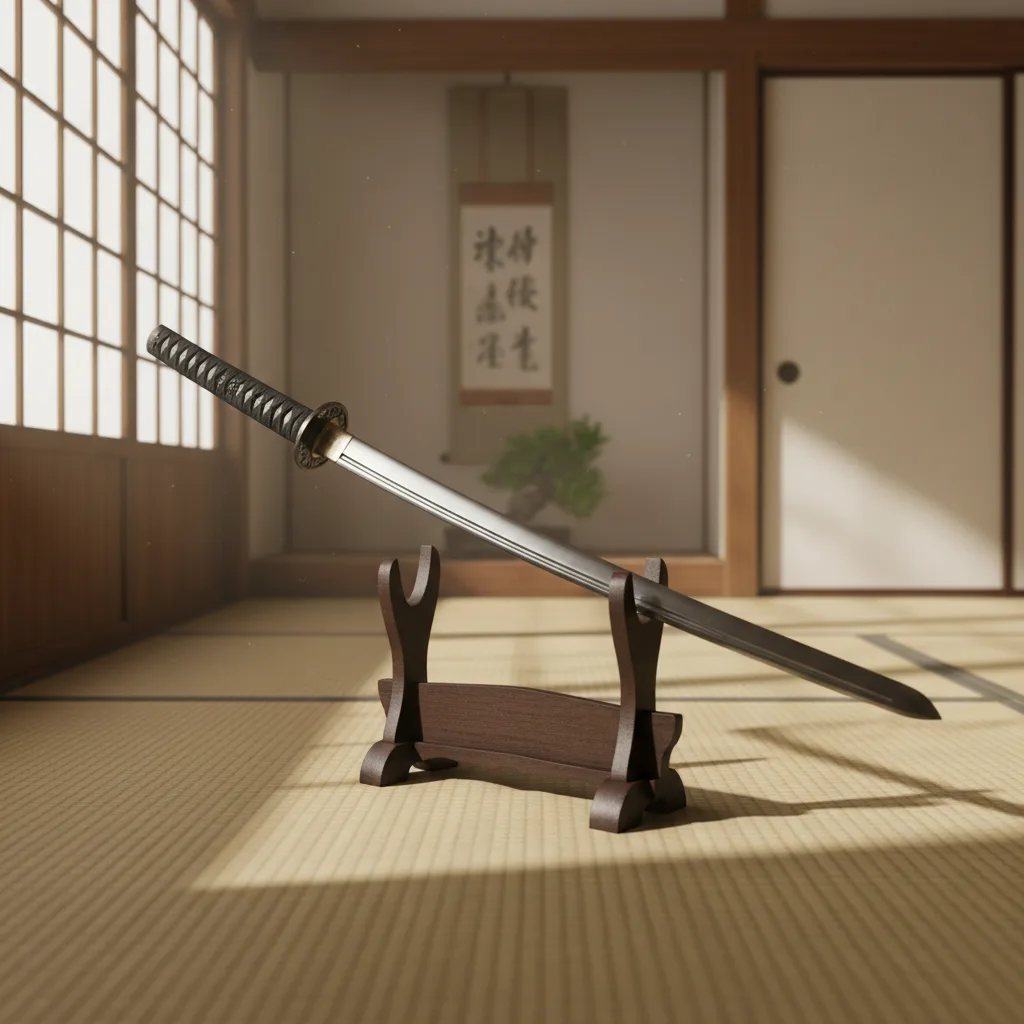
Japanese Katana: Origins, History & Enduring Cultural Symbolism
Explore the rich history and origins of the Japanese Katana, from its role as a formidable battlefield weapon to its enduring status as a cultural and national symbol.
The Katana: From Battlefield Weapon to Enduring Symbol
At Agincourt in 1415, English longbowmen, fingers raw and calloused, unleashed volleys that shredded French heavy cavalry, fundamentally altering medieval warfare. The longbow was more than a weapon; it symbolized the English common man’s skill, democratizing battlefield power and reshaping national identity. A marvel refined over generations, its accuracy demonstrated human ingenuity and relentless practice. Yet, like all tools, its dominance eventually waned, superseded by gunpowder and cannon.
Centuries later, Japan forged its own iconic weapon, one that fused advanced technology with national ethos: the katana. This curved, single-edged sword transcended its role as a mere war tool, becoming the embodiment of the samurai, representing discipline, honor, and refined artistry. The katana’s history offers insight beyond metal and forging; it reveals how societies adapt, how symbols evolve, and what occurs when the cherished instruments of one age confront irresistible technological and political upheaval. This pattern of adaptation and obsolescence is recurrent. Consider the machine gun in World War I, rendering cavalry charges suicidal, or contemporary cyber warfare, which redefines national defense. The specific instruments shift, but the fundamental tension—between tradition and innovation, identity and sheer necessity—endures.
From straight sword to curved blade: The katana’s origins
The katana emerged not as a sudden invention from a Japanese smith’s forge, but through a slow, deliberate evolution shaped by external influences and local requirements. Early Japanese swords, predating the familiar curve, were often straight, double-edged blades known as chokutō. These drew heavily from continental designs, arriving from China and Korea during the Kofun period (around 300–538 CE). While functional, they lacked the distinct character that would later define Japanese sword-making.
The curve that defines the katana began to emerge around the Heian period (794–1185), giving rise to the tachi. This longer, more curved sword, typically worn edge-down suspended from the obi (sash), proved ideal for cavalry. Its form facilitated a smooth, powerful draw while mounted and aided in delivering effective cuts from horseback. This design was a direct response to shifts in Japanese warfare, as mounted archery and skirmishes grew more prevalent. Dr. Kanzan Sato, in his classic book The Japanese Sword, emphasizes this practical adaptation: “The tachi’s curve was not merely aesthetic; it was a pragmatic design born of the saddle, allowing for quicker, more efficient draws and cuts.”
A critical turning point, significantly accelerating the katana’s refinement, occurred with the Mongol invasions of Japan in 1274 and 1281. The invaders’ short, straight swords, combined with their disciplined formations and unfamiliar tactics, revealed weaknesses in the Japanese blades of the era. While the tachi was effective, it occasionally broke against Mongol hardened leather armor and chainmail, or its length proved cumbersome for ground combat. Under immense pressure, Japanese smiths responded by crafting stronger, tougher blades. They developed advanced forging techniques, such as differential hardening (creating a hard edge and a softer, shock-absorbing spine) and complex folding processes. These innovations, initially applied to the tachi, established the foundation for the future katana, making it not only sharper but remarkably durable. External threats frequently serve as powerful catalysts for innovation, a dynamic seen from the space race fueled by Cold War fears to contemporary cybersecurity advances driven by state-sponsored hacking.
Forging the Blade: Mastery, Artistry, and the Warrior Class
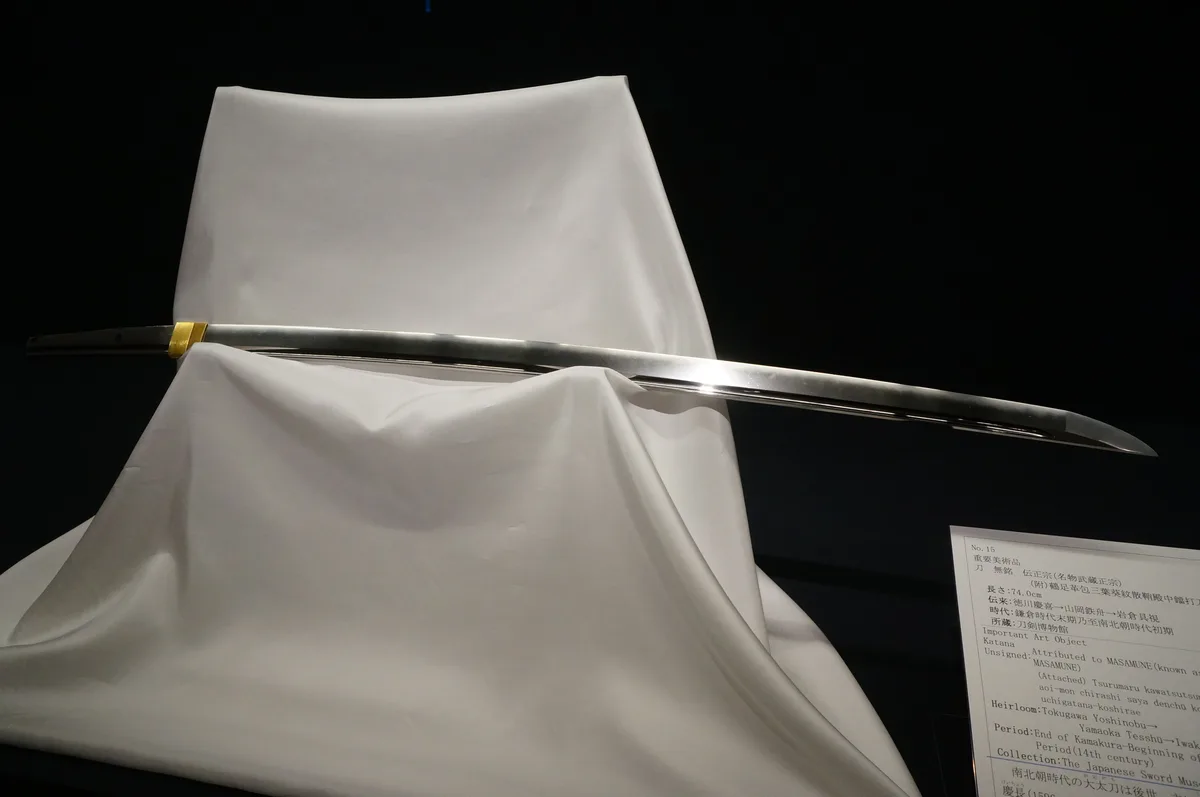 The **Kamakura period** (1185–1333), immediately following the Mongol invasions, marks the zenith of Japanese sword-making. During this era, the **katana** truly established its definitive form. It witnessed the emergence of renowned smiths and distinct sword schools, each with unique styles and closely guarded techniques. Masters like **Masamune** (active around 1288–1328) from Sagami province, and **Muramasa** (active in the 16th century), became synonymous with exceptional quality and artistic prowess. Their blades transcended mere weaponry; they were works of art, imbued with spiritual significance, their *hamon* (temper line) serving as a distinct signature of both smith and steel.
The katana, shorter and typically less curved than the tachi, and usually worn edge-up through the obi, became the samurai’s primary sidearm during the Muromachi period (1336–1573) and the tumultuous Sengoku Jidai, or Warring States period (around 1467–1615). This era of constant civil war saw samurai transition from predominantly mounted archers to infantry warriors, engaging in tight, close-quarter battles. The katana’s design enabled a quicker draw and immediate cutting action when dismounted—a significant practical advantage that solidified its role as the samurai’s indispensable weapon. It was often paired with a smaller companion sword, the wakizashi, forming the daishō (literally “big-small”). This pairing was not merely a fashion statement; it represented a deeply ingrained cultural practice, akin to how specific uniforms denote rank and belonging for modern military officers.
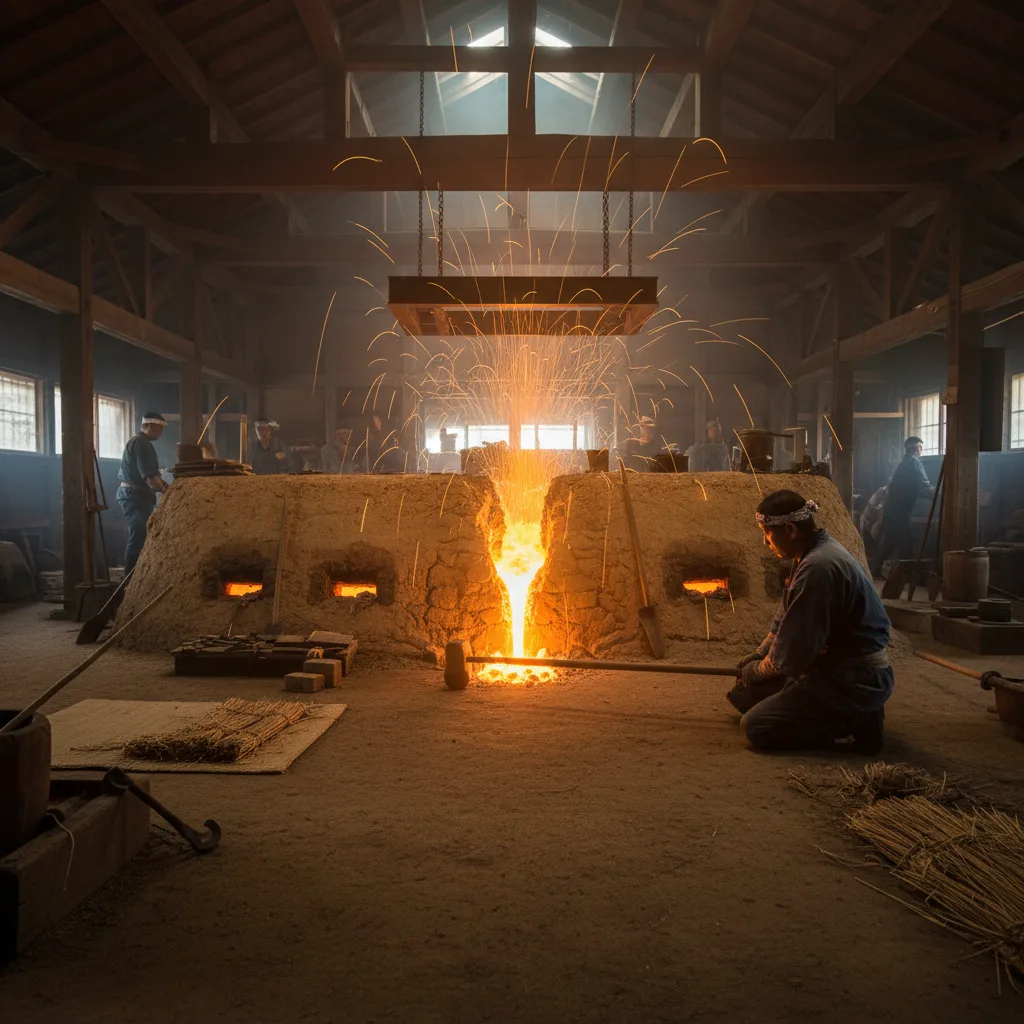
The craft itself demanded arduous, meticulous work. Smiths utilized tamahagane, a high-carbon steel melted from iron sand in a traditional tatara furnace. This raw steel was then folded, hammered, and fire-welded repeatedly, often thousands of times, to eliminate impurities and uniformly distribute carbon. The blade subsequently underwent differential hardening: a special clay mixture was applied before quenching, producing the extremely hard, sharp ha (edge) and the flexible, shock-absorbing mune (spine). This complex process, as detailed by researchers like Stephen Turnbull in The Samurai Sword: A Warrior’s Weapon, transcended mere metallurgy; it was a cultural ritual, a testament to patience and perfection. Such dedication to a specialized craft echoes in the work of 18th-century Swiss watchmakers or contemporary bespoke tailors, where the pursuit of mastery remains a constant human endeavor.
From Battlefield to Symbol: The Katana’s Evolving Role
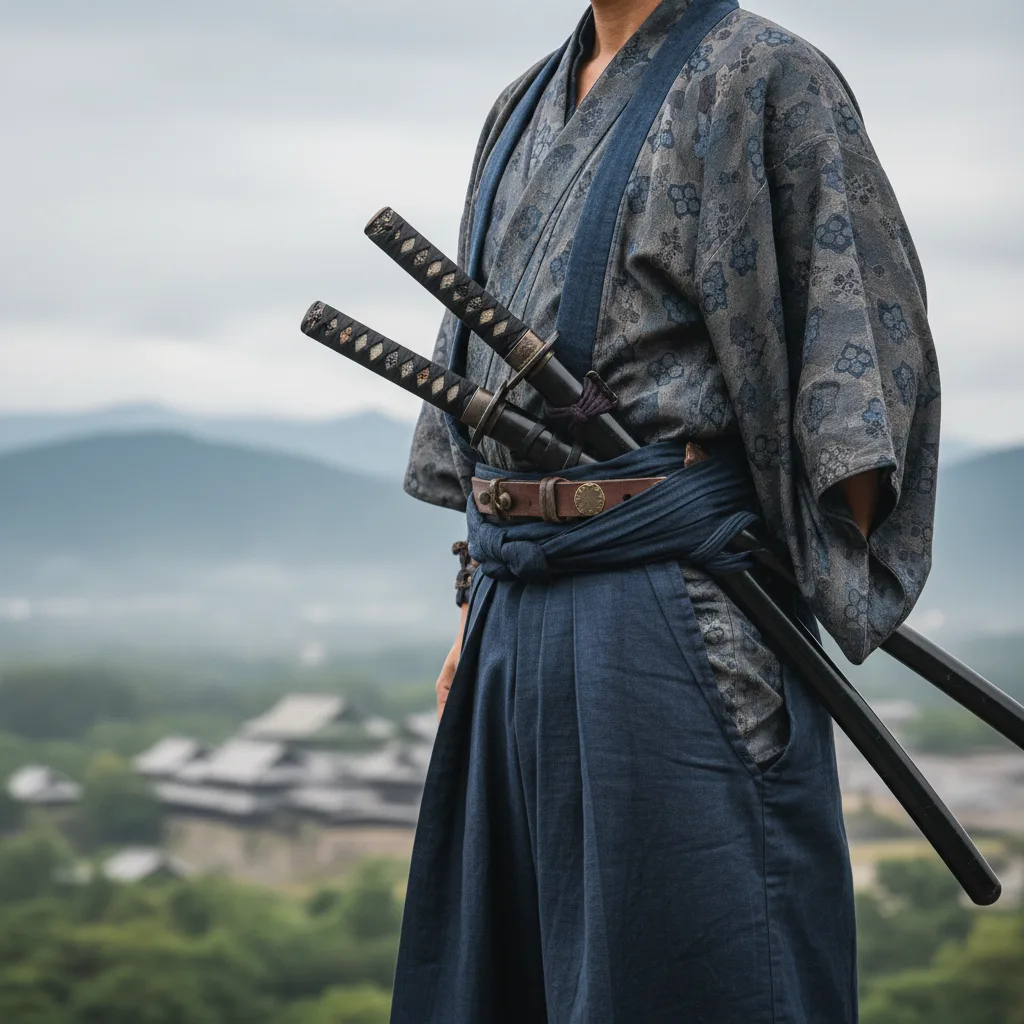
The Edo period (1603–1868) ushered in a prolonged era of peace under the Tokugawa Shogunate. In the absence of major wars, the katana’s function shifted dramatically. It transformed from a primary battlefield weapon into a potent symbol of status, authority, and samurai identity itself. Carrying the daishō became an exclusive privilege of the samurai class, clearly distinguishing them from commoners. Blades grew increasingly decorative, featuring exquisite tsuba (handguards), menuki (ornamental handle grips), and saya (scabbards), showcasing their owners’ wealth and refined taste. This period also saw the establishment of schools dedicated to sword etiquette, maintenance, and the blade’s philosophy, beyond mere combat techniques. This parallels the Victorian era, where military uniforms grew increasingly elaborate and ceremonial, even as industrialization began to fundamentally alter warfare.
This era of symbolic importance, however, ultimately preceded the katana’s obsolescence. The Meiji Restoration of 1868 propelled Japan into rapid modernization, aiming to align with Western powers. The samurai class was abolished, and their associated privileges vanished. The infamous Haitōrei edict of 1876 banned carrying swords in public, effectively stripping the katana of its practical function. For many samurai, this represented a profound, painful loss—both practical and spiritual. To have their cherished weapon, their family’s legacy, suddenly rendered illegal to carry must have felt like a fundamental piece of their identity had been severed. Such harsh transitions are echoed in industries disrupted by new technologies: horse-drawn carriage makers confronting the automobile, or Blockbuster Video facing the rise of Netflix.
Despite the ban, the katana’s cultural significance persisted. During the rise of Japanese nationalism in the early 20th century and through World War II, the katana experienced a resurgence, albeit in an altered form. Military officers, particularly in the Imperial Japanese Army, received or commissioned modern swords that often replicated the traditional katana’s aesthetic, known as shin-guntō. These were mass-produced, frequently of lower quality than historical blades, yet they fulfilled a powerful symbolic role: linking contemporary soldiers to the samurai warrior tradition. It proved a potent propaganda tool, connecting present military strength to a revered heritage. These symbolic blades were carried into an age dominated by machine guns, tanks, and aircraft—a clear demonstration that while symbols endure, their practical utility can diminish significantly. Following Japan’s defeat in 1945, the Allied Occupation Forces completely banned sword production, viewing it as a symbol of militarism. Only in 1950 were dedicated artisans permitted to resume production, strictly for cultural and artistic purposes, overseen by organizations like the Nihon Bijutsu Token Hozon Kyokai (NBTHK), which safeguards traditional sword-making techniques.
Beyond the Blade: The Katana’s Modern Legacy
Today, the katana is no longer a weapon of war. It stands as a revered artifact, an object of profound cultural and artistic value. Master sword smiths, though their numbers are fewer, continue to practice the ancient techniques, meticulously forging new blades that can take months, even years. These modern artisans, such as the acclaimed Yoshindo Yoshihara, do not merely replicate the past; they extend a living tradition, ensuring the knowledge and skill persist and evolve. Their work is celebrated in museums worldwide, from the Tokyo National Museum to New York’s Metropolitan Museum of Art, where these blades are exhibited for their history, their striking beauty, and their engineering brilliance.
The katana’s enduring appeal also manifests in martial arts like iaidō and kendō, where it remains a core training tool and philosophical guide. Practitioners learn not only the physical movements but also mental discipline and respect for the blade itself. Furthermore, it permeates pop culture, appearing in Hollywood blockbusters and video games, often romanticized and occasionally misunderstood. It has become a global shorthand for “ninja,” “samurai,” and “Japanese warrior spirit.” While not always historically accurate, this widespread presence underscores an icon’s capacity to transcend its original function and embed itself in our collective imagination. Ancient Roman gladiators, despite their practical irrelevance, continue to fascinate us in a similar way.
The katana’s extensive history offers a potent lesson in the shifting nature of value. It was a tool born from necessity, honed by conflict, elevated to a symbol of status, then rendered obsolete by progress, only to be revitalized as an object of profound cultural and artistic esteem. This trajectory is not unique to Japan. It mirrors the decline of transatlantic ocean liners supplanted by air travel, or the manual typewriter replaced by the word processor—each leaving an inspiring legacy. The katana illustrates that while an object’s practical function may diminish, its essence—the human ingenuity, the cultural narratives, the sheer artistry invested in its creation—can endure, often becoming more powerful in its symbolic manifestation. It speaks to a fundamental human drive to create, to perfect, and to imbue objects with significance far beyond their immediate purpose. What might be the next “katana” in our rapidly changing world? Perhaps an obsolete technology finding new life as an art form, or a digital tool transforming into a cultural touchstone. History, while not repeating itself precisely, often echoes its past, revealing patterns for those who observe closely.
Common questions about the katana
Common questions about the katana often arise; here are some brief answers.
The main difference between a tachi and a katana comes down to length, curve, and how they were worn. A tachi is usually longer and more curved, traditionally worn edge-down, hanging from the obi. A katana is typically shorter, less curved, and worn edge-up through the obi, which made for a faster draw in close-quarters fighting.
“Tamahagane” is a high-carbon steel made from iron sand in a traditional tatara furnace. It’s vital for katanas because its unique makeup and the intense folding process used to refine it create a steel with incredible strength, flexibility, and the beautiful hamon (temper line) that defines a real katana.
No, not all samurai swords were of the same quality. While the katana was the samurai’s main weapon, its quality differed greatly based on the smith, materials, and historical period. Legendary swords from masters like Masamune are national treasures, but many blades made in later periods or during wartime for ordinary soldiers were much poorer.
Is it legal to own a katana today? This depends heavily on the country. In Japan, strict rules mean special permits are needed for historically important or traditionally made swords, and new sword production is tightly overseen by the NBTHK. In many other countries, owning a katana is legal, often treated like other knives or antique weapons, but carrying one in public is usually restricted or forbidden.
You might also like:
👉 Shahed 136 Drone: Cost-Effective Weapon Reshaping Modern Warfare
👉 The Black Stone of Mecca: History, Legends & Spiritual Significance
👉 Medieval Empires: Power, Culture, and Lasting Global Impact