Medieval Europe Map: Kingdoms, Empires & Shifting Borders
Delve into the dynamic map of medieval Europe, where borders blurred and allegiances shifted. Understand the complex tapestry of power, faith, and ambition that defined kingdoms and empires.
The Shifting Sands of Power: Unraveling Medieval Europe’s Map of Kingdoms and Empires
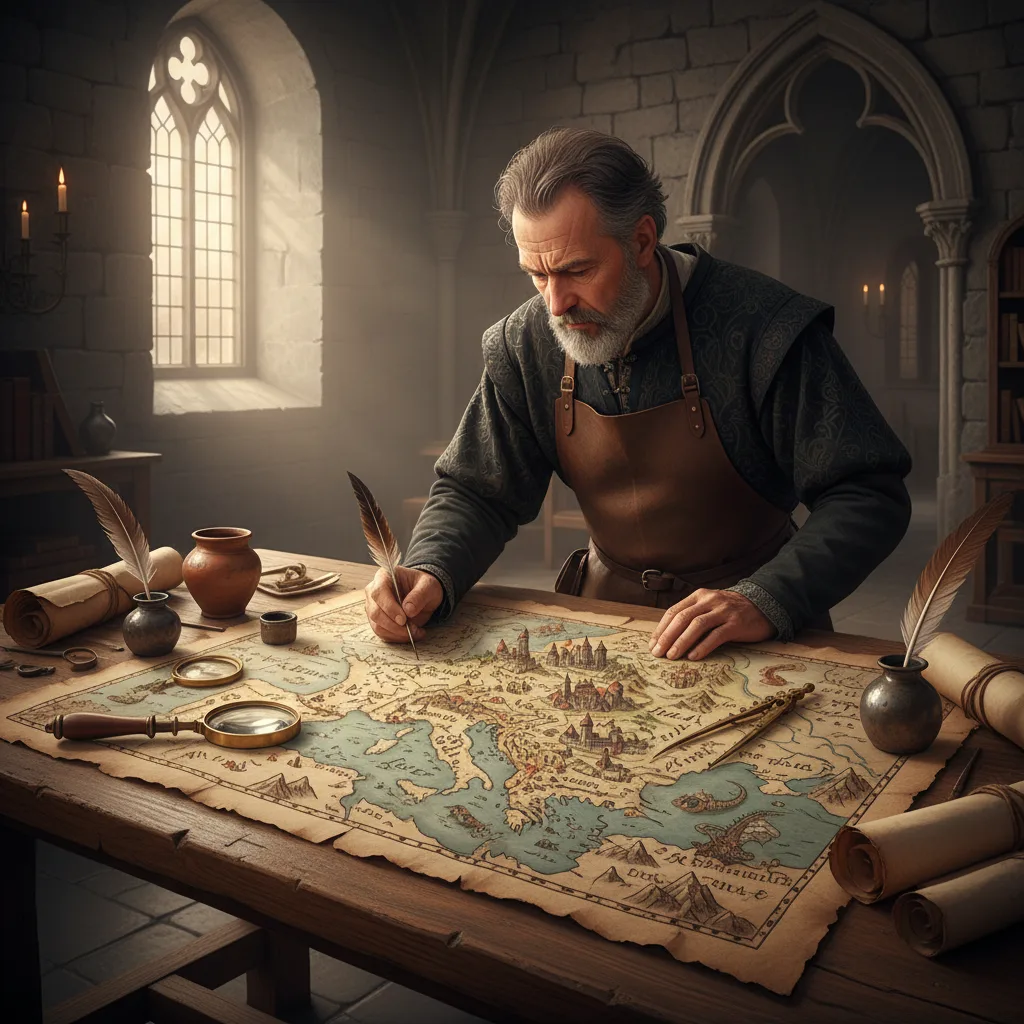
Imagine, for a moment, being a cartographer in the year 1200. Tasked with drawing a definitive map of Europe, you’d quickly realize it’s a fool’s errand. Borders blurred, allegiances shifted with the wind, and what was a kingdom one decade might be a collection of feudal domains the next. The medieval European landscape was a dynamic, ever-evolving tapestry of power, faith, and ambition, far more fluid than the neat lines we draw on modern maps. This wasn’t a static tableau but a living, breathing entity, its contours constantly redrawn by the clash of swords, the stroke of a pen, and the pronouncements of popes and kings.
To understand the medieval Europe map kingdoms and empires is to dive into a period of profound transformation, where the remnants of Rome met emergent barbarian cultures, forging the very foundations of the nations we know today. It’s a story less about fixed territories and more about spheres of influence, contested claims, and the relentless pursuit of sovereignty. Join us as we journey through this tumultuous era, charting the rise and fall of formidable powers and the enduring legacy they left behind.
The Cartographer’s Nightmare: A World in Flux
The fall of the Western Roman Empire in 476 AD didn’t just end an era; it shattered a continent into a thousand pieces. The grand, unified administrative structure dissolved, replaced by a patchwork of tribal kingdoms, often short-lived and perpetually at war. This was the genesis of medieval Europe’s political landscape – a land of constant fragmentation and attempted consolidation. For centuries, the very concept of a stable border was almost alien.
Feudalism, the dominant socio-political system, further complicated matters. Land was held in fief from a lord in exchange for service, creating a complex web of overlapping loyalties and jurisdictions rather than clear, centralized authority. A duke might owe fealty to a king, but his local power could be immense, almost sovereign, making his territory a de facto independent entity. This inherent decentralization meant that even within a recognized kingdom, the monarch’s direct control often extended only to their personal demesne.
From the Visigothic Kingdom in Iberia to the Frankish realms that would eventually give birth to France and Germany, these early states were continuously redrawing their own internal and external boundaries through conquest, marriage, and inheritance. The Carolingian Empire under Charlemagne (c. 747–814 AD) offered a brief, shining moment of unity, stretching across much of Western Europe, but even this mighty construct fragmented upon his death, laying the groundwork for future rivalries. How, then, did any semblance of order emerge from this perpetual chaos?
The Holy Roman Empire: A Ghostly Giant on the Medieval Europe Map
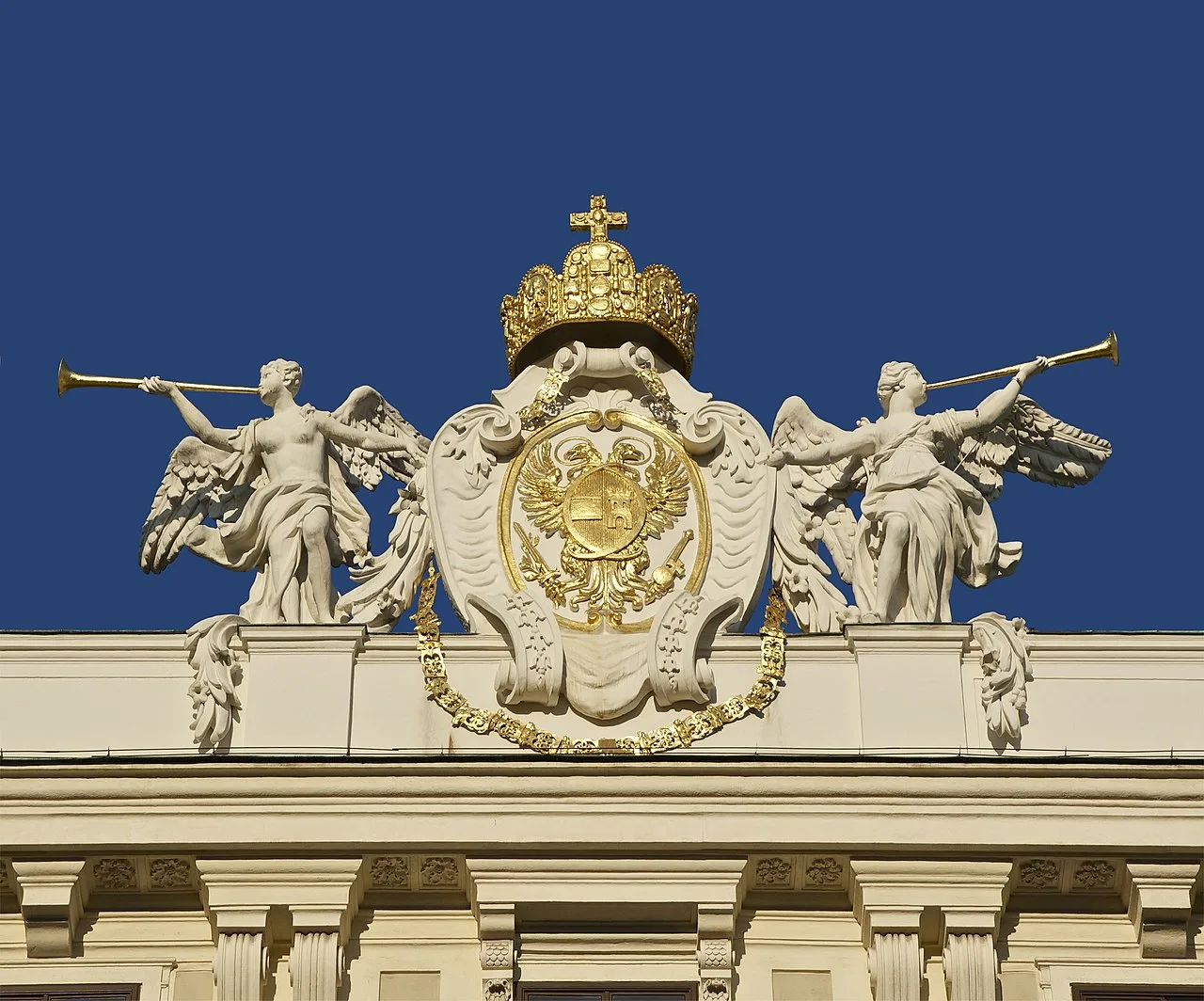 The Imperial Crown of the Holy Roman Empire, a potent symbol of the vast, multi-ethnic entity resurrected by Otto I.
Perhaps no entity better encapsulates the complex, often contradictory nature of medieval European power than the Holy Roman Empire. Resurrected by Otto I in 962 AD, this vast, multi-ethnic conglomerate claimed the mantle of ancient Rome, yet it was, as Voltaire famously quipped, “neither holy, nor Roman, nor an empire” in the traditional sense. Spanning vast territories across Central Europe – primarily modern Germany, Austria, Bohemia, and parts of Italy and France – its sheer geographical scale was immense, yet its internal cohesion was notoriously weak.
The HRE was less a centralized state and more a loose confederation of hundreds of principalities, duchies, bishoprics, and free imperial cities. The Emperor, theoretically the most powerful secular ruler in Christendom, was elected by a college of powerful prince-electors, often leading to intense political maneuvering and compromise rather than absolute rule. This constant struggle for power between the Emperor and his constituent princes, as well as with the Papacy, defined much of its history, preventing the kind of strong national identity seen in emerging monarchies to its west.
Despite its decentralization, the HRE played a crucial role in shaping the political and cultural landscape of Central Europe for over 800 years. Its emperors, like Frederick Barbarossa (reigned 1155–1190), often commanded immense prestige and military might, intervening in Italian affairs and engaging in crusades. Yet, the question always remained: how could such a sprawling, internally divided entity maintain its imperial façade for so long without ever truly consolidating its power?
From Isles to Empires: The Rise of England and France
While the Holy Roman Empire wrestled with its internal divisions, two powerful monarchies were slowly but steadily consolidating their domains and defining their national identities: England and France. Their story is one of intertwined destinies, fierce rivalry, and the relentless pursuit of territorial integrity.
England’s journey to nationhood was dramatically accelerated by the Norman Conquest of 1066. William the Conqueror imposed a strong, centralized feudal system, creating a powerful monarchy that, unlike its continental counterparts, exercised significant control over its nobles. Over subsequent centuries, the Plantagenet kings, like Henry II (reigned 1154–1189), forged what historians call the “Angevin Empire,” a vast dominion stretching from Scotland to the Pyrenees, encompassing England and much of western France through inheritance and marriage – most notably, Henry’s marriage to Eleanor of Aquitaine. This sprawling, cross-channel empire made the English monarchy a formidable force, but also a constant threat to French sovereignty.
France, under the Capetian dynasty, faced a far more protracted struggle to unite its disparate feudal territories. For centuries, the French kings were often weaker than their most powerful vassals, controlling only the Île-de-France region directly. However, through strategic marriages, shrewd diplomacy, and relentless warfare, they gradually expanded their royal demesne. The Hundred Years’ War (1337–1453) was a brutal crucible that ultimately forged a strong French national identity and saw the expulsion of most English territorial claims from the continent. Figures like Joan of Arc became symbols of this emergent nationhood. By the end of the medieval period, both England and France had largely defined their modern borders, becoming powerful, centralized kingdoms that profoundly reshaped the medieval Europe map kingdoms and empires.
The Iberian Peninsula: A Tapestry of Reconquista and Rivalry
To truly appreciate the diversity of the medieval Europe map kingdoms and empires, one must look south to the Iberian Peninsula, a land shaped by centuries of religious and territorial conflict. From the early 8th century, much of Iberia was under Muslim rule, known as Al-Andalus, a vibrant, sophisticated civilization that was a beacon of learning and culture. However, alongside this Islamic power, Christian kingdoms persisted in the north, laying the groundwork for a centuries-long struggle.
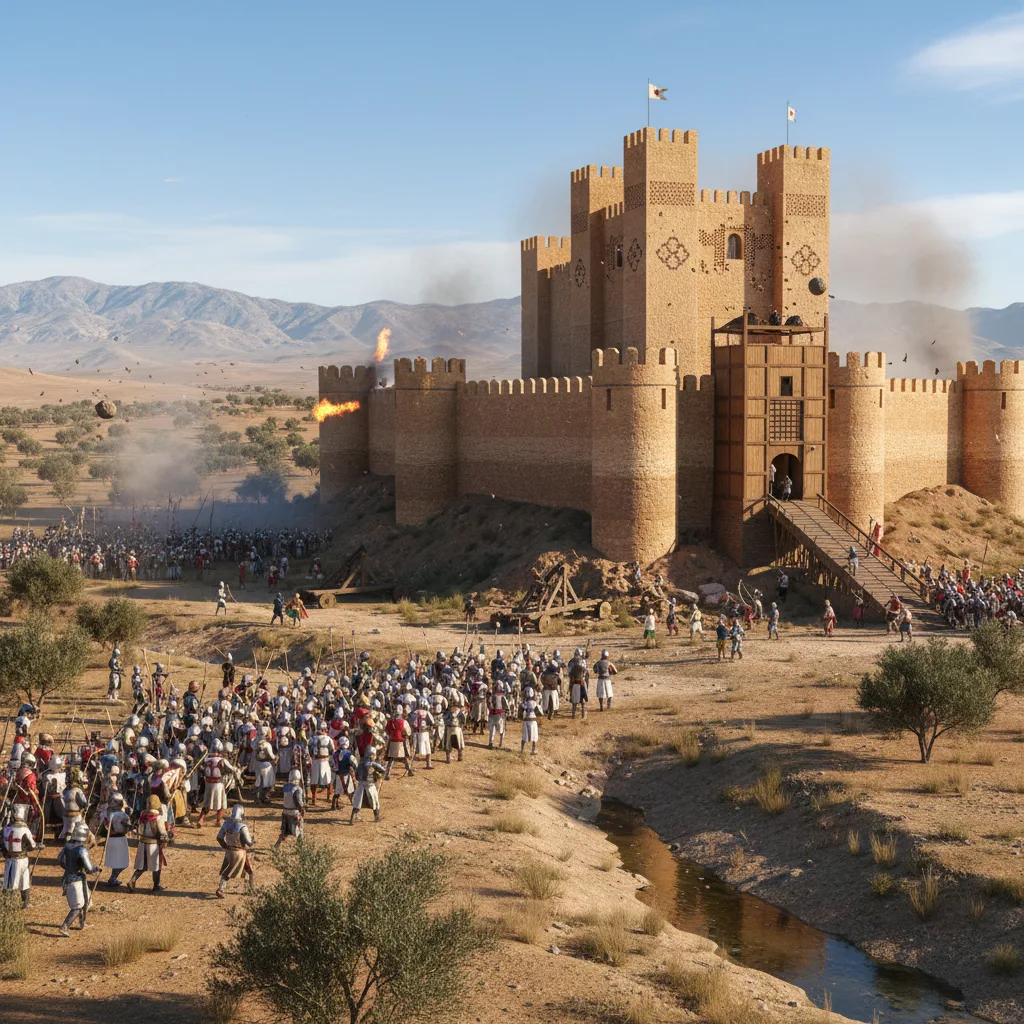
The Reconquista – the gradual Christian reconquest of the peninsula – was not a single, unified movement but a series of intermittent campaigns waged by a shifting array of Christian kingdoms: Asturias (later León), Castile, Aragon, and Portugal. These kingdoms constantly vied for territory not only against the Muslim taifas (fragmented emirates) but also against each other. Legendary figures like El Cid embodied the complex loyalties and shifting alliances of this era, fighting for both Christian and Muslim rulers at different times.
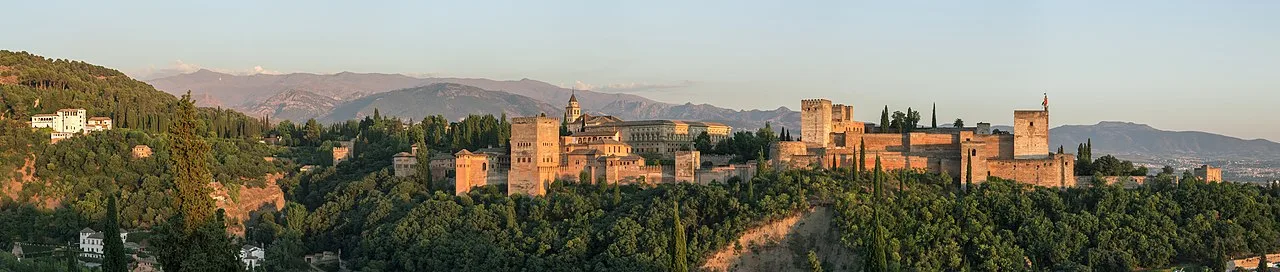 The Alhambra in Granada, a magnificent palace and fortress complex, representing the last bastion of Muslim rule in the Iberian Peninsula. (Slaunger, CC BY-SA 3.0)
The turning point came with the Battle of Las Navas de Tolosa in 1212, a decisive Christian victory that severely weakened Al-Andalus. By the late 13th century, only the Nasrid Kingdom of Granada remained under Muslim control. The marriage of Ferdinand of Aragon and Isabella of Castile in 1469 united the two largest Christian kingdoms, paving the way for the final conquest of Granada in 1492. This monumental event not only completed the Reconquista but also laid the foundation for a unified Spain, poised to become a global superpower.
The Eastern Front: Byzantine Legacy and Slavic Ascendancy
While Western Europe was grappling with feudalism and emerging monarchies, the eastern half of the continent presented a vastly different, yet equally complex, political and cultural landscape. Here, the legacy of the Roman Empire persisted in the form of the Byzantine Empire, centered on Constantinople. For centuries after the West’s collapse, Byzantium remained a bulwark against invaders, a hub of Orthodox Christianity, and a preserver of classical learning, though its territorial reach steadily diminished.
Further north and east, vast new powers were rising. The Kievan Rus’, a powerful federation of East Slavic and Finno-Ugric peoples, emerged in the 9th century, establishing a sprawling state that stretched from the Baltic to the Black Sea. Its conversion to Orthodox Christianity under Vladimir the Great (c. 980–1015) solidified its cultural ties with Byzantium and laid the foundation for future Russian identity. However, like many medieval realms, Kievan Rus’ eventually fragmented, and its various principalities later faced the devastating onslaught of the Mongol invasions in the 13th century, which profoundly reshaped the political map of Eastern Europe.
Alongside these giants, new kingdoms like Poland, Hungary, and Bohemia carved out significant territories. Poland, under dynasties like the Piasts and Jagiellonians, expanded its influence eastward, often clashing with the Teutonic Knights and the burgeoning power of Muscovy. Hungary, initially a powerful Magyar kingdom, contended with both Western and Eastern influences, often serving as a bulwark against nomadic incursions. These Eastern European kingdoms, often caught between the spheres of influence of the Holy Roman Empire, the Byzantine Empire, and later the Golden Horde, developed distinct identities and played crucial, though often overlooked, roles in the broader European narrative.
The Italian Mosaic: City-States, Papacy, and Petty Kingdoms
Italy, the heartland of the Roman Empire, was ironically one of the most politically fragmented regions of medieval Europe. Far from coalescing into a unified kingdom, the peninsula remained a vibrant, often chaotic, mosaic of independent entities, each with its own ambitions and allegiances. This fragmentation was largely due to a unique combination of factors: the enduring power of the Papacy, the rise of wealthy merchant city-states, and continuous foreign interference.
At the center of Italy lay the Papal States, a temporal dominion ruled directly by the Pope, stretching across the central part of the peninsula. The Pope’s dual role as spiritual leader of Christendom and a powerful secular ruler meant he actively engaged in political and military affairs, often preventing any single power from unifying Italy. This temporal power, while providing the Papacy with independence, also embroiled it in endless conflicts with emperors and local lords.
To the north, the rich and powerful city-states of Venice, Florence, Milan, and Genoa flourished, driven by trade, banking, and manufacturing. These de facto republics, often fiercely independent and mutually antagonistic, developed sophisticated political systems and rivaled the wealth of entire kingdoms. Their constant infighting and shifting alliances, however, prevented any one of them from dominating the peninsula. In the south, the situation was equally complex, with the powerful Kingdom of Sicily (later divided into the Kingdom of Naples and the Kingdom of Sicily) passing through the hands of Normans, Hohenstaufens, Angevins, and Aragonese rulers, all adding layers of external influence and internal strife. Italy, therefore, remained a microcosm of medieval power struggles, a land of immense cultural and economic vitality but persistent political division.
Conclusion: Beyond the Borders – A Legacy of Power and Identity
The medieval Europe map kingdoms and empires was never a finished product. It was a dynamic canvas, continually being painted and repainted by the forces of conquest, diplomacy, marriage, and religious fervor. From the sprawling, decentralized Holy Roman Empire to the consolidating monarchies of England and France, the religiously charged territories of the Iberian Peninsula, the vast and shifting realms of Eastern Europe, and the vibrant, fragmented mosaic of Italy, each region tells a unique story of political evolution.
These aren’t just historical curiosities; they are the foundational narratives of modern Europe. The borders, identities, and rivalries forged in the medieval period continue to echo in the continent’s geopolitics today. Understanding this complex, often bewildering, political geography helps us grasp the deep roots of national identities, cultural differences, and enduring conflicts. The medieval map, in its constant state of flux, reminds us that power is never static, and the quest for sovereignty is a timeless human endeavor.
You might also like:
👉 Unveiling Medieval Empires: Power, Culture, and Lasting Global Impact
👉 Fractured Legacy: Medieval Kingdoms & Latin Empire in 1212