
Mpox Unmasked: A Century of Silent Evolution & Global Health Threat
Explore the century-long mystery of mpox, formerly monkeypox. Uncover its silent evolution from a rare threat to a global health challenge, highlighting overlooked warnings and the interconnectedness of our world.
A Hidden Threat Unmasked: The Enigmatic Journey of Mpox
What if a disease, thought to be a rare, localized threat, had been silently evolving, preparing for its moment on the global stage for decades longer than we ever suspected? The story of mpox, formerly known as monkeypox, is not just a recent headline; it’s a century-long medical mystery, a testament to overlooked warnings, and a stark reminder of the interconnectedness of global health. From the dense forests of Central Africa to the bustling metropolises of the West, the virus has charted an unpredictable course, leaving a trail of questions that continue to challenge our understanding of emerging infectious diseases. This investigation delves into the hidden history, the explosive present, and the uncertain future of a pathogen that forced the world to pay attention.
The Ghost in the Congo: A Century of Silence?
Our story begins not with humans, but with a scientific anomaly in a Danish laboratory. In 1958, Dr. Preben von Magnus, a virologist at the State Serum Institute in Copenhagen, identified a novel poxvirus during an investigation into a disease outbreak among cynomolgus monkeys imported from Singapore for polio vaccine research. He named it “monkeypox.” This initial discovery, a footnote in virological history, would remain largely confined to animal research for over a decade. The first human case, however, ripped the virus from the laboratory and into the complex tapestry of human health, emerging in 1970 in Basankusu, Équateur Province, Democratic Republic of Congo (DRC) – a nine-month-old boy.
For decades, mpox remained an obscure, sporadic illness, primarily affecting remote communities in Central and West Africa. Epidemiological data from countries like the DRC, Nigeria, and Cameroon painted a picture of a zoonotic disease, transmitted from wild animals, likely rodents, to humans, with limited human-to-human spread. The disease was characterized by fever, headache, muscle aches, swollen lymph nodes, and a distinctive rash that could be disfiguring. Researchers like Professor Jean-Jacques Muyembe Tamfum, a leading virologist in the DRC, documented its persistent presence, often in areas with limited medical infrastructure. The prevailing narrative suggested a contained threat, a regional concern far removed from global anxieties. Was this perception a comforting illusion, or did the virus genuinely operate under different rules in its ancestral home? The question lingers: how much silent evolution occurred, unnoticed, in the shadows of the equatorial forest?
The sheer scale of the DRC, combined with its vast, often inaccessible regions, meant that surveillance for diseases like mpox was inherently challenging. Outbreaks could flare and fade without ever reaching the global health radar. This geographical isolation, coupled with a lack of targeted funding for research into what was considered a “minor” African disease, created a blind spot. While scientists in the DRC diligently collected data, their warnings about the virus’s potential for wider spread were often drowned out by the noise of more prominent global health crises. This historical neglect set the stage for a future global surprise, allowing mpox to simmer and adapt, largely unobserved by the world’s major health institutions.
From Obscurity to Outbreak: Mpox’s First Forays Westward
The illusion of mpox as a purely African concern shattered dramatically in 2003. A shipment of exotic animals from Ghana, including Gambian pouched rats and dormice, arrived in the United States. These animals, carriers of the mpox virus, infected prairie dogs housed in close proximity at an Illinois animal distributor. Within weeks, the virus jumped from these prairie dogs to humans, leading to the first documented mpox outbreak in the Western Hemisphere. Seventy-one cases were identified across six states – Illinois, Indiana, Wisconsin, Ohio, Kansas, and Missouri – with no fatalities. The swift response by the Centers for Disease Control and Prevention (CDC), under then-Director Dr. Julie Gerberding, involved quarantine measures and the use of smallpox vaccine for exposed individuals, effectively containing the outbreak.
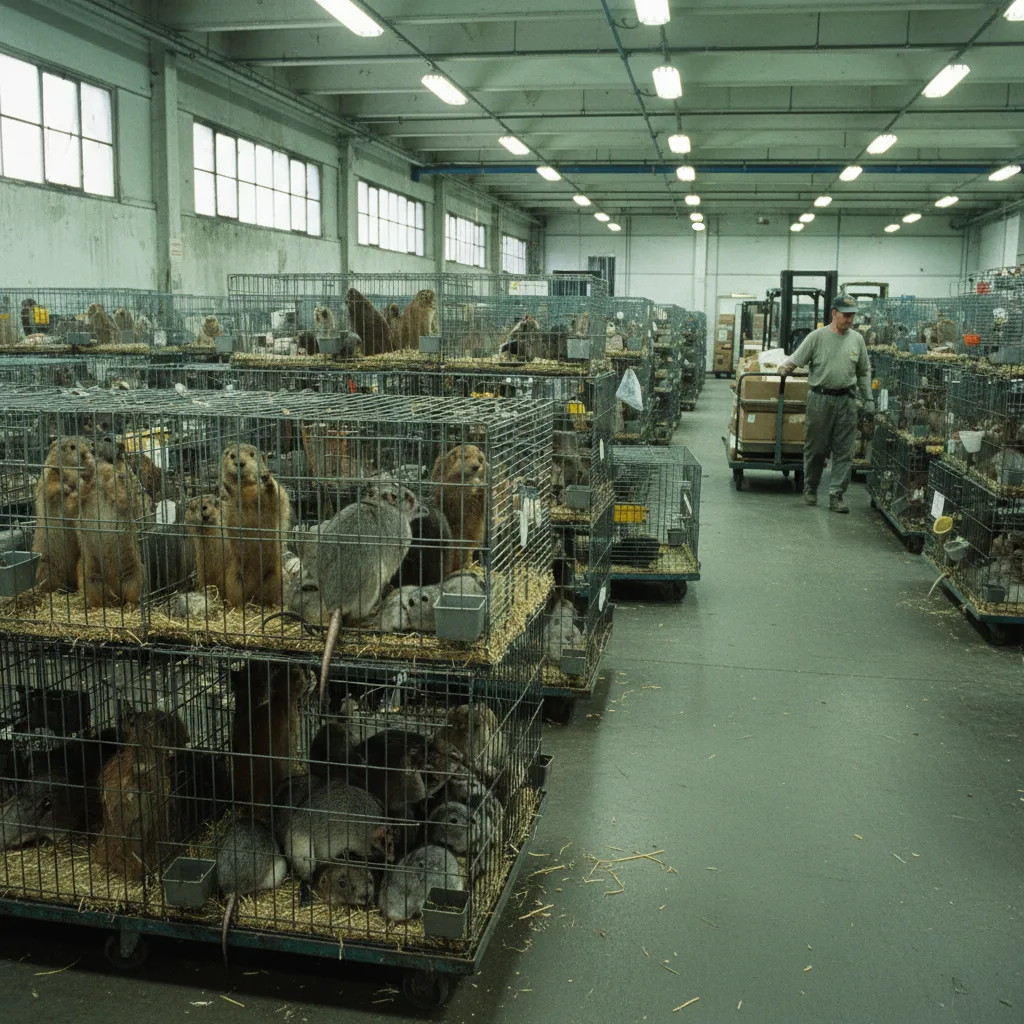
This 2003 incident served as a critical, albeit largely forgotten, warning. It demonstrated the virus’s capacity to cross species barriers and continents, leveraging the global exotic pet trade as an unwitting vector. Yet, despite this clear demonstration of zoonotic potential, mpox largely receded from the forefront of global health discussions. It wasn’t until 2017 that the virus once again demanded international attention, this time with a significant resurgence in Nigeria. After nearly 40 years without reported cases, Nigeria documented over 100 suspected and 30 confirmed cases, spreading across several states. This outbreak, unlike previous sporadic events, showed a more sustained pattern of human-to-human transmission, prompting concern among local health authorities.
The Nigerian resurgence of 2017, and subsequent smaller outbreaks, highlighted a crucial debate: what was the true animal reservoir for mpox? While rodents are suspected, a definitive primary host remains elusive. This gap in knowledge is a critical vulnerability. Without understanding the virus’s natural ecological niche, preventing future zoonotic spillover events becomes immensely challenging. Scientists continue to investigate various rodent species, from rope squirrels to dormice, across Central and West Africa. The complexity of these ecosystems, coupled with limited funding for extensive wildlife surveillance, means the precise origins of mpox’s recurrent jumps to humans often remain shrouded in mystery, a persistent unresolved question at the heart of the mpox enigma.
The Global Alarm Bell: Mpox’s Unprecedented 2022 Surge
The world was caught off guard in May 2022. A patient in the United Kingdom, who had recently traveled to Nigeria, was diagnosed with mpox. This initial case was quickly followed by a cluster of unrelated cases in individuals with no travel history to endemic regions, suggesting local transmission. Within days, the virus appeared in Portugal, Spain, the United States, and Canada. The speed and geographical spread were unprecedented. Unlike previous outbreaks that remained geographically contained or linked to specific animal exposures, this new wave of mpox was rapidly disseminating across continents, primarily through human-to-human contact.
The World Health Organization (WHO) watched with growing concern. On July 23, 2022, after weeks of escalating case numbers and intense debate among experts, Director-General Dr. Tedros Adhanom Ghebreyesus declared the global mpox outbreak a Public Health Emergency of International Concern (PHEIC). This declaration, the highest alert level the WHO can issue, underscored the severity and rapid evolution of the crisis. By early 2023, confirmed cases globally had surpassed 87,000, spanning over 110 countries. The virus, once a rare tropical disease, had transformed into a global health challenge, forcing governments and health systems to mobilize rapidly.
What made the 2022 outbreak different? Genetic sequencing revealed the circulating virus belonged to the West African clade, generally associated with milder disease and lower mortality compared to the Congo Basin clade. However, its transmission dynamics had fundamentally shifted. The vast majority of cases initially occurred among men who have sex with men (MSM), particularly those with multiple or anonymous partners, and often linked to large gatherings. This demographic shift, combined with the virus’s ability to spread through close intimate contact, including sexual activity, presented a new public health challenge. The rapid global spread of mpox served as a sobering reminder of how quickly a localized pathogen can exploit global connectivity and social networks to become a worldwide concern.
The Changing Face of Transmission: Unpacking Mpox’s Spread
The 2022 global mpox outbreak forced a critical re-evaluation of the virus’s transmission pathways. While historically understood as primarily a zoonotic disease with limited human-to-human spread via respiratory droplets or direct contact with lesions, the recent surge highlighted the significant role of close, sustained physical contact. The virus, typically found in skin lesions, scabs, and bodily fluids, demonstrated a clear propensity for transmission during intimate encounters, including sexual activity. This isn’t to say mpox is exclusively a sexually transmitted infection (STI), but rather that sexual networks became a highly efficient vector for its dissemination in this particular outbreak.
Public health messaging faced a delicate tightrope walk: how to inform affected communities about the risks of transmission without fueling stigma and discrimination. The initial concentration of cases within the MSM community led to uncomfortable parallels with the early days of the HIV/AIDS epidemic. Organizations like the WHO and national health agencies, including the CDC, emphasized that anyone can contract mpox through close contact, regardless of sexual orientation. However, tailoring prevention messages to the most affected groups, while simultaneously combating misinformation and prejudice, proved a complex and often contentious task. The very act of naming the disease, with its historical association with “monkey,” became a point of contention, leading the WHO to officially rename it mpox in November 2022, citing concerns about racist and stigmatizing language.
Beyond close physical contact, other routes of transmission remain relevant, though less prevalent in the 2022 context. Prolonged face-to-face contact, involving respiratory droplets, can transmit the virus. Contact with contaminated materials, such as bedding, towels, or clothing used by an infected person, also poses a risk. The incubation period, typically 6 to 13 days but ranging from 5 to 21 days, allows for silent spread before symptoms manifest, further complicating containment efforts. Understanding these varied transmission pathways, and effectively communicating them without oversimplification or stigmatization, remains a cornerstone of managing the ongoing threat of mpox.
The Arsenal Against Mpox: Vaccines, Treatments, and Readiness
 The global health community was not entirely empty-handed when mpox surged in 2022. Decades of smallpox eradication efforts had left a legacy of effective vaccines and, critically, a framework for their deployment. The primary vaccine used against mpox is **JYNNEOS** (also known as MVA-BN), a live, non-replicating viral vaccine developed by Bavarian Nordic. Approved in the US in 2019 for both smallpox and mpox, JYNNEOS is considered safer than older smallpox vaccines, particularly for immunocompromised individuals, due to its attenuated nature. Another vaccine, **ACAM2000**, a live, replicating vaccinia virus, is also effective but carries a higher risk of side effects and is contraindicated for certain populations.
The deployment of these vaccines, particularly JYNNEOS, became a race against the virus. Countries like the United States, through its Strategic National Stockpile, rapidly distributed millions of doses. However, challenges emerged: limited initial supply, logistical hurdles in distribution, and varying levels of vaccine hesitancy within affected communities. The debate over vaccination strategy also came to the fore: should it be a broad-based approach, or a more targeted strategy focusing on individuals at highest risk of exposure? Most nations opted for ring vaccination and pre-exposure prophylaxis (PrEP) for at-risk groups, including healthcare workers and individuals with multiple sexual partners.
For those who contract severe mpox, specific antiviral treatments are available. Tecovirimat (TPOXX), developed for smallpox, received emergency use authorization or compassionate use approval in several countries for mpox. TPOXX works by inhibiting a viral protein essential for viral replication and assembly. While not a cure, it can reduce the severity and duration of symptoms, particularly in immunocompromised individuals or those with severe disease. The existence of these countermeasures, a direct benefit of historical investments in smallpox preparedness, undoubtedly blunted the impact of the 2022 mpox outbreak, preventing potentially far worse outcomes, yet also highlighting the fragility of global health security when faced with an unexpected viral surge.
Beyond the Headlines: Persistent Questions and Future Threats of Mpox
Despite the global mobilization against the 2022 mpox outbreak, numerous critical questions remain unanswered, casting long shadows over the virus’s future trajectory. Perhaps the most fundamental is the precise identification of the primary animal reservoir for mpox. While rodents are strongly implicated, pinpointing the specific species and understanding the ecological dynamics that lead to spillover events is crucial for effective long-term prevention. Without this knowledge, interventions often remain reactive rather than proactive, leaving us vulnerable to future zoonotic jumps.
Another pressing concern is the potential for mpox to establish itself as endemic in new regions outside Africa. The sustained human-to-human transmission observed in 2022, particularly through sexual networks, raises fears that the virus could become a permanent fixture in non-endemic countries. While case numbers have significantly declined, sporadic clusters continue to emerge, suggesting that the virus has not been eradicated from these new environments. The long-term health consequences for mpox survivors, including potential chronic pain, scarring, or even neurological effects, are also under active investigation, adding another layer of complexity to the disease’s impact.
Furthermore, the very nature of the virus itself demands continued scrutiny. Genetic sequencing has identified various lineages, including the A.1 and B.1 lineages prominent in the 2022 outbreak. Researchers are actively monitoring for mutations that could alter transmissibility, virulence, or vaccine effectiveness. The intersection of climate change, deforestation, and human encroachment into wildlife habitats also presents a looming threat, increasing the likelihood of novel zoonotic spillover events. The mpox saga is far from over; it serves as a stark reminder that our understanding of emerging pathogens is constantly evolving, and that vigilance, robust surveillance, and sustained research are not luxuries, but necessities for global health security.
The Lingering Shadows: Global Equity and the Mpox Narrative
The 2022 global mpox outbreak threw into sharp relief a persistent, uncomfortable truth about global health: the stark disparity in attention, funding, and urgency when a disease primarily affects African nations versus when it reaches Western shores. For decades, mpox was a known, albeit neglected, health challenge in countries like the Democratic Republic of Congo and Nigeria. Researchers and clinicians in these regions, like Dr. Dimie Ogoina, a Nigerian physician who published seminal work on the atypical presentations of mpox in 2017, issued warnings about the virus’s evolving nature and its potential for wider spread. Yet, these warnings often went unheeded by the international community.
The contrast in response could not be more striking. When mpox cases began to appear in Europe and North America in May 2022, global media attention exploded. Millions of dollars were rapidly mobilized for research, vaccine procurement, and public health campaigns. This rapid, robust response, while necessary and commendable, highlighted the systemic inequities in global health. The very same virus, causing similar suffering, had failed to generate comparable international alarm when its impact was largely confined to African populations. This disparity raises profound ethical questions about whose lives and health are deemed worthy of urgent global attention.
This investigative look at mpox cannot conclude without acknowledging this fundamental imbalance. The narrative of mpox has been shaped by a global health architecture that often prioritizes the concerns of wealthy nations. Moving forward, true global health security demands a fundamental shift: equitable investment in surveillance, research, and healthcare infrastructure in all regions, particularly those where zoonotic diseases are most likely to emerge. The mpox story is not just about a virus; it is also about the politics of disease, the ethics of global responsibility, and the urgent imperative to build a more just and responsive global health system.
Frequently Asked Questions about Mpox
1. What is the difference between monkeypox and mpox? “Mpox” is the new preferred name for monkeypox, officially adopted by the World Health Organization (WHO) in November 2022. The change was made to address concerns about stigmatizing and racist language associated with the original name, particularly its links to monkeys and its historical association with African countries. The disease itself remains the same.
2. How is mpox primarily transmitted? Mpox is primarily transmitted through close, sustained physical contact with an infected person, including direct contact with their rash, scabs, or body fluids. This often occurs during intimate contact, including sexual activity. It can also spread through prolonged face-to-face contact via respiratory droplets, or by touching contaminated materials like clothing or bedding.
3. Are there vaccines or treatments for mpox? Yes, there are vaccines and treatments available. The primary vaccine used in many countries is JYNNEOS (MVA-BN), which is effective against mpox and safer for broader populations. Another vaccine, ACAM2000, is also available but has more side effects. For treatment, the antiviral drug Tecovirimat (TPOXX) can be used for severe cases, particularly in immunocompromised individuals.
4. Is mpox still a global threat? While the global public health emergency declared by the WHO ended in May 2023, mpox continues to circulate in many parts of the world, particularly in endemic African regions. Sporadic cases and clusters still occur globally. The virus remains a concern for public health, especially given the ongoing questions about its animal reservoir and potential for re-emergence, necessitating continued surveillance and preparedness.
The journey of mpox, from an obscure viral discovery in 1958 to a global health emergency in 2022, is a compelling narrative of scientific discovery, overlooked warnings, and evolving threats. It underscores the critical importance of robust global surveillance, equitable health systems, and a proactive approach to emerging pathogens. The virus has laid bare our vulnerabilities, but also demonstrated our capacity for rapid scientific response. As we move forward, the lessons from mpox must guide us: vigilance is paramount, equity is non-negotiable, and the silence of the past must never again lull us into a false sense of security.
You might also like:
👉 Significant Medical Breakthroughs: A Journey Through Medicine History
👉 AI in Medicine: A Complete Guide to Healthcare Transformation
👉 Can Cancer Survivors Get Cancer Again? Understanding Second Primary Cancers