Ocean's Shifting Baseline: Is Marine Life Beating Climate Change?
Beneath dire headlines, marine life shows surprising resilience to climate change, challenging common narratives of irreversible damage.
Ocean ecology: more than just bad news
The ocean is in trouble, everyone agrees. We hear constant warnings about collapsing ecosystems and irreversible damage from climate change. But what if the full story is more complicated? What if, beneath the dire headlines, marine life shows surprising resilience?
The ocean’s shifting baseline
Ocean ecology studies how marine life interacts with its surroundings. This includes everything from tiny plankton to huge whales. To track ocean health, scientists watch key indicators. These include sea surface temperature, pH, oxygen levels, and how species spread.
Most people hear that oceans are warming, acidifying, and losing oxygen fast. These trends are real, and they challenge marine life. But painting the entire global ocean with one brush hides local adaptations and natural historical changes.
Warming waters, hidden adaptations
Since 1970, global average sea surface temperatures have risen about 0.13°C per decade. That’s from the Intergovernmental Panel on Climate Change (IPCC, 2019). Warmer water expands and pushes species toward cooler poles. We know this happens.
But not all marine life reacts the same way to temperature changes. Some species show incredible flexibility. Studies, like those by Dr. Malin Pinsky at Rutgers University, show fish like Atlantic cod adapting genetically to warmer waters. These rapid shifts happen in decades, letting populations survive.
Marine heatwaves hit hard, stressing local ecosystems. Yet, some affected ecosystems show surprising strength. For instance, certain kelp forests in warming regions have bounced back locally. This recovery goes against simple decline models, as University of Tasmania research on Australian kelp forests documents. These findings suggest a rebound capacity often missed in broader assessments.
Ocean acidification: what about calcifiers?
Since the industrial revolution, ocean pH has dropped 0.1 units, from 8.2 to 8.1. NOAA reports this is a 30% acidity increase. This trend mostly threatens calcifying organisms: corals, shellfish, and plankton that build shells or skeletons from calcium carbonate.
The danger to these calcifiers is serious. But lab experiments often use sudden pH drops. In the real ocean, acidification happens much slower. Some studies suggest marine life adapts to these gradual changes. Dr. George Waldbusser at Oregon State University found certain shellfish larvae can handle lower pH. They tolerate more if food is ample.
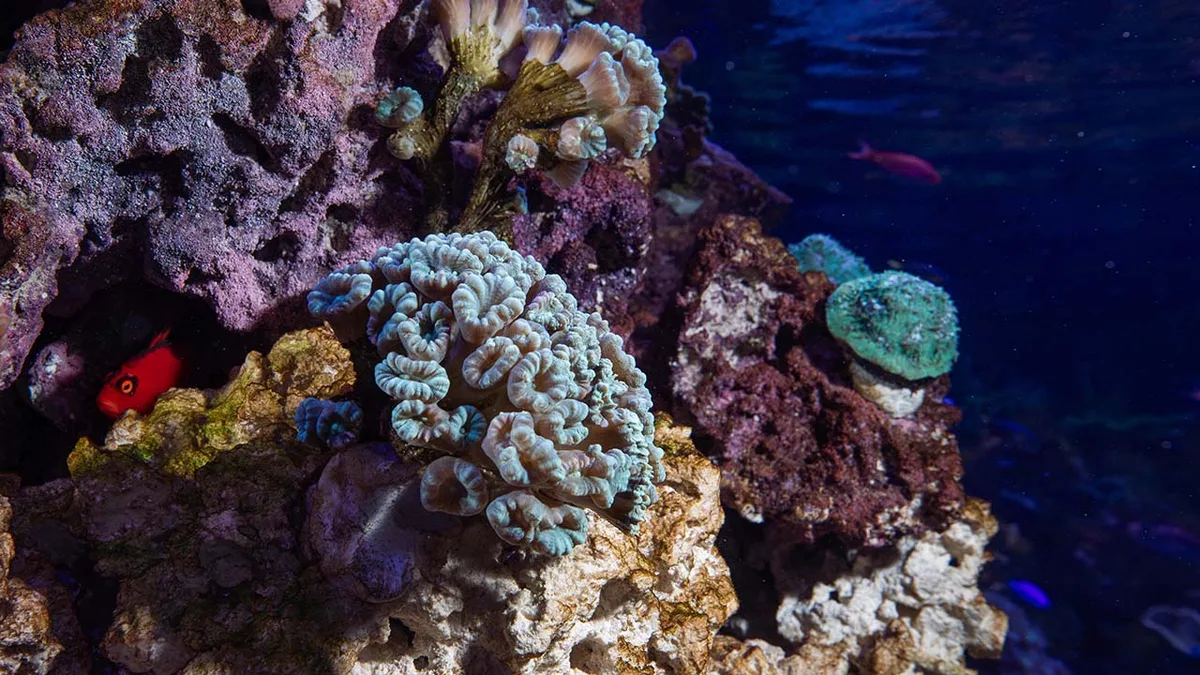
Coral reefs, vital ecosystems built by calcifying organisms, are seriously threatened by ocean acidification, which has increased acidity by 30% since the industrial revolution. However, some studies suggest marine life may adapt to these gradual changes, offering a complex picture of their future. (Source: neaq.org)
Natural variations also exist in ocean chemistry. Corals near volcanic CO2 vents already live in naturally lower pH. Dr. Federica Goffredo at the University of Bologna researched these “extreme” spots, showing surprising coral resilience. These corals adapt over generations, hinting at long-term acclimation for other species.
Deoxygenation: more than just a drop
Oxygen minimum zones (OMZs) have grown in some ocean areas by 3-8% since 1960. A 2017 Nature study by Schmidtko et al. reported this. Less dissolved oxygen creates “dead zones.” These zones hit marine life hard, especially mobile species.
Today’s deoxygenation worries us, but it’s not totally new. Earth’s oceans have seen natural deoxygenation cycles for eons. Sediment cores show past periods of widespread low oxygen. These cycles shaped marine evolution over millennia. Dr. Brad Seibel at the University of South Florida studies these conditions. He points out many deep-sea species already adapted to low-oxygen spots, perfecting these adaptations over huge evolutionary timescales.
Local factors often cause deoxygenation too. Nutrient runoff and local upwelling can worsen oxygen loss. These local causes sometimes outweigh global temperature effects. Big assessments often miss this. They might blame all changes solely on global warming.
Coral bleaching: a closer look
The Great Barrier Reef had big mass bleaching events in 2016, 2017, 2020, and 2022, according to the ARC Centre of Excellence for Coral Reef Studies. Bleaching, where corals expel their symbiotic algae, is a clear sign of stress. Bad or repeated bleaching can kill corals.
Despite these worries, not all corals react the same way to stress. Different species have varying heat tolerance. Recovery is possible, and we often underestimate it. Dr. Peter Ridd, formerly of James Cook University, has questioned some stories about coral decline. He points to old records and survey methods that might miss how fast some corals recover after disturbance.
Local problems often worsen global warming’s impacts. Sediment runoff, pollution, and overfishing harm coral reef health. These factors lower a reef’s ability to bounce back. Blaming all coral decline only on global climate change ignores these vital local factors. We need to understand the specific mix of problems in each reef system.
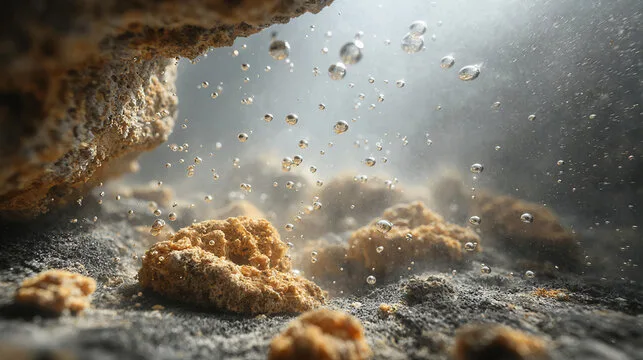
Underwater volcanic CO2 vents, like those researched by Dr. Federica Goffredo, release carbon dioxide into the ocean, creating naturally acidic environments. Surprisingly, corals and other marine life in these extreme spots have shown remarkable resilience and adaptation over generations. (Source: stock.adobe.com)
The ocean’s future: look closer
Ocean ecosystems are changing, no doubt. Temperature, pH, and oxygen levels prove it. But the story of uniform collapse often oversimplifies the science. It misses the ocean’s varied responses and its creatures’ amazing resilience.
We can’t keep making broad assumptions. Future research needs to be local, species-specific, and historically informed. We should focus on adaptation, evolutionary flexibility, and how different stressors combine. This gives us a fuller picture. A better understanding means smarter conservation plans and a more honest public conversation. It’s time to stop painting the ocean’s future with a single, gloomy brushstroke.
FAQ
What is ocean acidification? Ocean acidification is the ongoing drop in the pH of Earth’s oceans. It happens because the oceans absorb too much carbon dioxide from the air. It affects marine organisms that build shells and skeletons.
Do all ocean species react the same to warming? No, marine species show different responses to warming waters. Some move, others adapt their bodies, and some populations have genetic changes over fairly short times.
Can corals recover from bleaching? Yes, corals can recover from bleaching. Recovery depends on the stress’s severity, the coral species, and other local problems that might slow regrowth.
Are there natural cycles that affect ocean oxygen levels? Absolutely. Earth’s oceans naturally saw different oxygen levels throughout history. These natural cycles shaped marine life and still influence regional oxygen.
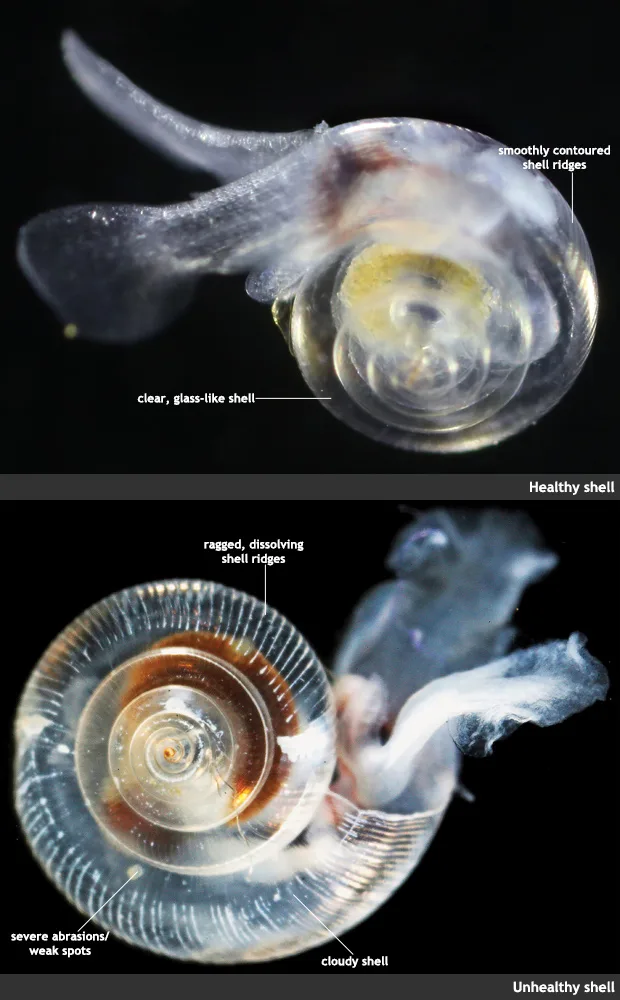
Pteropods, also known as sea butterflies, are tiny marine snails with delicate shells that are highly vulnerable to ocean acidification. As ocean pH drops, it becomes harder for them to form their shells, and existing shells can even dissolve, impacting the marine food web. (Source: climate.gov)
You might also like:
👉 Venus: Why 475°C Hell Holds Earth’s Climate Future