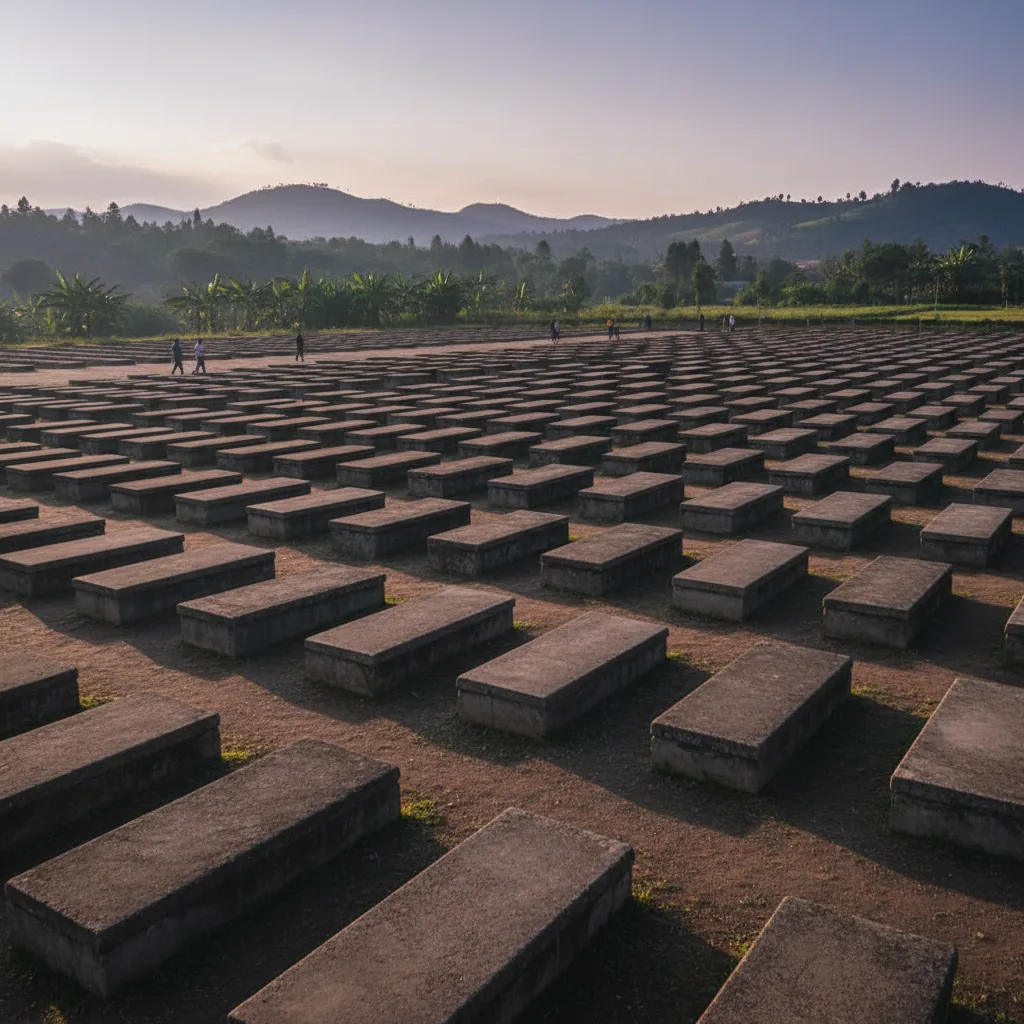
Rwanda's 1994 Genocide: Unmasking the 'Ancient Hatreds' Lie
Rwanda's 1994 genocide wasn't just ancient hatreds. Discover how carefully planned political actions and international failures led to the disaster.
Rwanda’s Genocide: The Convenient Lie
In 1994, Rwanda became known for widespread horror. Many people believe the genocide resulted from a sudden, brutal outbreak of “ancient ethnic hatreds” between Hutu and Tutsi. They also think the world mostly ignored the killings. This view acknowledges the terrible death toll. However, it overlooks the carefully planned political actions and specific international failures that led to the disaster.
For decades before the genocide, Rwandan society had three main groups: Hutu, Tutsi, and Twa. Pre-colonial Rwanda was a centralized kingdom where people could change social standing. Hutu and Tutsi were often social-economic categories, not fixed ethnic groups. Historian Jean-Pierre Chrétien writes that individuals could shift identity based on wealth or status. German colonizers arrived in 1884, and Belgians took over in 1916. This changed Rwandan society completely. Belgian administrators used false racial theories to create formal ethnic divisions. They issued identity cards, classifying people as Hutu, Tutsi, or Twa. They favored the Tutsi minority for administrative roles. This created a rigid caste system, which caused anger among the Hutu majority.
Colonialism’s Poison
Belgian colonial policies assigned races to Hutu and Tutsi populations. They changed flexible social differences into fixed ethnic categories. Historian Alison Des Forges wrote in “Leave None to Tell the Story” that Belgians saw Tutsi as “natural rulers.” This was due to supposed Hamitic origins. This favoritism worsened Hutu complaints. In 1959, a “Hutu Revolution” began, leading to widespread violence against Tutsi. Thousands of Tutsi died. More than 300,000 fled to nearby countries like Uganda, Burundi, and Zaire.
Rwanda gained independence in 1962. The Hutu majority quickly took political control. Grégoire Kayibanda became the first president. His government, and later Hutu-led administrations, maintained a system of discrimination. They mostly kept Tutsi out of power. Tutsi also endured regular massacres, especially in 1963, 1967, and 1973. President Juvénal Habyarimana took power in 1973. He continued Hutu dominance, using quotas in education and employment. This organized exclusion kept many Tutsi in exile, leading to a strong wish for return and justice.
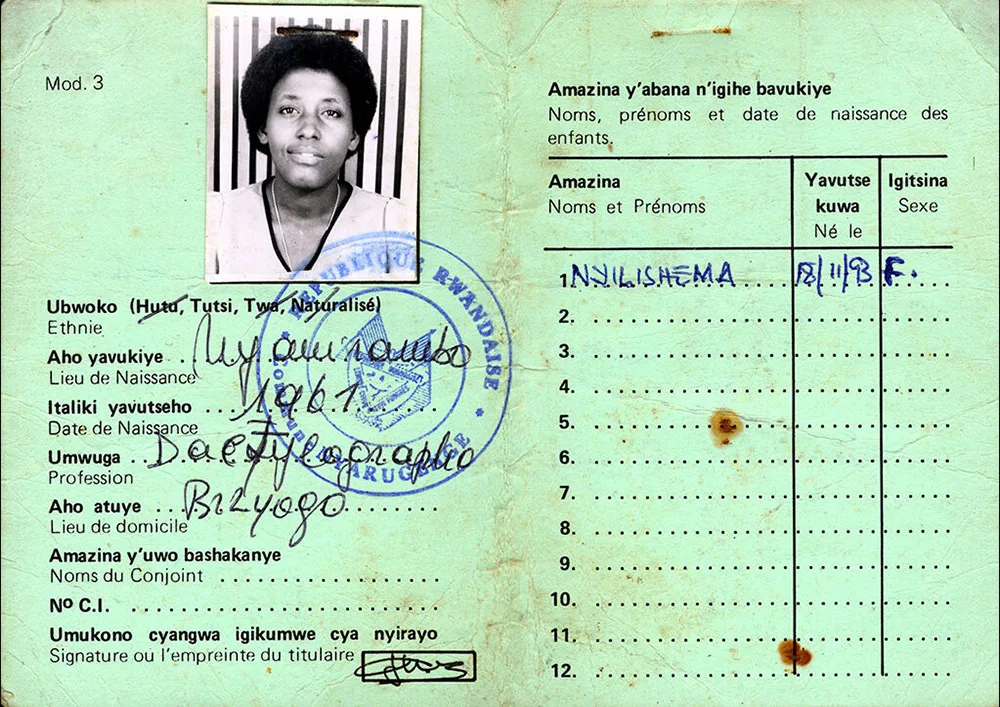
Belgian colonial administrators introduced identity cards in Rwanda, formally classifying individuals as Hutu, Tutsi, or Twa. This policy transformed flexible social categories into rigid ethnic divisions, profoundly shaping the country's future and contributing to the tensions that led to the genocide. (Source: considerthesourceny.org)
Rising Tensions: War Begins
By the late 1980s, Rwanda faced growing internal disagreement and economic difficulty. President Habyarimana’s ruling National Revolutionary Movement for Development (MRND) became more controlling. Meanwhile, Tutsi refugees in Uganda formed the Rwandan Patriotic Front (RPF) in 1987. Many of them had fought in the Ugandan civil war. Paul Kagame led the RPF. Their goal was to ensure refugees could return and to create a more open government in Rwanda.
On October 1, 1990, the RPF invaded Rwanda from Uganda, starting the Rwandan Civil War. This war increased ethnic tensions. It also allowed Habyarimana’s government to strengthen its power using fear. State-supported media, especially Radio Télévision Libre des Mille Collines (RTLM), began broadcasting hateful anti-Tutsi messages. These broadcasts made Tutsi seem less than human. They called them “inyenzi” (cockroaches) and presented them as a dire danger to Hutu.
The international community urged Habyarimana to negotiate a power-sharing agreement with the RPF. These talks led to the Arusha Agreements, signed in Tanzania on August 4, 1993. The agreements proposed a temporary government with RPF representatives and a national army made up of various ethnic groups. However, extremist Hutu elements within Habyarimana’s government, known as the Akazu or “little house,” strongly opposed these agreements. They viewed power-sharing as a betrayal. They started to plan a “final solution” to the Tutsi “problem.”
The Genocide Begins: Organized Violence
On April 6, 1994, a plane carrying President Habyarimana and Burundian President Cyprien Ntaryamira was shot down near Kigali airport. Many see this as the direct cause for the genocide. While the plane crash started the violence, it was not an unplanned, sudden burst of anger. Evidence indicates the act was an excuse for a carefully organized killing campaign.
Within hours of the plane crash, Hutu hardliners set up roadblocks throughout Kigali. This group included the presidential guard and Interahamwe armed groups. They began to target Tutsi and moderate Hutu politicians in an organized way. These victims were identified from lists prepared beforehand. Human Rights Watch’s report, “Leave None to Tell the Story,” explains how these lists were made months in advance. The killings quickly spread from the capital to rural areas. RTLM radio broadcasts helped this, telling killers where to go. These broadcasts gave names, addresses, and even urged listeners to join the killings.
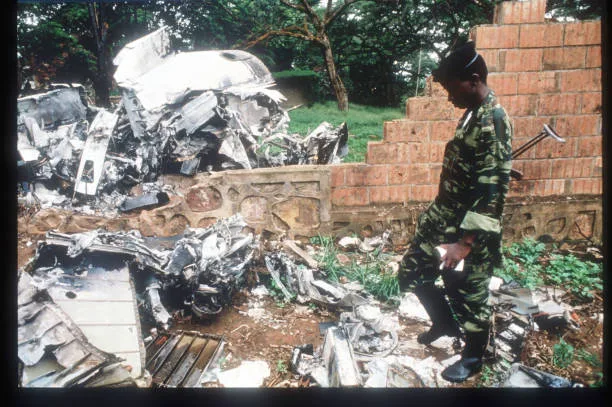
The wreckage of the Dassault Falcon 50 jet carrying Rwandan President Juvénal Habyarimana and Burundian President Cyprien Ntaryamira, which was shot down on April 6, 1994, near Kigali airport. This event served as the immediate catalyst for the Rwandan genocide, triggering widespread organized violence. (Source: gettyimages.com)
The violence was not random. It was an organized campaign by the state, carried out with horrifying speed. Soldiers, police, and government officials took part, often with civilian armed groups. Churches, schools, and hospitals became places of mass murder. Tutsi sought safety there, only to be trapped and killed. Over about 100 days, from April to July 1994, an estimated 800,000 to 1,000,000 people were murdered. Most were Tutsi, along with many moderate Hutu who opposed the genocide or were thought to support Tutsi.
The World’s Silence: Apathy or Complicity?
The world did not intervene in Rwanda. This is often viewed as a terrible mistake. Many believe it happened because of a lack of knowledge about the developing horrors. However, this view overlooks important facts: deliberate inaction and missed chances. The UN Assistance Mission for Rwanda (UNAMIR) arrived in October 1993. It was supposed to oversee the Arusha Agreements, but lacked enough staff and supplies. Its commander, Canadian General Roméo Dallaire, frequently warned UN headquarters about a coming genocide.
In January 1994, Dallaire sent a well-known “genocide fax” to UN headquarters in New York. The message described information from an informant. It stated Hutu hardliners planned to kill Tutsi and train armed groups. Dallaire asked for permission to raid hidden weapons. The UN refused. They told him to share the information only with President Habyarimana. After the plane crash on April 6, ten Belgian peacekeepers were killed. This caused Belgium to pull its entire group of soldiers from UNAMIR. The UN Security Council, under pressure from the United States, then voted to cut UNAMIR from 2,500 troops to just 270.
This decision was not made without knowledge. As Samantha Power wrote in “A Problem from Hell,” US officials deliberately avoided using the term “genocide.” They were still recovering from the “Black Hawk Down” incident in Somalia. This allowed them to avoid their legal and moral duty to intervene under the 1948 Genocide Convention. French involvement also remains disputed. Critics claim France directly supported the Hutu government before and during the genocide. Operation Turquoise, a French-led aid mission, created a safe zone in southwestern Rwanda. However, it faced criticism for allowing those who committed genocide to escape into Zaire. The world knew about the terrible acts but chose to ignore them.
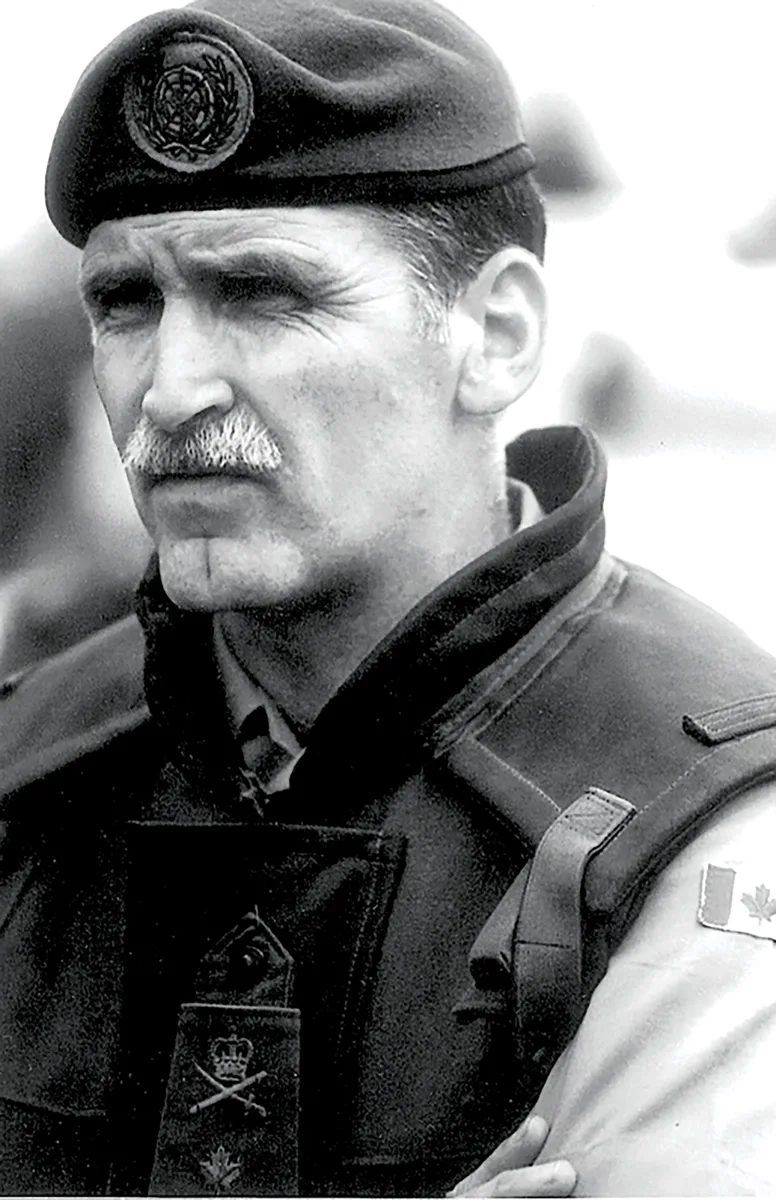
Canadian General Roméo Dallaire commanded the UN Assistance Mission for Rwanda (UNAMIR) in 1994, famously sending a 'genocide fax' to UN headquarters warning of the impending massacres and requesting permission to raid hidden weapons caches, which was refused. (Source: library.westpoint.edu)
Aftermath and New Challenges
By July 1994, the Rwandan Patriotic Front (RPF) took control of Rwanda. This brought the genocide to an end. The RPF’s military win stopped the killings. Yet, it also began a new period filled with difficult issues and disagreements. Millions of Hutu, including many who committed genocide and their families, fled into eastern Zaire (now the Democratic Republic of Congo). This led to huge refugee camps. Many of these camps became bases for armed Hutu groups, including former genocidal forces.
The RPF government, led by Paul Kagame, sent its military into Zaire to find those who committed genocide. These actions played a large part in starting the First and Second Congo Wars. Those wars killed millions and made the entire Great Lakes region unstable. Mahmood Mamdani, in “When Victims Become Killers,” states the RPF’s actions were meant to provide security. However, they also created regional instability. They made it harder to tell the difference between victims and perpetrators in certain situations. The lasting effect on the DRC is still very bad.
At home, the new Rwandan government set up Gacaca courts. This community-based justice system handled a very large number of genocide suspects. Over 12,000 courts tried almost two million cases between 2002 and 2012. Many praised Gacaca for helping reconciliation and justice. However, the process also drew criticism. People mentioned possible unfair legal procedures and RPF crimes that were not addressed. Paul Kagame has held tight control of power since 1994. He was Vice President and Minister of Defense first, then President since 2000. His government has brought about much economic growth and stability. However, human rights groups like Amnesty International have reported worries. These include political control, limits on free speech, and silenced opposition.
Beyond the Simple Story: Rwanda’s Future
Rwanda today faces a complex political situation, 29 years after the genocide. The common explanation of the Rwandan genocide rightly points to the terrible loss of life. Yet, it often reduces the causes to “ancient hatreds.” This simple view hides deep political reasons. It also covers up the purposeful part played by colonial policies and organized planning by extremist Hutu groups. Furthermore, it lessens the importance of specific, recorded failures by international actors. Their inaction was a decision, not an accident.
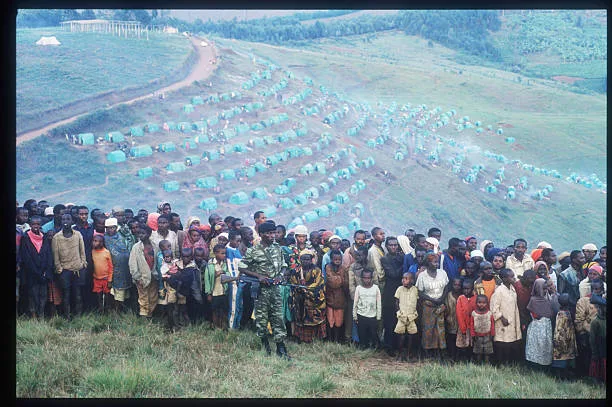
Following the Rwandan genocide in 1994, millions of Hutu, including many perpetrators, fled into eastern Zaire (now the Democratic Republic of Congo), creating massive refugee camps like those around Goma. These overcrowded camps quickly became bases for armed Hutu groups, contributing to regional instability and sparking the devastating Congo Wars. (Source: gettyimages.com)
Rwanda’s rebuilding after the genocide has been notable in some ways. However, it also deals with these difficult issues. The RPF’s strong hold on power, its military actions in the Congo, and current worries about political freedoms are all lasting effects. To understand Rwanda fully, one must recognize its complete history. This includes the impacts of colonialism, the political reasoning of Hutu Power hardliners, and the thorough planning of the genocide. It also involves specific international policy choices and the difficult facts of governing after the genocide. Only by facing these uneasy truths can we truly learn and work to stop similar terrible events in the future.
FAQ
What were the Hutu and Tutsi before colonialism? Before colonial rule, Hutu and Tutsi were largely socio-economic categories within a single Rwandan culture, not rigid ethnic groups. Individuals could sometimes shift identity based on wealth or status, sharing language, religion, and customs.
How did colonial powers contribute to the genocide? German and Belgian colonizers assigned races to Hutu and Tutsi. They created fixed ethnic identities using identity cards and favored the Tutsi minority. This caused deep divisions and anger, which Hutu hardline leaders later used for political gain.
Why did the international community not intervene? Despite clear warnings, the UN and major powers like the US and France decided not to intervene. Reasons included a hesitation to send troops after Somalia, a legal way of avoiding the term “genocide” to get around duties to intervene, and in some cases, disputed foreign policy interests.
What is the legacy of the RPF’s victory? The RPF’s victory ended the genocide and brought stability to Rwanda. However, it also resulted in the RPF’s long-term control, disputed military actions in the Democratic Republic of Congo, and continued worries about human rights and political freedom under the current government.
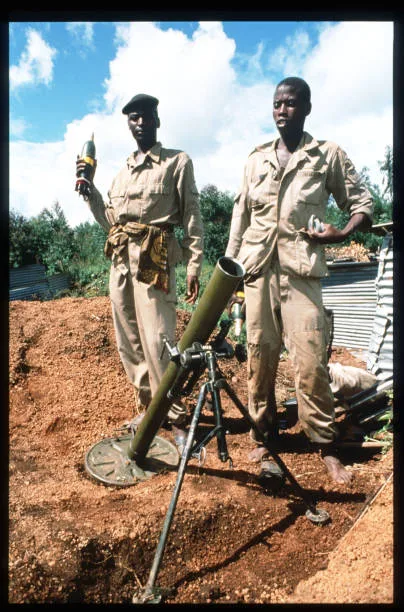
The Rwandan Patriotic Front (RPF) was the Tutsi-led rebel army that ended the 1994 genocide against the Tutsi and subsequently became the dominant political party in Rwanda. Their victory brought stability but also led to long-term control and ongoing debates about political freedoms. (Source: gettyimages.com)
You might also like:
👉 Canada’s Great Unsolved Mysteries: Historical Enigmas & Secrets